

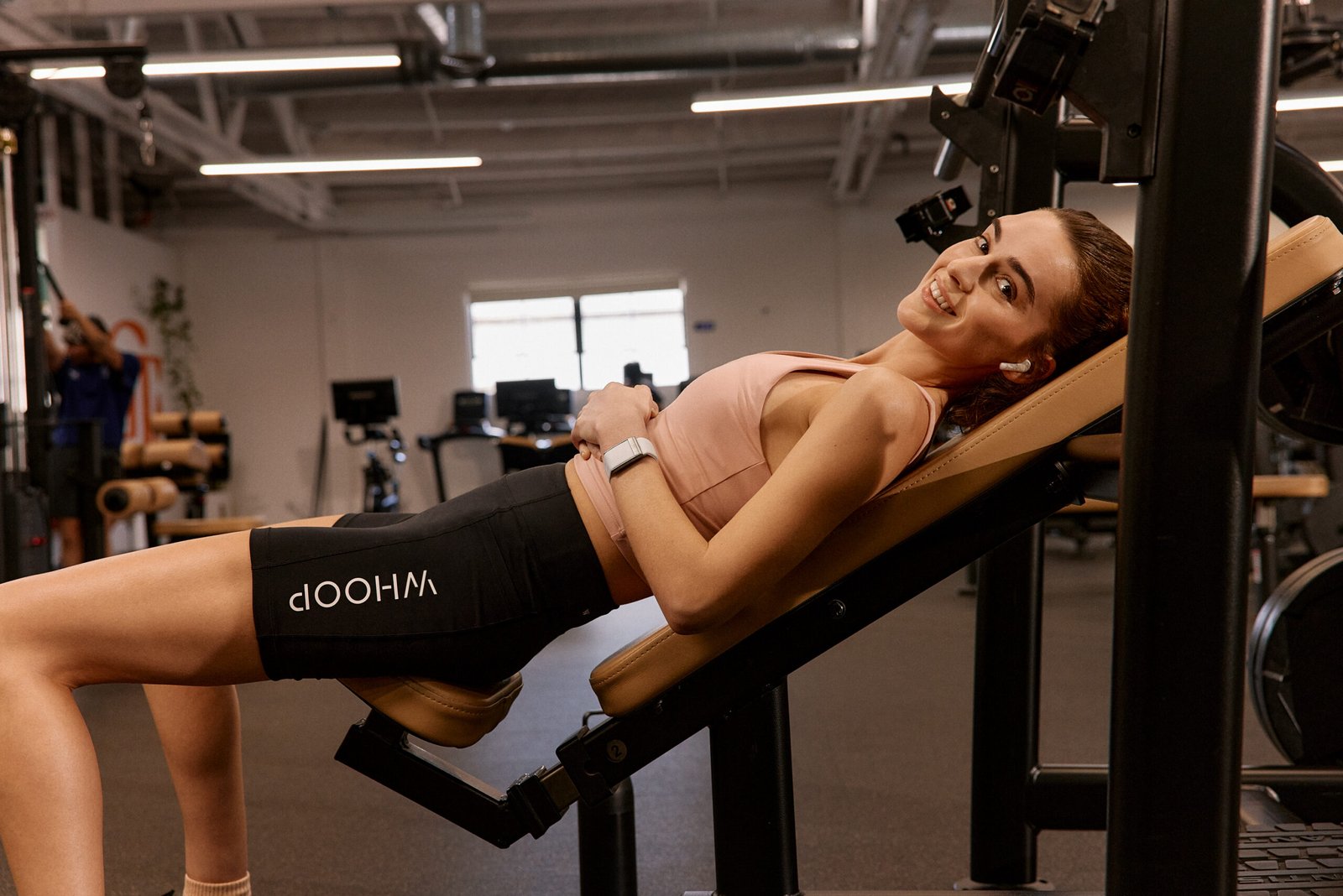
The arms race for our blood continues and WHOOP is looking to secure its place at the top.
If you’ve been around these parts for a while, you know we’ve been tracking the biomarker boom happening across the health, wellness, and performance world.
More here: The Biomarker Boom: Your Blood Is Now a Product
At first glance, today’s announcement reads like a simple product update.
WHOOP is launching a new women’s health blood biomarker panel, alongside expanded hormonal insights and menstrual cycle modeling designed to help female athletes better understand their physiology.
But zoom out and something else becomes clear.
WHOOP isn’t just adding a few women’s health features; it’s expanding the scope of what the platform actually is. The company is pushing beyond recovery tracking and deeper into the broader conversation around your health.
And WHOOP knows exactly where the momentum is coming from.
According to the company, women represent one of the fastest-growing segments of new members, with 150% year-over-year growth. Female users also engage with WHOOP AI roughly 30% more than male members, a signal that demand for more intelligent, personalized women’s health insights is already here.
What WHOOP Announced
The headline feature, available for purchase through the WHOOP app, is a new Women’s Health Specialized Blood Biomarker Panel, launching in April for U.S. users through WHOOP’s Advanced Labs program.
This panel adds eleven female-specific biomarkers to the company’s existing lab testing framework. The markers are designed to provide deeper insight into areas that commonly affect female athletes but rarely appear in typical wearable dashboards: hormone balance, thyroid function, nutrient sufficiency, bone-metabolic health, and more.
The idea is to connect those signals with the physiological trends WHOOP is already tracking through the device like HRV, sleep quality, recovery scores, and strain.
In practice, that means wearable data isn’t sitting in isolation anymore. Combined with WHOOP’s AI tools, the platform is trying to tie these signals together into something more actionable.
If recovery drops or sleep starts trending downward, the system can look at lab data + hormonal patterns to add context like your low in iron, or have a thyroid shift. WHOOP will know and be able to tell you.
All things that might explain why your body suddenly feels different even though your training load hasn’t changed.
WHOOP also expanded its Menstrual Cycle Insights and Pregnancy Insights with a new feature called Hormonal Symptom Insights and Predictions.
Instead of treating the menstrual cycle like a simple calendar tracker, which, if we’re being honest, is still a weakness in platforms like TrainingPeaks. Unlike TP, the system adapts over time using wearable signals and symptom inputs.
Users can log things like cramps, mood changes, fatigue, headaches, or sleep disturbances, and WHOOP begins connecting those symptoms with biometric patterns across cycles.
Over time, the platform predicts when certain symptoms may appear and how they may affect recovery, sleep quality, and readiness.
The goal isn’t just tracking the cycle.
It’s understanding how that cycle affects training and performance.
And for those who enjoy really nerding out on research, WHOOP also published a new white paper explaining the research and modeling behind its menstrual cycle prediction engine.
The company says the model uses physiological signals collected by the wearable alongside user inputs to better understand how hormonal phases interact with recovery, sleep structure, and cardiovascular strain.
Put simply, the system is trying to answer a question athletes have been asking for years: Is my body reacting to the training — or to hormones?
That distinction matters more than most training plans acknowledge.
As a coach, it can be incredibly difficult to decipher what the data is telling you when a female athlete is on her period. The numbers sometimes look like anomalies as you see recovery drops, sleep shifts, and workouts that were harder than they should have been.
It’s easy to assume the athlete is pushing too hard but sometimes it’s simply physiology, and that’s the layer WHOOP is trying to surface.
At first glance, this might sound like just another layer of health tracking. But for athletes, especially our females, the implications are bigger than that.
Training plans have historically been built around a single physiological model, even though the bodies following those plans can vary widely.
When wearable data, hormonal patterns, and lab biomarkers begin living inside the same system, the conversation around training changes.
Suddenly the question isn’t just how hard did you push today, it becomes what was happening inside your body when you did workout and how are you recovering?
Why This Matters
Women’s health has historically been one of the most overlooked areas in sports science.
Training systems for decades treated male physiology as the baseline and ignored what women go through; instead often having to interpret their own hormonal patterns and adapt their training without much guidance from technology or coaching systems.
A recent report from the World Economic Forum found Women’s health receives only 6% of private healthcare investment, despite women accounting for nearly half the world’s population. And that conditions like PMS, menopause, endometriosis, and maternal health issues account for a significant share of the women’s health burden, yet receive only a tiny fraction of global research funding.
So when a wearable platform starts connecting cycle tracking, lab biomarkers, and training data, it’s not just another feature. It’s a step toward understanding how female physiology actually interacts with endurance training.
That matters because the difference between a strong training block and a frustrating one often comes down to context and without it, wearables can only tell you something changed.
With the right physiological signals, they start explaining the why.
The Business Strategy
Of course, this isn’t purely altruistic, WHOOP is making a strategic play here.
Women are one of the fastest growing segments of the WHOOP user base and that creates a clear incentive to expand women’s health offerings.
But the real strategic shift is platform expansion. WHOOP is no longer positioning itself as just a wearable that tracks strain and recovery. It’s becoming a connected health platform that integrates multiple inputs all connected through AI which has been a rocket ship at connecting all the pieces together.
WHOOP now has its hands in wearable metrics, blood biomarkers, cycle tracking, AI interpretation, and coaching insights and when those pieces start living inside the same ecosystem, the wearable becomes much harder to replace or even give up on.
And that’s the real competitive advantage; giving enough value to users that they never consider leaving, even in a shit economy where everyone is having to decide what matters most to them and what can be left behind.
Blood Changed the Game
Companies like Levels, Function Health, and Superpower have been building blood-based health platforms for years, and for a while WHOOP looked like it was falling behind in that part of the health-tech race.
Then in November 2025, WHOOP made its move.
The company launched Advanced Labs, a program designed to bring blood testing directly into the WHOOP ecosystem. Members can upload existing lab results or schedule WHOOP curated panels, which are then analyzed alongside the wearable data the platform already collects every day. The goal is simple: connect two worlds that traditionally live in separate silos, lab diagnostics + continuous physiological monitoring.
Yes, WHOOP is playing a bit of catch-up in the blood biomarker space but it’s doing so with something the other platforms don’t have at the same scale: millions of wearables already strapped to members wrists, deep relationships with professional athletes, and one of the most recognizable brands in performance tech.
That combination changes the math and flips the script and this announcement is just the next phase for WHOOP.
What This All Means
This announcement matters less because of the features and more because of the focus: women.
And this is the next phase of the wearables evolution.
First it was step counters. Then it was recovery scores and sleep metrics. The next wave is being powered by labs, AI, and physiology.
It’s about connecting behavior, biology, and context so athletes actually understand what’s happening inside their bodies in real time.
Of course, that only works if users are willing to play along and hand over the one thing these platforms need most: data.
WHOOP seems comfortable making that bet.
Because if they can successfully connect wearable signals, biomarkers, hormonal patterns, and AI insights into a single ecosystem, the product goes way beyond just a performance tracker you wear on your wrist.
It is the closest thing to being a personal health operating system.
And if that shift is going to happen anywhere first, it means the future of performance tech may end up being shaped by the athletes it once overlooked.
Leave a Reply
You must be logged in to post a comment.