

To carb or not to carb. That is the question.
I’ve gotten it more than a few times from athletes, but some seem to think if you delay your post-workout carbs for a few hours, let your body stew in that low-glycogen state, you’ll trigger stronger adaptation signals that make you a better athlete over time.
Essentially they’re asking, if I train hard, and recover strategically, will I get the best of both worlds.
Researchers at Victoria University in Melbourne decided to actually test this idea and the results should change how you think about the window right after your next hard session.
What They Did

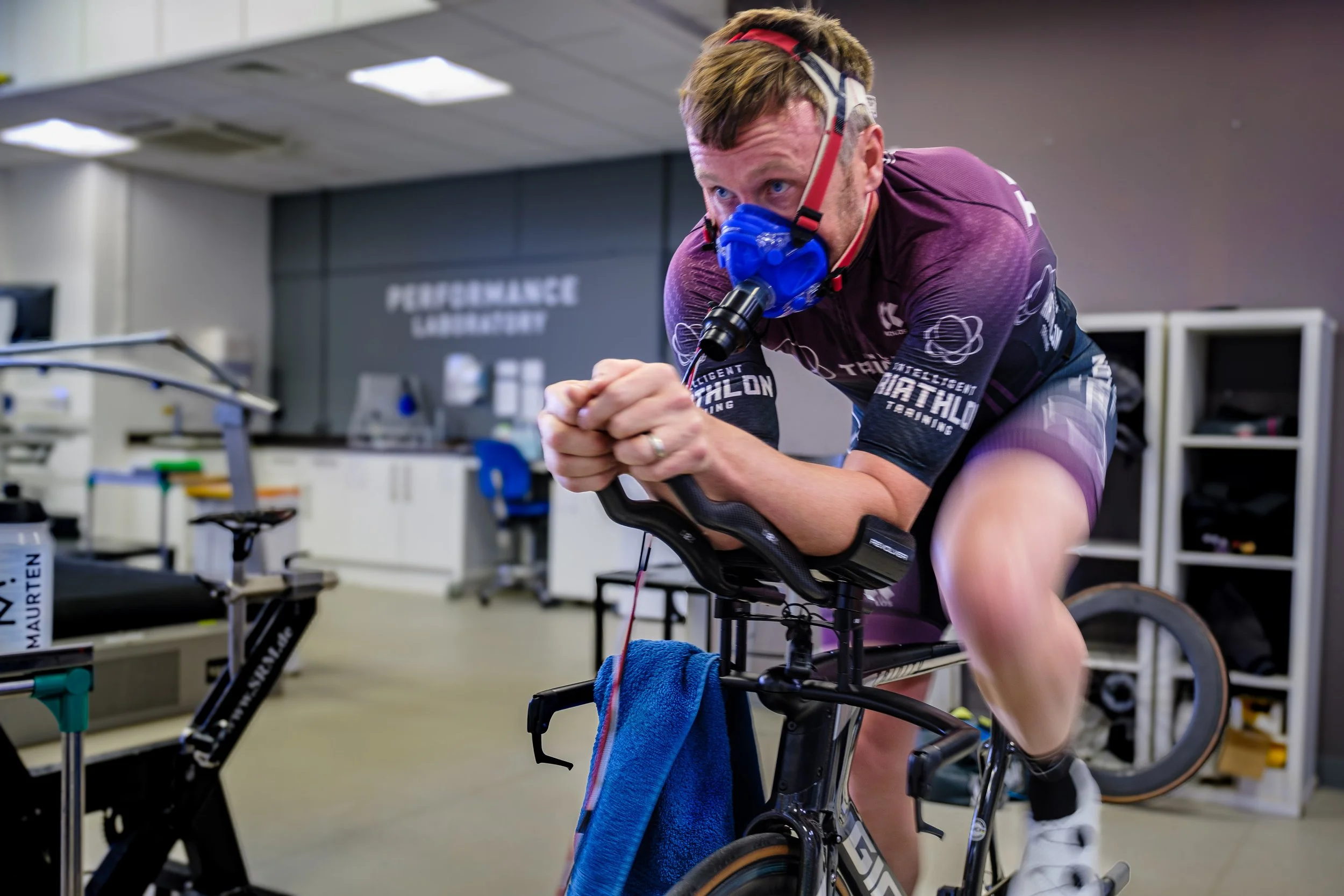
Nine recreationally active men (why not females?) performed a high-intensity interval session on a bike. It was 10 rounds of 2-minute efforts at roughly 94% of peak power. Not impossible but hard enough work to make you feel something.
Then the researchers split them into two recovery protocols –
Group 1 — Immediate Carbs (IC): Started drinking a carbohydrate beverage immediately after finishing. They consumed 2.4 grams of carbs per kilogram of bodyweight within the first three hours — delivered in smaller boluses every 20 minutes rather than all at once.
Group 2 — Delayed Carbs (DC): Drank a taste-matched placebo for the first three hours, then received the same carbohydrate dose later in the day.
Critically, both groups consumed the same total carbohydrate intake over the full 24-hour period, about 7 grams per kilogram of bodyweight per day.
This wasn’t a low-carb vs. high-carb comparison. It was purely a question of when should athletes be fueling post workout.
Researchers took muscle biopsies at five points across 24 hours and measured everything: glycogen levels, gene expression, protein signaling.
Then, 24 hours later, participants came back and rode to failure at the same intensity to test next-day performance.
What They Found
On the molecular side, almost nothing was different between the two groups. Glycogen recovery rates, mitochondrial biogenesis markers, signaling proteins all came back essentially the same whether you ate carbs right away or waited three hours.
The “train low, adapt better” theory didn’t hold up under these conditions.
But the performance data told a different story entirely.
The delayed-carb group completed about five fewer intervals to failure the next day. That’s a roughly 30% drop in work capacity.
They also rated the effort as meaningfully harder throughout the session, despite identical heart rate and blood lactate responses. Their bodies were working just as hard physiologically. It just felt worse, and they couldn’t sustain it as long.
It was the same total carbs, and same molecular adaptations, resulting in a dramatically worse performance.
The Numbers You Actually Need
Breaking it down, here’s what this study tells you to do, specifically:
First: Eat within the first three hours after your workout.
That. Is. The. Window.
Not after my shower or after I do some chores, or even “sometime today.”
The immediate group started refueling right away and spread their intake across that three-hour block in smaller doses, which is worth replicating because it gives your muscles a steady supply rather than a single flood.
The Goal: Target 2.4 grams of carbohydrate per kilogram of bodyweight in that window.
For a 150-pound (68kg) athlete, that’s roughly 163 grams of carbs in three hours — think a large bowl of oatmeal with banana, a sports drink, and a piece of toast, or a dedicated recovery shake alongside a real meal.
For a 180-pound (82kg) athlete, you’re looking at closer to 197 grams.
Then hit 7 grams of carbs per kilogram of bodyweight across the full day. That’s the total daily target that both groups matched and it’s the number that ensured glycogen was fully restored by the 24-hour mark regardless of timing. The immediate group just performed better in the meantime.
To put it as simply: The timing of that first hit of carbs is the lever. If you nail the window but under-eat the rest of the day, you’re leaving recovery on the table.
If you eat plenty overall but skip the post-workout window, you’re showing up to tomorrow’s session already behind.
Why This Matters Beyond the Lab
For athletes training once or twice a day, in back-to-back days of hard sessions, or in any scenario with 24 hours or less between efforts, this is a direct argument for eating immediately after you finish. The research puts a number on what you’re leaving on the table if you don’t: roughly a third of your next day’s capacity.
There’s also a perception component worth noting. Even when the physiology looked the same between groups — same heart rate, same lactate — the delayed-carb athletes felt worse.
How hard something feels matters. It affects how you train, how you push, and how consistent you are over months and years, so if you have the solution in front of you, go ahead and eat it.
A Few Things to Note
This study was conducted on athletes who trained in a fed state — they had a carb-heavy breakfast about an hour before going hard. Earlier research that did show adaptation benefits from carb restriction typically had athletes training fully fasted, meaning the deprivation window was much longer and started before the session even began. So context matters, here.
If you’re a serious athlete deliberately experimenting with fasted training or extended low-carb recovery windows as part of a periodized nutrition strategy, that’s a different conversation. But if you’re simply waiting to eat after a hard workout because you’ve heard it might be better for adaptation — the science here says it isn’t, and it’s making your next session harder for no reason.
The Bottom Line
Within three hours of finishing. 2.4 grams of carbs per kilogram of bodyweight. Then keep eating to hit 7 grams per kilogram across the day.
That’s not a general recommendation. Nor is it bro science.
That’s the protocol that kept athletes performing at full capacity the next day, and skipping it only costs you 30% of your performance tomorrow.
So don’t be stupid.
Leave a Reply
You must be logged in to post a comment.