

This past weekend, as Coachella’s 25th anniversary got underway in the Indio, California, something happened on the campground loop that would have seemed strange a decade ago.
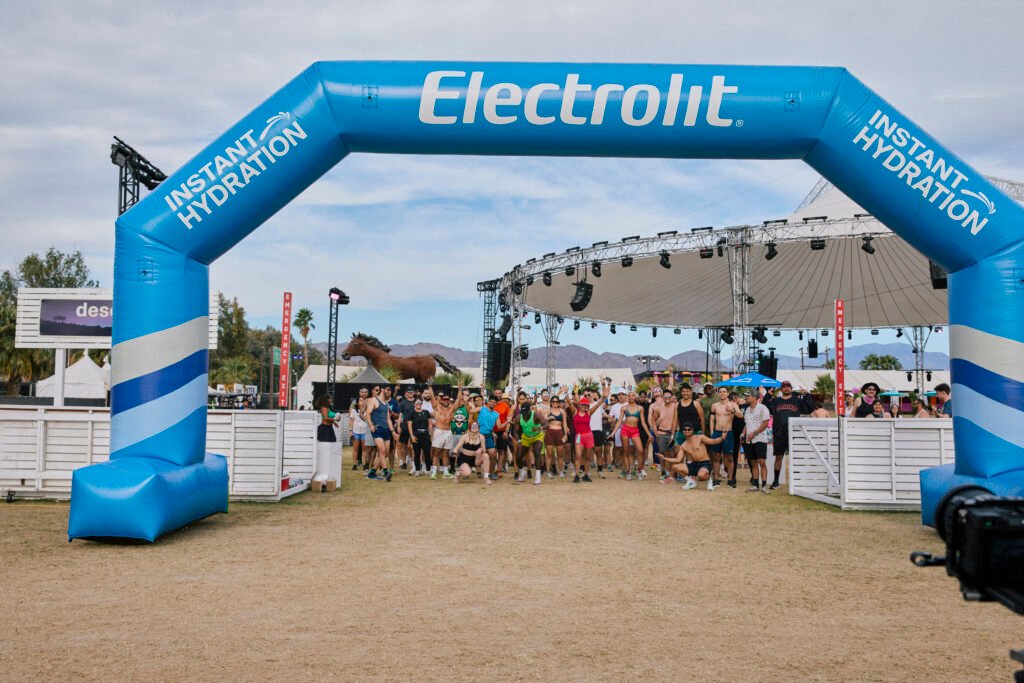
At 8:30 a.m. – yes, on a Saturday morning, before any music began, hundreds of festival goers were lacing up their running shoes.
They stretched. They took a deep breathe and they went running.
This was the Coachella x Electrolit Campground 5K.
Back for its third year in 2026, the fact that a 5K at a music festival exists at all, and that it keeps growing year-over-year, tells you everything about where health and wellness culture has landed.
Coachella is a different beast and not just a music festival that serves chicken nuggs and caviar or $14 tallboy’s anymore. It’s a performance event. And the performance is not on the main stage. It’s you working out.
The Numbers that Started a Movement
The business reality underneath the vibe shift is hard to argue with: younger generations are simply not drinking the way we did even a few years ago.
A 2023 Gallup survey found that the share of adults under 35 who drink dropped ten percentage points over two decades, from 72% to 62%.
Gen Z alone consumes roughly 20% less alcohol per capita than Millennials or Boomers at the same age.
By 2025, two-thirds of Gen Z respondents said they planned to drink less, compared to just 30% of Boomers saying the same.
Nearly 39% of Gen Z committed to going fully dry for the year. Not just stupid, Dry January. But the whole year.
| – 65% Gen Z alcohol consumption in 2025 | 20% Less alcohol consumed vs. Millennials | 39% Gen Z committed to a dry lifestyle | 30% Boomers planning to cut back |
Meanwhile, festival venues have caught on as they needed to figure out new ways to attract and sell to what their audience demands.
The bar tab follows the demographic. And the demographic is moving toward cold plunges.
For festival brands and sponsors, that math creates urgency.
Coachella drew around 125,000 attendees per day this weekend, with Gen Z making up an estimated 40% of that crowd.
When nearly half your audience is actively moderating or abstaining, the old playbook of luxury liquor activations, open bar sponsored lounges, and branded beer gardens starts to look like a misread of the room.
From Party Fuel to Performance Partner
The brands that figured this out first are the ones showing up all over the Coachella Valley this weekend.
Electrolit, which became the festival’s official hydration sponsor in 2023, are not just sampling product but with the Campground 5K they are building meaningful connection to an audience they crave.
Additionally, the brand’s two-story art-themed activation sat opposite the main stage as a full recovery hub.
That’s a fundamentally different category of sponsorship than having your logo on a cup or koozy.
And it’s not just Electrolit.
Plunge, the cold plunge brand that hit $100 million in revenue in 2024, made its mark at Stagecoach last year with The Recovery Rodeo, a standalone alcohol-free day party near the festival grounds featuring ice baths.
Normatec recovery boots by Hyperice, and non-alcoholic beverages from The New Bar and Best Day Brewing jumped in too.
Hyperice itself has become a fixture across festival activations, showing up wherever recovery is being reframed as part of the experience.
This weekend at Coachella, the recovery infrastructure is more embedded than ever.
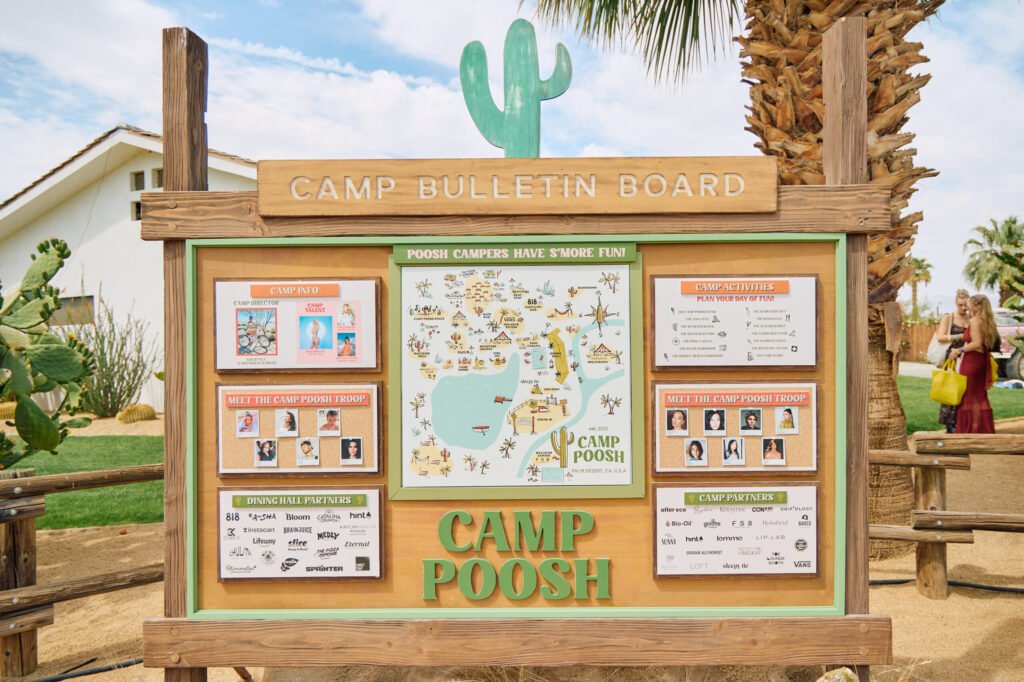
Camp Poosh hit its fourth year as a Coachella Valley fixture and runs a full wellness center as part of its invite-only estate experience, with programming that reads more like a performance athlete’s recovery day than a festival party.
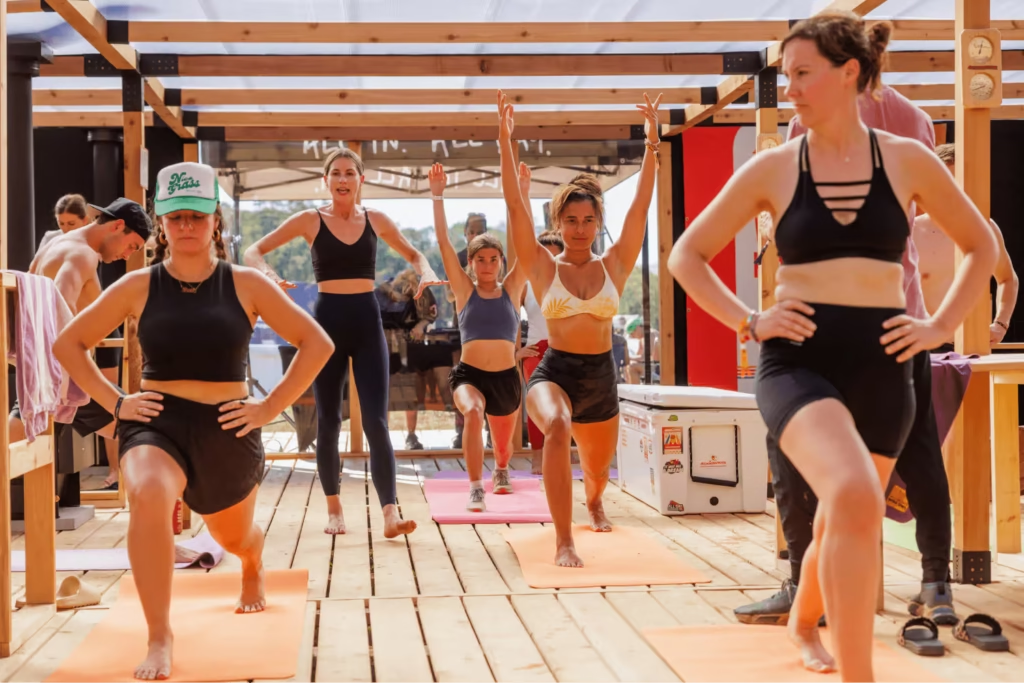
This year’s lineup also included Pilates and sculpt classes led by ClassPass and Heated Room, cold plunges, infrared sauna sessions, EMS treatments, facials, IV therapy, and percussion therapy by Hyperice.
Lemme hosts a supplement recovery lounge and TikTok Shop is running a dedicated wellness spa component. And Neutrogena, which has offered complimentary SPF stations on the festival grounds since 2023 also returned.
What began as a simple wellness touchpoint has grown into a fixture of the Coachella routine.
McKinsey data underpins all of it: 82% of U.S. consumers now rate wellness as a top or important life priority, and they reward brands that deliver on it with loyalty and willingness to pay premiums.
Forty-three percent of Gen Z say they are more likely to buy a beverage product marketed as aligned with the sober-curious lifestyle — versus just 16% of Gen X.
The Sober Rave Didn’t Wait for Coachella
While the festival industry catches up, the sober rave scene has been building its own infrastructure for over a decade.
Daybreaker, founded in New York in 2013 now operates in over 60 cities worldwide. By the end of 2025, the company had hosted more than 1,000 sober parties globally, drawing up to 2,000 participants per event.
Morning Gloryville, Daybreaker’s London-born counterpart, expanded to 25 cities and hosted sets from artists including Fatboy Slim and Basement Jaxx.
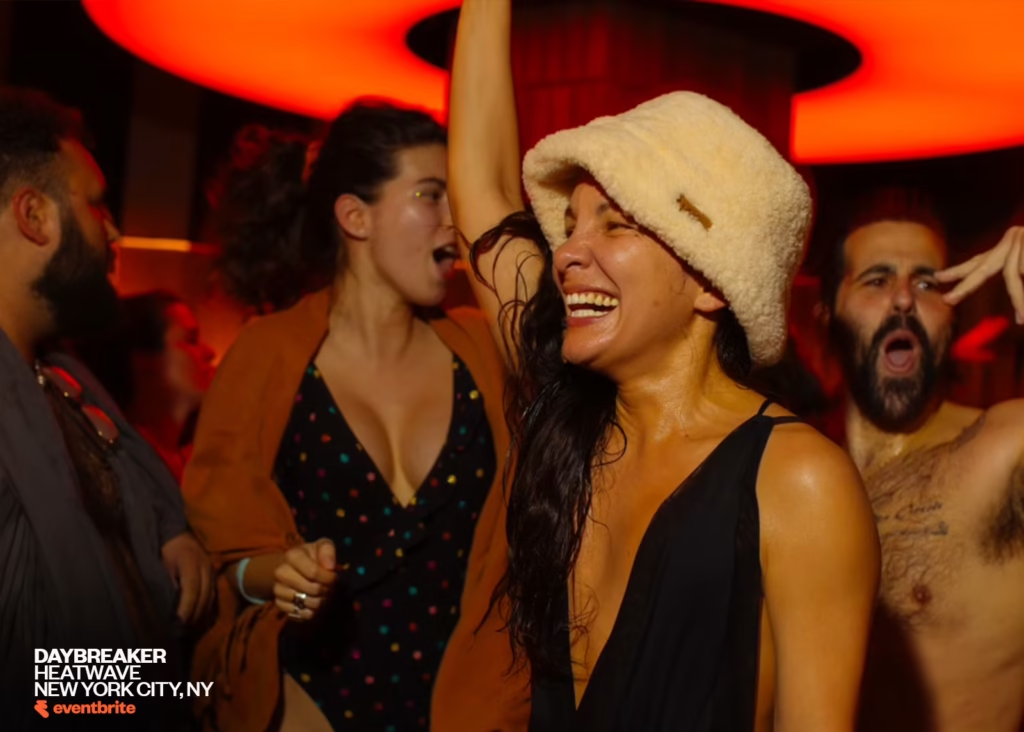
“Soft clubbing,” an Eventbrite term for sober or low-alcohol social events blending wellness, music, and community, saw a 92% increase in sober-curious gatherings in 2024, and a 478% jump in coffee rave-specific events year-over-year.
In New York City alone, registrations for this category spiked 900%.
Daybreaker’s founder Radha Agrawal put it plainly: “Younger audiences are done with the all-nighters. They want to wake up feeling alive, not depleted.”
Sober bars have followed. Sans Bar in Austin. Hekate in New York City. The Sober Social in Atlanta. The social architecture of a night out is separating from the alcohol itself.
You can have the ritual without the chemical. And a growing number of people, particularly younger ones, are choosing exactly that.
| +92% Sober-curious event growth on Eventbrite | +478% Coffee rave event growth year-over-year | +900% NYC sober event registration spikes | 1,000+ Daybreaker sober parties hosted |
Diplo Figured it Out
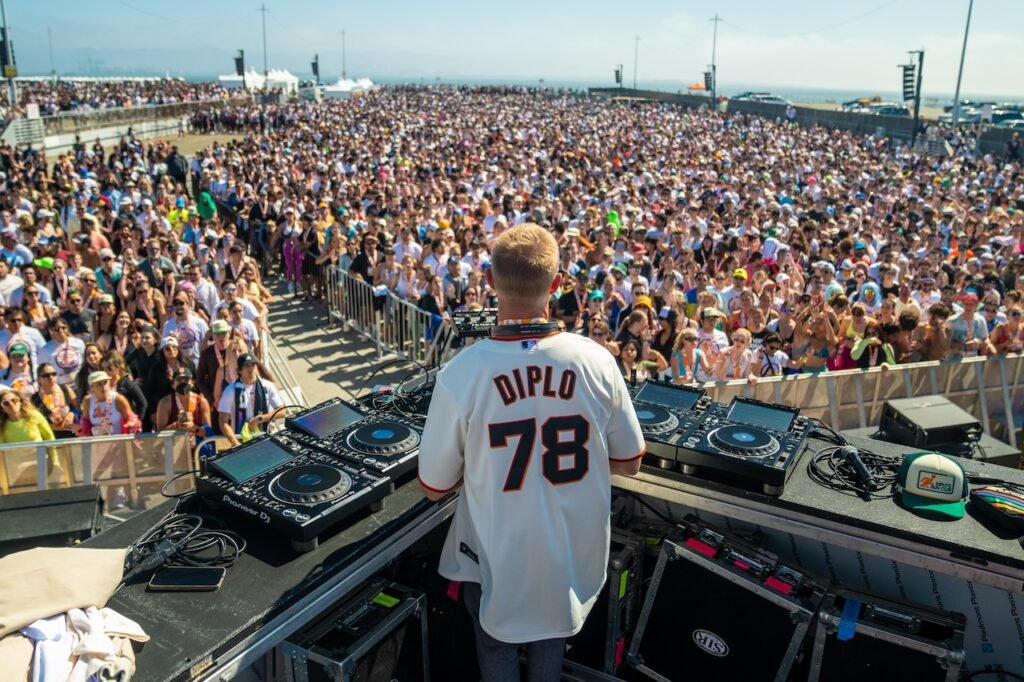
The clearest proof of where music and wellness converge may be Diplo’s Run Club.
In 2022, Diplo finished the Miami Half Marathon and wandered into Club Space, where other runners were dancing like it was peak club hour, just kind of riding a natural high. “The state of mind was incredible,” he said. “Everyone was clearheaded, happy, fully present. I kept thinking, ‘This is a moment. I wanted to recapture that.’”
In 2024, he did. Diplo’s Run Club debuted with two events — San Francisco and Seattle — a 5K followed by a 90-minute Diplo set.
Over 20,000 runners showed up combined.
The New York run placed among the ten largest 5Ks in the United States.
By the 2025–2026 season, the series expanded to ten U.S. cities, with Europe and Asia on the horizon. Altra Running came on as a brand partner. Macklemore ran the Seattle course. The Seattle mayor fired the starting gun. Six thousand people showed up in Philadelphia alone.
The average participant is around 36 years old. Many bring their kids. Grandmas run alongside grandchildren. The party is the run; and you stay for the hang after.
Runningman Turned Running into a Festival
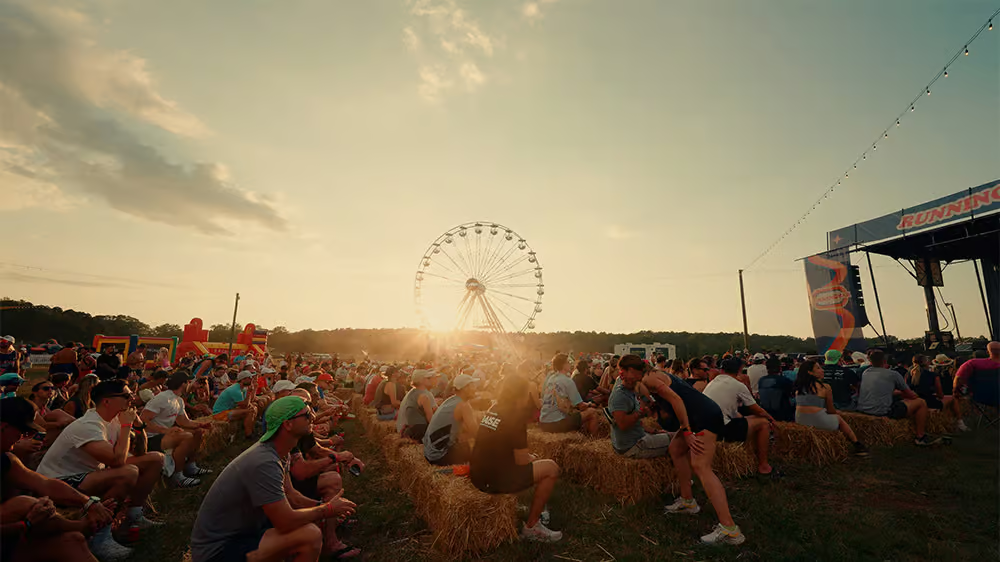
If Diplo’s Run Club is the proof of concept, Runningman Festival is the full build-out.
Co-founded by entrepreneur Jesse Itzler and Devon Lévesque, Runningman is a three-day wellness festival in Rome, Georgia where the centerpiece is an eight-hour choose-your-own-distance race on a one-mile grass loop.
You pick your target from a 5K to a 50K and run as long as you want, stopping for breathwork sessions, guided sauna rounds, cold plunges, speaker panels, and goat yoga.
The sauna is 4,200 square feet with 12 wood-burning stoves and live DJs inside.
Past speakers have included Courtney Dauwalter, Rich Roll, and Mat Fraser.
Runningman grew from 800 participants in its 2023 debut to over 1,000 in 2024 to more than 1,500 in 2025 — a 50%+ year-over-year jump that understates how much demand is outpacing capacity for this format.
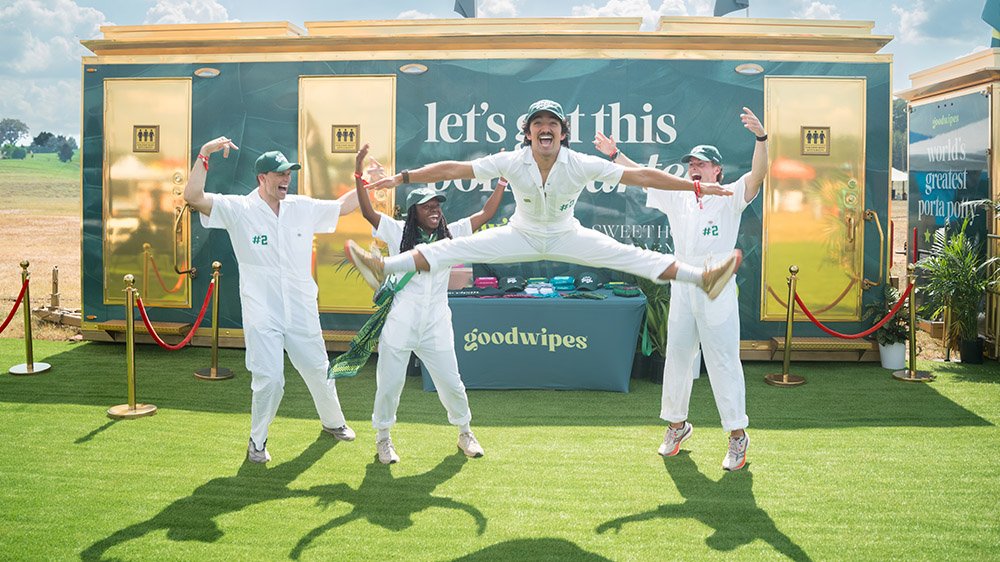
In 2024, 85% of runners exceeded their distance targets.
In 2025, participants collectively logged 13,558 miles.
Itzler’s founding thesis was direct,“I was bored of the same cookie-cutter running races and generic retreats. I wanted to build something that breaks every rule.”
| 800 Attendees in 2023 | 1,000+ Attendees in 2024 | 1,500+ Attendees in 2025 | 13,558 miles logged in 2025 |
Brands Showing Up are the Ones to Watch
From reports we read and Instagram videos we saw, if you walked the Coachella grounds this weekend, the wellness infrastructure is visible and here to stay.
The brands assembling this footprint aren’t fringe wellness players but instead sharks circling for blood with serious distribution, serious revenue, and a very clear read on where the consumer is going.
Plunge hit $100 million in revenue in 2024 largely on the strength of the same audience now booking cold plunge sessions between festival sets.
Hyperice has built a business around recovery as a performance category.
Electrolit’s Campground 5K draws from the same logic as every run club that has exploded in American cities over the past three years. Use movement as social ritual, without the morning after hangover. And if you are hungover, we’re there too.
And Neutrogena turning SPF into a festival utility for the third straight year is a masterclass in meeting the consumer in the context that matters to them.
For the endurance and performance community, this cultural moment is both a validation and an opportunity.
The behaviors athletes and coaches like me have always treated as serious, like hydration strategy, recovery, sleep, and fueling; are now mainstream festival content. Which is a good thing to feeling good.
Why This Matters
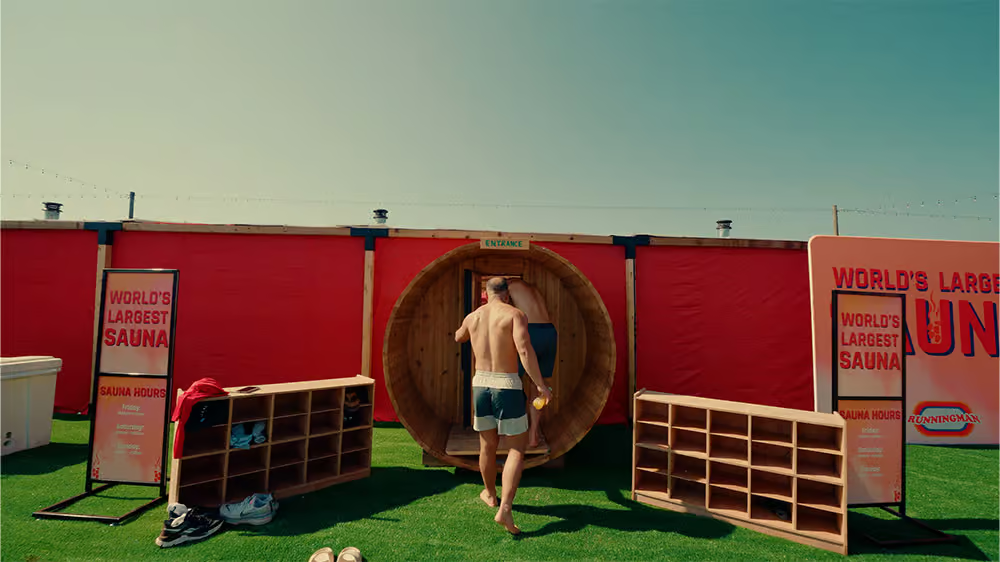
What’s shifting isn’t just what people consume at events, it’s how they measure a good weekend.
The metric is no longer whether you arrived for the first set and stayed until the last while having 17 cocktails. People want to experience more and be present, especially when the cost to attend is so high.
And even if 1/10th of the 125,000 people at Coachella joined in, that’s something real.
Leave a Reply
You must be logged in to post a comment.