

Most athletes obsess over a lot of things; Strava, mileage, paces, FTP, macros, and recovery to name a few.
But if we are being honest, the real edge any athlete should obsess over is sleep.
The most finely tuned athletes are getting the best sleep.
I’m not talking “eight hour” sleep, or WhAT iS yOUr SlEEp ScORe, dUde!
I’m talking that super damn deep sleep where your entire nervous system settles, your muscles repair, your brain consolidates what you did that day, and you wake up actually feeling like you recovered inside of some time machine that brought you back to the womb.
And that is exactly what Muse wants you to feel.
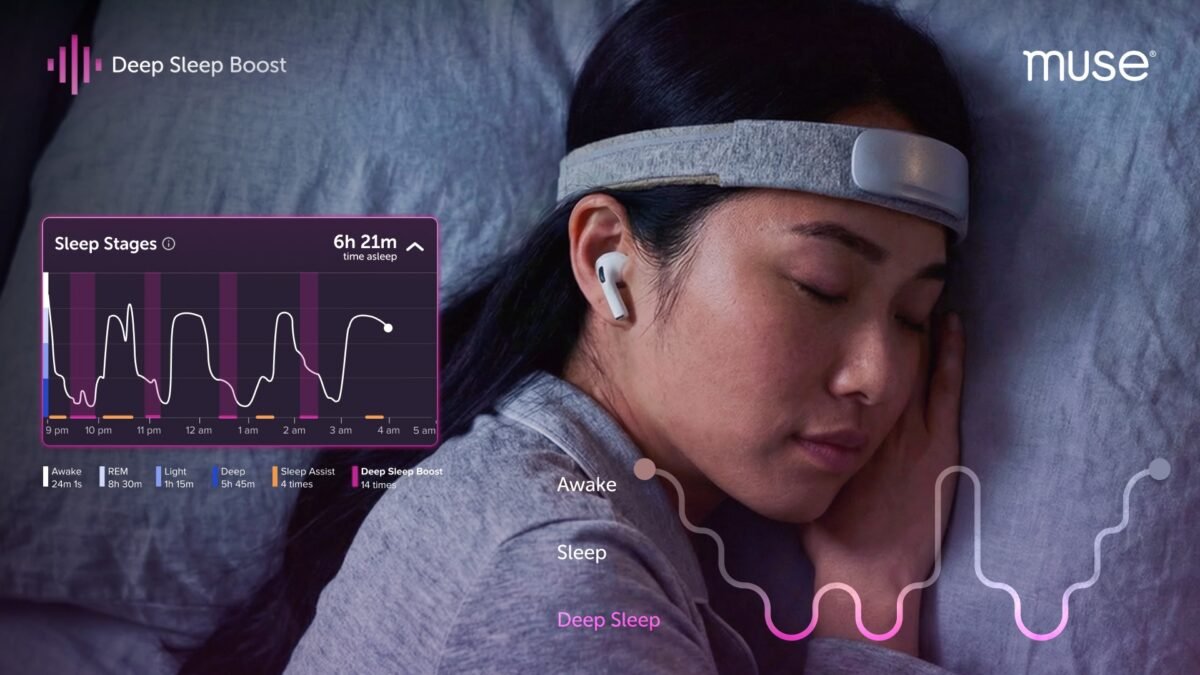
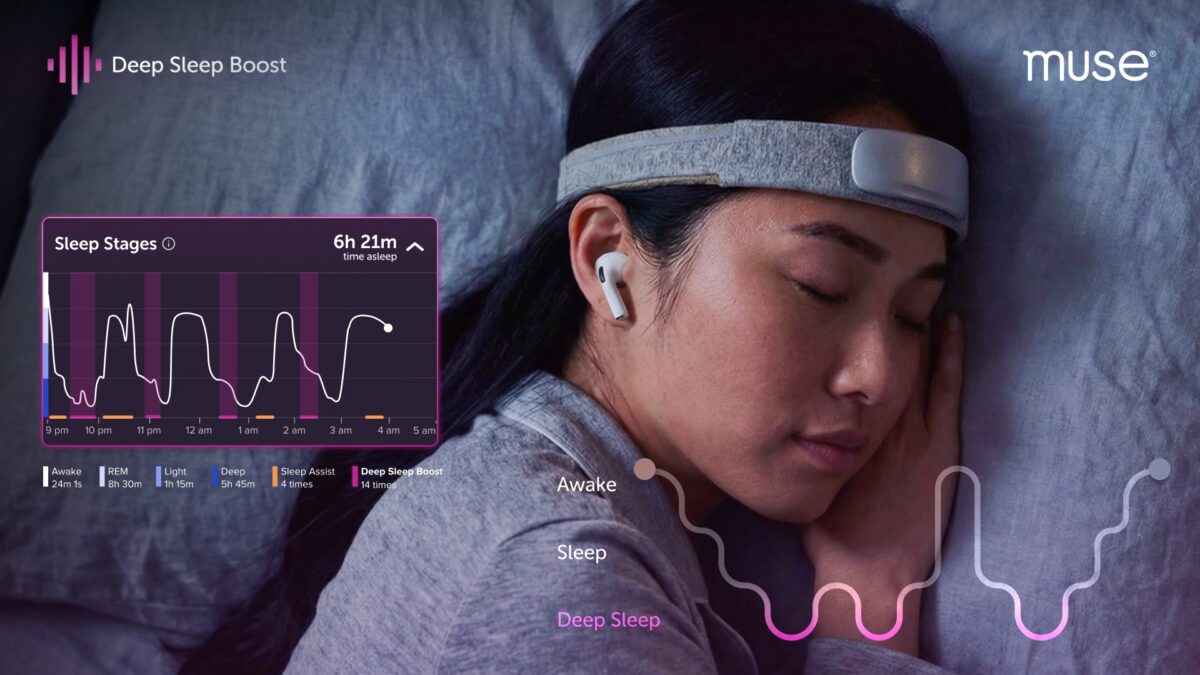
They just announced something interesting called the Deep Sleep Boost, a feature built into the Muse S Athena headband that doesn’t just track your sleep — it actively tries to improve the structure of your deepest sleep stage in real time.
This Isn’t More Tracking
We’ve been tracking sleep for years. My WHOOP, Garmin, Coros and Amazfit all do it. You wake up, you get a number, and you’re either “green” or “yellow” or questioning your life choices and that late night pizza.
Muse is stepping into a different lane.
Instead of telling you how you slept, Deep Sleep Boost uses real-time EEG monitoring to detect when you enter slow-wave sleep; the dankest and deepest and most restorative stage and delivers precisely timed pink-noise acoustic stimulation to reinforce it.
In plain English: it listens to your brain waves and gently nudges them to stay in that deep, slow rhythm longer.
They don’t want more minutes in bed, it’s about strengthening the architecture of deep sleep itself.
Why Slow-Wave Sleep Is the Real Prize
When it comes to sleep, slow-wave is where physical recovery accelerates. and where growth hormone peaks. It’s where your body handles the damage from that tempo run, heavy lift, or five-hour ride. It’s also tied to memory consolidation and long-term brain health.
Muse says: In a pilot study involving people with Alzheimer’s disease, nightly acoustic stimulation was associated with an approximately 60% increase in time spent in deep, slow-wave sleep. In one Controlled research trial, phase-locked sound cues increased slow-wave activity by nearly 50% and improved overnight memory retention by about 20%.
For me and you, that distinction is huge because we aren’t getting the full story with our smartwatches.
Fragmented deep sleep doesn’t restore you the same way sustained, organized slow-wave sleep does. If this tech truly reinforces that structure, it’s less about optimization and more about resilience.
What It Actually Does
So we asked, and Muse said that the Muse S Athena continuously monitors your brain activity overnight and when it detects slow-wave sleep, Deep Sleep Boost delivers whisper-quiet, EEG-timed sound pulses aligned to your brain’s slow oscillations.
Freaky!
If there’s any sign of disruption, stimulation pauses automatically. You can also customize intensity and timing preferences. It integrates into a broader toolkit that includes falling asleep faster (Sleep Assist), an EEG-informed Smart Alarm rolling out next year, and an AI sleep coach that explains your patterns over time.
It’s not passive but instead active and that’s the shift.
The Bigger Question
I’d imagine none of us want to Black Mirror this thing and get addicted to a device. So are we enhancing sleep or outsourcing it to Muse?
My thoughts are we’ve already accepted recovery boots, cold plunges, magnesium, CBD gummies, and melatonin. None of those feel controversial anymore. They’re tools. We use them to create conditions our bodies should be able to access naturally but often can’t in a stressed, caffeinated, blue-light world.
And with due time, is this any different? Do we hold sleep so sacred that we can’t also use a tool?
Deep Sleep Boost doesn’t sedate you. It doesn’t chemically alter you. It listens and responds. It supports a natural brain rhythm that already exists. In theory, it’s closer to guided breathing than to medication.
But it does raise a philosophical tension: if technology becomes the way we access deeper sleep, do we become dependent on it? Or are we simply using smarter tools in a world that makes good sleep harder to come by?
As working athletes, bread winners, and family wo/men who are also stacking serious volume or balancing life, work, and training, sleep quality is often the first thing to slip. If I’m stressed, I sleep like crap and it shows in my irritability and quick to snap attitude.
If a wearable can strengthen the most restorative stage of sleep without side effects, that feels meaningful.
Where This Fits
Muse isn’t new to EEG-based sleep tracking. What’s new is moving beyond observation and into intervention and bringing it all into the customers home.
We’ve yet to test but this feels like a different category entirely. It’s an actual attempt to make the deepest part of your night more effective.
Is this cool, absolutely. Will deep sleep become the next frontier in performance… or just another layer of tech in a world that already tracks everything and you have to wear another device on bed? Time will tell but sleep just became a little more interesting.
Leave a Reply
You must be logged in to post a comment.