

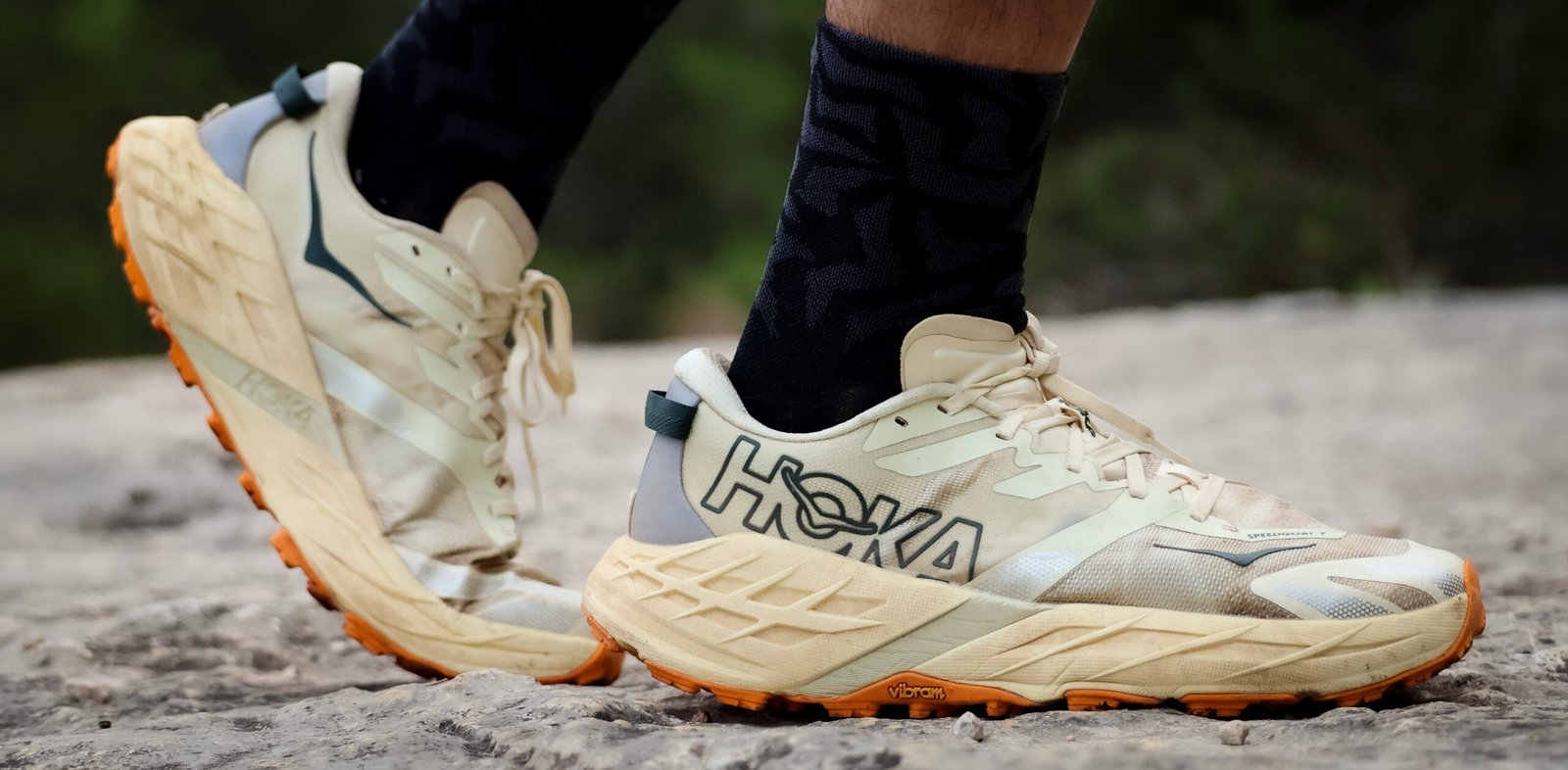
More often than not, reviewing shoes happen within a 20-mile radius of where you live.
Ultimately, you never truly get an understanding of how well they really perform.
The HOKA Speedgoat line has been front and center for quite some time, so in advance of our upcoming Spring Break trip that would take us 1,250 miles away and back, I wanted to jump into the 7s to best understand what the hype was all about.
I’m less interested in “How good is this shoe?” and more interested in “Can this shoe handle whatever I throw at it?”
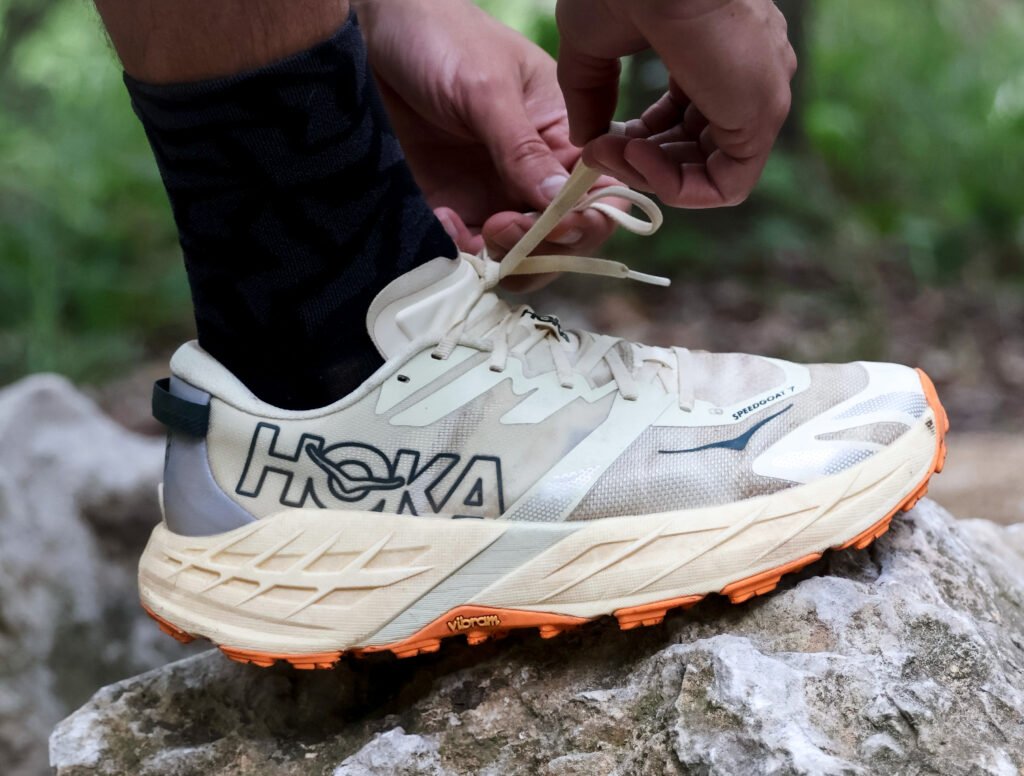
The HOKA Speedgoat 7 is the latest version of one of trail running’s most recognizable shoes, and after putting 100+ miles into them across four states, I get why people love these shoes.
I’ve spent weeks taking these shoes out on the dry, punchy, loose limestone trails in Texas. Then rocky and compact rolling trails in Arkansas. Some slicker, rootier, more humid stuff in Tennessee. And finally snow and altitude in North Carolina.
Just about every different surface, with different grip demands, all crushing my body dealing with varying degrees of fatigue.
Not just the kind of variety you’ll see in a single race but the kind any trail runner runs into over the course of an entire season.
I wanted to see where the Speedgoat 7 shines and where it lost me.
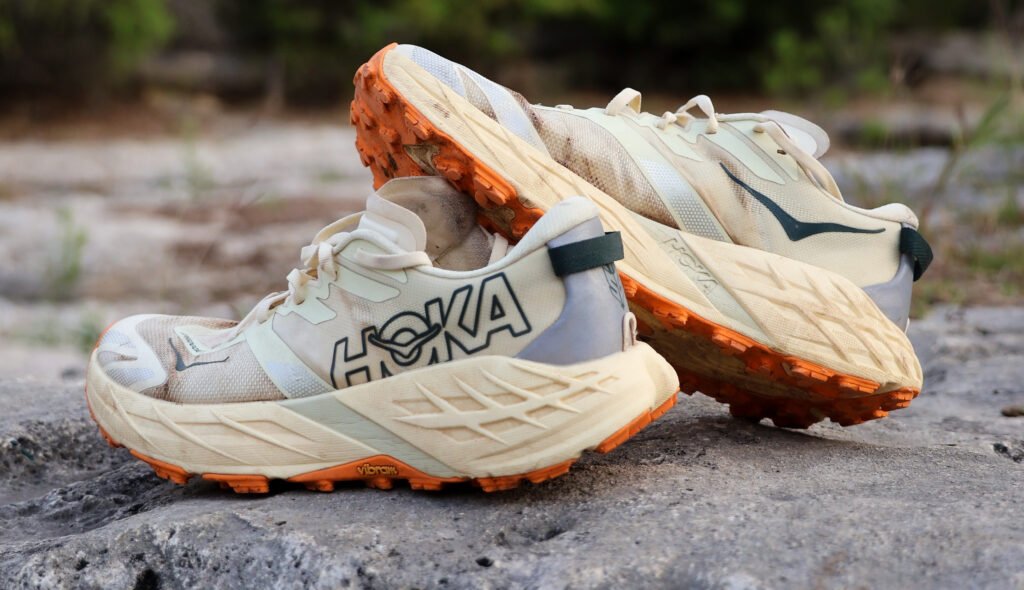
HOKA’s official updates to the seventh version are pretty straightforward: they have a new supercritical foam (SCF) midsole for more energy return, a redesigned traction lug pattern on the Vibram Megagrip outsole, a refined heel collar with more padding, a reworked split heel bevel for smoother transitions on descents, and added gaiter integration.
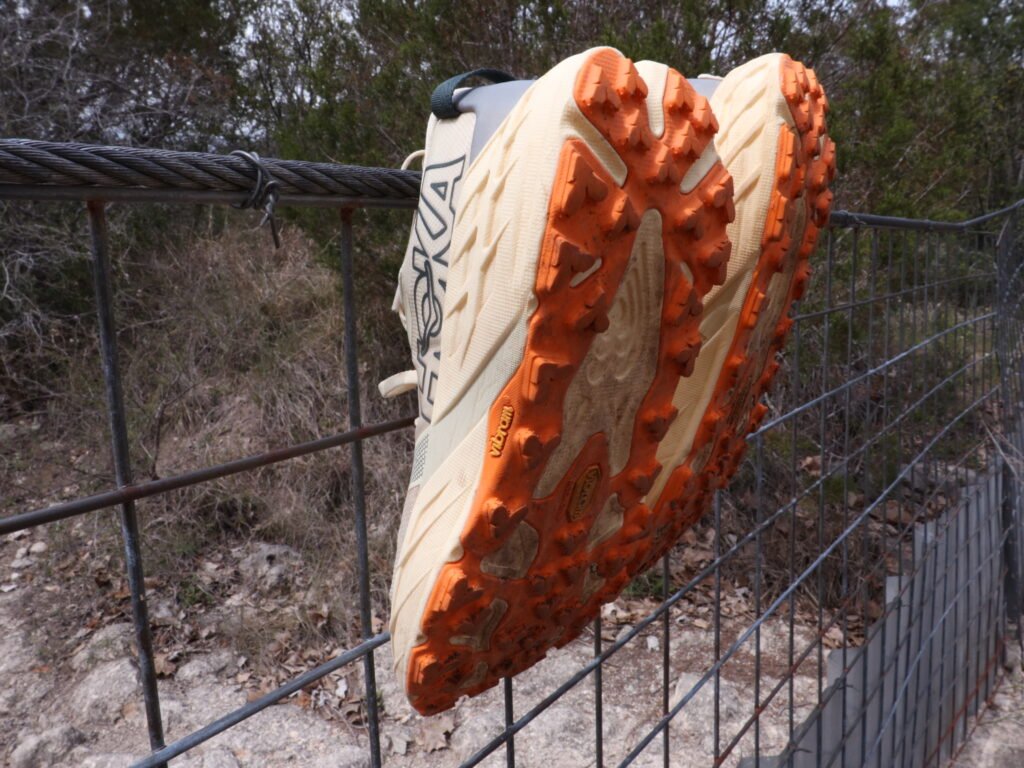
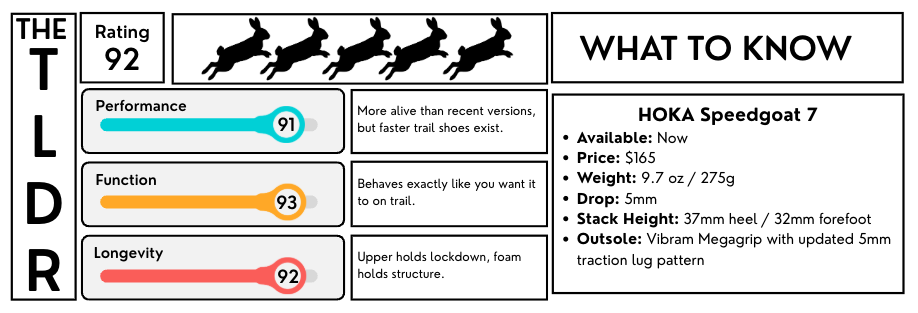
Official specs put it at 9.7 oz / 275g with a 5mm drop, 37mm stack height in the heel, and a $165 price tag.
That all sounds nice on paper. But on the trails, what it means is this: the Speedgoat 7 feels like the shoe you pull on when you want to go out and not think too much.
And that’s a compliment.
🔥 Here’s What Works
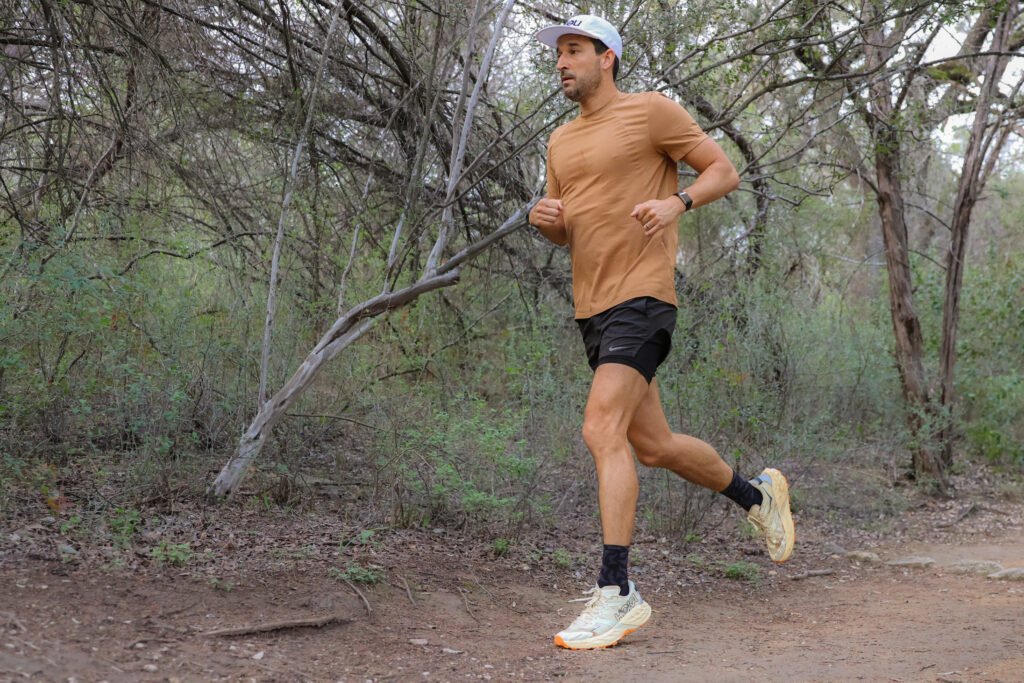
Performance: The biggest compliment I can give the Speedgoat 7 is that it feels more alive than some recent versions without losing the confidence that made the line famous in the first place. HOKA says the new SCF midsole improves responsiveness, and that’s exactly what you feel on trail: it has more snap, and more willingness to move side-to-side.
It’s not a carbon-plated trail rocket, and that’s not the point. The point is that it handles pace changes, climbs, and long descents really well without feeling like you’re dragging a mattress through the woods. The midfoot delivers in a way that you never worry about an ankle rolling as you’re transitioning your way across rocks, and roots..
What stood out more than the initial feel was how the foam held up over time. The SG6 midsole wore out too quickly. It was great out of the box, then dead by mile 40. The SG7 though has held its shape after nearly 100 miles. In Arkansas, I was flying happily 15 miles in and while my quads were crushed in North Carolina, my feet said, “Go On.” That’s not a small thing.
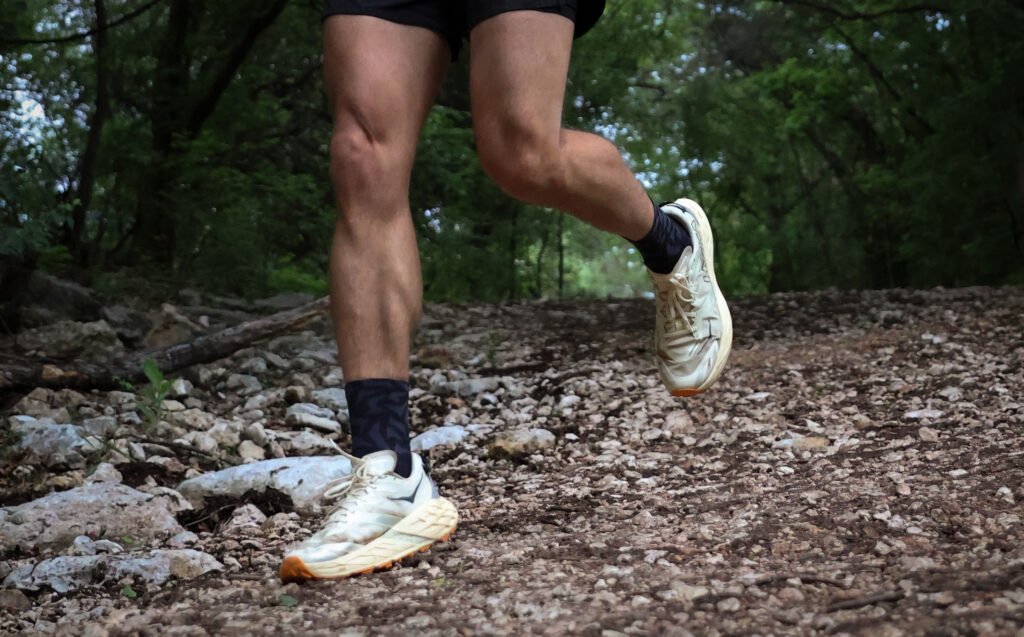
Traction: The Speedgoat line has a long history of being able to handle real trail conditions, and the 7 stays true to that. Regardless of whether I was in Texas, Arkansas, Nashville, or Asheville, this is a shoe for technical terrain that inspires confidence across anything thrown at it. HOKA updated the lug pattern here and the Vibram Megagrip, still 5mm lugs, combined with small traction dots around the outside of each lug adds nice surface area contact. In practice that showed up in how it handled terrain transitions across the four-state test. There was no point where I felt under-shoed. Even when I was sliding down loose limestone, my feet never slipped, even if my body was being thrown forward.
Function: This shoe just works. That sounds simple, but it’s not. Trail shoes can get quirky quickly. They’re too stiff, too narrow in the wrong place, too sloppy on descents, or too soft to push pace. The Speedgoat 7 isn’t trying to reinvent trail running, it’s functional. It is trying to make sure you can keep moving and across a 100-mile test in multiple states, that’s exactly what it did.
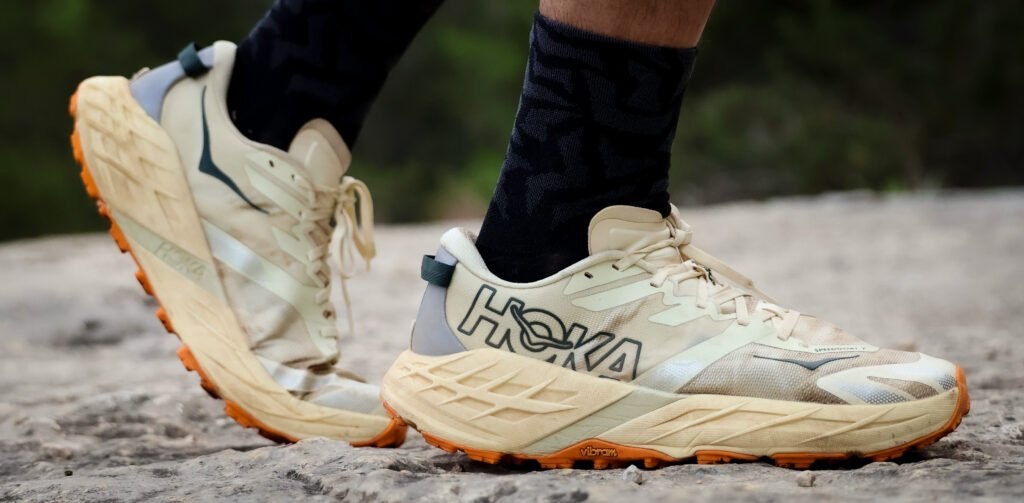
The Locked Down Upper Returns: The Speedgoat 6 wasnt beloved. I had this looser, stretchier mesh upper that wouldn’t hold its lockdown over time. We hated it. But HOKA fixed it, yay! The 7 uses a non-stretch woven nylon that stays exactly where it started: locked down
The tongue got an upgrade too. It certainly feels longer and I’d guess that is to keep debris out. It’s also slightly padded at the lace line too so you’re not feeling the knot on your foot all day. It’s a functional shoe that finally feels like it was thought out through and through.
A Better Ride Than the 6: Something always felt off with the Speedgoat 6. It’s almost as if HOKA took a big swing to do something different and deviated too far from what I liked most about the shoe. But the 7 feels like a return to the line’s sweet spot, making it worthy of the name again.
The foam is a big part of it. But so is the reworked heel bevel — HOKA deepened the split at the back of the shoe, which creates a smoother, more natural heel-to-midfoot transition. You feel it most on descents. Less jarring, more fluid, easier to maintain pace when the terrain is working against you.
🤢 Here’s What Sucks
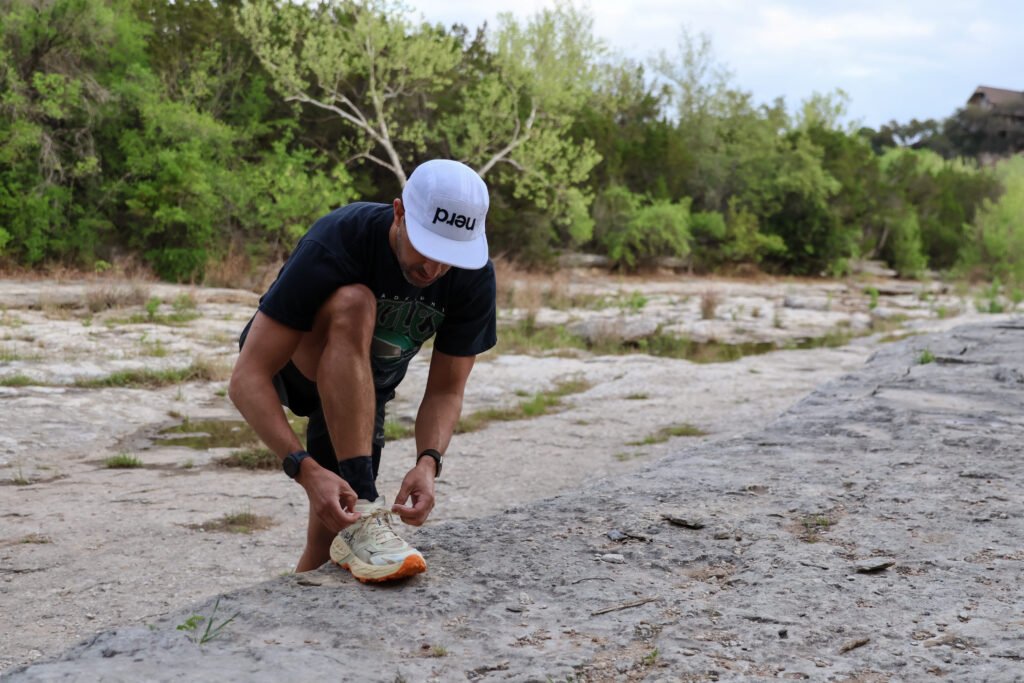
The Toe Box Still Isn’t for Everybody: For as much as we like the fit of the Speedgoat 7, if there’s one thing that still needs to be said: the fit isn’t universally forgiving. It’s been a while since we ran in a HOKA shoe but like some PTSD, we were immediately reminded that the toe box is a bit narrow. Yet we pushed on.
For some runners, that locked-down fit is exactly why the shoe feels so confident on technical terrain but for me, I like more toe splay and movement. A wide version is available so if you’re on the fence, don’t hesitate to go that route. And size up half a size, especially if you’re spending time on aggressive descents where feet swell and slide forward.
‘Feeling the Trail’ is Tough: This is the trade-off the cushion asks you to make and it’s worth saying plainly. With 37mm of stack height, you’re riding over the trail and not exactly feeling it. You’re not just floating on clouds but roots, rocks, and texture under your feet feel smoothed out. Most runners adapt fast and come to love the protection, especially over long days but I personally like feeling what’s under me. Not in a dangerous way but if you’re coming from a lower-stack shoe, the first few miles in the Speedgoat will feel disconnected; almost like the trail isn’t giving you information anymore. That’s by design but once you give yourself over to the Matrix and trust it, it’s genuinely fun. But there’s an adjustment period, one we never quite got over.
It’s Not a Super Shoe: This one isn’t really a criticism, but it’s worth being honest about. If you’re looking for a spicy, plated, “I need to PR this mountain” kind of ride, this isn’t that shoe. The Speedgoat 7 is fun, but it’s fun in a practical, workhorse way. We haven’t found the speed here that we found in the $260 On Cloudultra Pro. During a 2 mile stretch of power lines, we hit a clearing and would have loved to pick it up, but the lack of energy return was noticeable. It’s a shoe I’m grabbing because I trust it over every kind of terrain; but never the shoe I’m crushing PRs in.
Hot Days Will Frustrate You: It’s only April here in Texas and I found my feet getting really hot in the 7’s; and we’re not even in the days-on-end 90 degrees, yet. The woven nylon upper does a lot of things well. It provides durability, debris resistance, and lockdown, but what it doesn’t do well is breathe. Not a dealbreaker. But if you’re running in warm climates regularly or logging summer miles, your feet will know it.
The Backstory: Why It’s Called the Speedgoat
You can’t really review a Speedgoat without knowing who the Speedgoat is.
The shoe is named after Karl “Speedgoat” Meltzer, the HOKA athlete and ultrarunning legend who became the first U.S. athlete sponsored by the brand. Meltzer is the winningest 100-mile runner of all time with 40 victories. HOKA traces the original Speedgoat back to 2015, when it released a high-stack trail shoe developed with his input for rugged mountain terrain.
But the number most relevant to this particular review isn’t 40. It’s 2,189, the miles of the Appalachian Trail, which Meltzer ran in a record-setting FKT.
The man the shoe is named after ran the entire East Coast.
LOL. Our test covered small portions of four states.
Like the Air Jordan, the Speedgoat is a trusted shoe because the person whose name is on it would be the first to take the hit if it wasn’t. Meltzer has never relied on trendy trail aesthetics and the line has been built around moving long and fast over nasty terrain, because that’s all he’s ever done.
My Experience
This wasn’t a “local loop” test. This review started in Texas but expanded unexpectedly when I knew we’d be on the road for more than a week.
The Speedgoat 7 came with me across four states — Texas, Arkansas, Tennessee, and North Carolina — and that ended up being the best way to understand what this shoe actually is. Because no one runs the same terrain every day. And no race looks the same either.
Texas
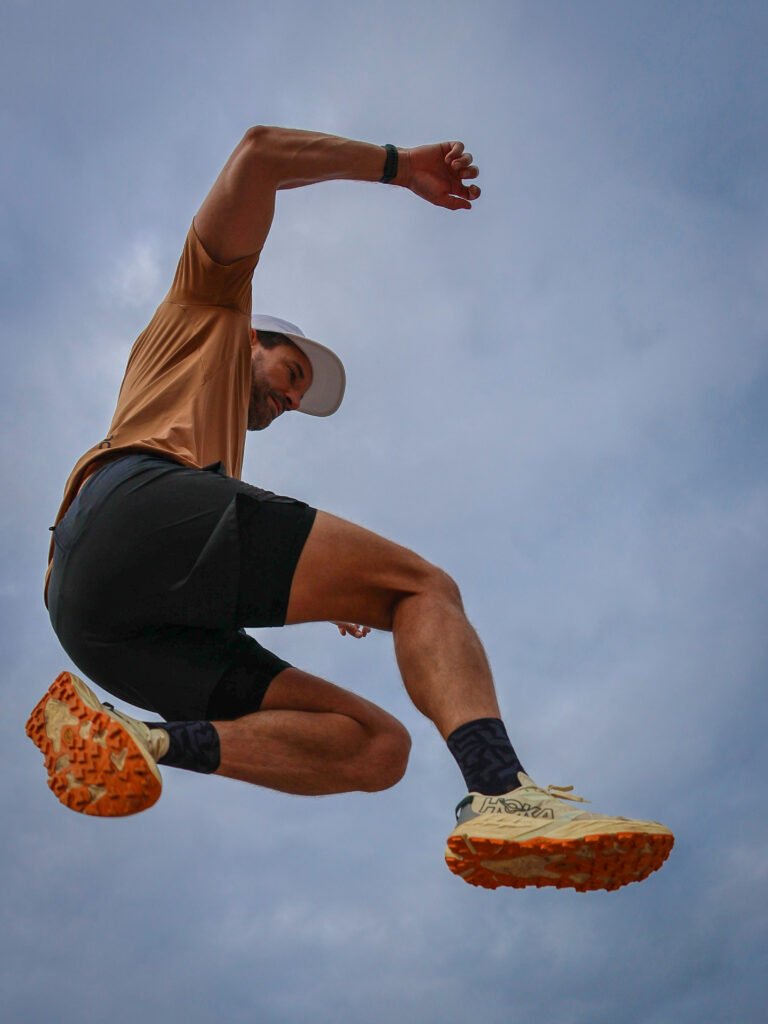
In Texas, the trails are hard, sharp, and unforgiving, filled with limestone, hardpack, and edges that punish ankles. It’s a place where overly soft shoes feel unstable and overly firm shoes destroy your quads. The Speedgoat 7 found a really nice middle ground.
The updated supercritical foam felt protective but still responsive; exactly what I want on hard terrain. Not marshmallow soft and not dead. Enough snap to keep things moving while taking the sting out of the rock. It made my backyard runnable at pace.
The one thing Texas exposed: it’s warm, and the upper will remind you of that. The lockdown and durability are excellent. The airflow is not. For winter or fall running, a non-issue. For anything above 75°F, your feet will accumulate heat faster than you’d prefer.
Arkansas and Nashville
More singletrack, tighter turns, uneven footing, constant ankle-testing terrain. This is where trail shoes separate quickly. You need stability, but you also need enough feel to react.
This is also where the stack height asks you to make a choice. For the first handful of miles I felt the disconnect — 37mm between you and the ground means the trail isn’t talking to your feet anymore. You’re reading it visually, not through sensation. It takes some miles before you stop looking for that feedback and start trusting the platform instead.
Once I did, the Speedgoat 7 really earned its reputation. The upper lockdown and midfoot hold are excellent, and the shoe stays planted even when things get unpredictable. The Vibram outsole gave a ton of confidence — loose dirt, packed trail, the sketchy sections that made me second-guess my next step. I never felt like I was fighting the shoe.
But the toe box is still on the narrower side, and on longer descents I could feel that pressure building — especially when terrain forced more aggressive foot placement. Secure. But not for everyone.
North Carolina
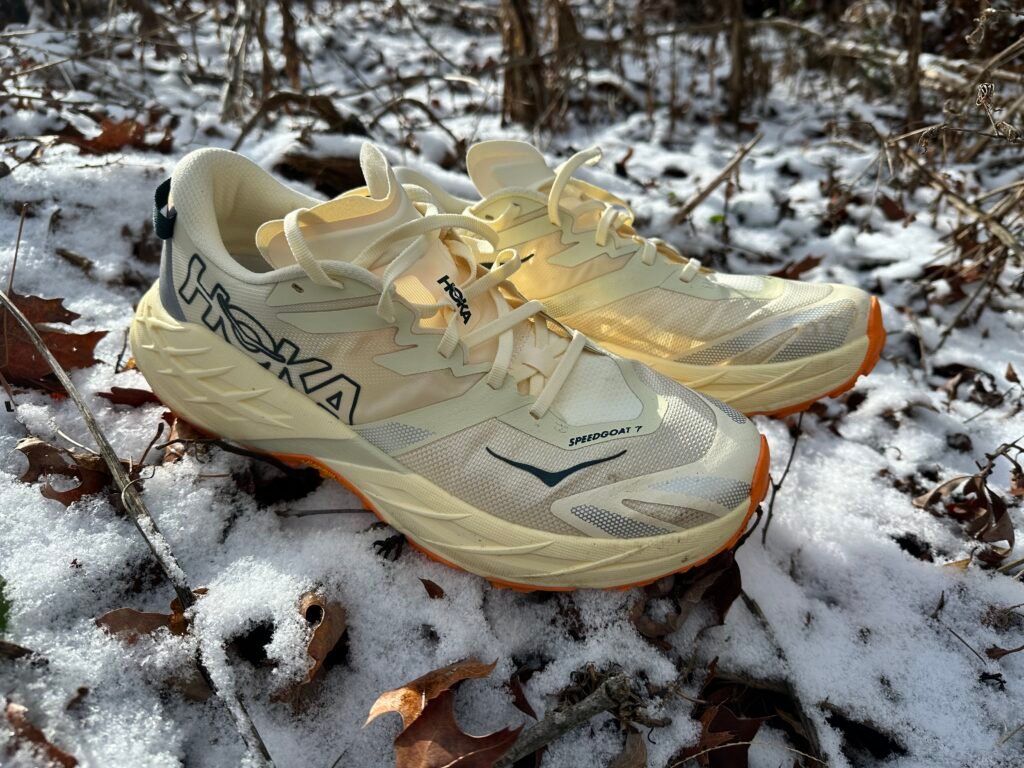
By the time I got to Asheville, the test changed again. Less about technical footwork, more about fighting my own form and focus through fatigue, serious elevation changes, and sustained effort in 20-degree weather with snow on the ground.
This is where the reworked heel bevel showed up most. The smoother heel-to-midfoot transition that HOKA built into the SG7 geometry is easy to miss on flat trail. On long mountain descents when your quads are toast and your form is starting to break down, that geometric smoothness is the difference between a shoe that compounds your fatigue and one that absorbs it. The Speedgoat absorbed it.
The Vibram Megagrip outsole held in snow and ice without a moment of hesitation. I never had to second-guess my footing, just “enjoyed” the run. And the midsole, even deep into long days, hadn’t packed out. There was still structure there. Still enough left in the foam to protect my feet when I needed it most.
What to Know
Available: Now
Price: $165
Weight: 9.7 oz / 275g
Drop: 5mm
Stack Height: 37mm heel / 32mm forefoot
Outsole: Vibram Megagrip with updated 5mm traction lug pattern
Verdict
The HOKA Speedgoat 7 is one of those rare shoes that makes a lot of sense.
Not because it’s flashy and not because it’s radically new. But because it feels built for what real trail runners actually do: run a lot of different terrain, in a lot of different places, without wanting to overthink their footwear every time they open the closet.
The Speedgoat line became a cult favorite for a reason and Version 7 reminds you why.
Should You Buy?
If you want a trail shoe that can handle almost anything, the answer is yes.
If you like a secure fit, solid traction, enough cushion for long miles, and a ride that holds its energy at mile 80 instead of dying at mile 40 like its predecessor, the Speedgoat 7 is an easy recommendation.
If you need a very roomy forefoot, run hot in warm climates, want aggressive race-day feel, or genuinely need to feel the trail underfoot to run well, you may want to look elsewhere.
But for the vast majority of trail runners who want one versatile, confidence-building shoe they can pack for a trip and trust almost anywhere: this thing earns its keep.
Just remember to size up half a size. We said it three times because it matters.
Disclaimer: All opinions are my own and written by me, a human. HOKA did send us these for testing and if these were a game-changer, we’d say so. If they sucked ass, we’d say so.
Leave a Reply
You must be logged in to post a comment.