

How a Once-Niche Sport Became Endurance Sports’ Hottest Market
This is the Front Pack Newsletter, your weekly source for all things endurance and business. We feed you the most important things happening in the world of health & wellness, cycling, triathlon, and running. Feel free to reach me here.
JOIN THE FRONT PACK APP to stay motivated, meet athletes near you, coordinate workouts, and highlight your journey to greatness.
There was a time when ultrarunning existed in the margins.
If you told someone you were running 100 miles, they’d look at you sideways much like people used to around Ironman.
Races were grassroots, counting laps involved rubber bands, and finish lines were folding tables in the woods.
Results, if it they existed at all, came via a very crappy Geocities website.
But fast-forward to 2025, and the sport feels entirely different.
Ultrarunning hasn’t just grown. It’s boomed!
According to UltraRunning Magazine, total ultramarathon finishes jumped from 102,191 in 2021 to 146,080 in 2024 — a staggering 43% increase in just three years.
Over the same period, the number of races grew by nearly a third, from 2,254 to just shy of 3,000. More events. More athletes. More stories being written every weekend.
But stats only tell part of the story, whats driven the growth is more interesting.
Low Entry Barrier
One of the driving forces behind ultrarunning’s rise is how inclusive it is. Unlike sports that require expensive equipment, high-end facilities, or even long-distance travel, ultrarunning strips the sport down to its simplest form: you, a pair of shoes, minimal gear that can fit into a carry on, and the trail.
Additionally, entry fees are not so exorbitant you need Affirm to help pay for it. A grassroots 50K on local trails might cost $50–$75 and include a beer and burger after, while marquee events like Western States 100 or UTMB can range from $400–$600. Even the most prestigious events, when compared to the cost of a single Ironman, are relatively accessible.
And perhaps the most important barrier broken isn’t financial — it’s cultural. Walk into an ultramarathon start line and you’ll find first-timers lining up alongside elite professionals. Most times, there are no qualification standards, and no performance thresholds to meet. If you’re willing to sign up, toe the line, and put in the work, you belong.
The 50K Boom
Not long ago, ultrarunning conjured images of 100-mile mountain slogs or desert crossings like the Marathon des Sables in the Sahara.
In speaking with iRunFar, the 50K is now the sport’s “gateway drug.”
The 50K is your first dose of endurance heroine. It is just a few miles beyond a marathon but enough to get you hooked. It’s short enough to be accessible, and long enough to give you bragging rights.
It’s giving road marathoners a logical next challenge, and trail runners a first taste of something bigger. Instead of leaping straight to 100 miles, athletes can step up in stages: marathon → 50K → 50-miler → 100. That incremental path is inviting thousands of new runners into the fold.
The Trail Running Funnel
The other force at play? Trail running itself is booming.
According to Sports & Fitness Industry Association, the estimates are that 14.8 million Americans took up trail running in 2024, up more than 1.5 million the year before. The pandemic sparked a huge wave of outdoor exploration, and that momentum hasn’t slowed. Trail running has become less of a niche activity and more of a mainstream fitness category.
Ultras live at the top of that funnel. More people on dirt means more people looking for the next test, their next hit.
Live Events Done Right
Perhaps the most surprising twist in ultrarunning’s rise is that people aren’t just running these events — they’re watching them.
It sounds almost absurd to think anyone would want to watch someone run for 30 hours but because of modern coverage and build ups to huge races, that is exactly what people do.
Thanks to YouTube, social media, live streams, drones, and cameras on gimbals, Western States now streams wire-to-wire coverage of the 100-mile race through the Sierra Nevada. UTMB in France in itself has become a global media product, with professional commentary, drone shots, and live tracking from Chamonix. Cocodona — a 250-mile Arizona sufferfest — streams live for days on YouTube, with thousands of fans tuning in at all hours of the day to watch.
Elite runners like Courtney Dauwalter, David Roche, Sally McRae, and newcomer Hans Troyer have taken advantage and built huge followings and personalities online drawing in the treadmill mutants watching their every step.
As Outside Magazine put it, ultras have become “shockingly watchable.” And in a media ecosystem dominated by short clips and instant gratification, there’s something oddly magnetic about following your favorite athlete, unknowing what human drama will unfold over hundreds of miles.
Big Brands Stamp of Approval
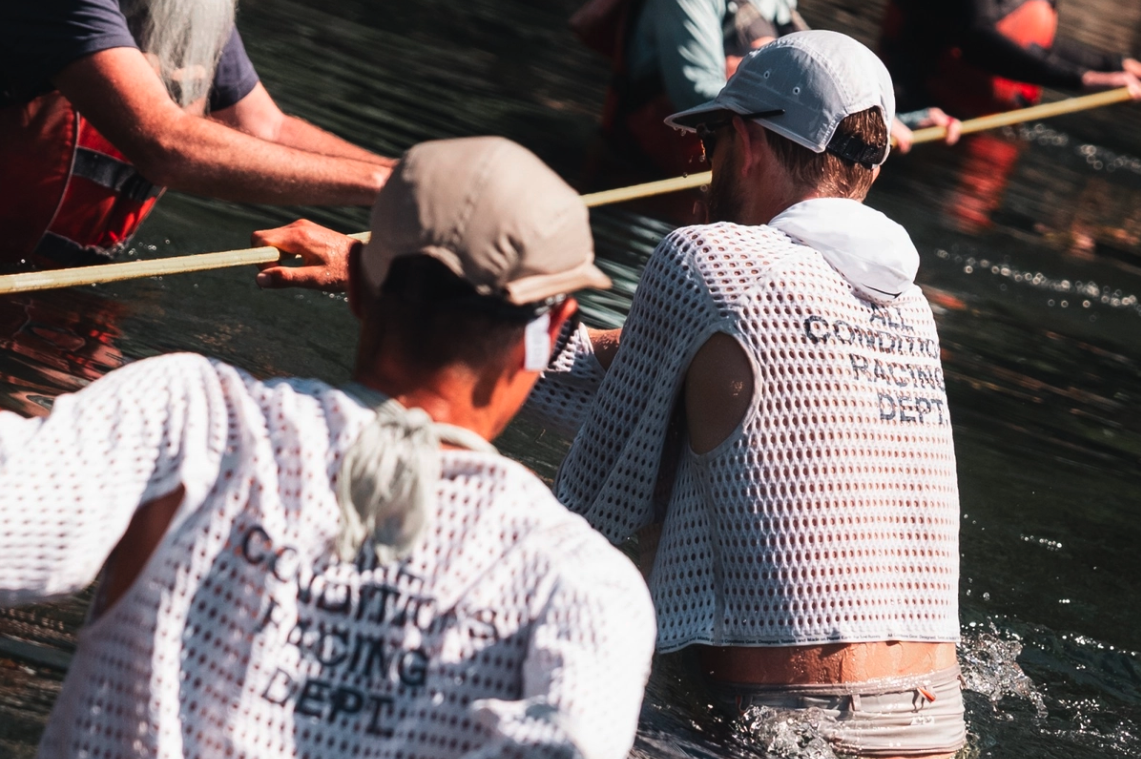
And big brands have taken notice. Nothing confirms a sport’s cultural arrival more than when major players stake their claim. Their presence—whether you love it or hate it—pours gasoline on the fire and accelerates the growth of races and the sport itself.
Hoka has become synonymous with trail and ultra. The brand’s early bet on maximalist cushioning found its truest home in 100-mile races, and today, Hoka sponsors UTMB — the most prestigious series in the sport.
On has made trail a central pillar of its growth strategy in 2025, backing elite athletes, high-profile events, and positioning itself as not just a road shoe brand but a mountain brand with their innovative Cloudultra Pro (we reviewed here) engineered specially for UTMB and to take those descents a little easier.
Nike, long ambivalent about trail, is now all-in. With its Trail division, the company just announced this week an all new line; Radical AirFlow which promises to keep runners cool on race day or during the summer heat.
Even Diadora, better known for soccer boots, has entered the space with a gravel + road hybrid shoe, the Nucleo GR — proof that the sport’s cultural relevance extends far beyond its historic roots.
Corporate sponsorship doesn’t just bring money. It brings visibility, legitimacy, and media amplification. When Hoka plasters “Time to Fly” across UTMB broadcasts, or On’s logos appear on livestream banners, it signals to mainstream audiences that ultrarunning isn’t just a fringe experiment. It’s a real sport with real stakes and real dollars.
Building the Buzz
Lotteries are a great way to build hype, buzz, and anticipation.
The Western States 100 lottery drew more than 9,000 applicants in 2024 and 10,000 in 2025 for fewer than 400 spots. UTMB’s entry process is now a labyrinth of points, qualifying races, and lotteries that mirrors the demand of a World Marathon Major. These aren’t empty start lines anymore, athletes are vying for that Willy Wonka level golden ticket to get in to the main event.
And when those spaces get filled, the true spectacle begins. Not only is it thousands of runners participating but its thousands more that include pacers, crews, families, production and online followings, turn each ultra into a multi- day long festival.
Between the Instagram stories, live GPS tracking, Strava segments, and YouTube streams, a single race can generate millions of impressions.
Repeat that a few times a year and that cycle fuels awareness + growth and FOMO for anyone wanting to dive in.
Why It Matters
The numbers, the livestreams, the brand dollars — they’re all proof that ultrarunning has crossed a threshold. It’s no longer an underground hobby, its huge business.
And like so many things before it, the question is no longer if the sport is growing, but how far will it go while staying true to itself.
On The Podcast
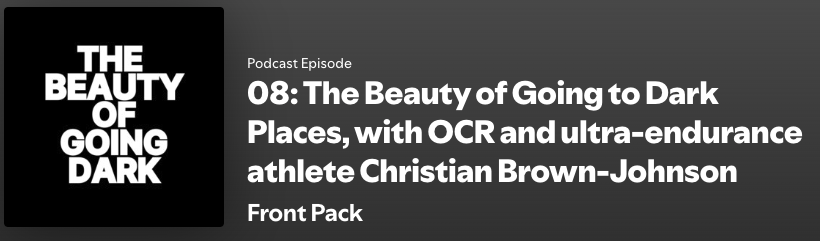
Speaking of ultra endurance racing, revisit our interview with Christian Brown- Johnson who completed the 300 mile Arizona Monster in May. He now has his eyes set on breaking the Guinness World Record for fastest time to run an ultramarathon distance on each continent. We also discuss his approach to life, business, and resilience.
In the News
https://instagram.com/p/DNoQUDiPkFs/
On launches the The Cloudboom Max. We’ve tested it and the new 4:00 – 4:30 Marathon Shoe both hits and misses.
The Pros are that it is well cushioned & supportive without feeling mushy. It is great for heel strikers and provides long-distance comfort and my legs felt surprisingly fresh the next day.
The Cons are that they were stiff out of the box (takes a few runs to break in), heavier than elite “super shoes” (but that’s the tradeoff for stability) and the $230 price tag puts it in the upper echelon of premium tier. I still would recommend them for everyday runners and new marathoners.
Texas Athletics and Humann combine forces to elevate cardiovascular health.
Strava launches B2B offering.
Women’s Sports are becoming big business.
The Color Run is making a comeback.
Precision Fuel & Hydration secures title partnership for the 2025 IRONMAN 70.3 World Championship Marbella.
Nike Radical Air Flow is an all-new breathable apparel line.
Leave a Reply
You must be logged in to post a comment.