

We’ll be honest about where we stood on the Hyperboot. When Nike and Hyperice launched it around the Paris Olympics and brought it to retail in May of 2025, we liked the idea a lot more than we liked wearing it. Heat and dynamic air compression in one boot is a legitimate recovery tool, but strapping into something that looks and feels like a ski boot isn’t exactly something you reach for after every long run. Great tech, clunky execution.
And Nike and Hyperice heard some version of that same feedback from their own athletes, because the follow-up product fixes almost exactly that problem.
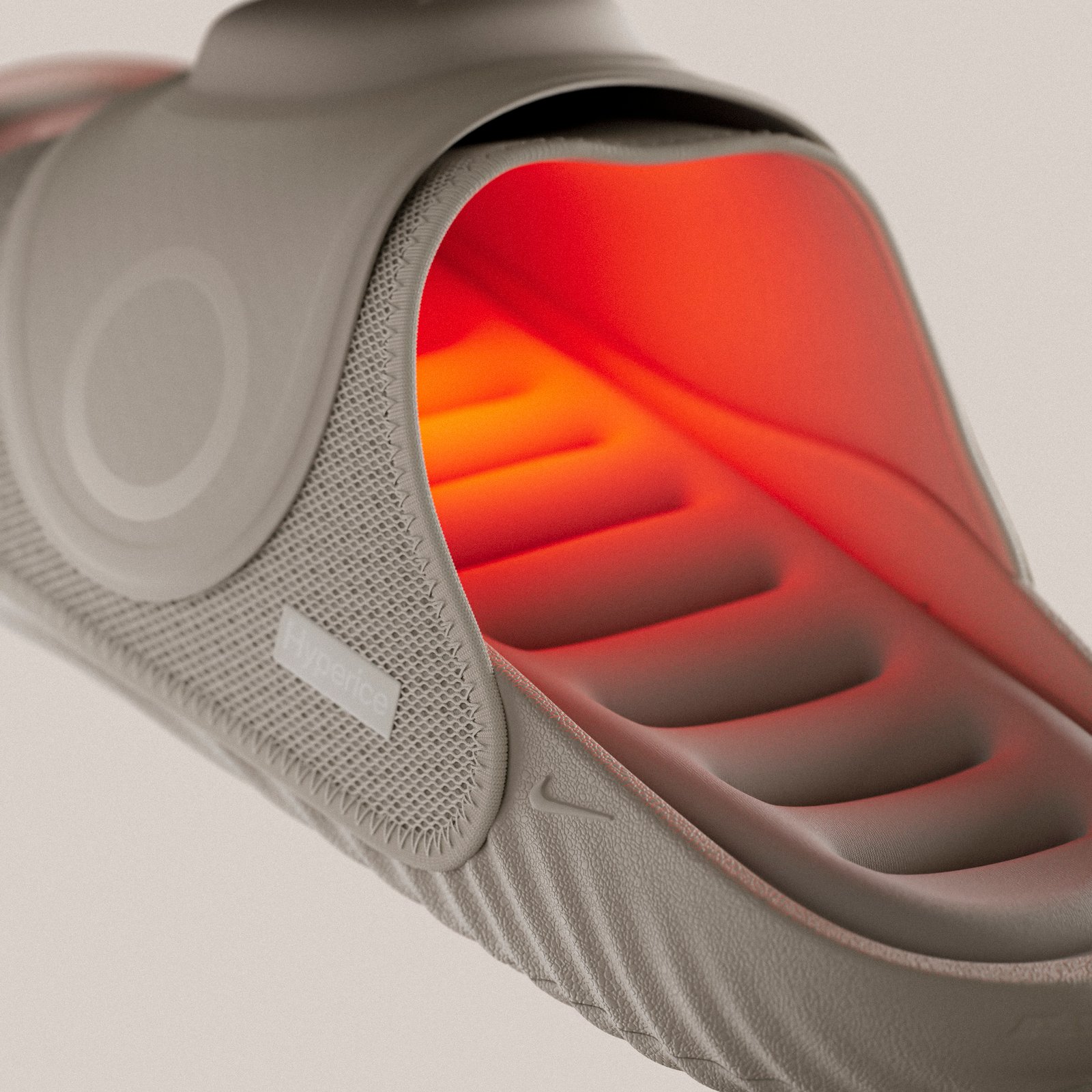
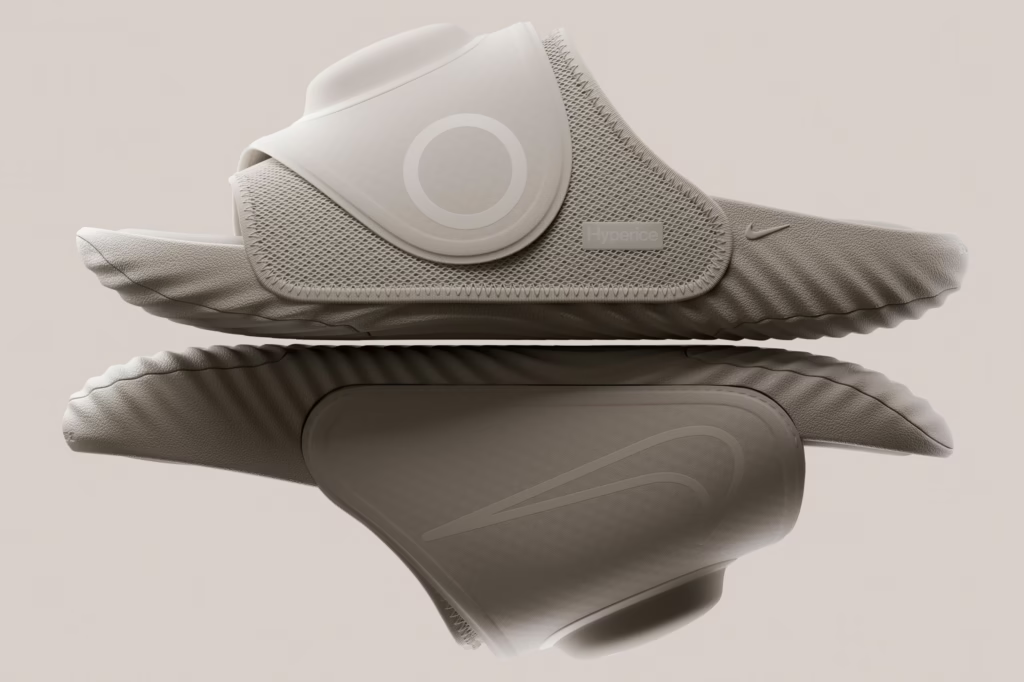
It’s called the Nike Air Zoom Hyperslide, runs $249, and it’s exactly the kind of version 2 of this partnership that takes a lot of lessons learned and builds it into something athletes want. Slides over boots every. single. time. These are actually something you want sitting by the door, and on your feet before or after a long workout.
What the Hyperslide is
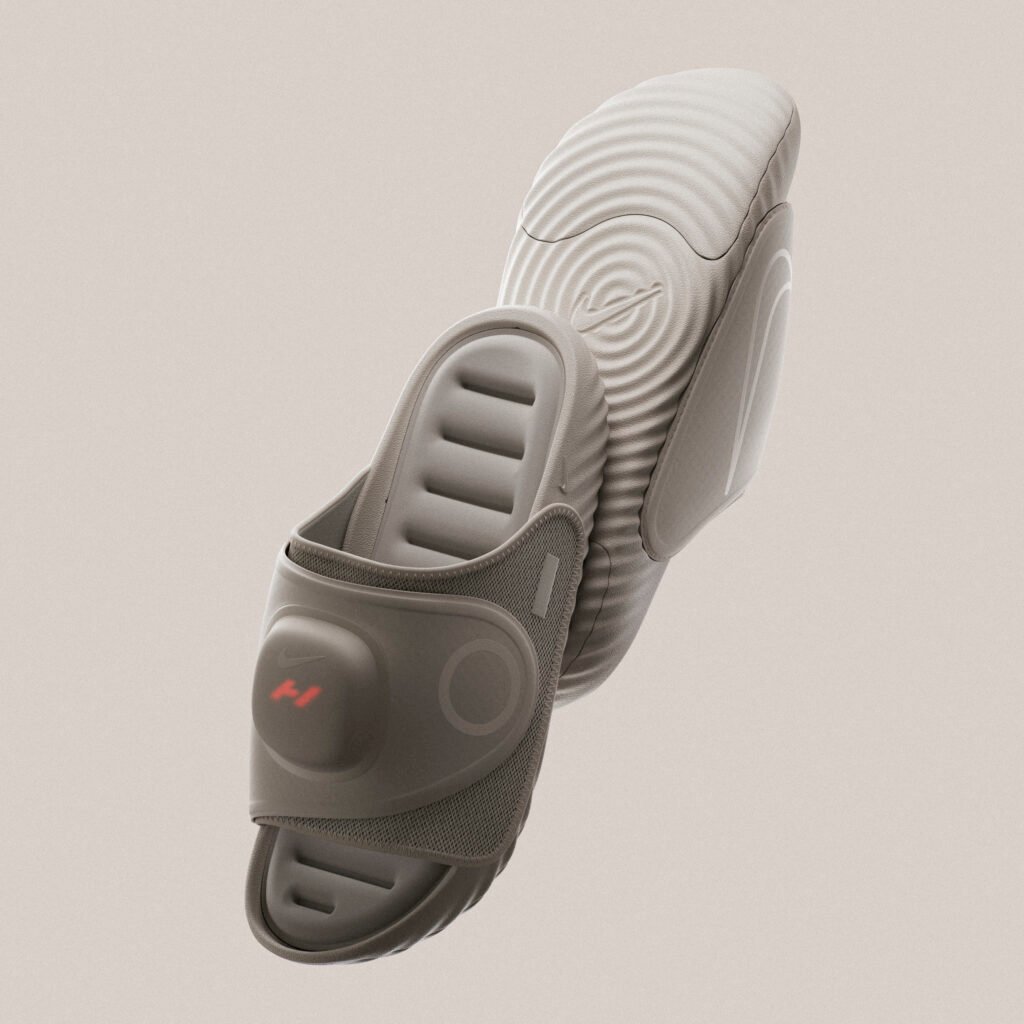
The Hyperslide is a powered recovery slide. Nike’s word for it is “the world’s first” that swaps the Hyperboot’s two modalities (heat, dynamic air compression) for a different pair: heat and vibration. That vibration piece came directly from athlete feedback on other Hyperice products, and it changes what the recovery feels like.
Where the Hyperboot works the circulatory system by pushing heat deep enough to warm the blood and drive a repair response, the Hyperslide is leaning on your central nervous system. It’s built for the “reset” right after you’re done, not the deep-tissue work you’d do later.
Interestingly, under the foot, there’s a 10mm Zoom Air bag, but it’s tuned specifically for this, running around 5 psi, well under the double-digit pressures Nike uses in performance footwear, because it’s sitting directly against your skin instead of buried in a midsole. And a foam topper sits over it for comfort. The air in that bag isn’t just cushioning, either, it’s the medium that carries vibration around and under the foot instead of just hitting one pressure point.
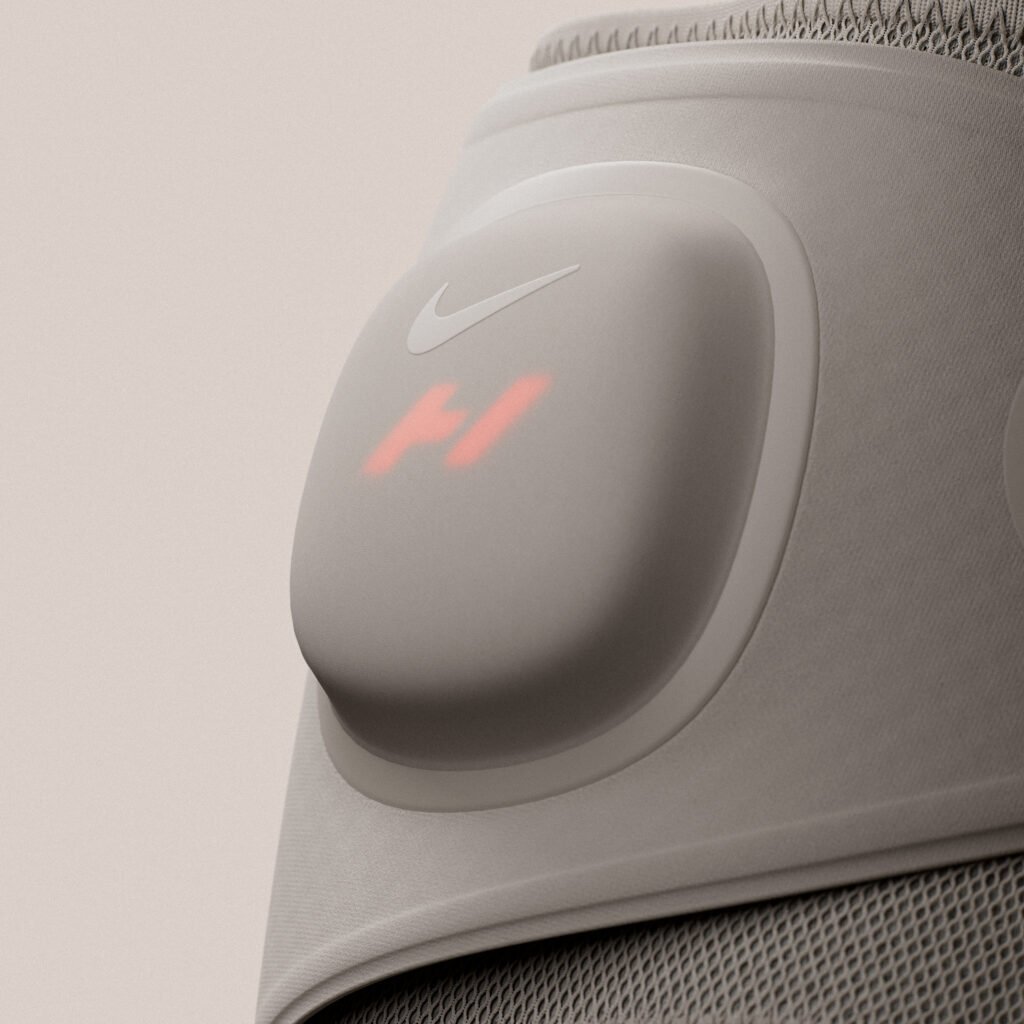
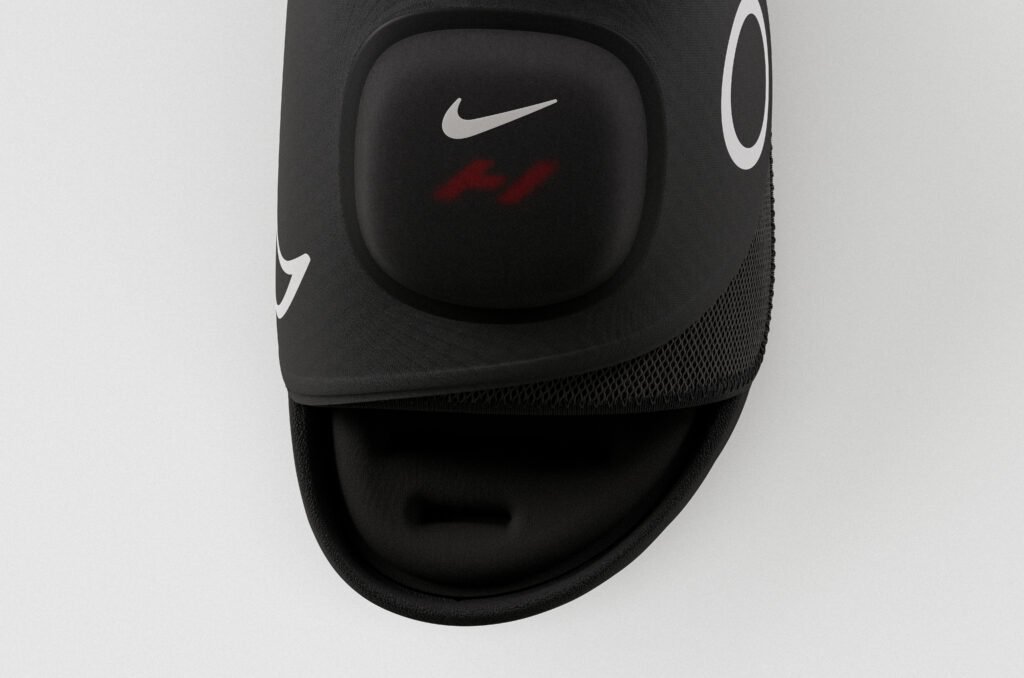
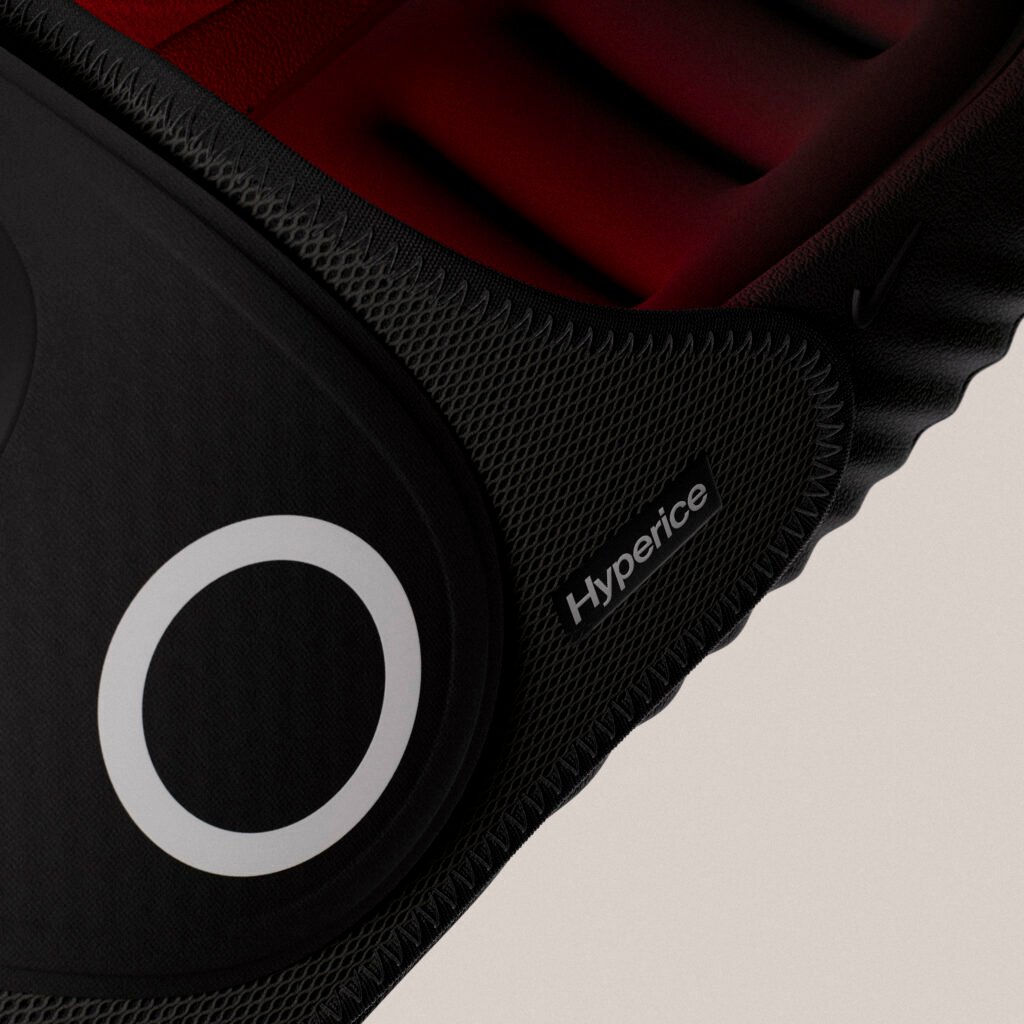
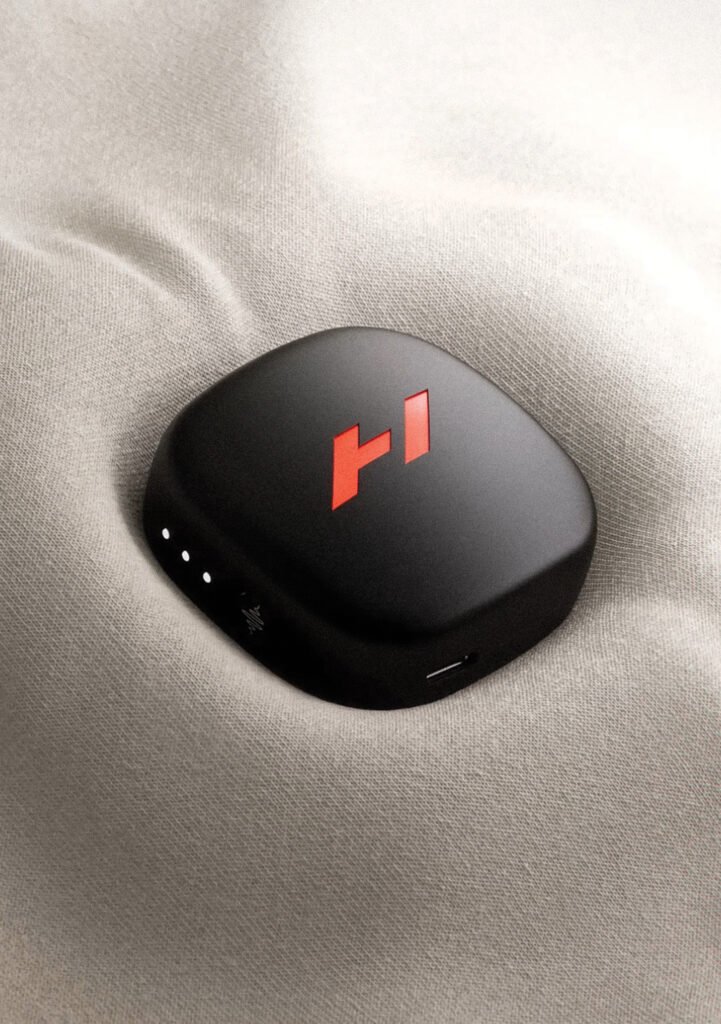
The tech itself lives in a small pod that clips onto the strap magnetically and pops off in your hand. There are no wires, and no permanent attachment. One button turns it on, one side controls heat (three levels), the other controls vibration intensity (three levels). The three levels of heat reach 117 degrees, and the three levels of vibration run in 15-minute recovery cycles, giving athletes the ability to seamlessly customize their experience through on-pod controls or by connecting to the Hyperice App.
Nothing happens until the pod is seated in the slide’s dock, which is also where the heating element lives. The strap adjusts to lock the pod against your foot so you don’t need to worry about losing it and completely killing the purchase of , which solves a real problem — most slides don’t adjust at all.
How the Hyperslide is being posititioned
The most useful thing out of our call with Tobie Hatfield, Nike’s Sr. Director of Athlete Innovation, focused on how Nike wants these two products used together.
The Hyperslide is being positioned as the immediate, right after you’re finished with a workout tool. Something low friction enough that an athlete can go from competition shoes to slides in seconds and get the recovery started. The Hyperboot, should you choose, comes later, when there’s actual time to sit down, get some work done on your laptop, or just chill a home on the couch.
Athletes get to decide how they actually use it, and Nike was upfront that some testers have started using the Hyperslide before competition too, for that same reset-and-activate feeling, even though Nike is positioning it squarely as a recovery product.
The Details
- Price & Release Date: $249 and available beginning September 29 in select markets at nike.com, hyperice.com as well as Best Buy and Dick’s Sporting Goods in the U.S.
- Colorways: Two at launch — a black and white; and an “Oro Wood” tan and white option. The Oro Wood looks real nice.
- Pods: Each pod runs about an hour on a full charge at continuous use. Nike/Hyperice will sell replacement pods separately in the aftermarket, but you can’t buy the slide without a pair of pods included — the box comes with two pods, a charging cable, and instructions.
- Travel: Both the Hyperslide and the Hyperboot are TSA-approved.
- Testing: Nike ran extensive wear tests at colleges and community colleges across multiple states before finalizing the strap design, and put the product in front of elite athletes across basketball, track and field, and global football, including at the World Athletics Championships in Tokyo.
Our Initial Thoughts
The Hyperboot was the proof point to kick off the Nike x Hyperice partnership and while useful, we just couldn’t ever get past the look. We used them for a full day in January 2025 and swore them off. They were loud, and goofy.
But like we said, Nike clearly used the Hyperboot as the proof of concept to show that heat and compression work and athletes want the benefit. From there, they went and built the version people will actually put on without thinking twice.
The low-pressure Zoom Air as a vibration medium is a smart bit of engineering and an interesting concept, but the bigger win for us is they look and function like a slide first, and recovery device second. And for us, that’s what was always missing from the Hyperboot. People stared at us wearing them, these blend into the background.
We’ll have more once we get hands-on time with a pair.
Leave a Reply
You must be logged in to post a comment.