

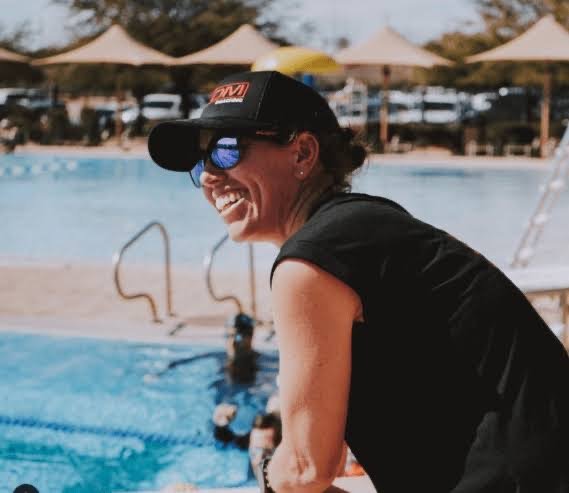
If you’ve spent any time around an Ironman finish line in the last few years, you’ve probably already crossed paths with Natasha Van Der Merwe out on course or on social media where her training tips are the gold standard for triathlon athletes looking to improve their swim, bike, or run.
She’s also the reason a growing number of Kona qualifiers have her name in their athlete bios instead of just their own.
She’s committed and intentional in everything she does; something we found out during this interview.
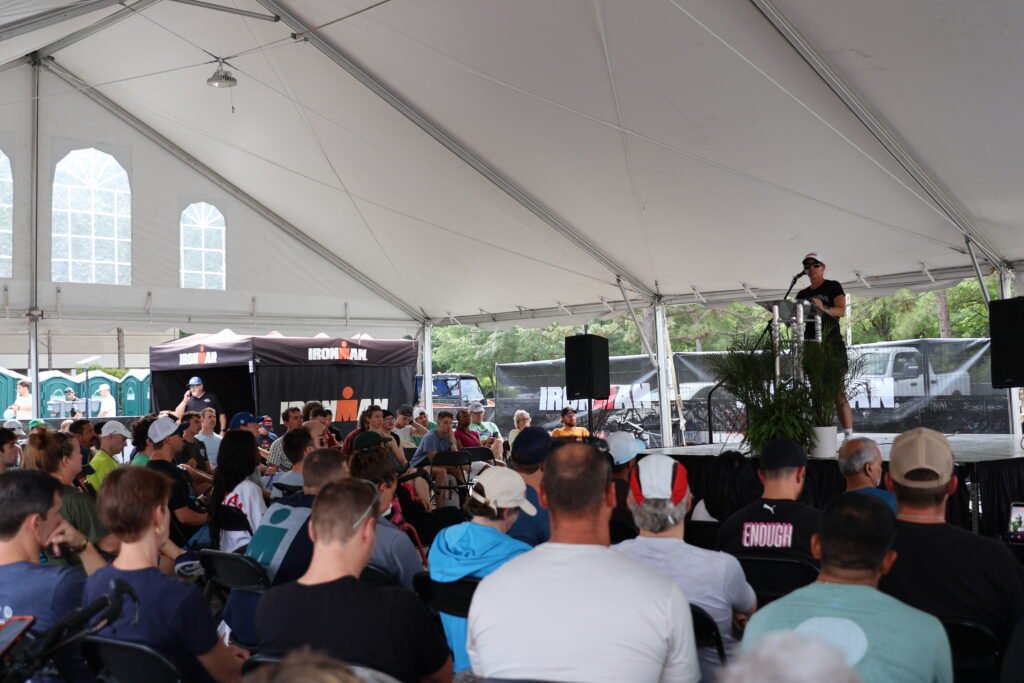
Now she’s taking on the job that puts her fingerprints on the entire sport: leading the reboot of Ironman U, the official coach education and certification program for the Ironman brand.
For anyone who hasn’t run into it yet, Ironman U is exactly what it sounds like, it is the credentialing system that trains and certifies the coaches who train the athletes chasing an Ironman finish line. It’s the connective tissue between “someone who knows a lot about triathlon” and “someone Ironman has actually vetted to coach at scale.”
Until now, it’s existed quietly in the background but that’s about to change.
Van Der Merwe is arguably the most obvious, and least surprising, person for this job.
She’s built her triathlon coaching company, NVDM Coaching, into one of the sport’s most respected shops, working with hundreds of athletes from first-timers to professionals, including Jackie Hering, the Ironman American Record Holder and multi-time 70.3 champion. Before that, she was a professional triathlete herself for over a decade, built one of the largest triathlon programs in the country from scratch at Austin Aquatics and Sports Academy, and has spent years as a spokesperson and technical advisor across the endurance industry.
She’s not a name Ironman found. She’s a name Ironman has been standing next to for years.
That combination, as a coach with two decades in the trenches, a business that’s scaled without losing its personal touch, and a brand relationship that’s already deep is exactly why this pairing makes sense.
Ironman didn’t just need someone who could write a curriculum. They needed someone who’s actually lived the gap between what a coaching certification teaches and what coaching every kind of athlete demands.
We sat down with Natasha to talk about what’s changing, what’s staying the same, and why she thinks the best coaches in triathlon have nothing to fear from AI.
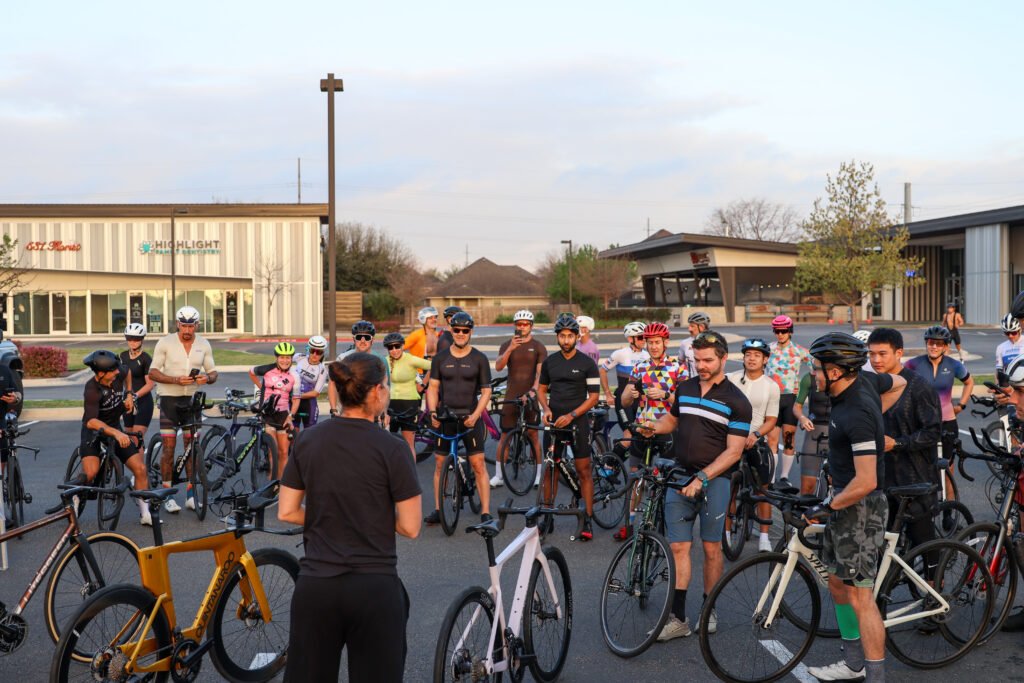
Let’s start with the big picture. What is this new version of Ironman U, and what are you building it to become?
Thank you — this is something I consider as the highest honor for a coach in the sport where Ironman is widely recognized as the most iconic and dominant brand in the sport of triathlon
IRONMAN U is the official coach education and certification program for IRONMAN. What we’ve built is a three-level credentialing system built around ten core domains of coaching excellence — everything from physiology and training design to athlete psychology, professional practice, and interprofessional collaboration. It’s not a single course. It’s a full educational architecture, with Levels 1 and 2 delivered asynchronously so coaches can progress at their own pace, and Level 3 including a live coaching component that puts real competency to the test.
What’s different is the rigor. But more than that — it’s the depth of support. Every lesson is grounded in current research and built on adult learning principles, which means the content is designed to actually stick. A coach walks away knowing not just what to do, but why — and how to apply it with real athletes. Whether you’re brand new to coaching or have years of experience, this program meets you where you are and takes you somewhere better. The goal is straightforward: IRONMAN U certification becomes the most respected credential a triathlon coach can hold.
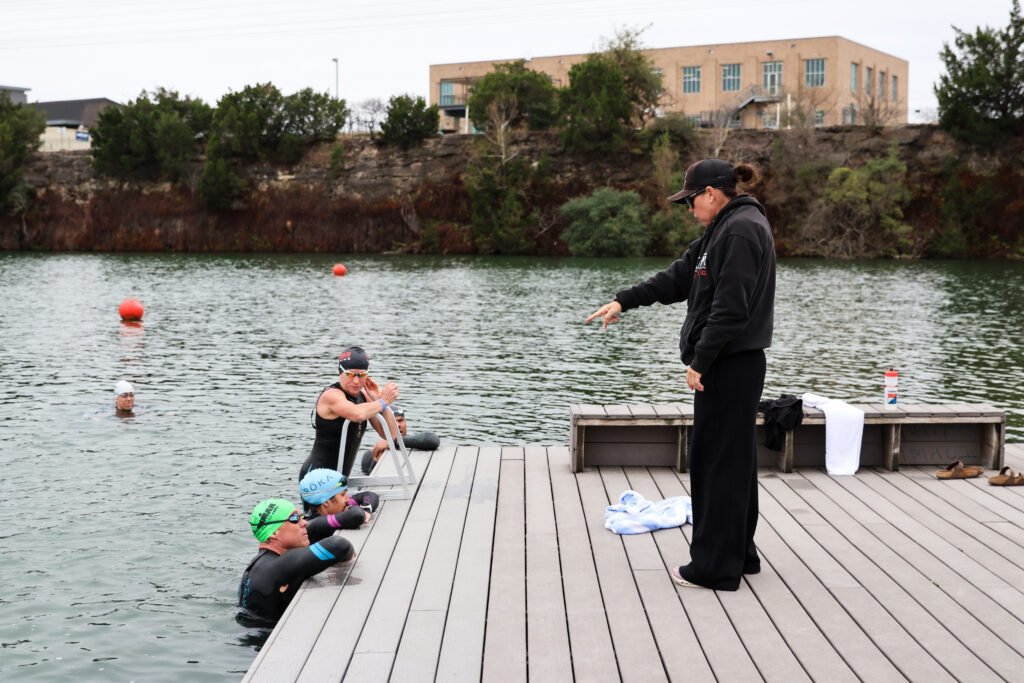
What was broken about the old version — and what did you refuse to touch?
The foundation IRONMAN had built around coach education was already fantastic, and the mission was always right: support coaches, elevate the sport. What I saw was an opportunity, not a problem.
The opportunity was to go deeper. To take what existed and match it to the complexity of what coaching actually demands in 2026 — the science, the psychology, the business of coaching, the interprofessional relationships, the ethics. Athletes are more informed than ever. The sport has grown dramatically. A coach who earns this credential should feel genuinely prepared for all of it, not just the physiology.
What I refused to touch was that core commitment to coach excellence and to the IRONMAN community. That stays. We just built a much bigger, more supportive house around it.
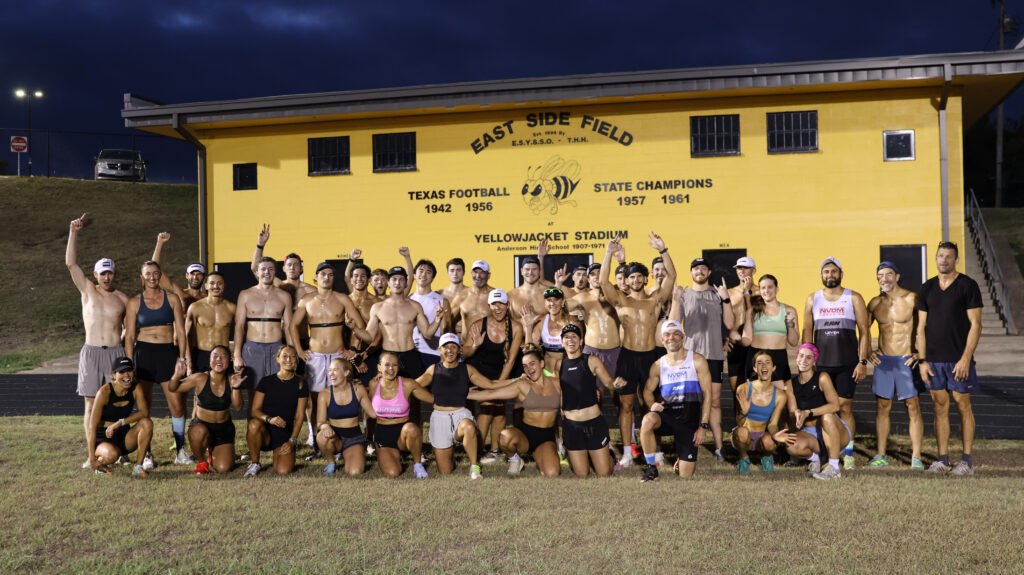
You already run a highly successful coaching company with hundreds of athletes. How did IRONMAN pitch this opportunity to you, and what key learnings are you bringing from your business into this program?
I believe they reached out because they were looking for someone whose values align with what IRONMAN stands for — performance, excellence, accessibility to the sport, and genuine care for the people in it. I take that trust seriously.
What I bring from NVDM Coaching and my years of coaching before, is almost 20 years of watching what separates good coaching from great coaching in the field. And what I’ve learned is that it almost never comes down to knowing more physiology than the next coach. It comes down to communication and care for the athlete. To building trust with an athlete so they’ll tell you when something’s wrong. To understanding the human being behind the training plan — their life, their stress, their why. At NVDM, our motto is that every athlete deserves a coach and a team that cares as much about their dreams as they do. That philosophy is woven into every part of this curriculum. Coaching isn’t just a technical discipline. It’s a relational one.
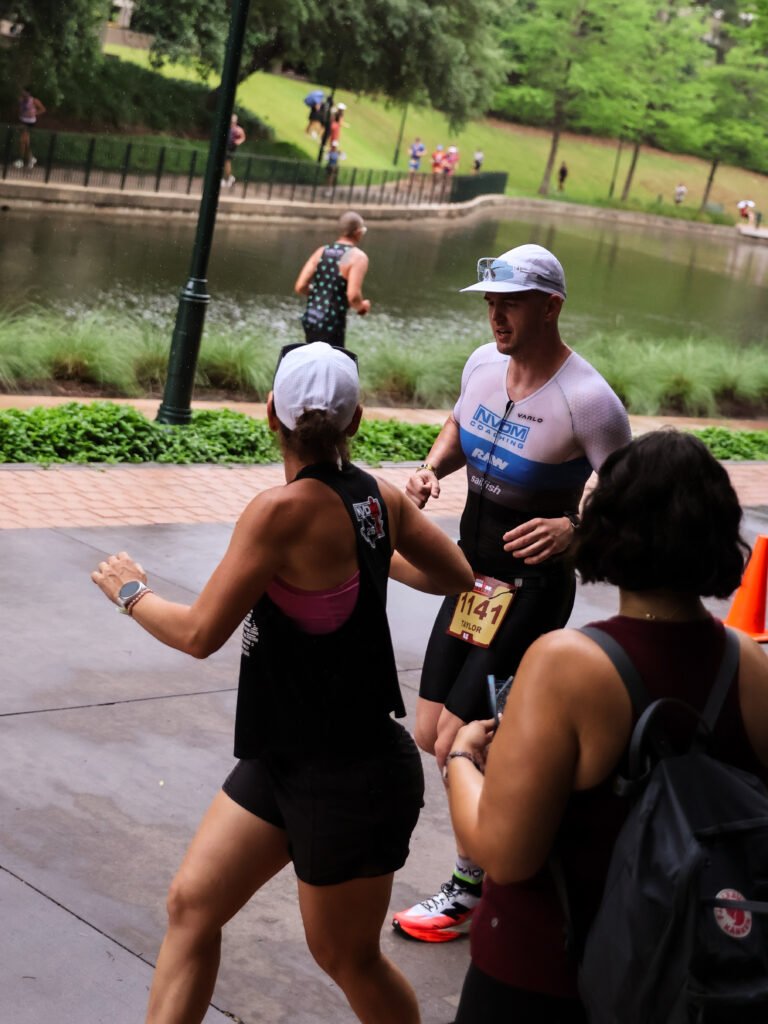
For a coach looking to get an IRONMAN U certification, what are some of the key components of the program?
The program is built across three levels, and each one is designed to build genuine competency — not just familiarity with content.
Levels 1 and 2 are delivered asynchronously, so coaches can move through them on their own schedule. That matters — most of the coaches we’re trying to reach have full lives, and we wanted to remove as many barriers to entry as possible. The content itself is comprehensive. We cover ten core domains: training physiology, race-specific preparation, athlete nutrition and fueling, health and injury management, performance psychology, the business of coaching, professional ethics and practice, interprofessional collaboration, communication, and athlete development across the lifespan.
Level 3 is where things become truly experiential. It includes a live coaching component — because we believe that applying knowledge under real conditions is what actually tests competency. At that level, you’re not just demonstrating that you understand the science. You’re proving you can coach.
The through-line across all three levels is practical application. Every concept connects back to what a coach actually does with real athletes. That’s non-negotiable.
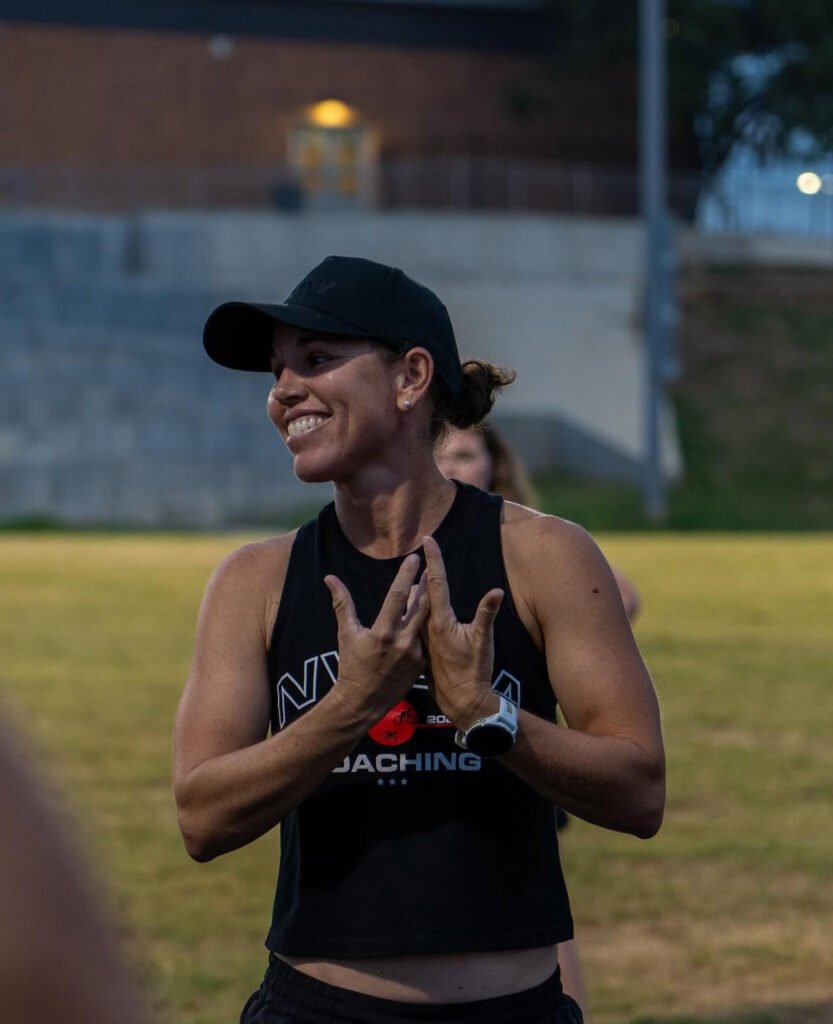
For an athlete hiring an IRONMAN U certified coach, what does that certification actually mean for them?
It means they’re working with someone who has been held to a genuine standard.
An IRONMAN U certified coach has demonstrated competency across the full scope of what coaching requires — not just training design, but nutrition, psychology, injury management, communication, ethics, and professional practice. They’ve been assessed. They’ve earned the credential.
For an athlete, that’s meaningful assurance. You’re not guessing whether your coach understands the physiological demands of a 70.3 versus a full distance race. You’re not wondering whether they have a framework for helping you manage stress load, fueling, or returning from injury. You know they do.
What I hope athletes feel, ultimately, is confidence. Confidence that the person guiding their training has the knowledge and the professional standards to be trusted with something as important as their health and their goals.
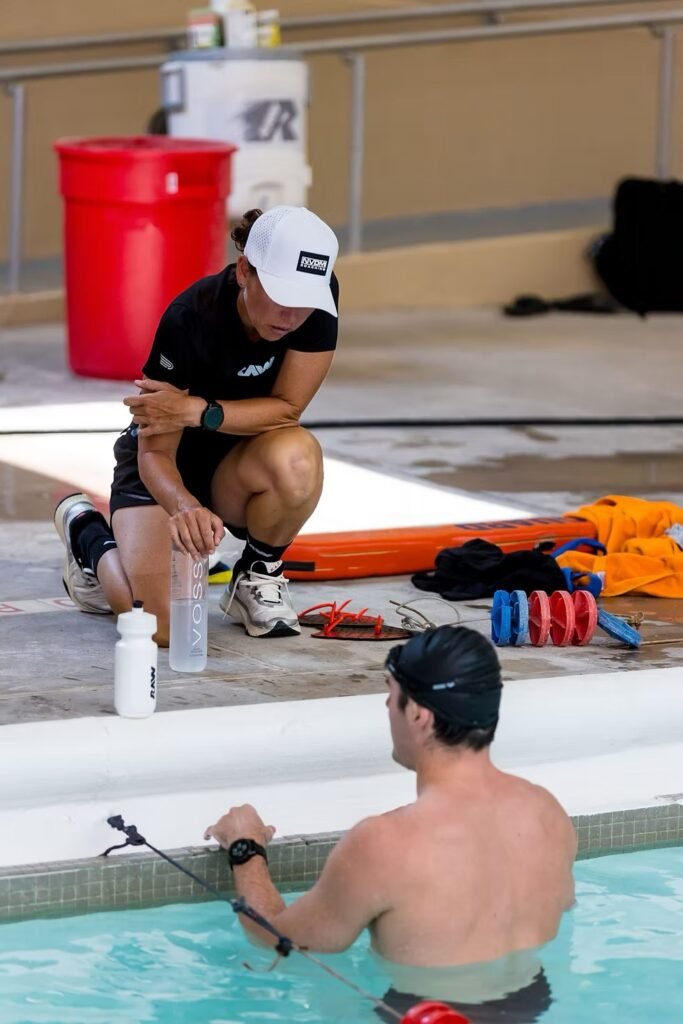
AI training plans are everywhere. Are you concerned about AI replacing human coaches, and what can a great coach do that an algorithm never will?
I’m not concerned — and I want to be direct about why. AI is a tool. A sophisticated, powerful tool. And great coaches should understand it and know how to use it. But coaching is not an optimization problem. It’s a human relationship.
An algorithm can analyze your power data, your sleep metrics, your training load. It can generate a plan. What it cannot do is notice that you’ve gone quiet this week. It cannot sense the difference between fatigue that needs rest and fear that needs a conversation. It cannot sit with you at mile 90 of a 112-mile ride — even metaphorically — and remind you who you are and why you’re out there.
At NVDM, we believe that every athlete deserves a coach and a team that cares as much about their dreams as they do. That care — that genuine investment in another person’s growth and their goals — is the irreducible core of coaching. No algorithm gets close to it.
The coaches I’m most excited to see come through IRONMAN U aren’t the ones who feel threatened by AI. They’re the ones who use it intelligently and still bring everything a human being uniquely can. That combination is what the best coaching looks like.
Leave a Reply
You must be logged in to post a comment.