

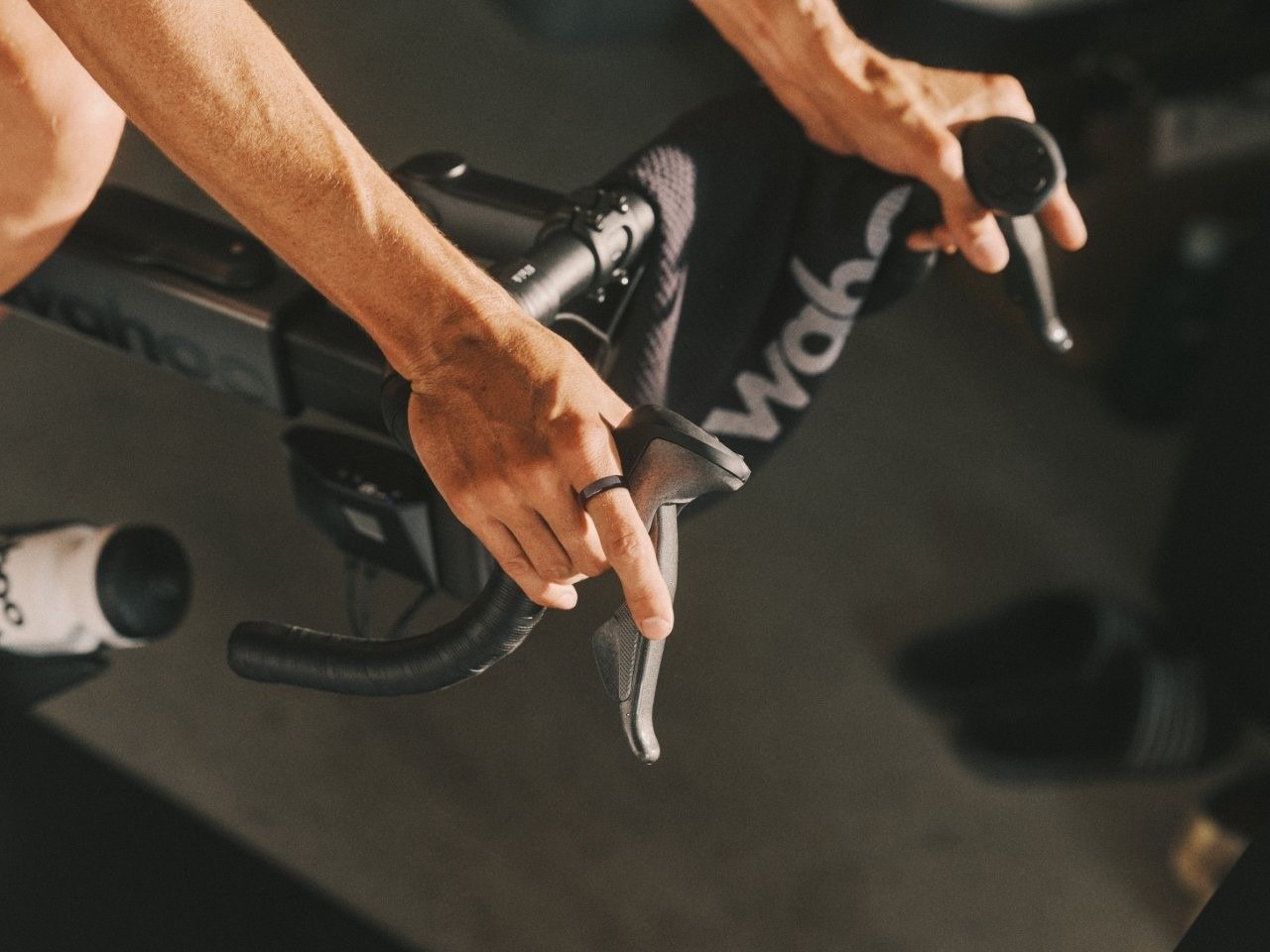
Wahoo has spent years telling you exactly how hard your workouts were. Now it wants to tell you whether you’re ready for the next one.
My Readiness just went live this week in the Wahoo app, with Oura as its first recovery data partner.
What’s Happening
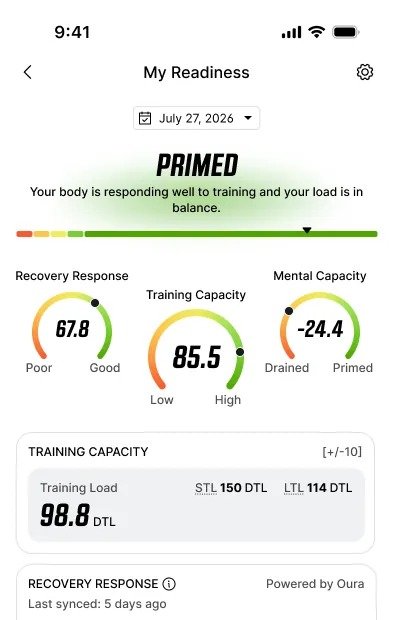
My Readiness takes the overnight recovery data from an Oura ring and reads it against your training history in the Wahoo app. Each morning you get one Readiness State: Primed, Ready, Under Stress, Depleted, Rest Recommended or Anomalies Detected. It comes with a short note on what’s driving it and a recommendation for the day’s session.
It sits on the home screen of both the Wahoo app and SYSTM, Wahoo’s indoor training platform, and Wahoo says it’s in the Apple Watch app too.
How It Works
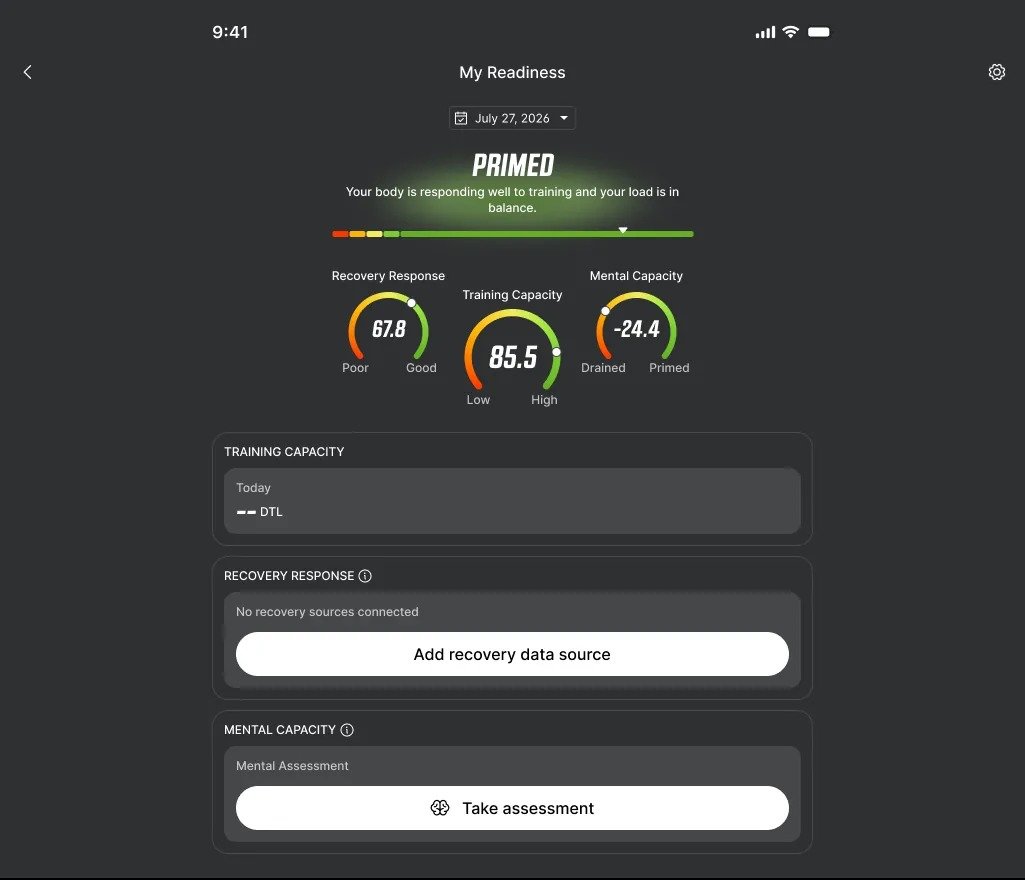
My Readiness rolls three scores into that one state. Each runs from -100 to +100, with zero meaning normal for you.
- Recovery Response: HRV, resting heart rate and sleep from your Oura ring, judged against how hard you’ve been training. Skin temperature, respiratory rate and blood oxygen act as early warning signs for illness. This is Wahoo’s own score. It doesn’t just copy Oura’s Readiness Score.
- Training Capacity: Your last week of training load compared with the last several months. Wahoo scores every ride and run against your 4DP (cycling) or 3DP (running) profile, its way of measuring what a session actually cost you across sprint, threshold and endurance efforts.
- Mental Capacity: A short daily reaction-time test plus a quick check-in on how you’re feeling, to catch the days when your legs are fine but your head isn’t.
The selling point is context. Wahoo’s example: you hammer VO2 max intervals on Tuesday, and Wednesday morning your HRV is down and your resting heart rate is up. A standalone recovery score would call that poor recovery. My Readiness sees the intervals, treats the dip as the expected cost and recommends an endurance ride. If the same dip shows up after an easy week with nothing in your training to explain it, the app tells you to hold back.
Wahoo also calculates its own Sleep Need from your recent load and sleep debt, then grades what Oura recorded against it. Get above 95% of your need and you’re Good. Below 80% is Bad.
Wahoo CEO Gareth Joyce framed it as a context problem: athletes have more data than ever but often lack the context, and this reads recovery against the work you’ve actually done. Oura’s Chief Product Officer Holly Shelton said Oura is happy to be the first wearable to connect.
What It Costs and What You Need
- My Readiness: Readiness State, Recovery Response, sleep, HRV and resting heart rate are free in the Wahoo app. Historical Training Capacity and Mental Capacity data require a paid Wahoo subscription.
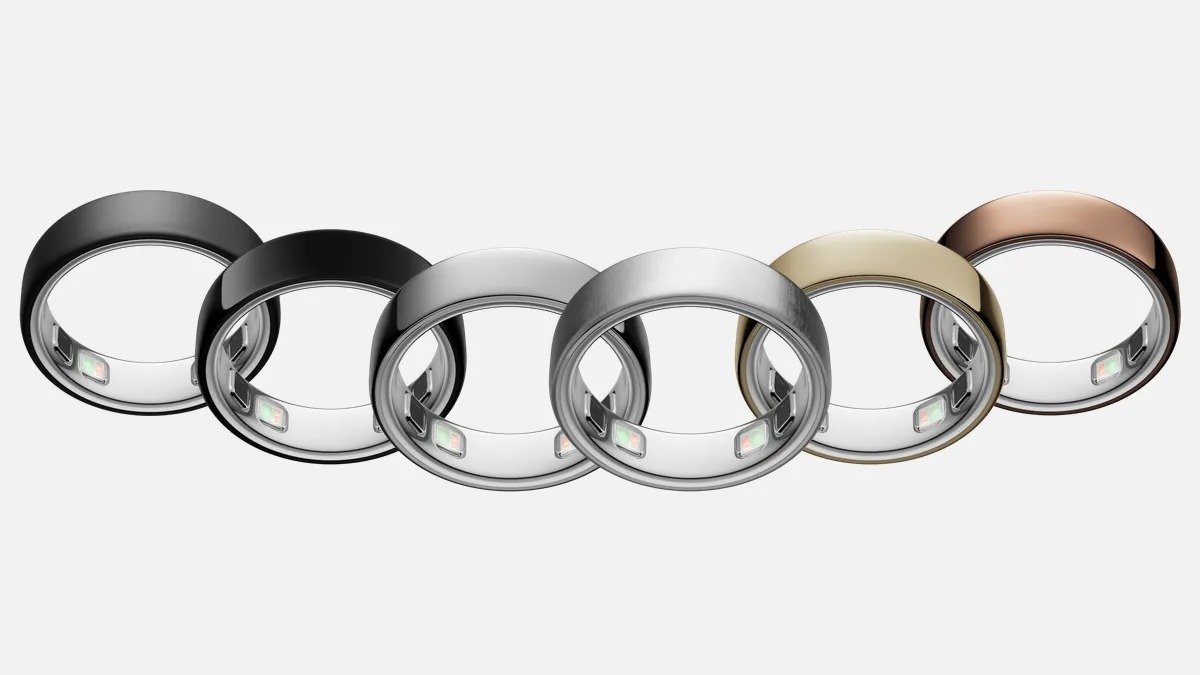
- Oura: you need a ring and an active Oura Membership ($5.99 a month or $69.99 a year in the U.S.).
- Rings: Wahoo’s page lists Oura Ring 5 and Ring 4 as compatible.
- Setup: connect once in the Wahoo app. It pulls up to 90 days of Oura history and needs seven days of data before your score calibrates.
- Platforms: iOS and Android. Wahoo says data only flows one way, from Oura to Wahoo.
About those ring sales: Wahoo’s new Oura page features Oura Ring 5 and “Shop Oura Ring” buttons all over it. But the rings are sold and shipped by Oura, returns and warranty follow Oura’s policies, and Wahoo notes it may earn a commission. So it’s a storefront handoff, not Wahoo stocking rings in its warehouse.
Wahoo says more data sources are coming soon, with Apple Health and COROS reportedly next. That would fit, given Wahoo and COROS already partnered earlier this year.
My Thoughts
This is a smart move. WHOOP and Garmin have been selling readiness scores for years. Wahoo already had the best part of the equation, a detailed record of the work, and was missing the overnight half. Instead of spending years building a wearable, it plugged into the ring a lot of athletes already wear. Everyone in this space is turning into a readiness company. Wahoo just did it without new hardware.
The “low HRV after intervals is fine” and the logic is the right idea. It’s exactly how I’d want an athlete to read their numbers. A dip you earned is training. A dip you didn’t earn is information.
If you already wear an Oura ring and train with Wahoo, it’s free to try. If you’d be buying a ring just for this, remember the membership is part of the cost, and i’d probably skip.
Leave a Reply
You must be logged in to post a comment.