

A solid new feature that lives behind the Garmin Connect+ paywall
We’re in Las Vegas this week at the annual Consumer Electronics Show, and Garmin finally answered a question many athletes have been asking –
When will the company offer nutrition logging alongside workouts, recovery, and sleep?
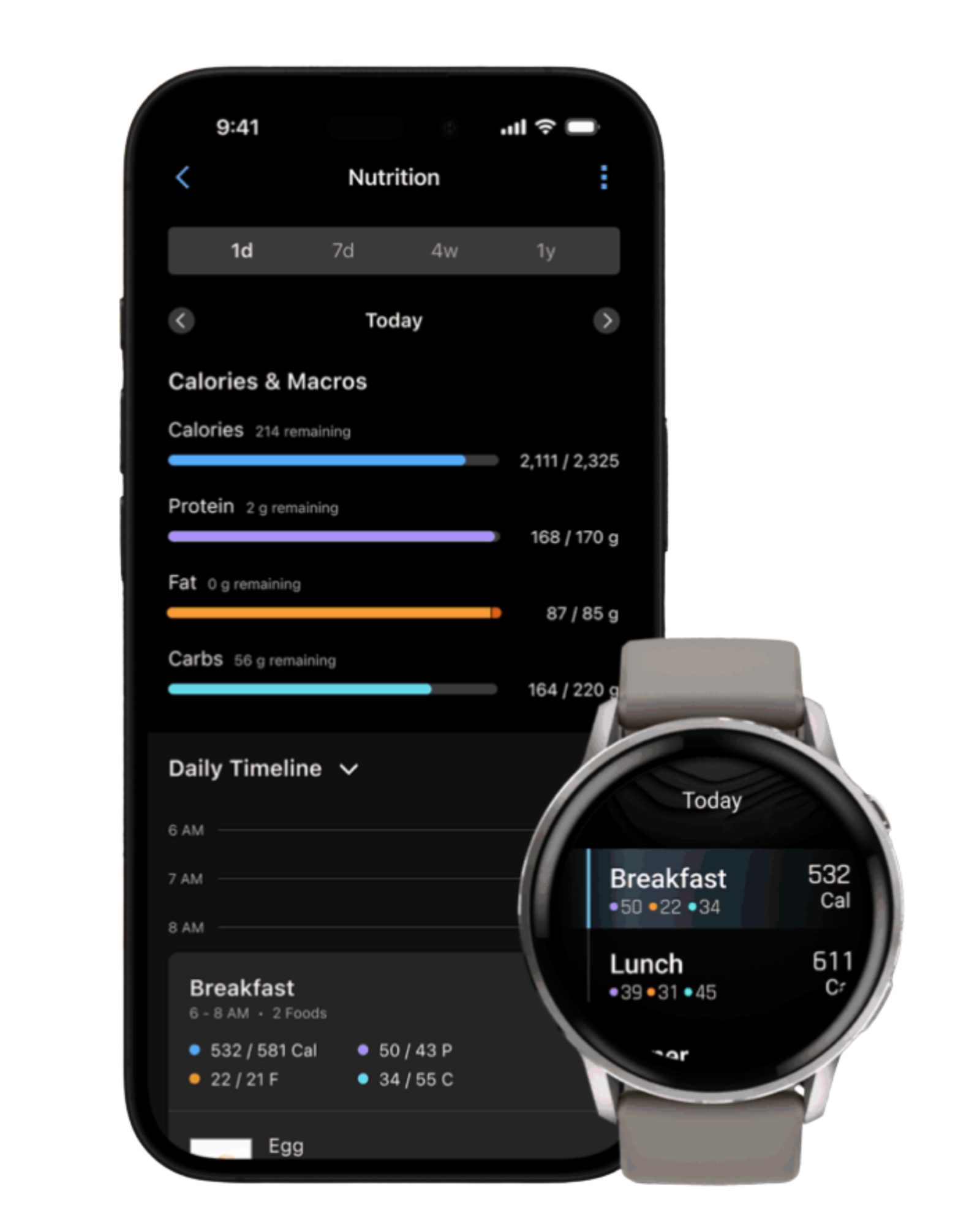
The answer came loud and clear just five days into 2026. Garmin has added built-in food, calorie, and macronutrient tracking to its Connect ecosystem.
Our reaction? More jeer than cheer, not because we didn’t want this feature, but because it lives behind Garmin Connect+, the brand’s paid subscription tier.
And while this move officially places Garmin into a crowded space dominated by apps like MyFitnessPal and newer platforms like Levels, it also signals something bigger. This is Garmin’s attempt to make Connect the single home for your entire training and lifestyle data stack—everything, finally, in one place.
But are you willing to pay for it?
What Garmin Just Launched
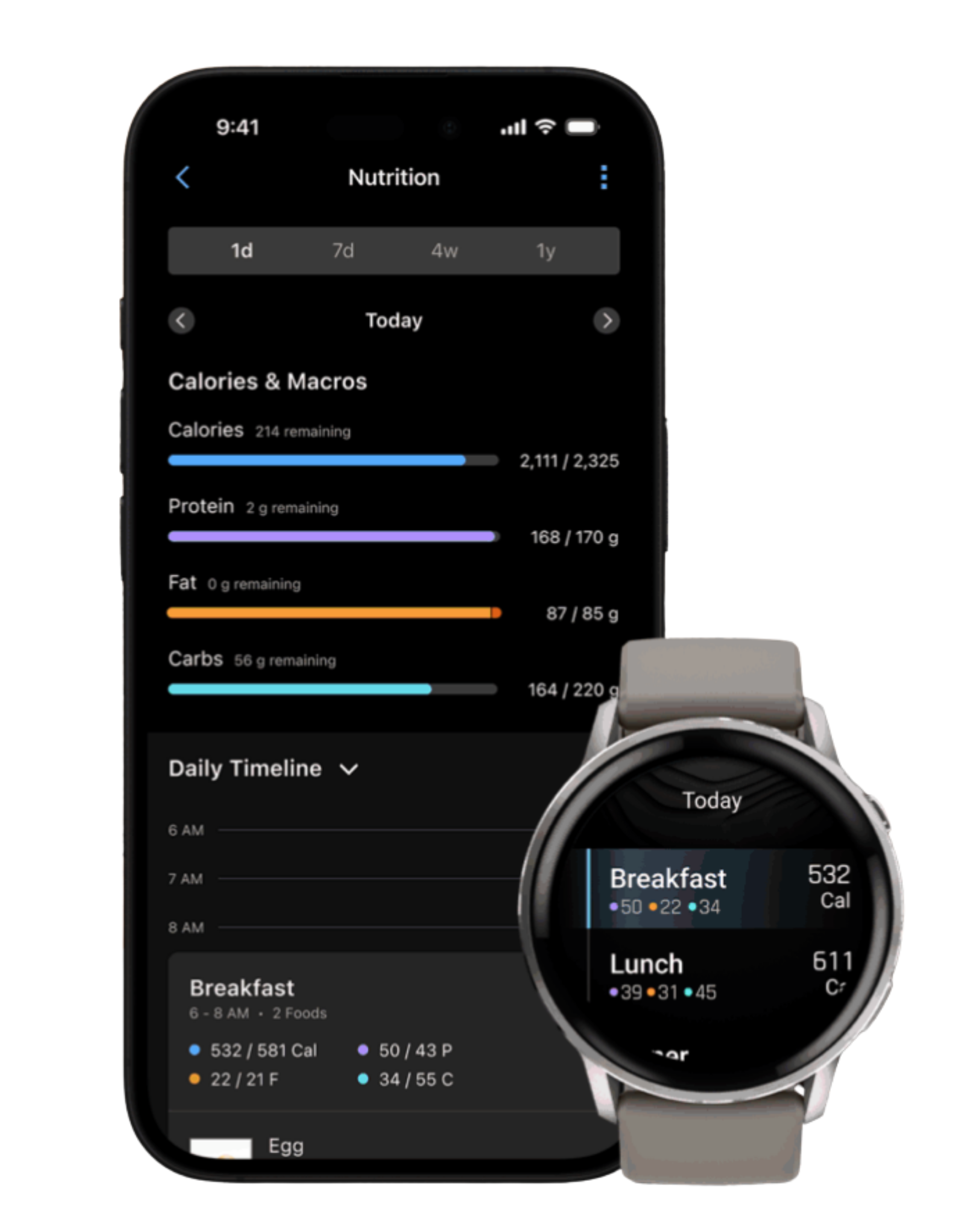
Garmin’s new Nutrition tracking allows users to log food and drink intake along with calories and macros (carbs, protein, fats) directly within the Garmin Connect app.
It pulls from a large global food database and lets users record meals via search, barcode scanning, or even photo recognition using smartphone cameras. Compatible Garmin watches can pull up recent or favorite meals and, in some cases, use voice commands to help log food on the go.
Once logged, your food data feeds into the broader health dashboard alongside workout data, sleep, recovery, stress, and other performance indicators.
“Garmin’s AI-powered Active Intelligence engine” — already in Connect+ — will offer insights based on how your nutrition correlates with how you train, sleep, and recover. It might, for example, highlight how late-night eating impacts sleep quality or how macro balance aligns with training load.
At a surface level, it feels like Garmin built its own MyFitnessPal inside Connect. You search, log, and sync.
For example, a meal of grilled salmon and greens gets tallied; your daily calorie budget updates; macros fill in. What makes Garmin’s approach compelling is that its a tighter integration given your food data now lives beside training and recovery data in one ecosystem rather than siloed across multiple apps, which I flipping hate!
In a world where we all have app fatigue, this makes me want to use the service. I hate tracking macros in Levels while all my training data is in Training Peaks. I’ve long left Garmin Connect given I switched to COROS this year but the one app thing, I get the appeal.
Garmin vs. The Rest — An Honest Comparison
Let’s be clear: Garmin is banking on their huge user base to make this successful because it is stepping into a crowded nutrition + performance market.
Apps like MyFitnessPal have been doing this for years. Newer platforms, especially Levels (our review here), has real-time macro tracking but also approaches nutrition tracking in a fundamentally different way — prioritizing biomarkers and metabolic signals (e.g., continuous glucose) and displaying that data in a visually intuitive way to help athletes make real-time decisions. Levels isn’t perfect, but its ease of reading dynamic data in an easy way has set a high bar for usability.
Trying this, Garmin’s nutrition logs are robust in their own right, but they still feel rooted in logging rather than interpretation which is something I honestly dislike about Connect.
Scanning barcodes and snapping meal photos get you the numbers, but how those macros really impact performance, energy availability, and metabolic state depends on you interpreting the chart. Unlike Levels, Garmin’s system won’t (yet) give you real-time metabolic signals or glucose insights alongside data like calorie burn — it’s still calories in vs calories out with advanced context on training load.
But the integration with your workouts and recovery stats is undeniably valuable, especially if you’re already committed to Garmin’s ecosystem.
Paywalling Sucks
Here’s the part that matters most for athletes: this feature doesn’t come free. Garmin’s nutrition tracking is locked behind Connect+, which currently costs around $6.99/month or about $70/year — roughly comparable to or a bit cheaper than a standalone MyFitnessPal or Levels subscription, depending on region and plan.
Some likely see value if Connect+ becoming a true all-in-one platform for training, sleep, heart health, and now nutrition. Others like myself question paying extra for something that competitors already offer — especially when the logging experience itself isn’t radically different from existing solutions.
Add to that the fact that enabling Garmin’s nutrition may disconnect your existing MyFitnessPal integration entirely — meaning data that used to sync automatically might now sit behind two different ecosystems unless you fully commit to Garmin Connect+.
What This Means for You
For Garmin lovers who already use Connect and want to simplify their digital stack, this is a welcome step forward. No more juggling multiple apps, syncing issues, or piecing together workouts and fuel logs manually. Nutrition now sits in the same place as your runs, rides, and sleep cycles.
But for athletes who value clarity of interpretation, tools like Levels still have the edge in visualizing how what you eat impacts how you perform and feel in very actionable ways.
Also, coming from someone who refuses to pay for Strava Premium; because Garmin’s logging lives behind a subscription wall, cost-conscious athletes may still stick with or add external tools that do this for free or with standalone pricing.
Availability
Garmin’s nutrition tracking is available now for Connect+ subscribers. New users can test it with a free trial, but full access does require the paid tier.

Leave a Reply
You must be logged in to post a comment.