

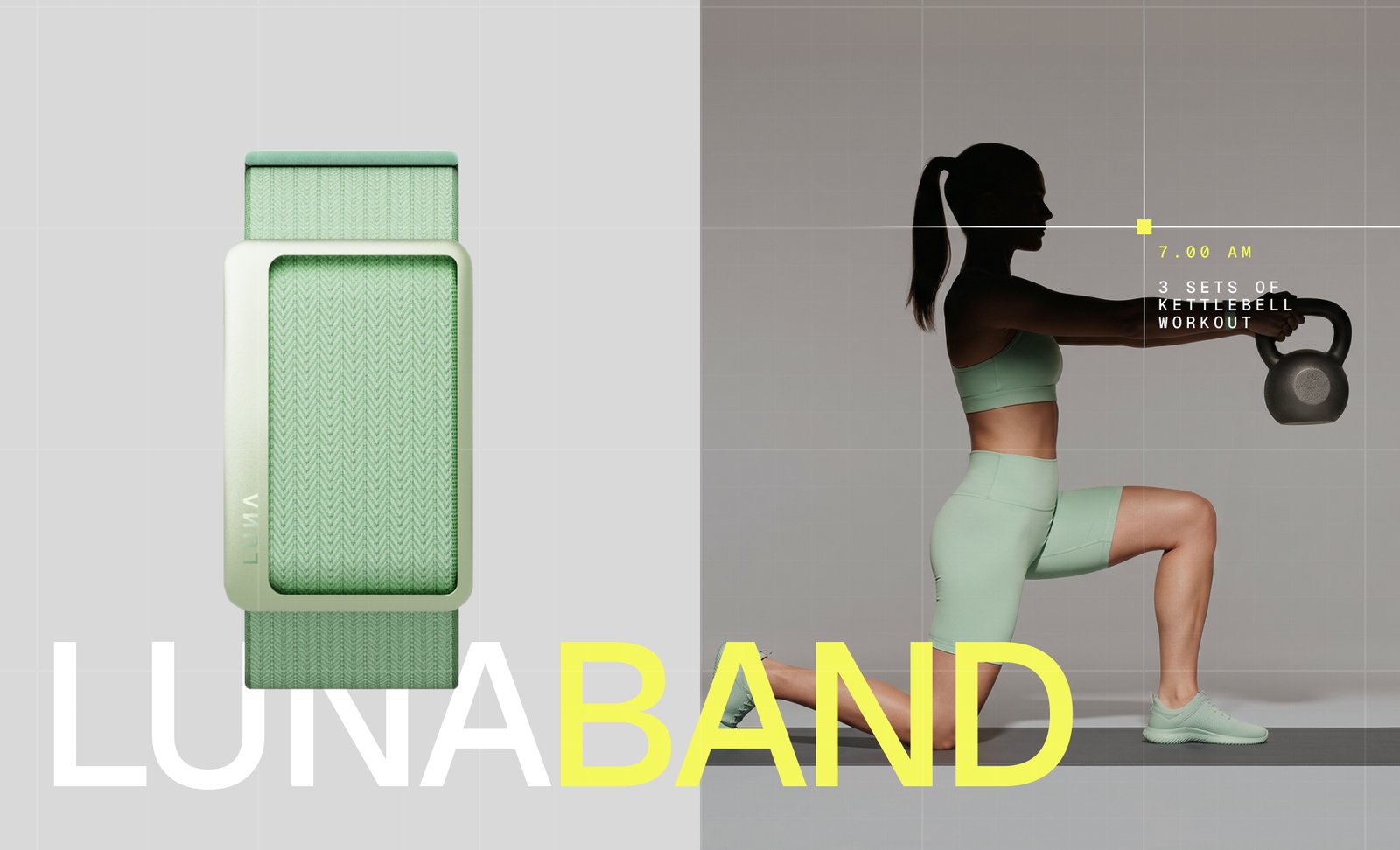
We covered Luna back in February when the company added voice to its smart ring. The thesis then was simple: wearables have gotten good at measuring but the problem is what happens after.
Luna’s answer at the time was conversation. You’d do things like ask your ring how you slept, and log your coffee intake out loud; reducing the friction between data and being something actionable. It was a smart move and and apparently just the beginning because today, we have even more from the company.
Today, Luna opened the waitlist for the Luna Band — a wrist-worn wearable built around its LifeOS intelligence engine, with a concept that goes further than any ring or watch we’ve covered: it doesn’t just track your day. It plans it.
What it Actually Does?
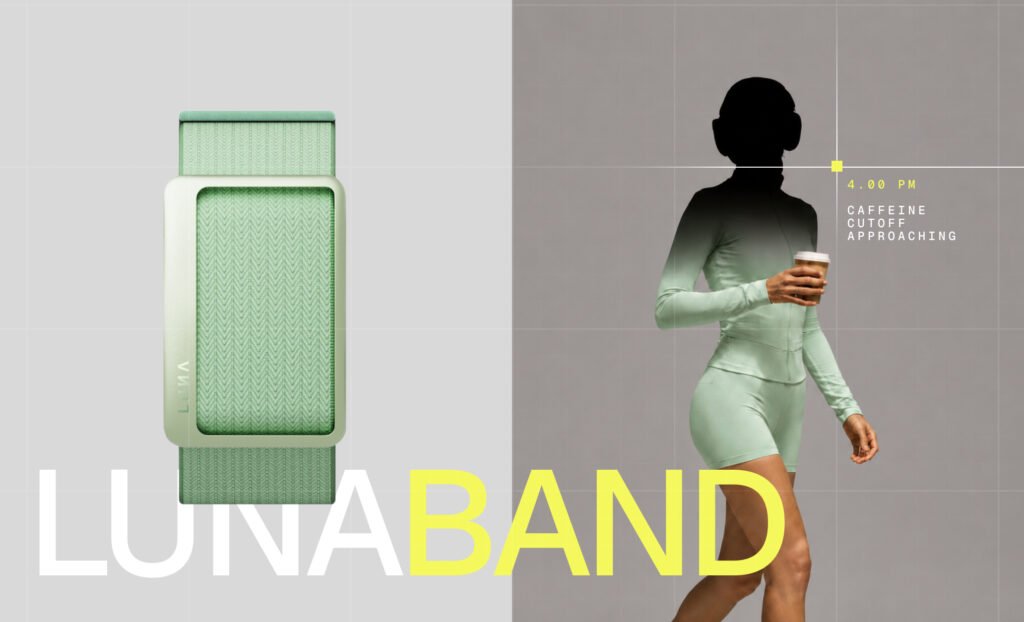
LifeOS reads biometric data continuously from the Band and pulls in additional context like blood markers, medical history, nutrition and will generate your entire day, hour by hour.
They say it will tell you when it’s time to act on something, like “4:00 p.m. caffeine cut off approaching” by getting a buzz on the wrist. That’s it. No dashboards or manual logging, just a tap that says: do this now. Which I don’t know about. I don’t love haptic so it’s probably not for me but to each their own.
The app ships with a library of micro-apps covering stress, nutrition, training, supplements, and productivity, each running on your own data rather than generic population averages. Users can also build custom health modules. The pitch is that one Luna app replaces the six or seven fragmented health apps most people already have, none of which talk to each other.
Luna founder Amit Khatri framed it plainly by saying, “most people spend their energy in the wrong order. The Band exists to fix that sequence, day by day.”
The LifeOS Foundation
This is where things get a bit tricky. Luna is known globally but not in the U.S. and with them being an unknown, how much will Americans put their trust in an entire new OS. Most are locked into Garmin, Apple, Samsung or WHOOP. So LifeOS is a complete outsider but it does have some cool things going for it.
LifeOS was trained on data from over 30 million smartwatch users, which gives it a depth most new entrants in this space don’t have and it comes free with the Band. Luna’s goal is to merge real-time health context into a single source of truth; something it started building toward with the voice-enabled ring we looked at earlier this year.
What’s interesting is how the Band extends that logic to the wrist. Voice was about removing friction from input and the Band adds a scheduling layer on top, attempting to turn biometric signals into a proactive plan rather than a passive report.
For the Athlete
Luna is positioning this squarely at high performers. The example use cases they mention are individuals managing jet lag across travel, maintaining “peak state” during high-stress periods, or training for HYROX. They’re not positioning it as a Fitbit Air but for actual activities, not steps. Not resting heart rate graphs. Frankly, outcomes.
Availability
Drop 1 is invite-only and shipping is expected at the end of July 2026. The waitlist is open now at lunazone.com.
We’ll be watching this one closely. The voice ring was a smart feature play because it was resourceful. The Band is a bigger swing and more dangerous one, and if the day-planning layer delivers and people like haptic, it could be one of the more interesting wearable launches of the year.
Leave a Reply
You must be logged in to post a comment.