

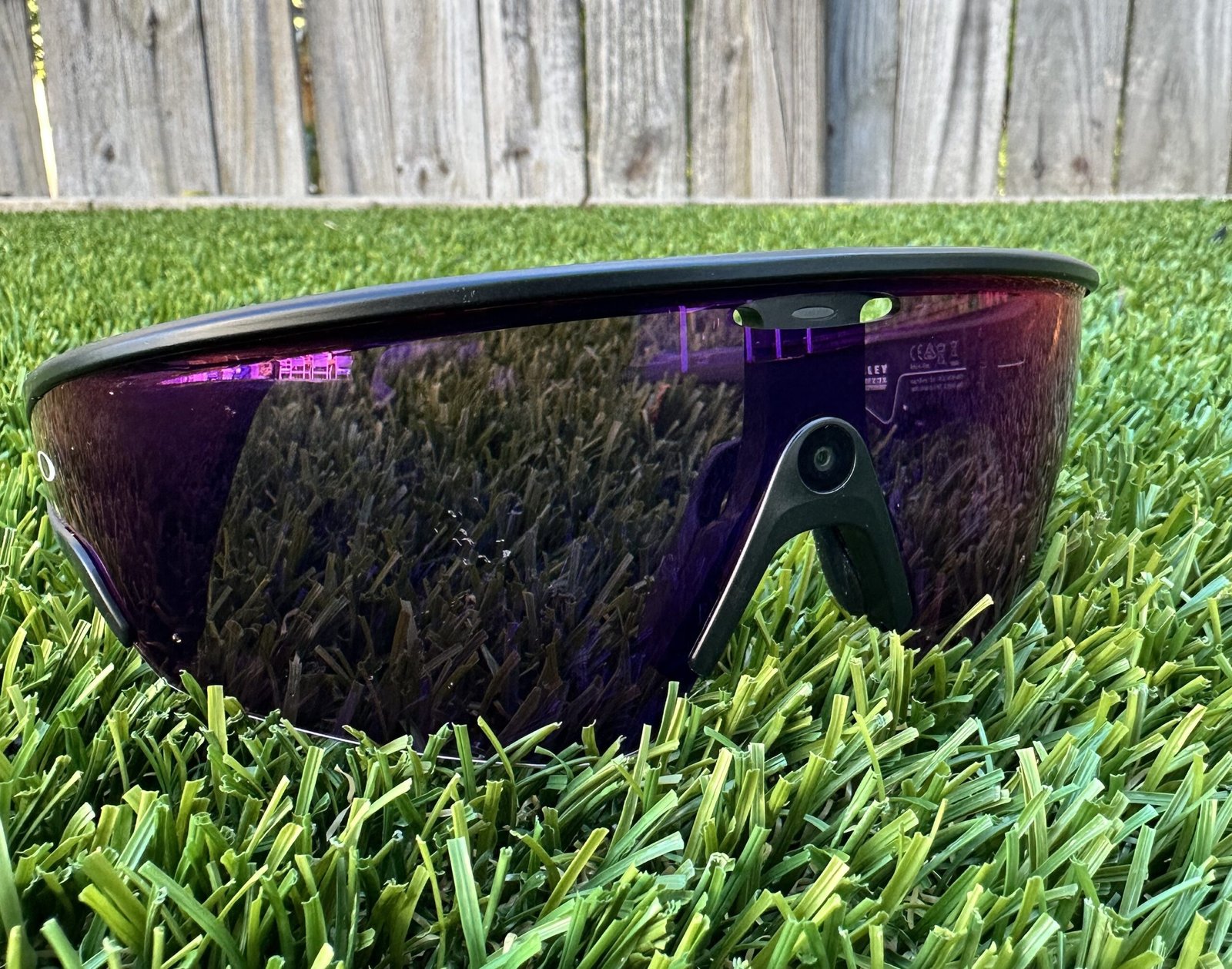
The Vanguards have a bright future … but Ironman Arizona exposed their biggest flaw.
“But… why?”
There’s something about doing really long races that’s almost impossible to explain to anyone who hasn’t done one. To them, you’re just riding your bike. But to me, its the sounds, the chaos, and the weird mid-race singing.
And I’ve spent years trying to answer that. Trying to describe to friends and family what an Ironman feels like. Not the polished highlight reel — the cannon blast, and the finisher chute. But everything in between. The world from my eyes at mile 90 of the bike and mile 17 of the run. But nothing existed that could capture it the way I wanted.
Until now.
With my ‘A race’ nearing, Ironman Arizona would be the perfect opportunity to test the Meta x Oakley Vanguard smart sports glasses. Ironman frowns on recording given there are so many athletes of varying skills on course. So no action cameras, no cell phones, no hands-on devices.
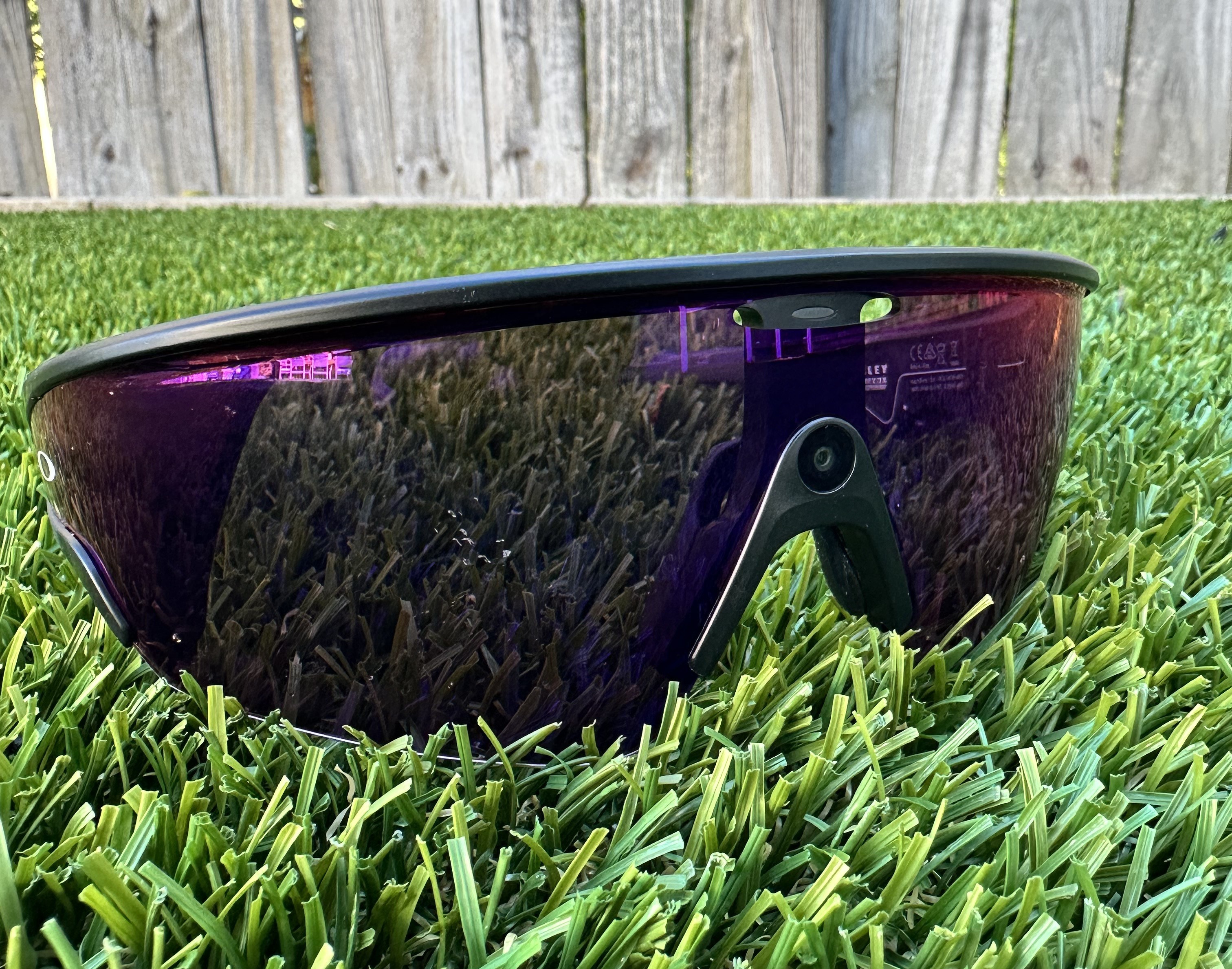
But hands-free sunglasses with a built-in camera designed for athletes that (in theory) are capable of capturing exactly what I’ve always wanted people to see.
Genius.
The premise was simple: Let me show the race exactly as I lived it, adding commentary along the way.
What I learned is that the Vanguards deliver something incredible and new — but have real limitations you need to understand, especially if you’re planning to spend $500 and hope to film in 3K.
https://instagram.com/p/DRZw_LujTrE/
🔥 Here’s What Works
All-Up Integration: The biggest win is how seamlessly Oakley and Meta merged sport performance with smart tech. You get Oakley’s Prizm optics combined with Meta’s camera, voice controls, and hands-free capture.
POV That Actually Looks Good: The Snapchat Specs sucked. But these are damn good. With the camera being right between your eyes, its a great first person POV. Add in the fact that you can record in 3K and you’re footage is crisp, and immersive.
Audio & Voice Features Work Really Well: Meta’s open-ear audio surprised me. Regardless how loud it was around me or how much headwind I faced, when I said “Hey Meta…” the glasses responded quickly about 80 percent of the time. The mic and speakers perform well and adjust to your surrounding, raising and reducing the volume when necessary.
Rock-Solid Fit & Optics: The Vanguards come with a few nose bridges you can swap, and I did because the default one was too big. The Prizm lenses enhanced contrast on a day that started overcast and ended with blinding sunshine.
😷 Here’s What Sucks
Long-Course Content Isn’t Their Strength: For a 9-hour race like Ironman Arizona, the battery simply can’t keep up—especially at full 3K resolution.
Ecosystem-Dependent Features: To unlock the “athlete” side of the smart ecosystem—split announcements, ride metrics, real-time training data—you need a compatible Garmin device and your phone nearby. Without those pieces, you’re basically using the glasses as a camera and microphone, not a fully connected AI training tool. Available apps are also limited.
No Local (Music) Storage: In the same breath, there is no local storage to download and store music. This wasn’t a big deal during the race because you can’t listen to music but with a Garmin watch that was not compatible, the only way I could listen to music was if I brought my phone with me for my training runs. It’s a small thing until it’s not.
My Experience: Ironman Arizona
The first thing you notice is the weight. The Vanguards are heavier than a standard pair of sunnies — and that’s no surprise. At 67 g, they’re slightly heavier than my go-to shades from 2025, the Chamelo Shield (31 g). But these aren’t just sunglasses. They’ve got a camera, a battery, speakers, and sensors, so the minimal added weight is shockingly reasonable.
What mattered more was how they felt over 138.2 miles — 112 bike miles, 26.2 on foot — and the answer is simple: I never wanted to rip them off. They, like any other pair of sunglasses disappeared once I started moving. They never slipped, never bounced, or demanded my attention. In a race where everything eventually becomes irritating — from your socks, to watch strap — the glasses stayed quiet. That alone is a win.
https://instagram.com/p/DRe-O_IjSzC/
And then there’s the Prizm Road lens. Oakley nailed this part. The Vanguards became part of the day. The tint adapted beautifully as Arizona shifted from overcast to sprinkles to bright sun. Contrast stayed crisp. Road detail stayed sharp. My field of view stayed wide and comfortable.
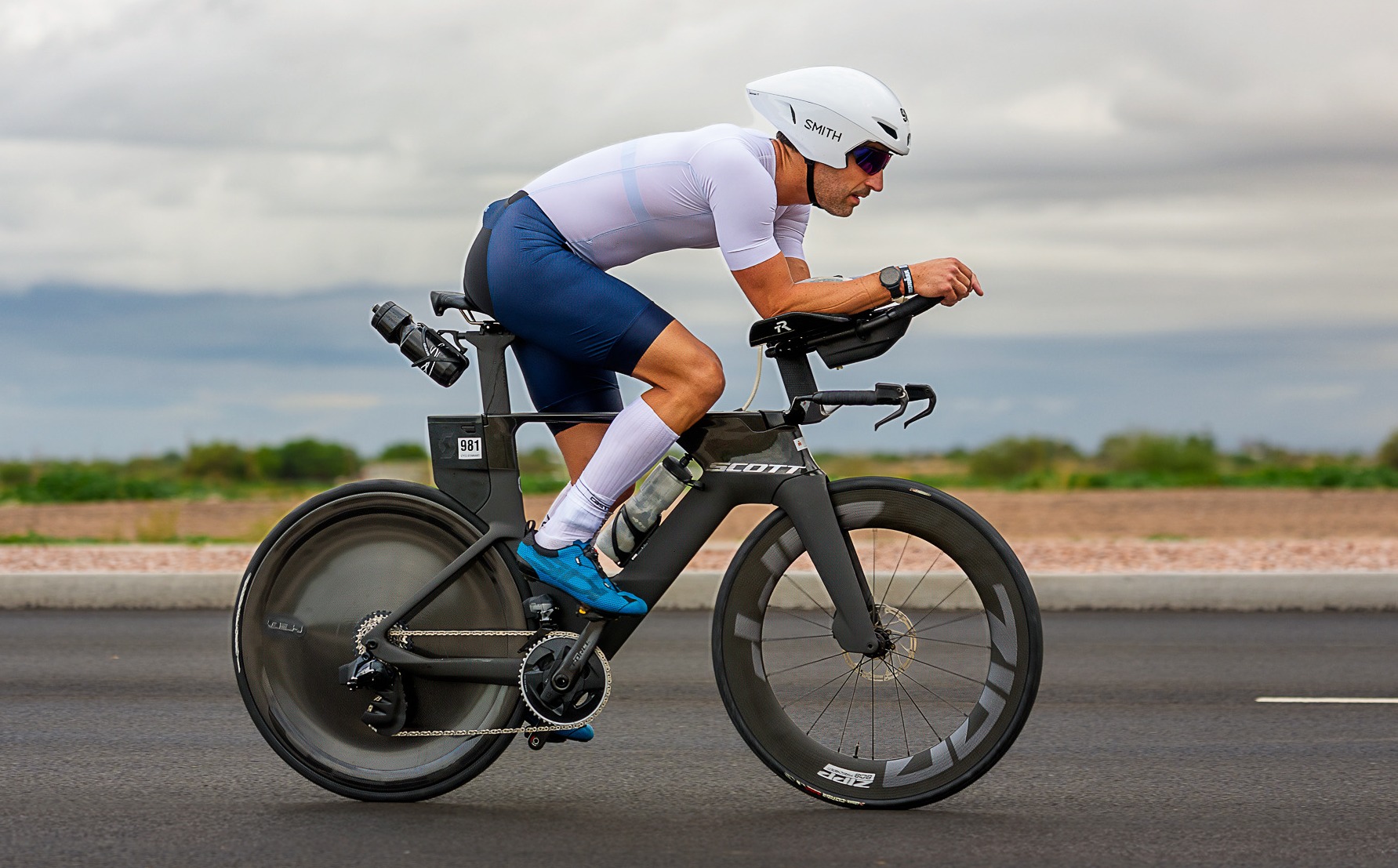
They enhanced the experience without announcing themselves, which is exactly what you want from something strapped to your face for nine hours.
Battery Life: Great for Creators…but
Let’s talk battery — because this is where the Meta x Oakley Vanguards show there greatest weakness and are not entirely ready for primetime.
If you’re using these for everyday content creation on your S-Works and in PAS Normal Studio kit, the battery is awesome. Filming quick clips on a run, grabbing POV shots on a ride, or taking hands-free photos while traveling — the battery holds up beautifully. For a normal day, these glasses punch well above average.
But if you’re dreaming of capturing 1-minute clips throughout a 9-hour IRONMAN, you’re going to be disappointed. And that was a decision I made.
Through the app, you can select how you want to record. Meta offers the ability to film videos in 1 and 3 minute (default) segments at Full HD (1080p at 30fps), High Frame Rate (1080p at 60 fps) or High resolution (3K at 30fps).
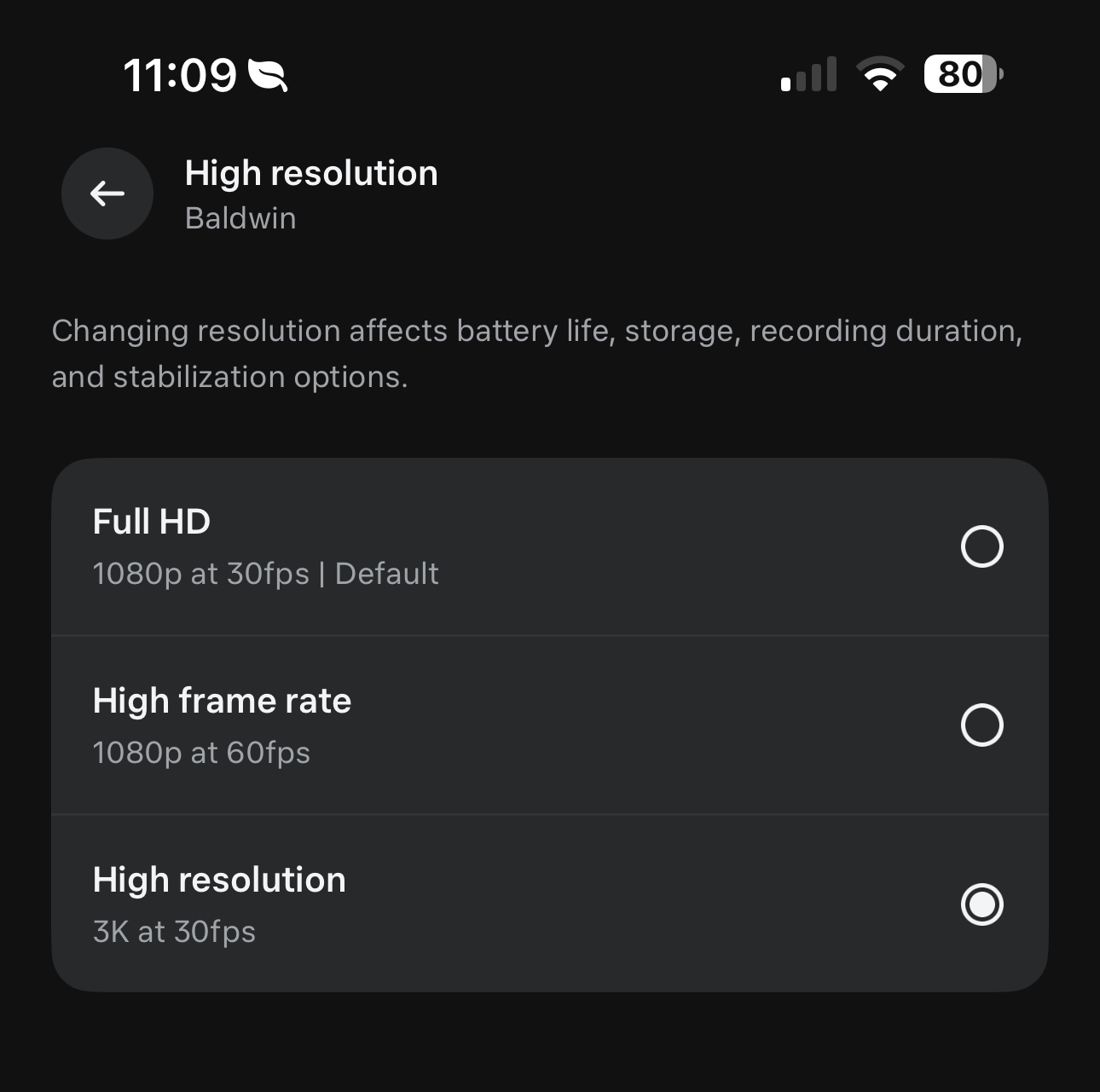
And this is where its a game of cat and mouse. Lower resolution isn’t something anybody wants to watch and higher resolution looks incredible but limits the battery. I also found 3 minutes to be too long to record and eats up too much battery so I opted for 1 minute at 3K at 30fps. Additionally, you HAVE to record the full 1 minute, you can’t save battery by telling Meta to “Stop recording…” which would be a great option.
I recorded all my race footage in 3K because if I’m going to create content, I want it to look good — for me and for the people watching. And that in lies the tradeoff: quality or longevity, but you can’t have both.
And here’s the thing — I wasn’t even using the other features that drain battery further. This was just filming — no audio streaming, no smart assistant, no GPS sync — and it still wasn’t enough to document an entire Ironman.
I filmed 12 1-minute clips on the bike and by Mile 4 of the run, Meta told me my battery was at 15 percent.
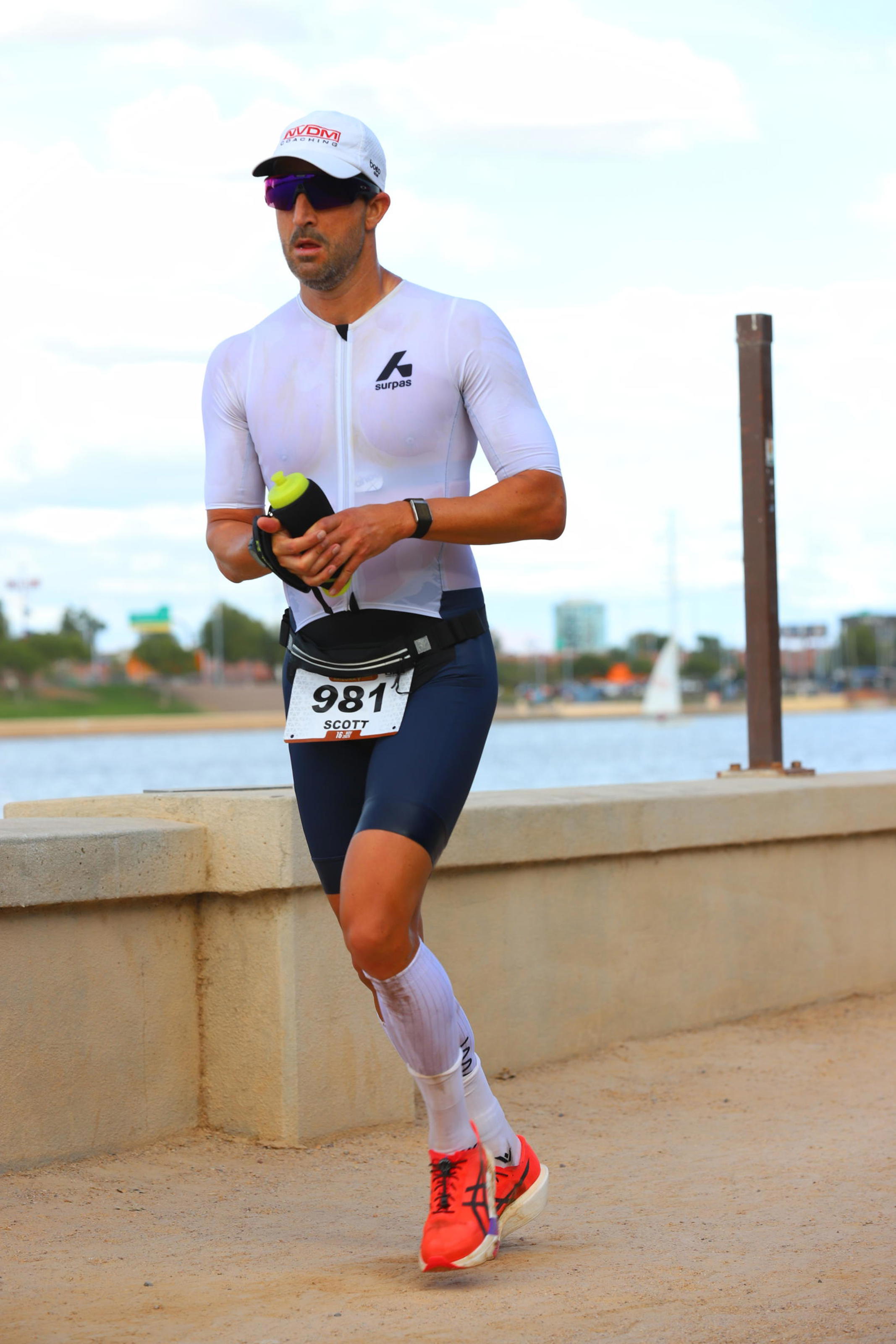
Long-distance athletes wanting to shoot cinematic POVs; temper your expectations. The Vanguards aren’t built for ultra-distance capture… yet.
Speaker Performance
The speakers surprised me — mostly in how loud they are. During training rides, the Vanguards pump out plenty of volume, almost too much at times. On open roads, I actually had to turn them way down. I never wear earbuds outside because I want total awareness of cars and wild dogs around me. My go-to for years has been Shokz bone-conduction headphones because they let me hear my surroundings and hold full conversations with riders next to me.
The Vanguards aren’t that.
They sit somewhere between open-ear and traditional audio — clear and powerful, but not as transparent as bone-conduction. If I kept the volume even moderately high, I lost a bit of that road-awareness I value. So I dialed them down almost immediately.
What they did nail was adaptive audio. The glasses seamlessly boost volume when you’re going fast and when I coasted into a stoplight, the sound dipped back down. It felt smart and responsive — a feature I didn’t expect to appreciate as much as I did.
If you want immersive audio during training, these glasses deliver. But if you rely heavily on situational awareness when riding outside, you’ll want to keep the volume low.
Partners
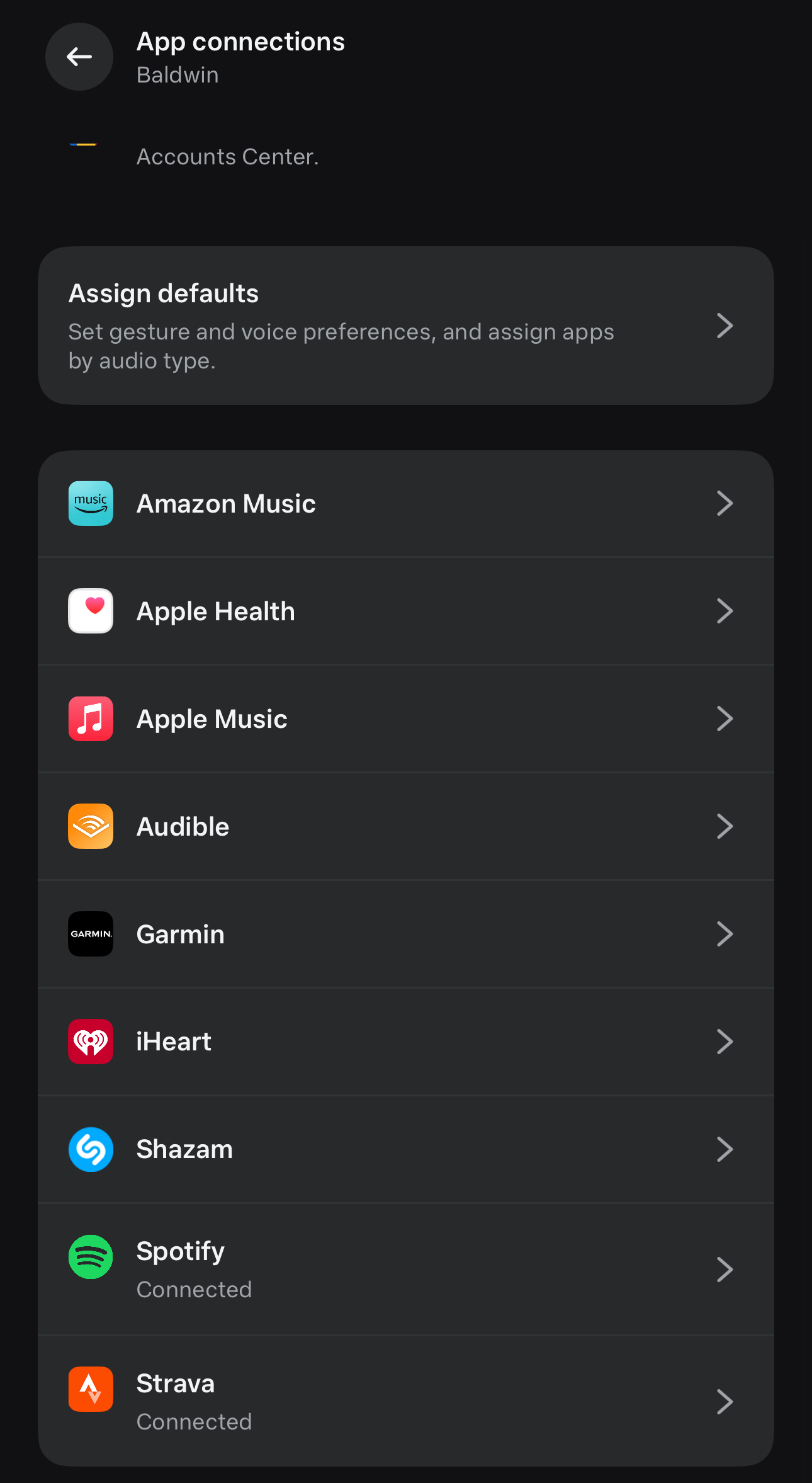
I won’t harp on this too long because, out of the gate, the Vanguard already plays nicely with a few solid partners — but I really wish there were more. Not everyone lives inside the Garmin, Apple, or Strava ecosystem. What about the Wahoo crew? The COROS athletes? Strava is the obvious social training hub, but where’s TrainingPeaks, or any of the platforms endurance athletes actually rely on to build and analyze training?
If Meta and Oakley want these glasses to become a staple in endurance sports, not just a cool gadget, the more connected the ecosystem becomes, the more valuable the Vanguards will be for athletes who want their entire training world synced, not siloed.
What About Your Data?
Like with any Meta product, the big question is always: how much of my data are they getting? I wanted a straight answer, especially if I ever paired the Vanguards with Garmin. If you connect through Garmin or Apple Health, are you basically handing them everything?
Turns out, no.
Meta only receives your workout file data, not your broader health metrics. That means they see the completed run or ride — distance, pace, route — but not your daily steps, HRV, sleep, or other health details. Garmin’s API separates those buckets, and the Vanguard integration only toggles the “workout” portion.
Think of it this way: Meta gets the same data you’d send to Strava. Anything like Daily Health Stats is a completely separate permission — and the Vanguards don’t APPEAR to request it.
A Bright Future
These are brand new and Meta & Oakley have some kinks to figure out – mostly the battery and partners.
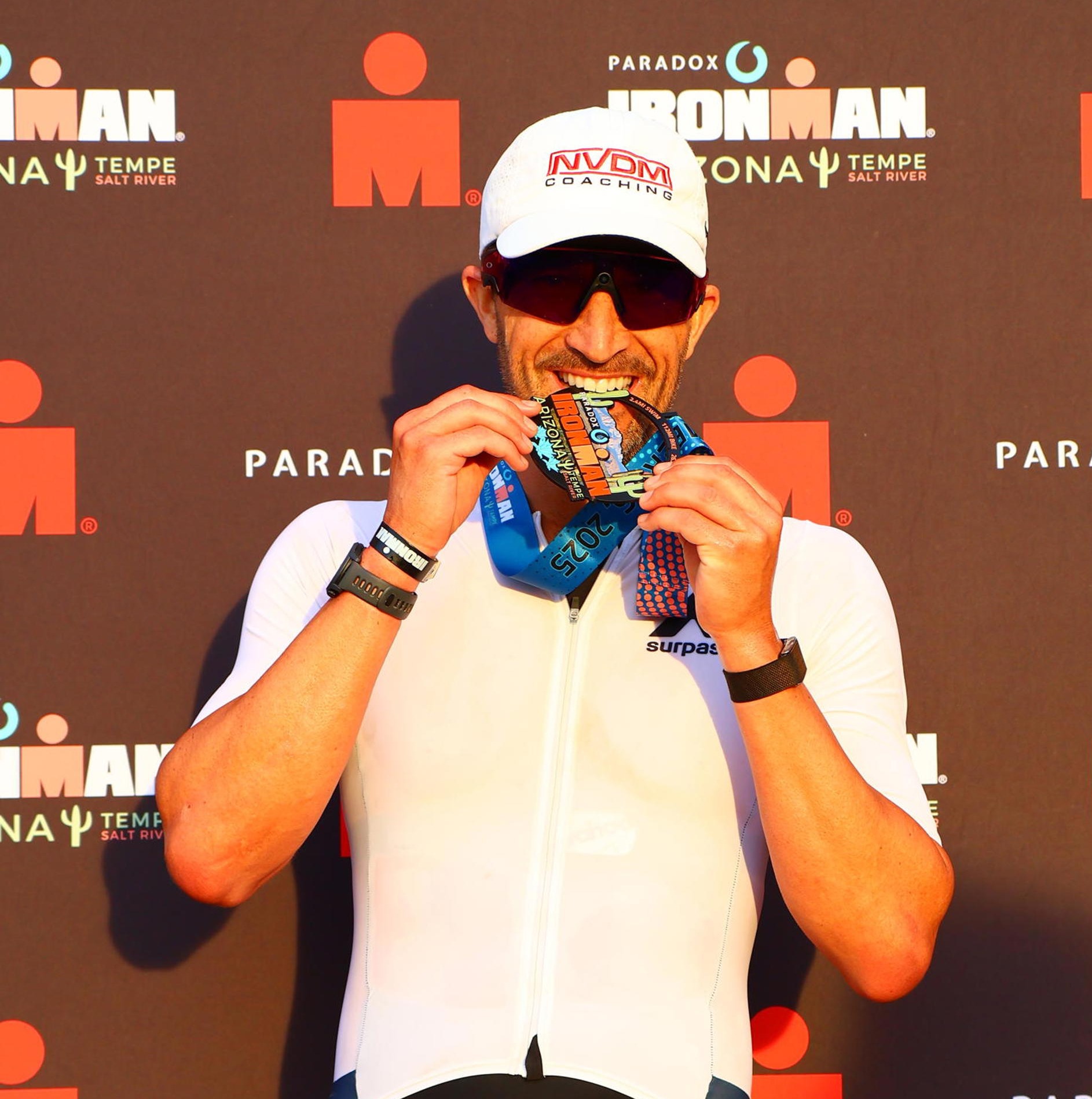
But there’s a bigger picture here too: the future of how we watch endurance sports and beyond.
Imagine the Tour de France with a single breakaway rider wearing Vanguards — letting fans see the peloton’s split, and the micro-movements of drafting and attacking. Not a helicopter shot or a moto cam but a true athlete POV that shows exactly when a rider go all-in. That’s a completely different experience for fans, and one that makes the sport instantly more accessible and cinematic.
Same with IRONMAN: pro athletes could finally show what it’s like on the Queen K or chasing down an opponent. These glasses could help athletes tell the truest version of their race—the strategy, the suffering, the nuance—without needing a film crew or a bulky camera.
It’s easy to see a world where athlete POV becomes a legitimate broadcast layer. And these glasses feel like a glimpse of that future—maybe imperfect today, but undeniably the start of something special.
What to Know
Oakley Meta Vanguard glasses. $499. No subscription
Battery (claimed): 6 hours of continuous audio playback and 9 hours of typical use. You can fully charge Oakley Meta Vanguard in 75 minutes + the charging case can provide an additional 36 hours of charging on the go.
Tech: Ultra-wide 122° field of view 12 MP camera and 3K UHD recording. Rated IP67 sweat, dust and water resistant
Weight: 67 grams (my favorite glasses, Chamelo Shield are 31 g)
Colors: 4 colors : White/Prizm Black; Black, Prizm 24K; Black, Prizm Road; White, Prizm Sapphire.
Verdict
The Meta x Oakley Vanguards are a glimpse into the future of endurance storytelling. They’re the best smartglasses we’ve ever used. The 3K is crisp, the POV is wonderful, speakers are loud, and hands-free voice capture is immediate. For creators, coaches, and athletes who want to bring fans, family, or followers into their world, there is no better.
But they’re not perfect—not yet. The battery limits full-day racing. The lack of onboard music restricts long sessions without a phone. And heavy integration with the Garmin ecosystem means Wahoo or COROS users like me don’t get the full smart experience unless you connect to Strava.
Still, for the right athlete, these glasses unlock a new level of storytelling and perspective. And as technology evolves, I hope we see professional athletes using these.
Should you buy them?
The holidays are here and now is a great time to splurge if you can afford it.
If you want to show the world what training/racing actually looks like, are interested in adding a new spin to your content, or if you simply love tech that pushes sports forward—they’re absolutely worth it.
If you want all-day, full-race POV coverage in 3K? They’re not there yet.
*Disclaimer: Meta sent me the Meta x Oakley Vanguard glasses for testing with the understanding I’d review at Ironman Arizona. All they asked for was my thoughts, comments, and review which are all my own and real. If these sucked, I’d have said so. Also. f*ck AI writing.
Leave a Reply
You must be logged in to post a comment.