

Nike just held its first investor day in nine years, and it opened with a promise I’m happy to hear: it wants to get closer to athletes. Yea, not shit, homie.
I read the fine print so you don’t have to and some of it is good news for runners. Some of it is a calendar problem. And some of it is a round of job cuts that makes the “athlete first” line feel a little more complicated.
Here’s what Nike actually said.
The Push Is Getting Back to Sport
Nike calls the plan Full Stride Ahead.
Strip away the corporate language and it’s a focus play. Nike is picking five sports to put most of its energy into: running, training, football (the real kind, the one with a round ball), basketball and outdoor.
On the lifestyle side, it’s backing Nike Sportswear, Jordan and Converse. Add in 23 priority countries, and Nike says that mix will drive more than 90% of its growth.
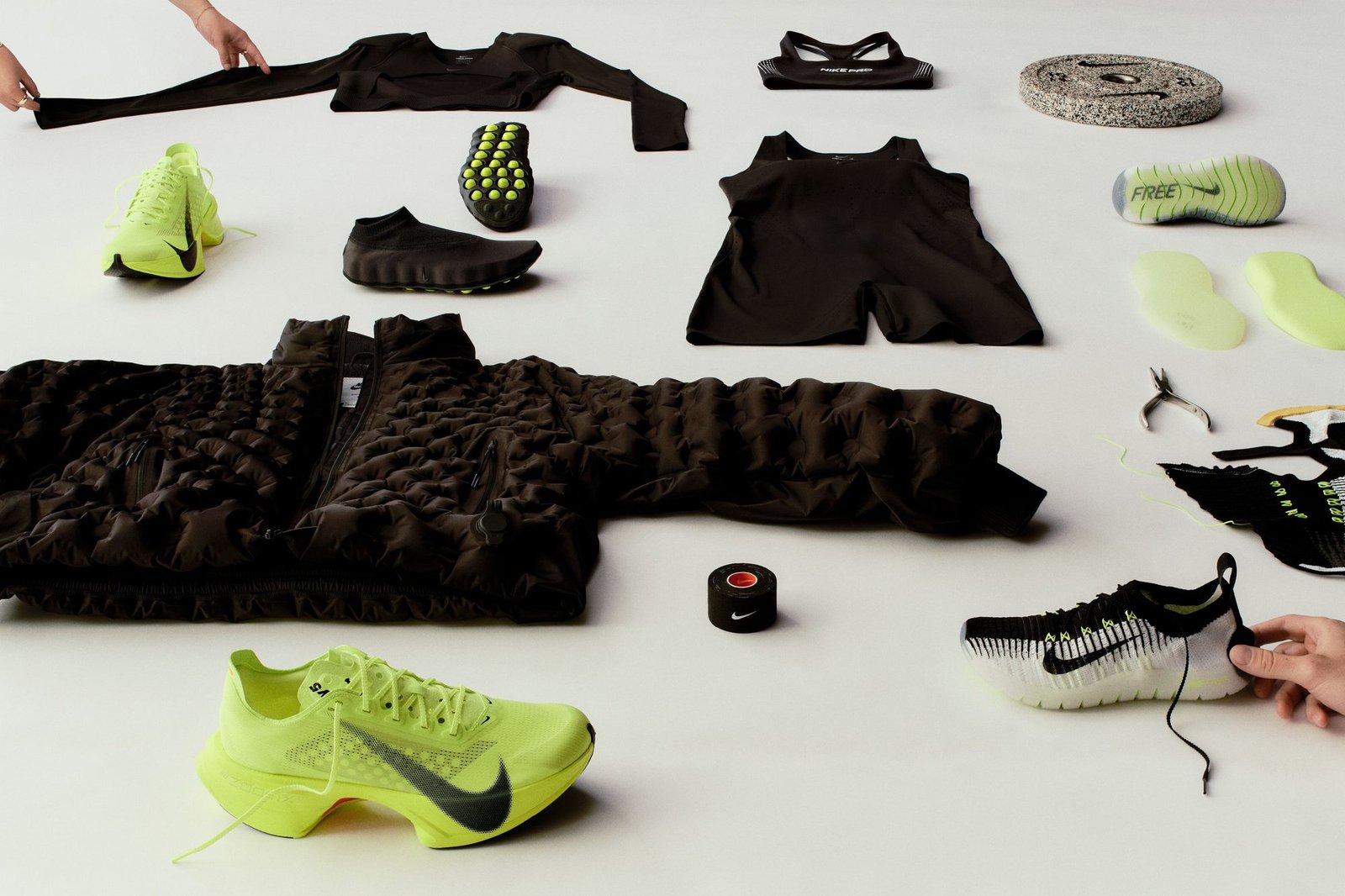
If you’re keeping score, running, training and outdoor are three of the five.
The plan has three pillars. EPIC is about making products and stories athletes actually want. CONNECTED is about being local, meaning more decisions made in the cities and countries where athletes live. FAST is about building things quicker and running the company with less friction.
CEO Elliott Hill put it this way: “Sport has never played a bigger role in people’s lives, and as the leader in a growing $330 billion athletic footwear and apparel industry, the opportunity ahead of us has never been greater.”
He also admitted there’s still work to do on inventory, selling at full price and profitability. I appreciated the honesty.
The Numbers
Nike’s fiscal year ends in May. FY27 is the year Nike is in right now, and FY31 is about four and a half years out. Everything below is measured on that calendar.
Nike is targeting roughly $5 billion in added revenue by the end of FY31, measured from where it is this year. About $4 billion of that is supposed to come from performance sports, which is running, training and the rest. About $1 billion comes from sportswear.
The profit target is the one that tells you how deep the hole is. This year, Nike expects to keep about 6 cents of operating profit on every dollar it sells. By FY31 it wants to be at 12 to 14 cents. Doubling that is a big swing.
But here’s the part Wall Street probably didn’t love. Nike still expects sales to fall this year, by a high single-digit percentage. The decline eases next year, but it’s still a decline. Growth that matches the overall market doesn’t return until FY29, and Nike says it expects to beat the market after that. That’s roughly a year and a half of shrinking before the turn.
Nike’s CFO, Dave Denton, said it plainly: “Our current financial performance does not yet reflect the full potential of those assets.”
The stock jumped early today, then gave it all back and more, closing down about 6%. Investors heard “growth in a few years” and shrugged. One analyst note called the targets more ambitious than expected, with little room for upside surprises.
Running Is Working
Credit where it’s due. Of everything Nike said, running was the most convincing.
Amy Montagne, Nike’s president, said running has grown nine quarters in a row, and that Nike gained six points of market share in the U.S. and Western Europe over the past year in shoes priced above $110. That moved it from the fifth biggest brand in that price zone to third. Her stated goal is to take back the number one spot. She also said she sees more than a billion dollars of new running revenue over the next few years.
The shoe carrying a lot of that is not a super shoe.
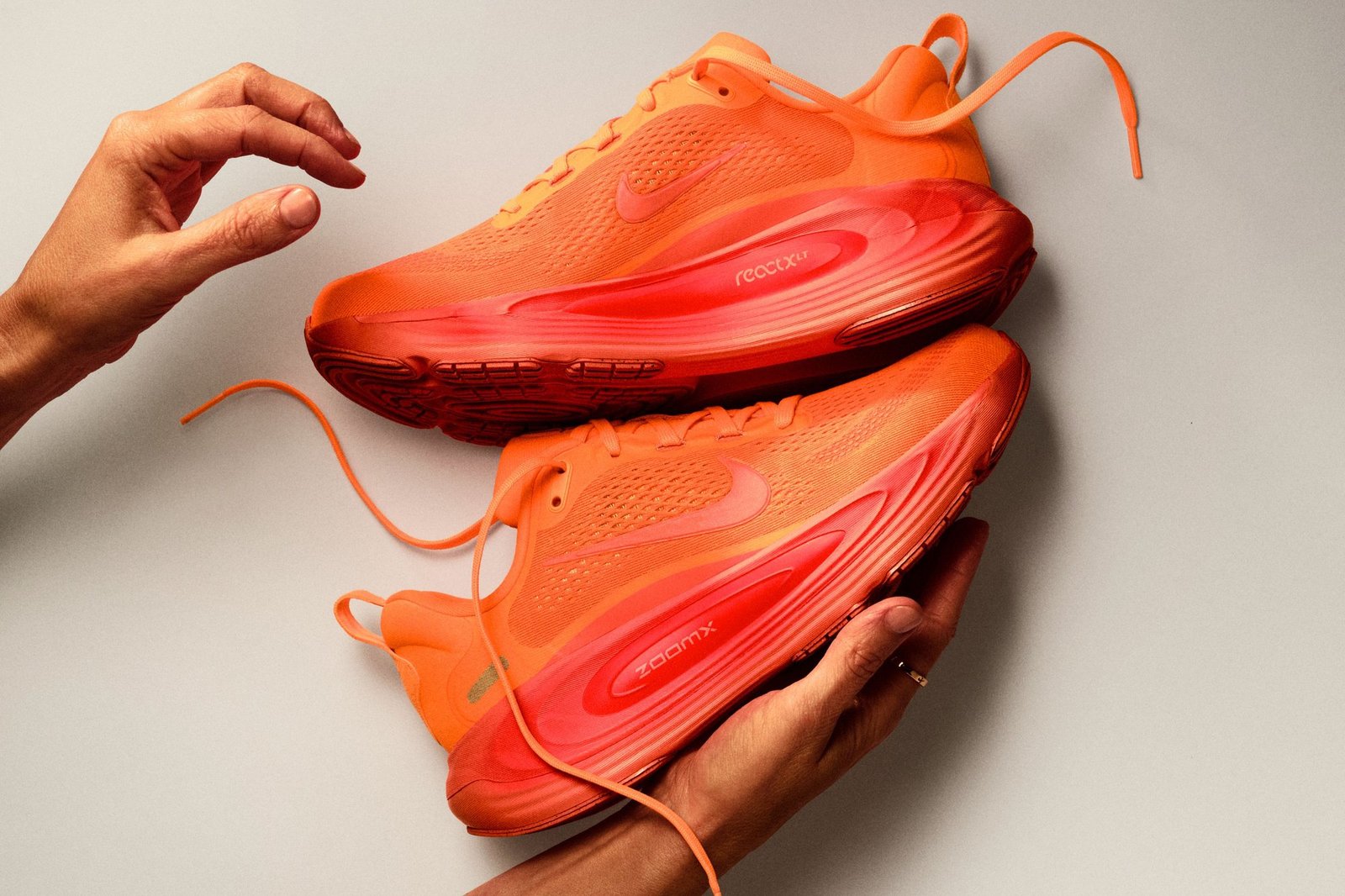
It’s the Vomero. The Vomero line is already a more than $1 billion a year business for Nike, and the Vomero 19 arrives early next year with about a million pairs available in its first month. That’s a huge number for a daily trainer that we didn;t think was that popular. Nike’s own take on the 19: is that it will have the same max cushion and stability as before, but lighter and more breathable.
And this tracks with what I tell runners every week.
Most of your miles are easy miles in a comfortable shoe, not race day in a plated rocket. A good daily trainer is the real business, and Nike seems to know it.
The Hero Shoe Is a Year Away
Now the part that stings a little.
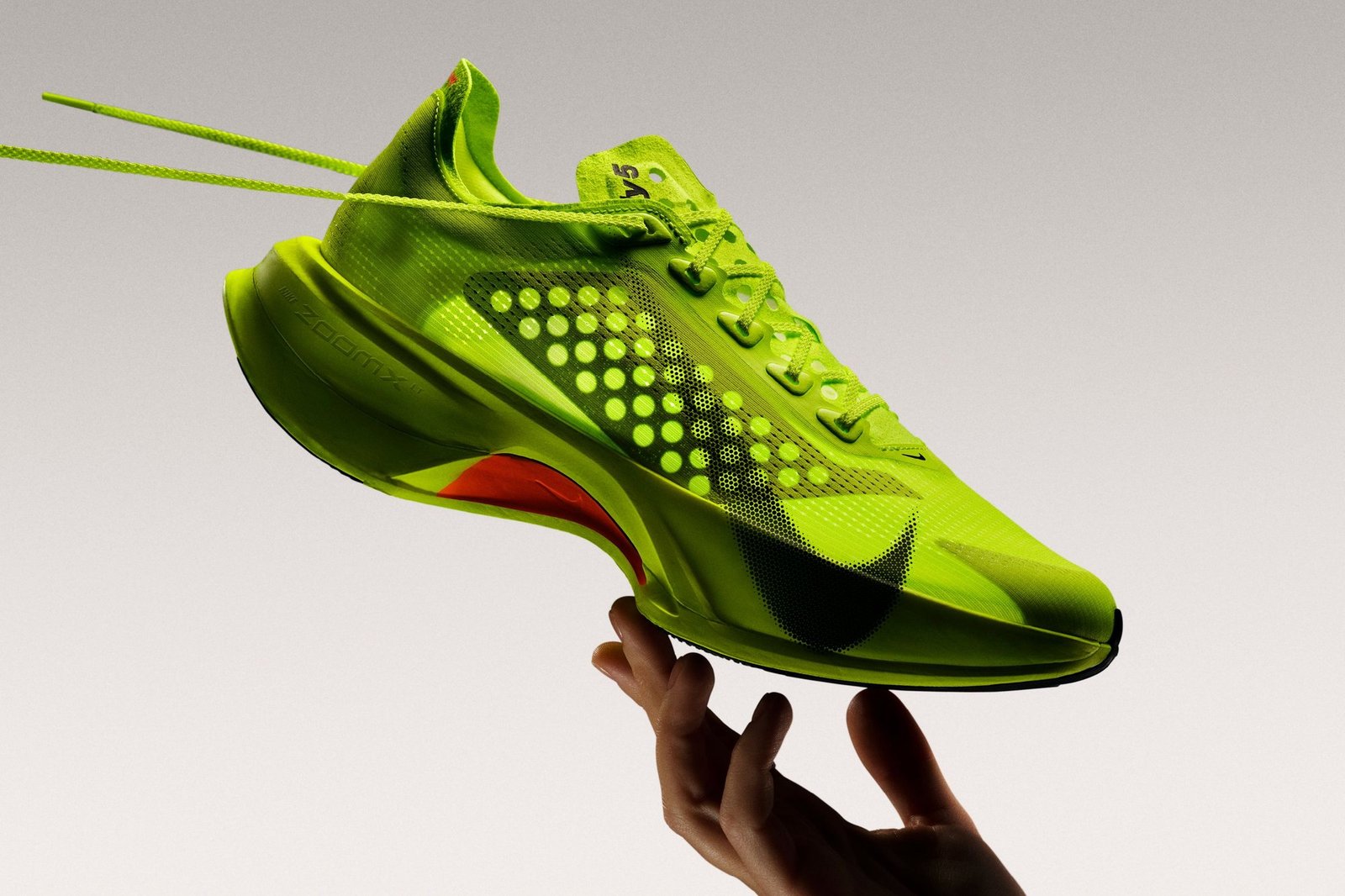
The Vaporfly 5 is the shoe Nike wants you talking about and it’s the “most aggressive Vaporfly yet,” with a wave-shaped plate and two foams. It’s pitched at races from the 5K up to the half marathon.
But it’s also not out until next fall. TWENTY TWENTY SEVEN.
Nike’s lineup for the rest of the racing wall is clearer than it was a month ago.
The Alphafly 4 is out now.
The Apex, Nike’s pinnacle marathon shoe, and the Swooshfly, the entry point for first-time racers, both arrive early next year. Then the Vaporfly 5 closes the set next fall.
I like that Nike is laying it out instead of leaving everyone to guess. But it also means the shoe getting the headlines is the one you can’t buy for about a year. So it will drive some hype now, hopefully help the stock price, and if you’re racing this spring, nothing in this keynote changes your shoe or what you’ll use.
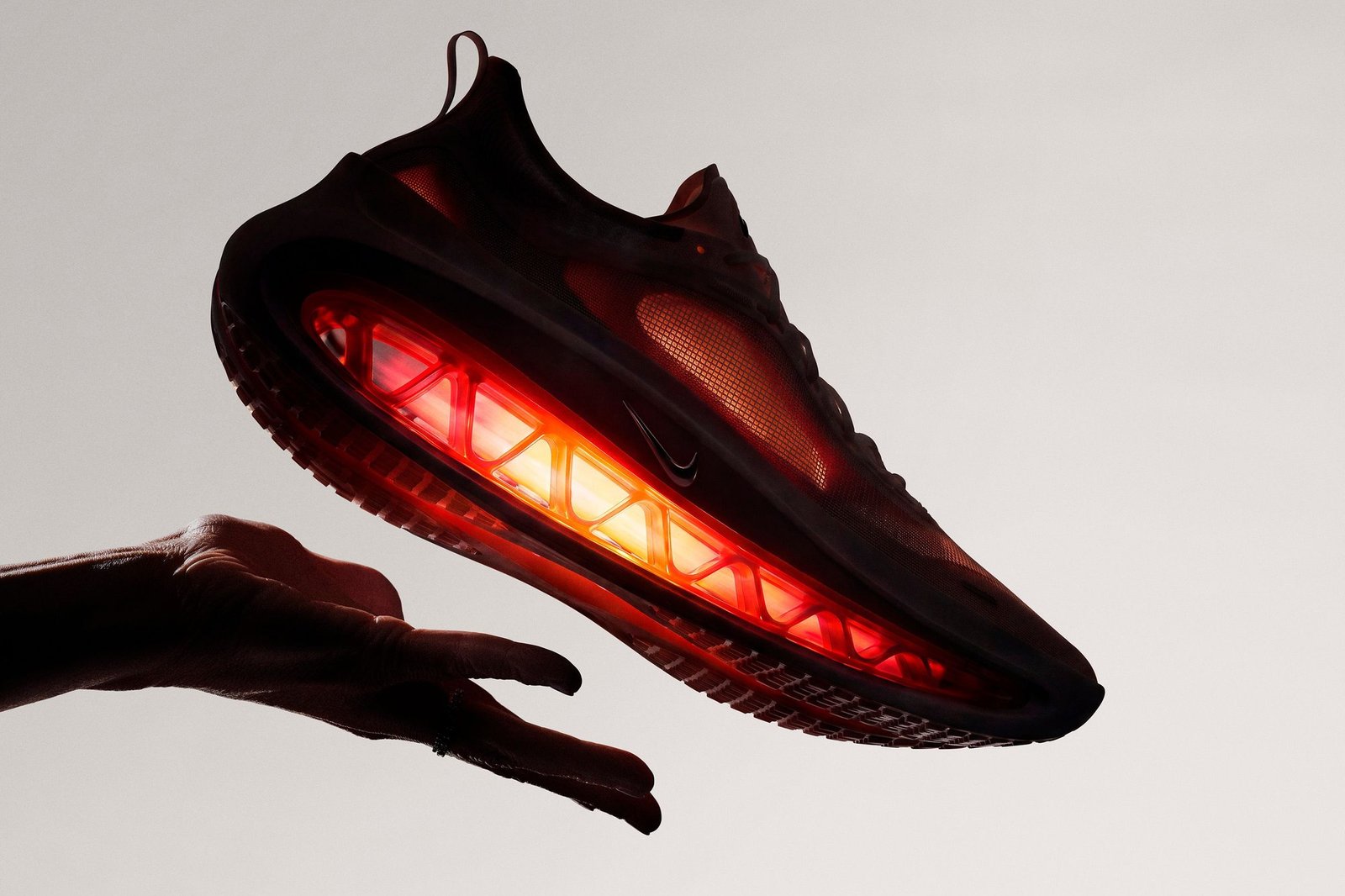
Nike also showed Tuned Air, a new digital way of making Air cushioning. It’s reported to debut in running late next year. I’ll believe how it feels when I put it on my foot.
I’m not going to rehash every shoe Nike showed this week.
What matters for this story is the calendar. A lot of what Nike is selling Wall Street on isn’t in stores yet.
ACG Finally Gets Its Moment
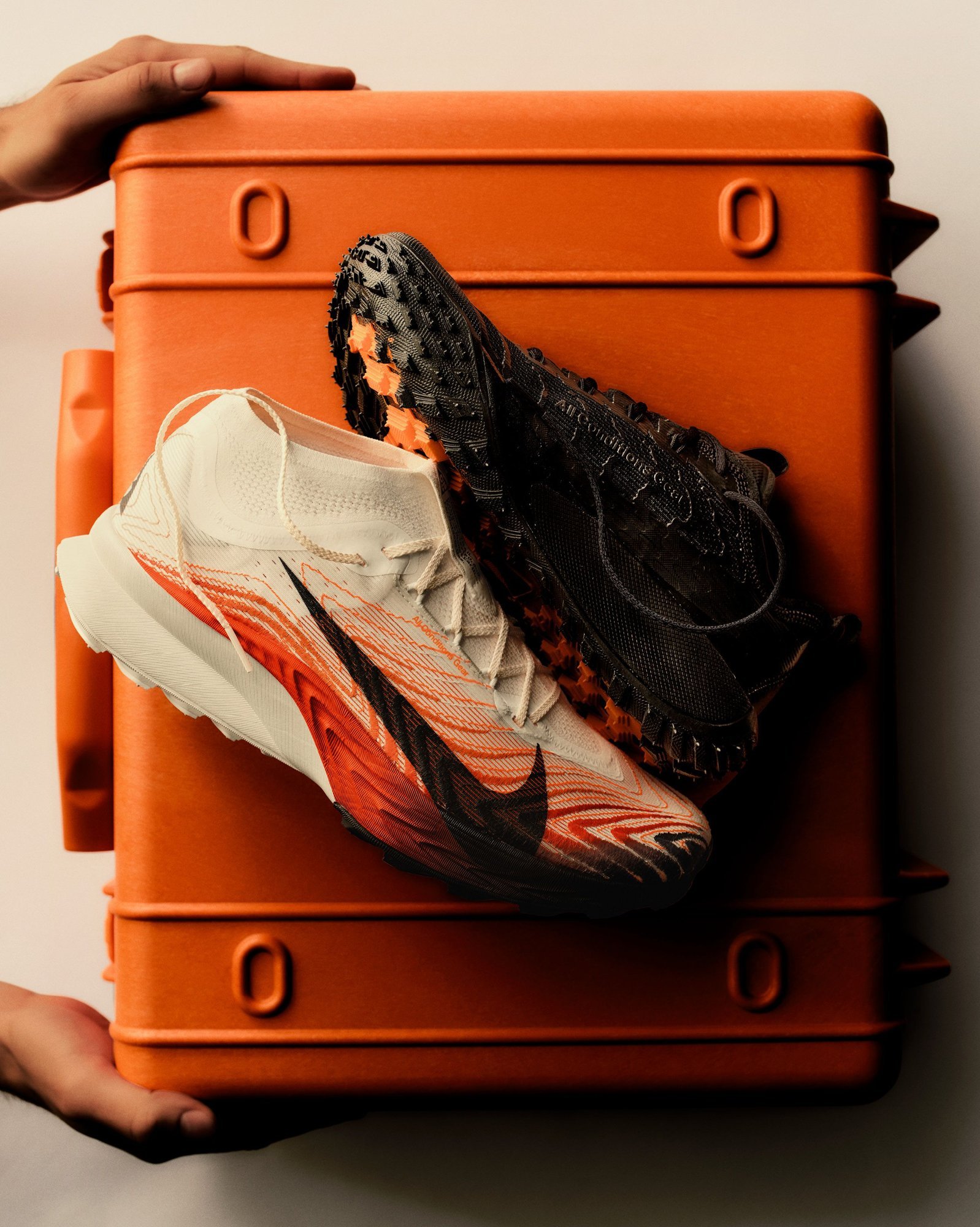
Nike says it holds less than 1% of the outdoor market. Amy Montagne called outdoor one of the company’s “most significant” untapped opportunities, and she put ACG at the center of it. “For nearly four decades, ACG has been waiting for this moment,” she said. “Now it gets to become the outdoor performance brand it was always meant to be.”
The plan is to keep ACG focused on three things: run, hike and explore. Montagne said the product has to “compete with the best in the outdoor market.” Nike wants to take ACG from about 3,000 stores to 8,000 by the end of the plan, and it expects the brand to add more than $1 billion in new sales over a few years.
The shoe that shows where this is headed is the Kigerfly, ACG’s lightest trail racing shoe.
I broke it down, along with the Kiger Hike, in Nike ACG Drops Two Stunning Trail Shoes.
If you run trails or spend your weekends hiking, this is good news. A company this size putting real effort into dirt should mean more options, more testing and more shoes built for the trail instead of borrowed from the road. Run, hike and explore is also how a lot of us actually use the outdoors, so the focus makes sense.
Here’s my skeptical note. Outdoor is a different game from road running. Hoka, Salomon, Altra and the rest have spent years earning trust with trail runners and hikers, and a lot of that trust is built in specialty outdoor shops where shoppers ask hard questions and the staff know the product. Getting into 8,000 stores only helps if the shoes hold up when it’s steep, wet and a long way from the car.
The ambition is big, and I like hearing it. Now the shoes have to prove it. I’ll be watching what ACG puts on the trail, not the store count.
HYROX Focused
If you train for HYROX or any hybrid race, Nike’s message is that it sees you.
Training is one of the five priority sports. Nike already has a two-shoe system built for hybrid racing. The Hybrid RN is a runnable trainer for everyday workouts, and it’s been out since last month. The Hybrid Fly is the race-day version, with a full-length carbon plate and a wider, more stable base for the transitions between stations. That one arrives next spring. Lauren Weeks, a world champion hybrid athlete who helped develop them, was among the athletes Nike put on stage this week.
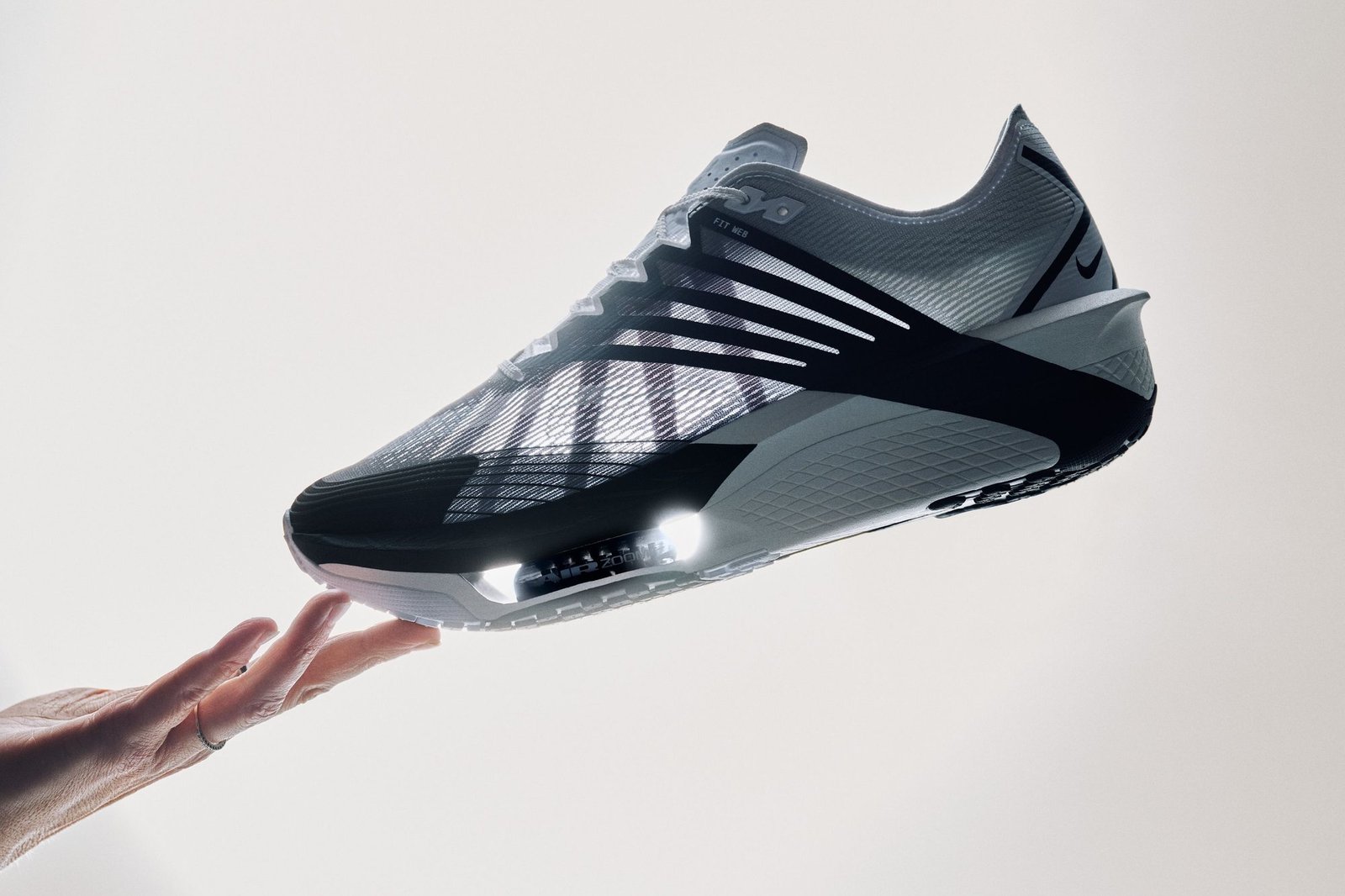
Here’s what I couldn’t find: a HYROX number. Nike didn’t tie any specific revenue target to hybrid racing in anything I could read, and the full deck and replay aren’t posted yet. But I’ll keep checking or hopefully hear more.
Also worth remembering that PUMA is the official apparel and footwear partner for HYROX, with a deal that runs through 2030. Nike isn’t the official partner, it is simply trying to get into the athletes’ bags instead.
Expected Layoffs
This is where “athlete first” gets complicated.
Nike’s cost-cutting program is called Pace. It’s supposed to save about $2.5 billion a year by FY31, at a cost of roughly $1.3 billion to get there. Nike has said it will mean fewer roles at the company, and decisions on who is affected start next year. Nike hasn’t said how many people that is. It’s not the first round of cuts this year either.
The China picture is a reset as revenue there fell 26% last quarter. Nike is reorganizing around 20 priority cities, with Shanghai leading on running, and it expects China to stay roughly flat through FY31. For a runner in Texas, that’s a distant story. But it’s the reason Nike needs the U.S. running business to keep winning.
My Thoughts
I buy the strategy. I don’t buy the timeline yet.
Putting running, training and outdoor at the front of the company is the right call, and the running numbers back it up. Nine straight quarters of growth, real market share gains and a daily trainer launching with about a million pairs in its first month is a company that remembered what its customer does with its shoes.
What I’m waiting on is proof. The hero shoe is a year out. Sales don’t grow for roughly another year and a half. The savings plan means people will lose jobs, and Nike still hasn’t said how many. Lots of cuts to help their stock price.
I’m with Wall Street on one point and against it on another. Nike deserves patience on product. Running shoes take time, and the Alphafly 4, Apex and Swooshfly are lined up one after another. It doesn’t deserve a pass on execution. A plan with this many moving parts only works if the shoes land on time, the stores are stocked and the discounting stops.
For the athletes reading this, here’s my practical take. Don’t wait on Nike to decide what you run in. If you want a daily trainer, Vomero 19 is worth looking at when it lands. If you want a marathon shoe from Nike, the Alphafly 4 is out and the Apex is close.
If you do hybrid racing, the Hybrid RN is already here and the Fly is coming. And if you’re a Vaporfly fan, mark your calendar for next fall and start saving.
I want Nike to win running because Nike is America. Competition makes shoes better but I’ve heard enough turnaround stories to know the real test isn’t the keynote but what’s on the shelf and what’s on your feet when race day comes.
Leave a Reply
You must be logged in to post a comment.