

Most gear news is a new color and a bigger price tag. These six are different. Each one goes after a problem every endurance athlete knows: heat, cold, weight, one shoe being asked to do every job, and what happens when you crash.
I haven’t worn any of them, so this isn’t a review. It’s the list of designs I can’t stop thinking about, and what the brands themselves say each one does.
Nike ACG Radical AirFlow: A Shirt That Runs the Air Conditioning
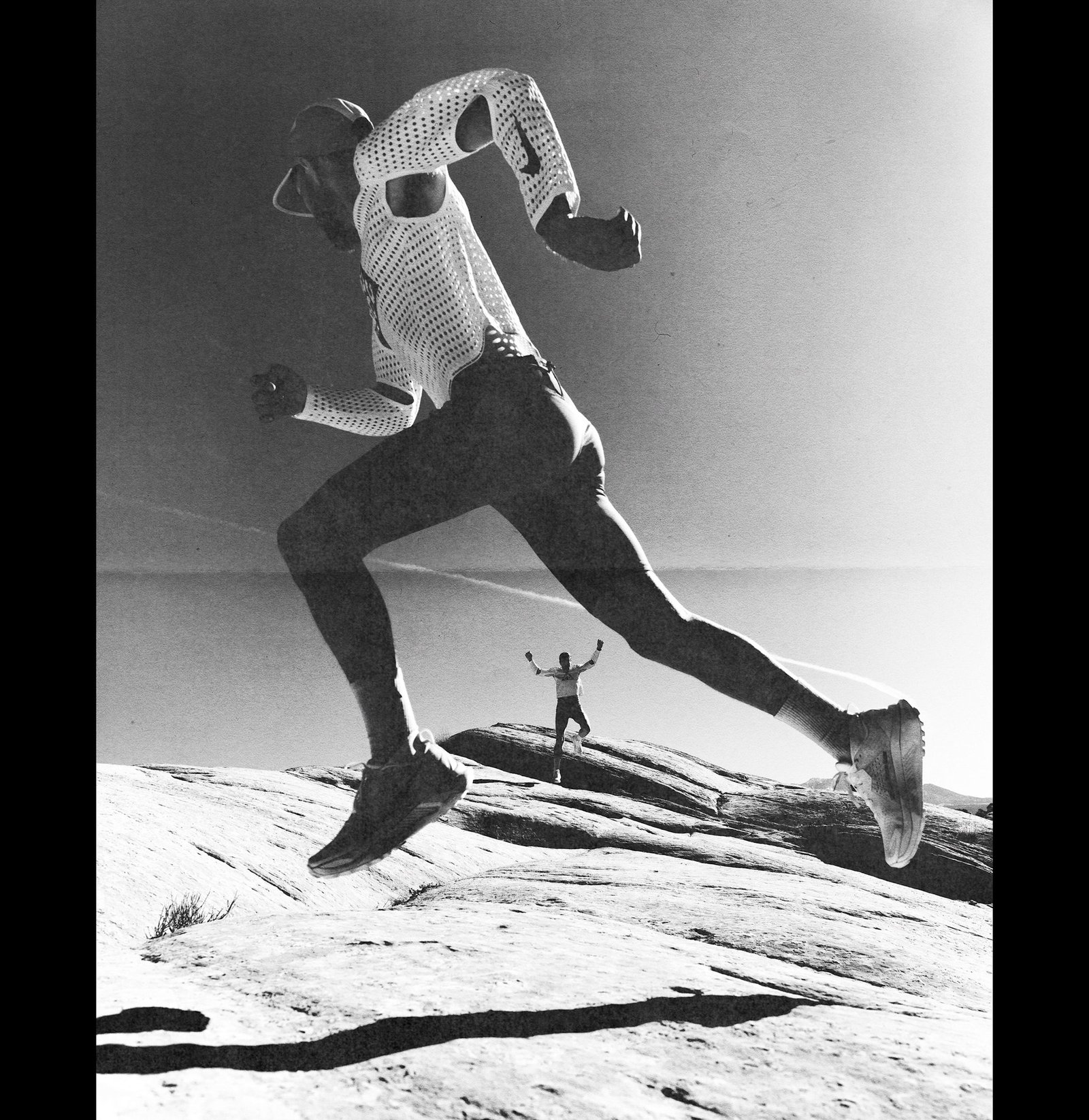
Nike starts with a problem I like. When you’re cold, you add a layer. When the trail is cooking you, you can only take off so much. So Nike ACG asked what happens if the shirt helps you cool off instead of just getting out of the way.
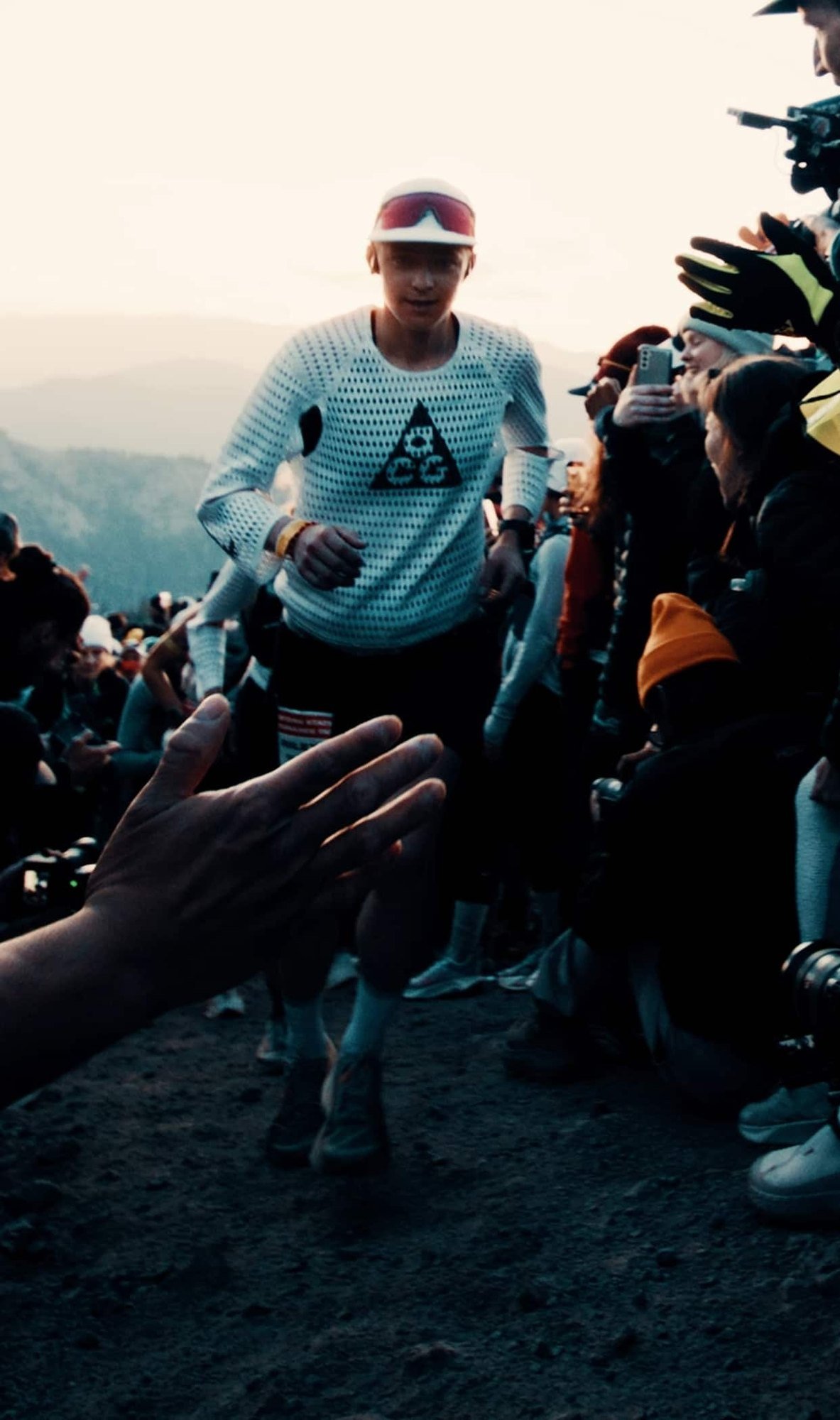
The answer is a knit full of open holes with engineered air ducts built into the high-heat, high-chafe zones. As you move, it funnels air onto your bare skin so sweat evaporates faster. Nike says its Sport Research Lab people described it, and the ACG team assumed they were exaggerating.
Then Caleb Olson wore a prototype to win last year’s Western States in 14:11, the second-fastest winning time in the race’s history. Temperatures reached 100 degrees that day. Nike says Olson told them it felt like walking into a refrigerator.
Nike’s All Conditions Racing Department athletes tested the top through the elite season, and Nike says their feedback changed it. The shirt bunched up near the elbows, so the team added cutouts.
Nike lists the long-sleeve ACG Radical AirFlow NXT at $150. It also gives you a warning I appreciate. No matter how cool it looks, it only feels cool if there are as few layers underneath as possible. Wear a base layer under it and you’ve bought a very expensive fishnet.
lululemon Ventscape: The Warm Vest That Breathes

Everyone knows the winter deal. You freeze for the first mile or sweat through the last five. You dress for the start or you dress for the finish, and you’re wrong either way.
lululemon built Ventscape to kill that trade. It’s a run vest with PrimaLoft ThermoPlume+ insulation to keep you warm when you’re slow and cold, plus mesh vents. As your pace and effort climb, lululemon says the vents pull air in and flush out the heat and humidity that build up around your body.
lululemon says it tested the vest for more than 250 hours across 2,500 kilometers, in its lab and outdoors. Lewis Hamilton, the seven-time Formula 1 world champion, helped shape the fit and construction and ran it in the brand’s cold chamber and in real-world conditions. So did Leah Yingling and Nikki Hiltz.
Hamilton’s verdict, from lululemon: “The moment I picked up the pace, it just adjusted with me. No overheating, no chill. That’s when it clicked: This thing is actually reading my effort.”
lululemon says Ventscape launches globally starting in December. I couldn’t confirm a price from lululemon, so I’m not going to guess one. I’d check lululemon.com when it goes live.
“No overheating, no chill” is the claim I want to test. I’d want one slow start in the freezing cold and one hard tempo before I believed it.
Gobik ICEFLOW: The Tour de France Ice Vest
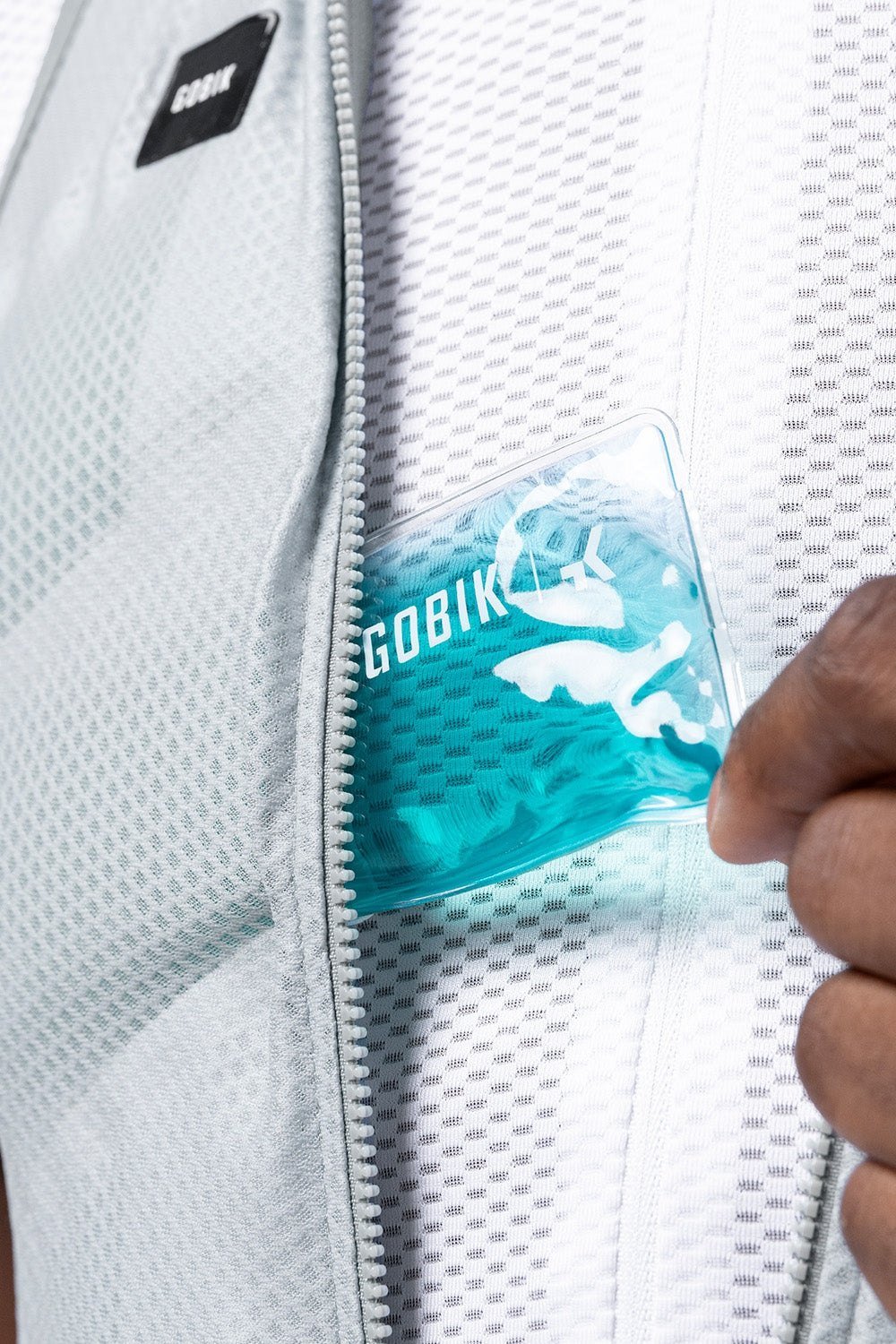
Picture a pro cyclist on the rollers before a stage, wearing a vest with pockets full of frozen gel. That’s an ice vest, and the idea is smarter than the look.
Gobik’s ICEFLOW is the one the brand built under World Tour team standards. It’s an open-mesh vest with 14 pockets, six on the front and eight on the back, each holding a gel pack. You freeze the packs for about 12 hours, zip in, and the cold sits against your torso while your legs get ready to race. Gobik says its pro road and mountain teams use it before a start, on the rollers or on the team bus, and for the first minutes of recovery after.
Gobik was the technical apparel partner for Movistar and Netcompany Ineos at this year’s Tour de France. Its chief marketing and sales officer described the vest at the Tour’s start in Barcelona as a warm-up tool: cool the upper body and core while the legs warm up.
The key word is before. Riders aren’t racing in these. Gobik says a set of packs is good for 45 to 60 minutes, the vest is meant for temperatures from 25 to 40 degrees Celsius, or about 77 to 104 Fahrenheit, and the zipper is there so it comes off in seconds right before the start.
Gobik also sells it to the rest of us, at 150 euros. If you have a hot race, or a hot indoor trainer session with no airflow, this is the most practical idea on my list.
adidas Adizero Adios Pro Evo 3: The Two Hour Racer
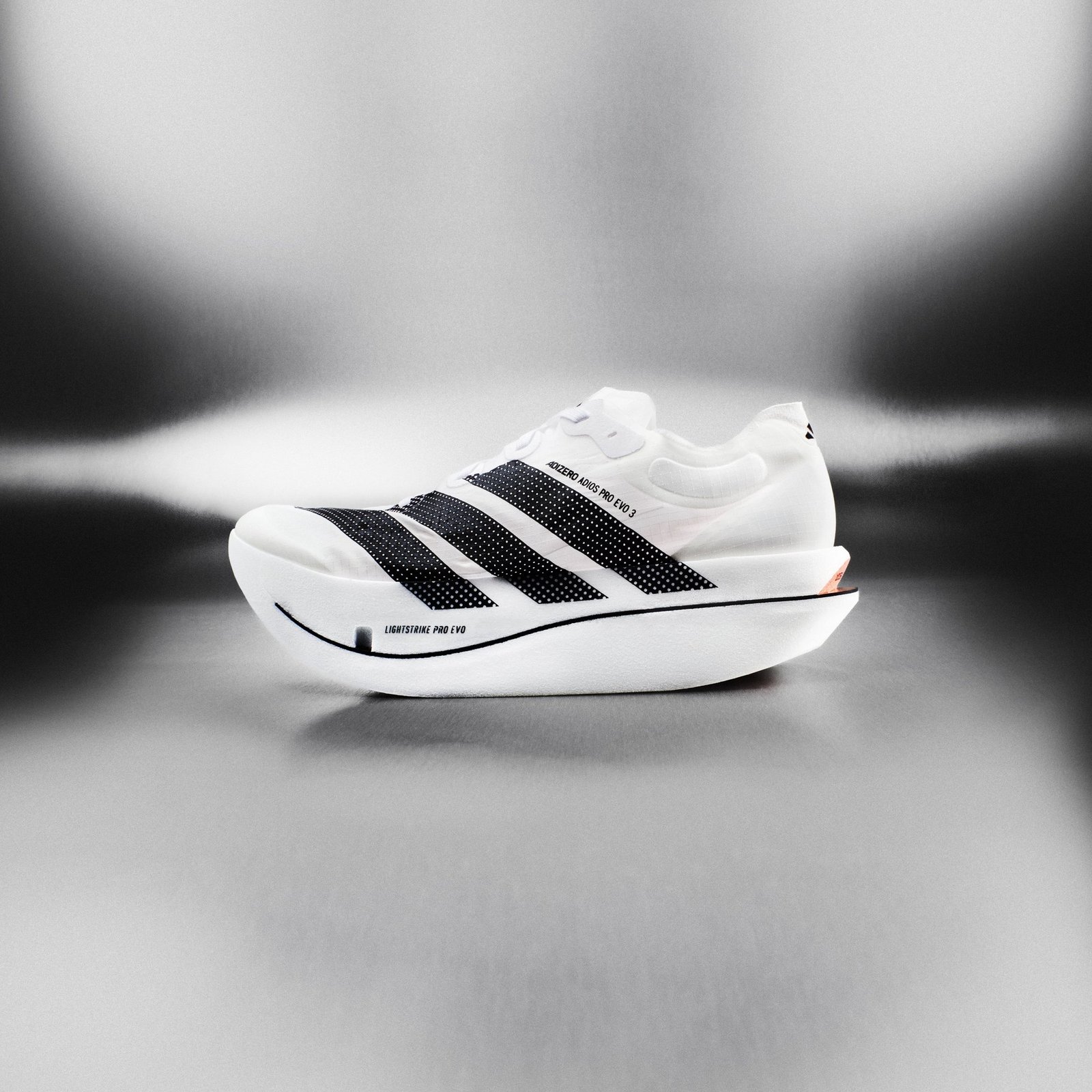
Sabastian Sawe ran the London Marathon in 1:59:30 this year. He became the first person to go under two hours in an official marathon. His shoe was the Adizero Adios Pro Evo 3. Yomif Kejelcha, who was second, also went under two hours in the same shoe.
The headline number is weight. adidas says the Pro Evo 3 averages 97 grams, and calls it the first running shoe under 100 grams. It gets there with a new foam called Lightstrike Pro Evo, which adidas says is about 50 percent lighter than the foam in the previous model, and a design called ENERGYRIM. Instead of a plate under your foot, ENERGYRIM puts a carbon rim around the foam. That frees up more foam for cushioning and energy return, with a 39-millimeter stack at the heel.
Sawe said, “It reflects the hard work behind the scenes, the support of my team, and the role of innovation in helping me push beyond limits.” adidas worked with him on the shoe for about three years.
It’s also $500, and adidas released it in limited numbers.
That’s the part I want you to remember. The shoe didn’t run the marathon. Sawe did. A 97-gram shoe won’t turn your marathon into his. It’s a tool built for an athlete who already does the work.
adidas Adizero Gearshift: The Plate With a Gearbox
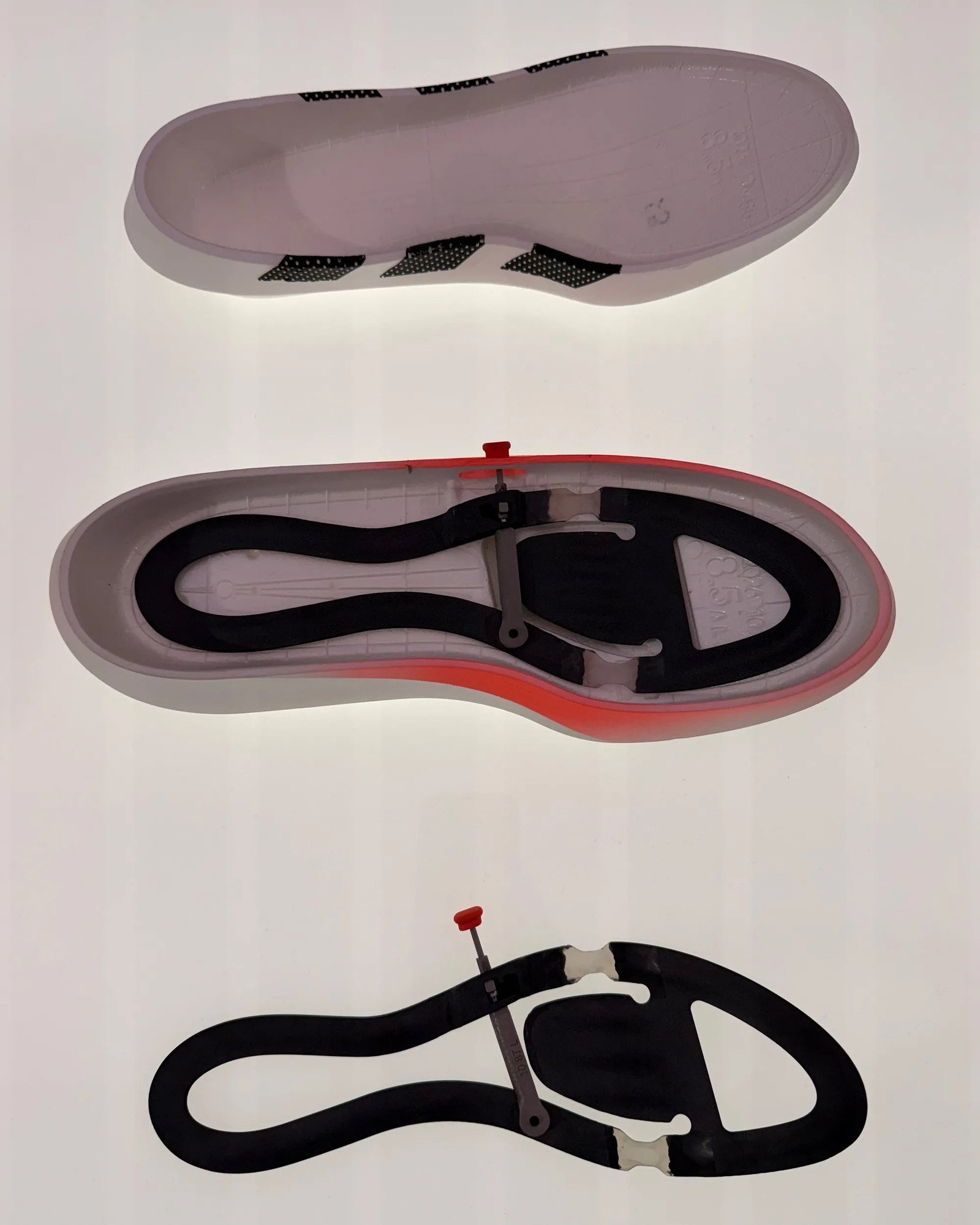
A carbon plate normally has one stiffness, picked for you in a factory. You use the same shoe for easy miles and for race day, and it can’t be right for both.
adidas showed a concept that fixes that. The Adizero Gearshift has a carbon plate you can dial between flexible and stiff, so the same shoe can be soft on an easy day and stiff when you want to race. It isn’t a two-setting switch either. The plate adjusts across a range.
adidas showed two versions at its Home of Innovation event in Germany. The mechanical one has a slider on the side of the midsole. You press a button and slide it, but you have to stop to do it. The digital one adds electronics and a battery, so you can change the stiffness from a phone or a watch, and it’s heavier.
This is a concept. adidas hasn’t announced a price or a release date, and hasn’t said it will actually make it.
I still need this. One shoe that does the easy run, the tempo and the race is the best idea on this list. Whether it makes you faster is a different question, and nobody can answer that yet. I’d want to know what the digital one weighs, how long the battery lasts and whether it survives a wet winter before I’d trust it on race day.
Aerobag: Bib Shorts With an Airbag
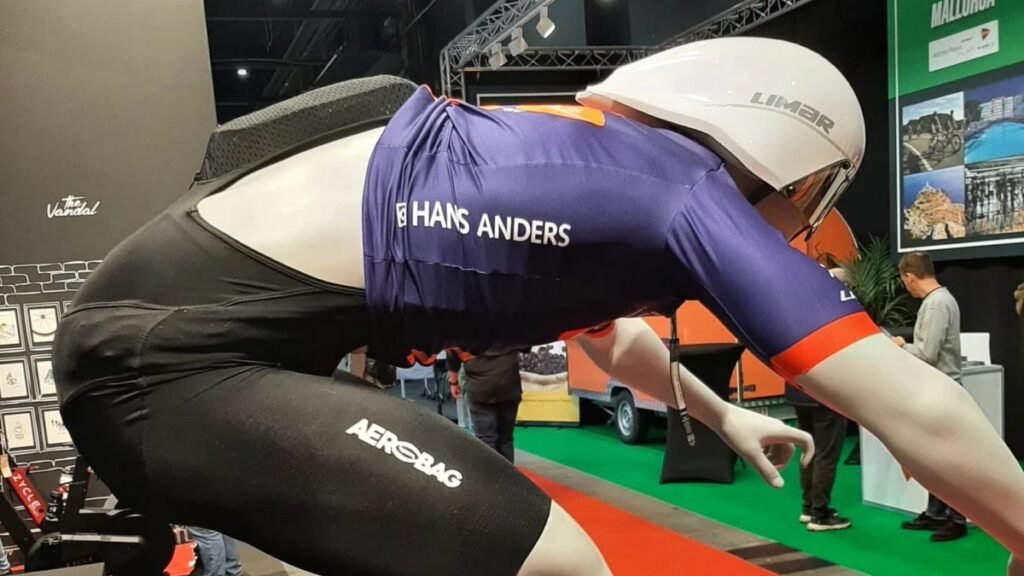
Every other pick on this list is about feeling better or going faster. This one is about what happens when you hit the road.
Aerobag is a Belgian company that makes a wearable airbag for cyclists. The device plugs into the straps and waistband of specially made bib shorts. Aerobag says it uses nine sensors scanning 200 times a second, and when its algorithm sees a crash, it deploys in 100 milliseconds and puts an air chamber around your neck, back, chest and hips. The whole system weighs about 500 grams. The CO2 cartridge and the electronics sit in a small pocket on the back.
After it fires, Aerobag says it starts deflating on its own and the rider can keep going. To be protected again, you swap in a new inflator.
Aerobag says it started after Bjorg Lambrecht, a young Belgian rider, died following a crash in a race. Quinton van Loggerenberg of Aerobag put the thinking plainly: you can’t keep sending riders down the road at 70 kilometers an hour in nothing but Lycra.
The WorldTour team Picnic PostNL helped develop it. Its riders have been training in it, and the team showed it off to the press before the start of this year’s Tour de France in Barcelona. Racing is the open question. The UCI opened a consultation this year to set a framework and standards for airbag systems in cycling, and Aerobag says the UCI has been “broadly supportive.” I couldn’t find a UCI rule or approval that lets anyone race in one yet. Earlier this year, a Picnic PostNL R&D expert said the team hoped to be race-ready next year, depending on testing and an agreement with the UCI.
What surprised me is that you can already buy it. Nalini, Picnic PostNL’s clothing sponsor, sells the Aerobag bib shorts for 289 euros. The airbag device is sold separately: Aerobag lists it at 685 euros, and Nalini lists it at 828.85 euros. I couldn’t confirm why the two prices differ, so check the total with tax before you order. A replacement inflator is 73.55 euros. Aerobag calls the first run a limited series and ships to the EU and UK for now.
My Thoughts
Look at what these six have in common. None of them are about looking fast. Nike and lululemon both go after heat you build while you move. Gobik goes after it before you start. adidas went after weight (yes, speed too), then after one shoe doing too many jobs. And Aerobag goes after the one problem none of the others can touch, which is what happens when you hit the ground.
Four of these have launched: the Nike top, the Gobik vest, the Pro Evo 3 and the Aerobag bibs. Ventscape arrives in December. Gearshift is a promise. The Gobik vest and the Nike top are the ones most athletes can use. The Pro Evo 3 is a $500 shoe for people chasing a marathon PR. Aerobag is real and you can order it, but it costs roughly a thousand euros or more all in and isn’t cleared for racing, so I’d treat it as a training and safety purchase for now. Ventscape I’d keep an eye on for winter, and Gearshift stays on my wish list until adidas puts a date and a price on it.
I haven’t worn any of them, and I won’t tell you one works until I have. But if you want to know which designs I can’t stop thinking about, it’s these six.
Leave a Reply
You must be logged in to post a comment.