

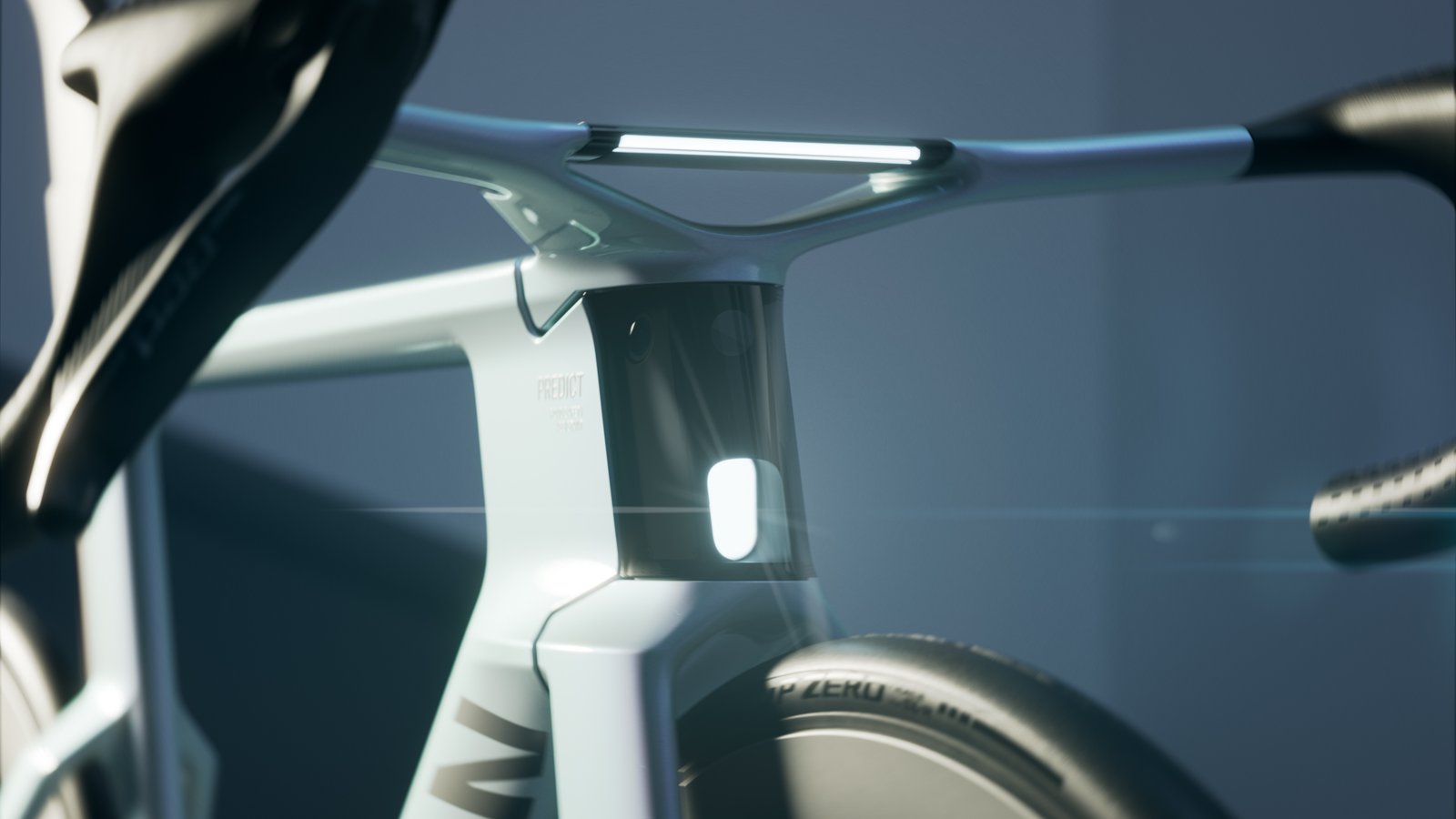
Cyclists die on roads every day. Not because they’re reckless and not because they aren’t paying attention. But because of the environment around them, like distracted drivers, unpredictable traffic, deteriorating road surfaces moves faster than they can react to.
Canyon thinks technology can close that gap, and at Eurobike, they showed the world what that looks like.
The result is the Canyon Predict; a fully integrated safety ecosystem built around a prototype road bike and a smart helmet called the Stingr Smart. Together, they represent one of the most ambitious attempts to bring automotive-grade safety intelligence into cycling.
Say what you want about concept bikes and there are plenty of them that never make it past a press release but Canyon is adamant this one is different.
They’ve already proven the core technology works, and they’re targeting a market introduction in approximately three years.
Predict: 360 Degrees of Safety
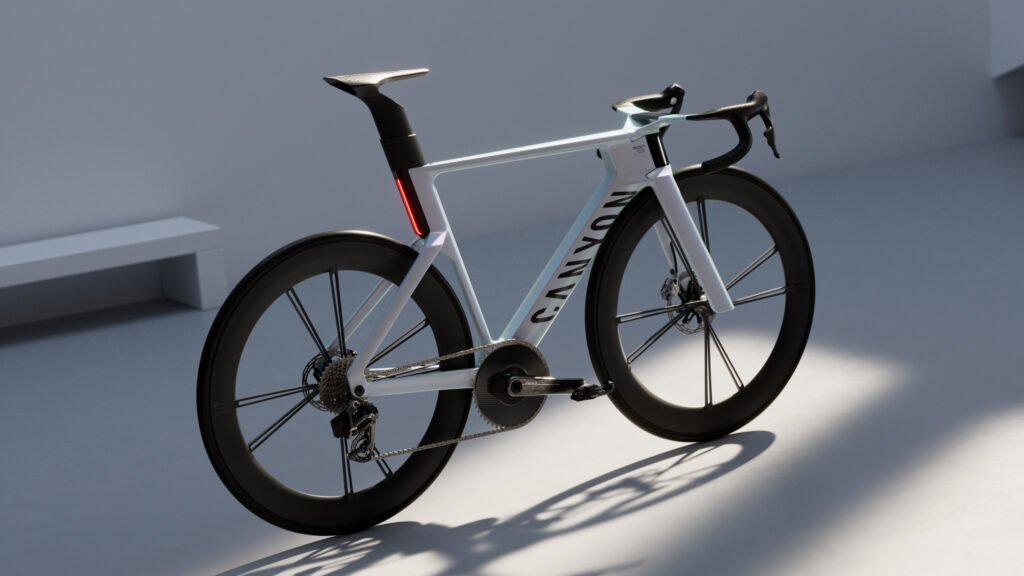
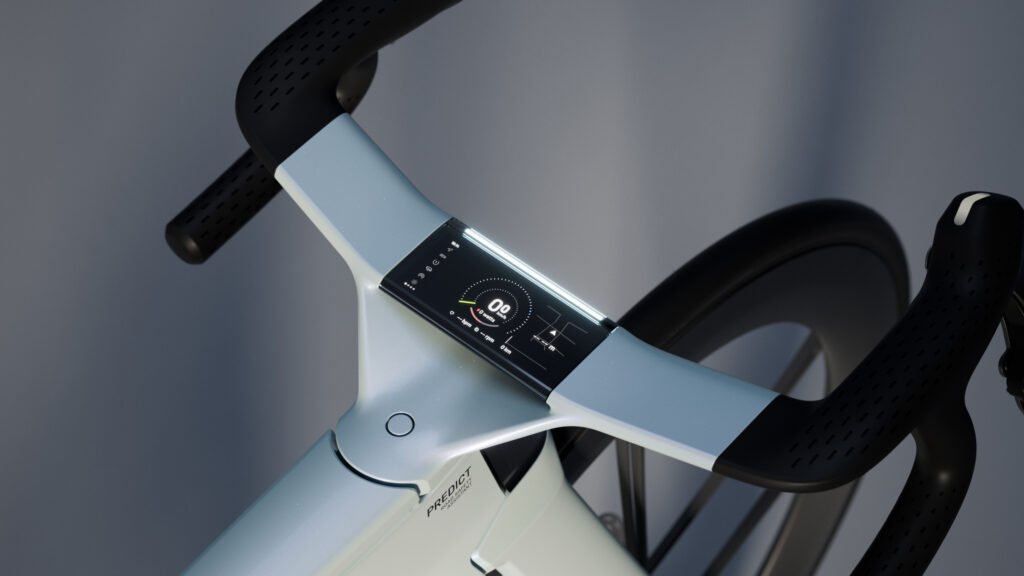
On the surface, the Canyon Predict Bike looks like a gorgeous and legitimate aero road bike. Nothing too alarming or different until you start looking closer.
The system uses a full 360-degree sensor array with cameras and radar units that feed continuously into what Canyon calls the “Cognitive Core,” an onboard computer running a Large Vision Model AI system. All processing happens on-device, so no cloud or internet required, just the ability to react in real-time not wait for a server or anything.
Canyon’s IoT hardware lead, Mazen Jrab, put it plainly, “the advantage of on-device AI processing is that everything happens instantly. Zero delay. Split-second timing,” he said. “This could potentially save lives.”
The system fuses data from optical cameras, radar (measuring distance and closing speed of hazards), and on-bike sensors tracking speed, steering angle, and stability.
From all of that, it builds a real-time situational model.
In theory, this is not just around traffic, but around the physics of the ride itself.
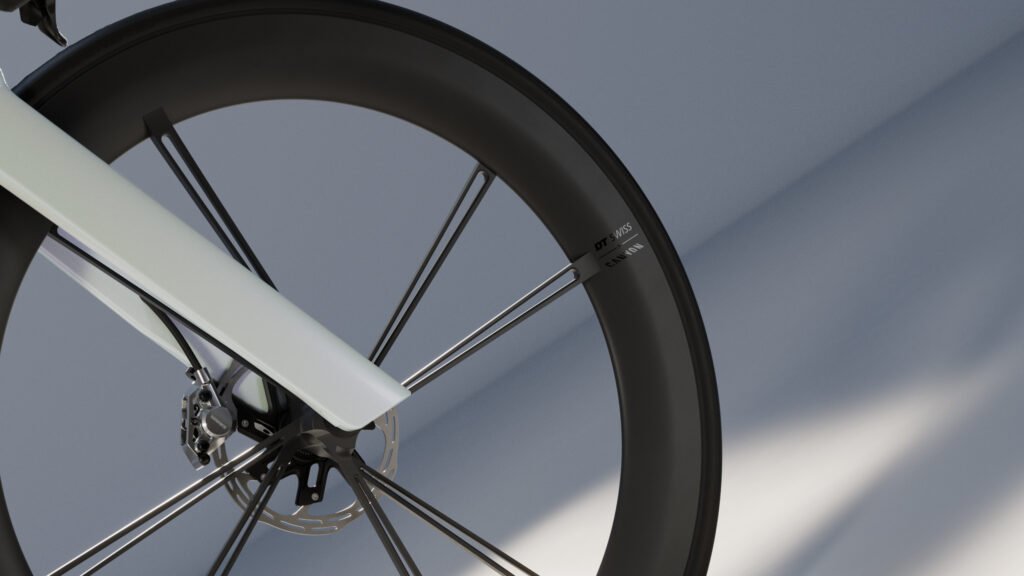
It can flag an approaching vehicle, warn you about group-ride proximity, advise on cornering speeds, and even detect tricky surface conditions before you feel them through the wheels. A motion sensor integrated into the DT Swiss wheel hub adds another layer of data to the mix.
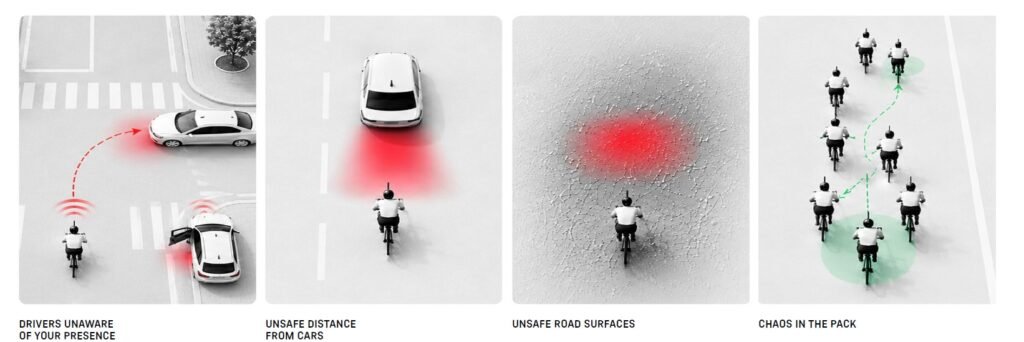
What does the bike actually do with all of that information?
Three things. First is the handlebar-integrated display, lights built into the shifter hoods that indicate threat severity and direction, and haptic feedback. Warnings escalate progressively as subtle cues at first, then more urgent signals if the situation demands it.
The bike can also drop the seatpost automatically to lower your center of gravity and improve stability in a critical moment.
Canyon describes the system’s goal as transforming cycling safety from reactive to predictive which every cyclist should be celebrating because right now, the Garmin Varia radar gives us the best rearview mirror and that’s about it.
The Stingr Smart Helmet

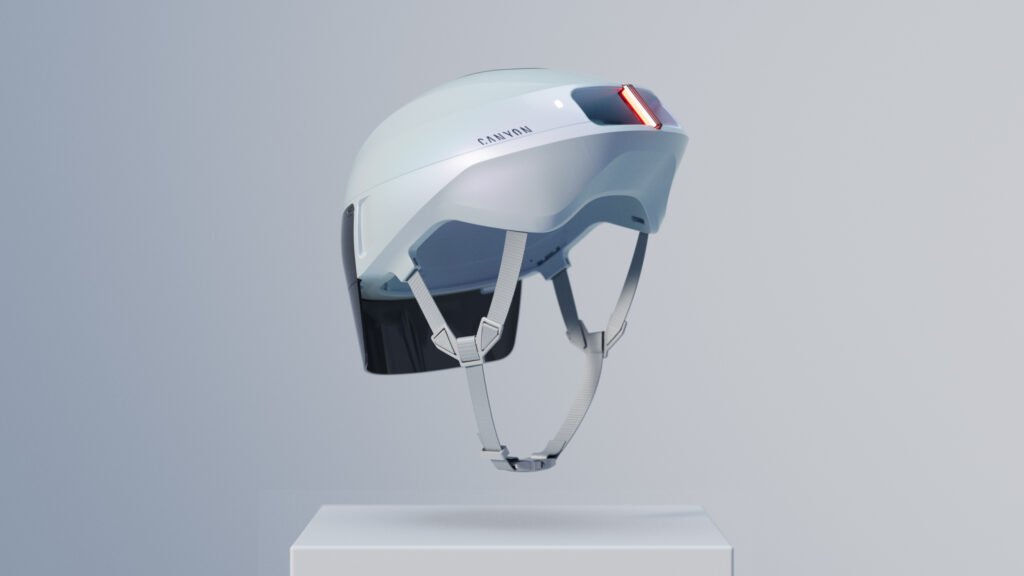
The Stingr Smart helmet is where this gets genuinely wild and becomes even more intuitive.
Built on the architecture of Canyon’s existing Stingr aero helmet which means it’s already optimized for aerodynamics and protection — the Smart version adds a motorized (yes, motorized) retractable visor with a heads-up display projected on the inside surface.
Data visualizations appear primarily in the rider’s peripheral vision, minimizing cognitive load while keeping eyes forward. When a threat escalates, warnings move to the center of the display. The whole system communicates through Prediction Assist, Distance Assist, Terrain Assist, and Group Ride Assist which are the same alert categories coming from the bike, now rendered visually on the visor.
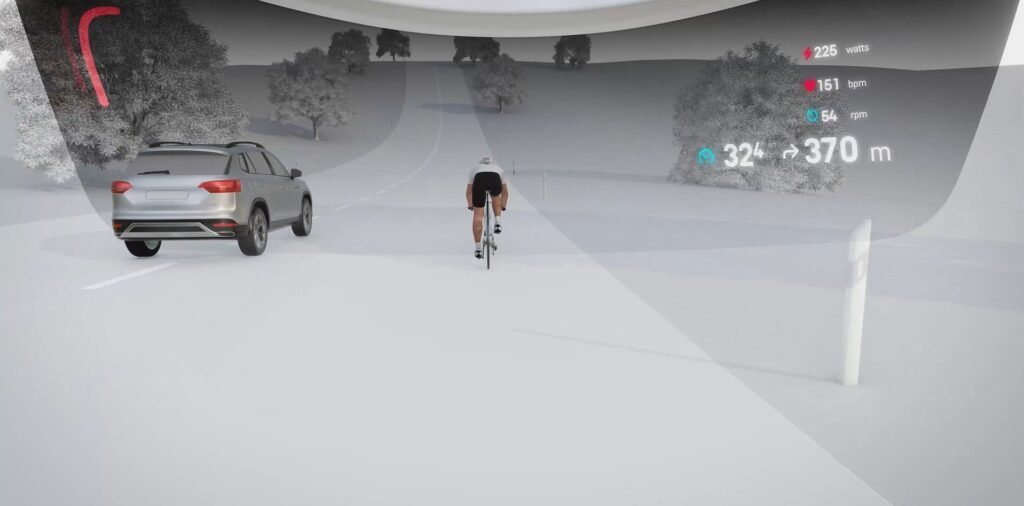
The display can also show speed, power, heart rate, cadence, elevation, gradient, gear usage, and battery levels. The helmet is connected to the bike and can receive inputs from the Canyon Predict bike or operate as a standalone device paired to a smartphone. It works with Bluetooth and ANT+ connections, so existing sensors integrate cleanly.
The visor itself retracts via voice command or a touch button on the outer shell, and each time it moves, it passes through a built-in wiper blade that cleans the surface. A legitimately clever solution to the rain and I can’t see problem.
Navigation, group messaging, and hands-free calling run through the near-ear audio system, keeping hands on the bars at all times. The microphone picks up voice commands cleanly enough to control all helmet functions without touch.
As for battery life, we all know what a brand says and what real-life brings never aligns.
Canyon claims 8 hours for the bike system and 8 to 15 hours for the helmet, with a dynamo hub on the bike and a solar panel on the helmet providing renewable top-ups.
UCI Legal? Not a Chance.
Let’s be clear, neither of these products are real right now or going to show up in a sanctioned road race anytime soon.
The UCI equipment regulations exist in a different universe from what Canyon is presenting here, and that’s fine. This isn’t built for the peloton but I’d rock it for my training if it meant I’d be safer and more aware of what is around me.
Road cycling has borrowed a lot from the automotive world over the years — disc brakes, electronic shifting, tubeless tires. Safety tech is still vastly under represented but is the obvious next frontier, and it’s one the car industry has been pushing hard for decades. For cycling, time to catch up.
Our Thoughts
You don’t have to love every piece of the bike or the helmet but the underlying mission here, making every ride safer through better awareness and faster information is a conversation that is not happening nearly loud enough. And one that could keep cyclists from being killed.
Respect to Canyon for getting people talking.
Leave a Reply
You must be logged in to post a comment.