

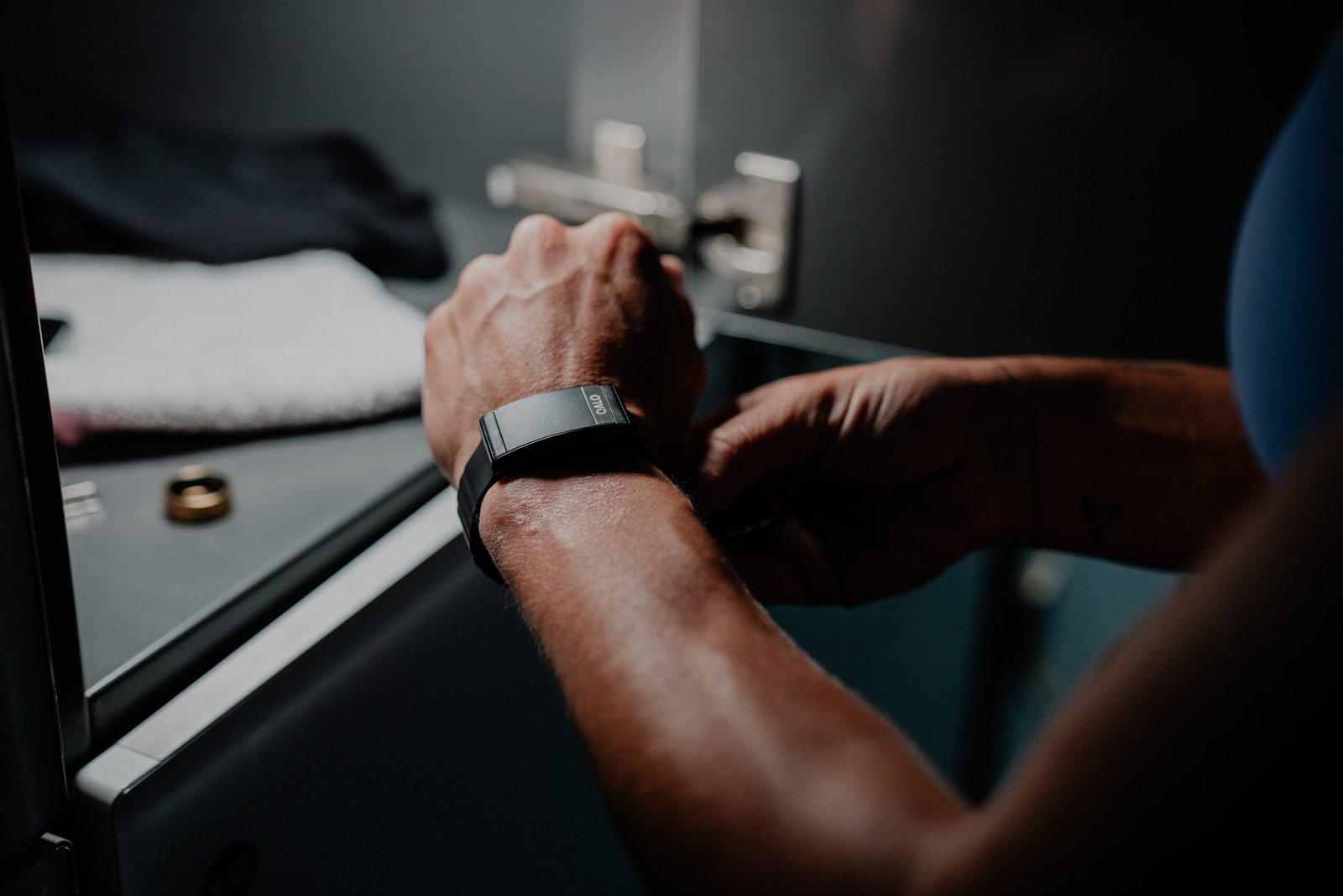
You know the moment. You grab a barbell, a kettlebell, or a pull-up bar, and you wonder whether the ring on your finger should be there right now.
QALO (KAY-Low) thinks you shouldn’t have to choose.
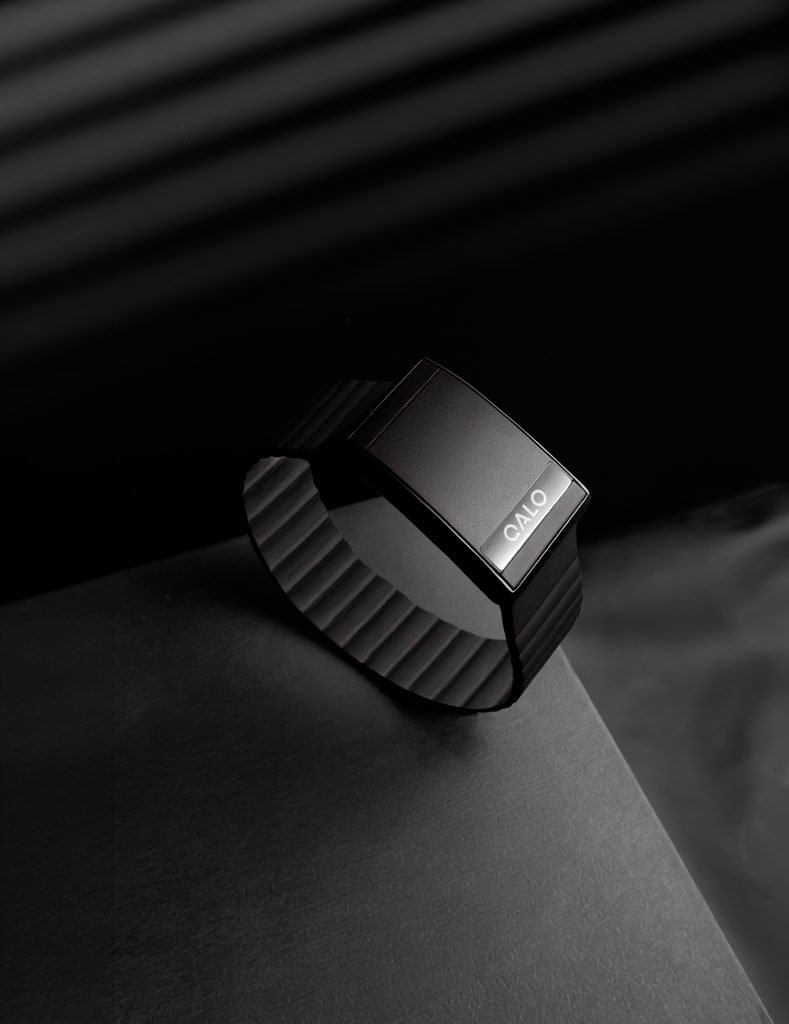
Today the company launched the QALO SL-1 Smart Band, a $199 screenless wrist-worn tracker built for high-intensity training and hard physical work. It runs on the same app as QALO’s smart rings, so your sleep, recovery, and activity data stay on one profile no matter which device you’re wearing.
Maybe, the best part? There is no subscription.
QALO’s CEO, Jake Curreri, kept coming back to one line in our conversation ahead of the launch: “Better health shouldn’t be a luxury.” He said their core customers have been left behind by brands charging a premium every month.
Wait, the Silicone Ring Company?
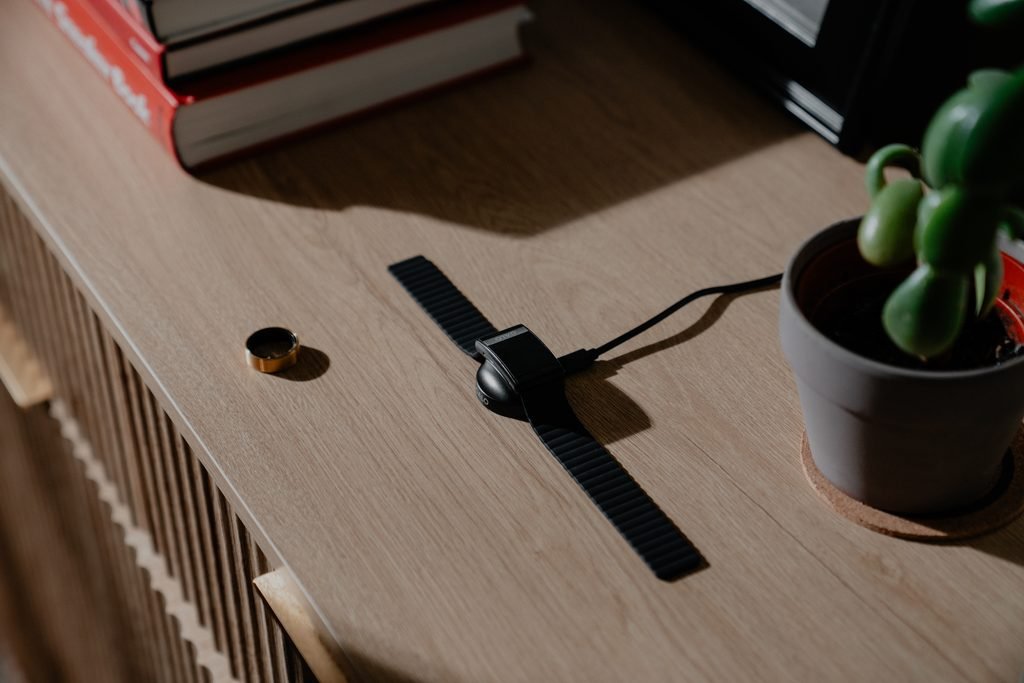
Yes. If you’ve spent time in a CrossFit box, or know a firefighter, or simply have been to a gym in the last decade, you’ve seen a QALO ring. The brand launched in 2013 as the Silicone Ring Company, making functional wedding bands for people whose hands take a beating. Metal rings snag, scratch, and in the wrong moment cause real injuries. QALO’s answer was a ring you could actually work in, and more than two million customers have bought one. (The name stands for Quality Athletics, Love, and Outdoors.)
In 2025, QALO took that same audience into health tech. Its QRNT (pronounced “current”) smart rings, now the SR-1 and the slimmer SR-2, track heart rate, HRV, SpO2, skin temperature, sleep, stress, and steps. The SR-2 weighs about 2.5 grams, and QALO claims it’s the lightest smart ring on the market.
The headline was never the hardware, though. It was the business model. You pay $199 once, and the full app experience is included for life. QALO built its app in-house, stores data in the U.S., and makes privacy a core part of the pitch. According to QALO, its user base has grown more than 400% year over year.
What the SL-1 Smart Band Does
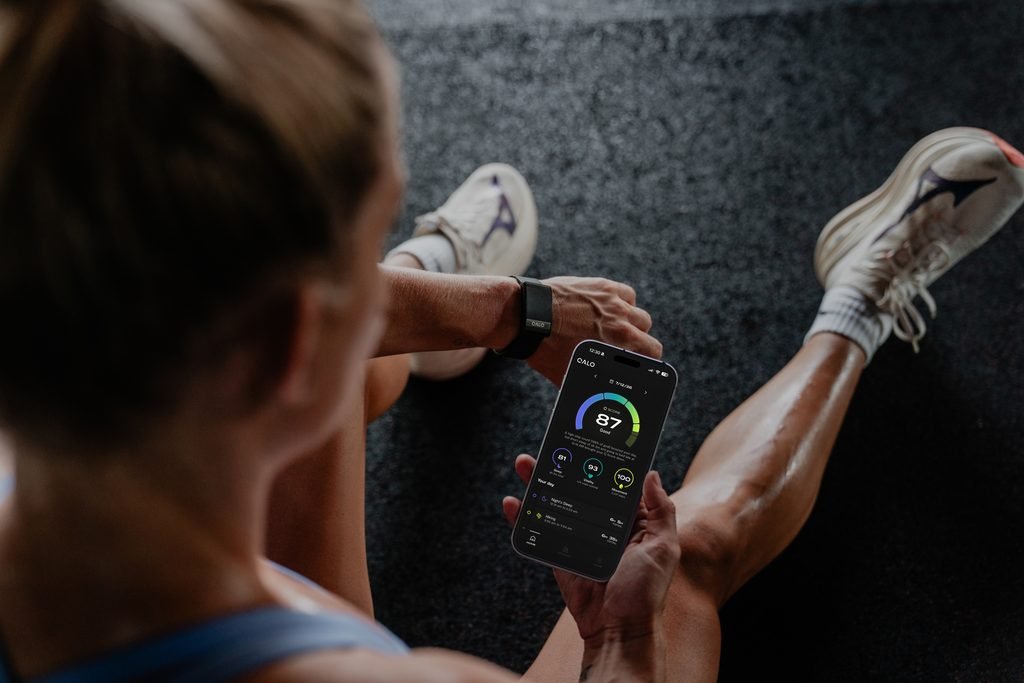
The SL-1 is a wristband, not a smartwatch. Think of it as the ring’s sensor suite moved to a spot that’s safer for grip-heavy work. Here are the features we like most:
Daily Q Score. A 1–100 number that rolls sleep, HRV, movement, and stress into one daily read and shows whether you’re trending up or down. It’s the same idea as a readiness or recovery score, and QALO says users get obsessed with keeping their Q Score streak alive.
Live Heart Rate and Sport Modes. You get real-time heart rate, elapsed time, and step count during workouts, which is a step up from rings that mostly show the picture after the fact. QALO also has sport-specific modes, like HIIT and strength training, that tune the heart rate algorithm to the activity. Automatic activity detection is there too, though Curreri said that’s the part they’re still dialing in.
Women’s Health Metrics. QALO offers a fully integrated cycle tracking experience covering the follicular, ovulatory, and luteal phases, plus period prediction, fertility awareness, and pregnancy-related insights. The company built it with a team of OB-GYN medical advisors and says perimenopause and menopause support is planned.
Battery and Water Resistance. Battery life is roughly twelve days, long enough that you won’t have gaps in your sleep data, and gaps are what make trend data useless. The band is rated to 10 meters, so it’s swim-ready (“built for the Ironman,” as Curreri put it), and a fast-follow model rated to 30 meters is on the way.
Ring for Life, Band for Work
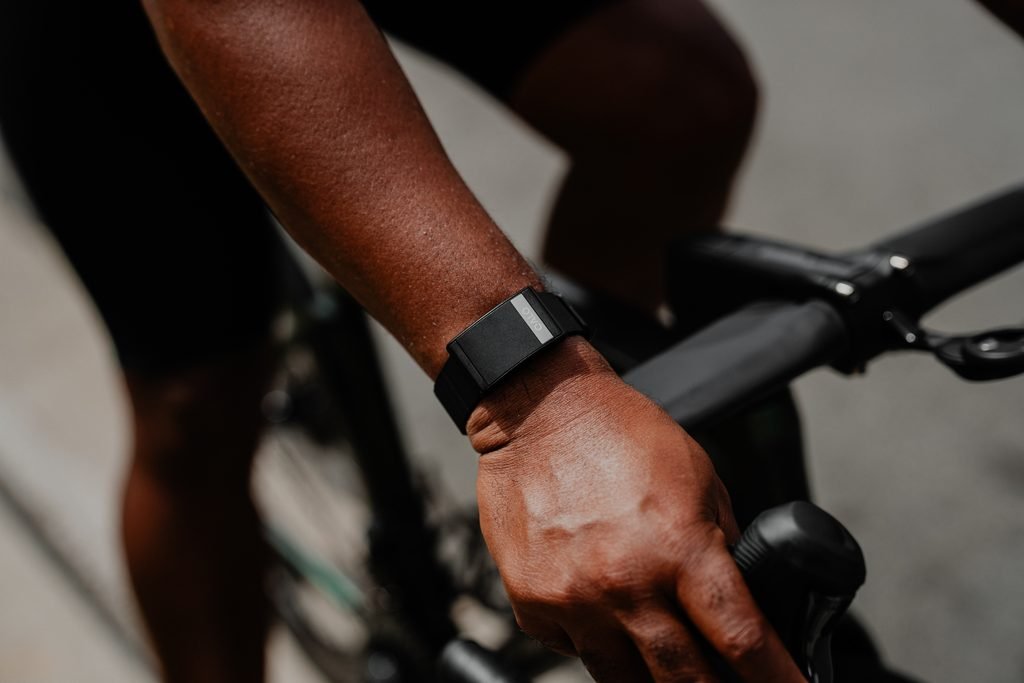
I asked Curreri who should wear which. His answer: the real story isn’t the band on its own, it’s that QALO now has two form factors on one profile.
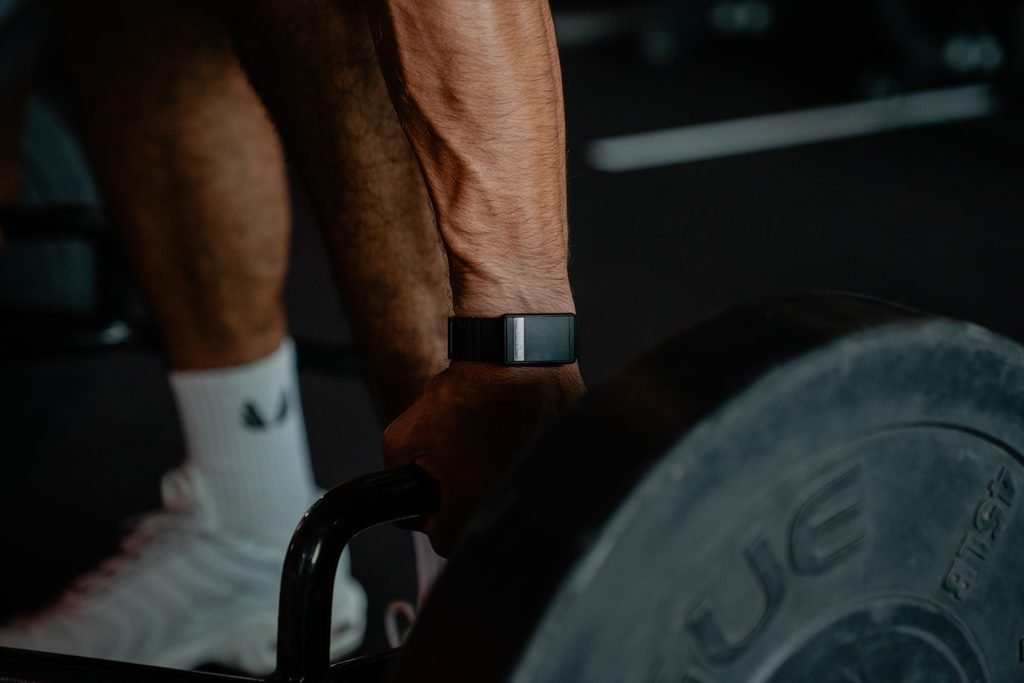
QALO positions the SR-2 ring as the all-day, all-night device for work, dinner, sleep, and easy workouts. Curreri said most customers tell him they love the ring for about 90% of their day, and the band is meant to capture the other 10%: heavy lifting, endurance, HYROX sled pushes, and manual labor. QALO also specifically calls those professions using their hands a lot, like firefighters, paramedics, construction workers, and mechanics.
That’s how Curreri wears them himself. The ring goes on for sleep and most of the day, and the band goes on for CrossFit-style workouts. Both devices feed the same app, so swapping doesn’t split your data across two platforms.
Can You Trust the Numbers?
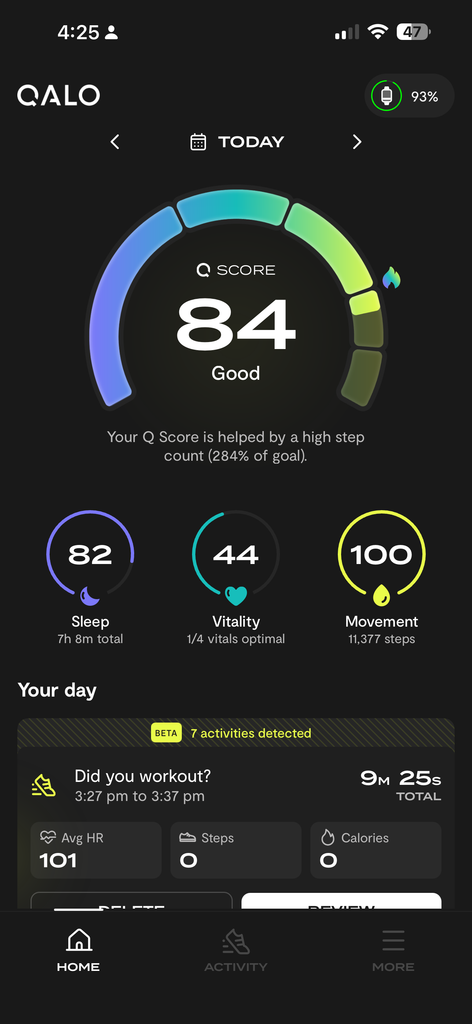
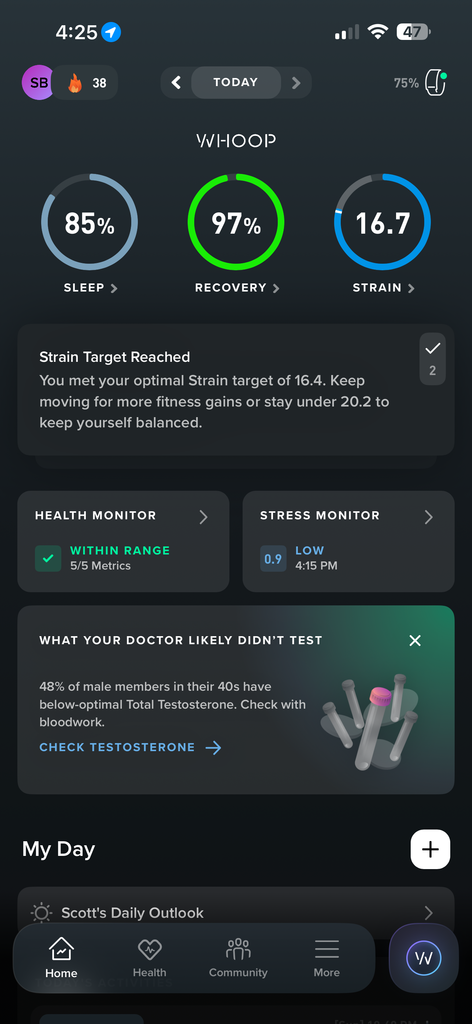
A side-by-side comparison between QALO and Whoop. We have activity detection on and plan to switch to manual for the full experience, right now.
Heart rate at high intensity is the hard part for any wrist or finger sensor so we’re going to keep an eye on that in particular. Curreri compared it to a doctor trying to use a stethoscope on a patient riding a horse. He also said they do benchmark against in market chest straps in its internal “QALO Labs” and also uses third-party testing, with clinical and non-clinical reports promised down the road.
Integrations matter here too. The band syncs to Apple Health and Google Health Connect today and the company hopes other third party integrations (think Strava, TrainingPeaks, etc.) happen too.
Disruptors Are Good for All of Us
Like so many other industries, wearables have drifted into a subscription economy, and it sucks. The playbook is simple: get the device on your body, make you feel like you can’t live without it, then charge a premium every month to see what it learned. Stop paying, and your sleep, your HRV, and your body’s own data go dark.
The biggest names all run some version of this.
- Garmin launched Connect+ at $6.99 a month in 2025 and to be fair, Garmin has kept every existing feature free, but new features like AI insights, the performance dashboard, and meal tracking now sit behind the paywall. Its premium watches also start around $700.
- WHOOP has no device price at all. The band is “free” because you’re renting it, at $199, $239, or $359 a year depending on tier. There’s no pay-once option. Cancel, and you’re done. Your data leaves too.
- Oura sells you a ring starting at $349, then charges $5.99 a month or $69.99 a year to unlock it. Without the membership, the app drops back to three daily scores and loses the detailed sleep, HRV, and cycle insights you bought the ring for. The lifetime membership early owners got is no longer for sale.
Run the math over three years and the gap is significant:
| Device | Upfront | Ongoing | 3-year Spend |
| WHOOP Peak | $0 | $239/year | $717 |
| Oura Ring 4 | $349 | $69.99/year | $560 |
| QALO SL-1 Smart Band | $200 | $0 | $200 |
U.S. list pricing as of September 2026; WHOOP Peak is its most popular tier. Oura total assumes annual billing and its included first free month. Otherwise, $6/month
Fitness Without A Monthly Cost
QALO is betting the opposite way: pay once, keep everything.
And it’s doing it from an unusual position, as a lifestyle brand with two million customers and deep roots in the trades, first responders, and functional fitness rather than one of the big wearable makers who don’t aim at these groups.
Even if you never buy a QALO product, we can appreciate what they’re doing around the following:
Form-Factor Choice. Ring, band, or both, options are great to give people.
Price Pressure. Every credible no-subscription option makes it harder for competitors to justify recurring fees. We’ve only used QALO for a short time, but so far the sleep and HRV feedback looks roughly in line with what we get with Whoope. Athletes win either way.
Data Ownership. To not own your own data is such a pile of crap. Your health data shouldn’t sit behind a paywall where you lose it the moment you stop paying. QALO makes that a selling point, which pushes the whole category to answer the question.
Access. HSA/FSA eligibility and a Walmart rollout put recovery tracking in front of people who would never walk into a specialty run shop. More people tracking sleep and recovery is a good thing.
Our Thoughts
We like the direction, but this is an announcement, not a review, so we’re not handing out a verdict or telling you to drop your WHOOP or Fitbit for this.
The no-subscription model is a real differentiator. The ring-plus-band idea also solves a problem athletes actually have, because you never want a ring caught on a piece of equipment, and QALO lets you choose one or both. The upfront price is solid, and twelve days of battery is comparable to the competition.
Here’s what we want to know before recommending it to endurance athletes.
What does the data look like when heart rate is under load. Wrist sensors get shakiest when the effort gets hard and your arms are moving. We’ll compare live heart rate against a chest strap during intervals, long runs, and lifting sessions.
Automatic detection. In the very small amount of time we’ve used it, its asked if we were working out when we haven’t been. Not a big deal but we want to see QALO get better ar that. Passive activity detection is convenient when it works, and QALO admits it’s still refining it. We’ll see how it handles outdoor runs, treadmill sessions, and everything in between.
The bottom line is that QALO is helping people break away from The Matrix and making a real argument that your health data shouldn’t come with a monthly bill and you should always feel free to own it yourself.
Now, you just need to decide, ring or band. or both?
Leave a Reply
You must be logged in to post a comment.