

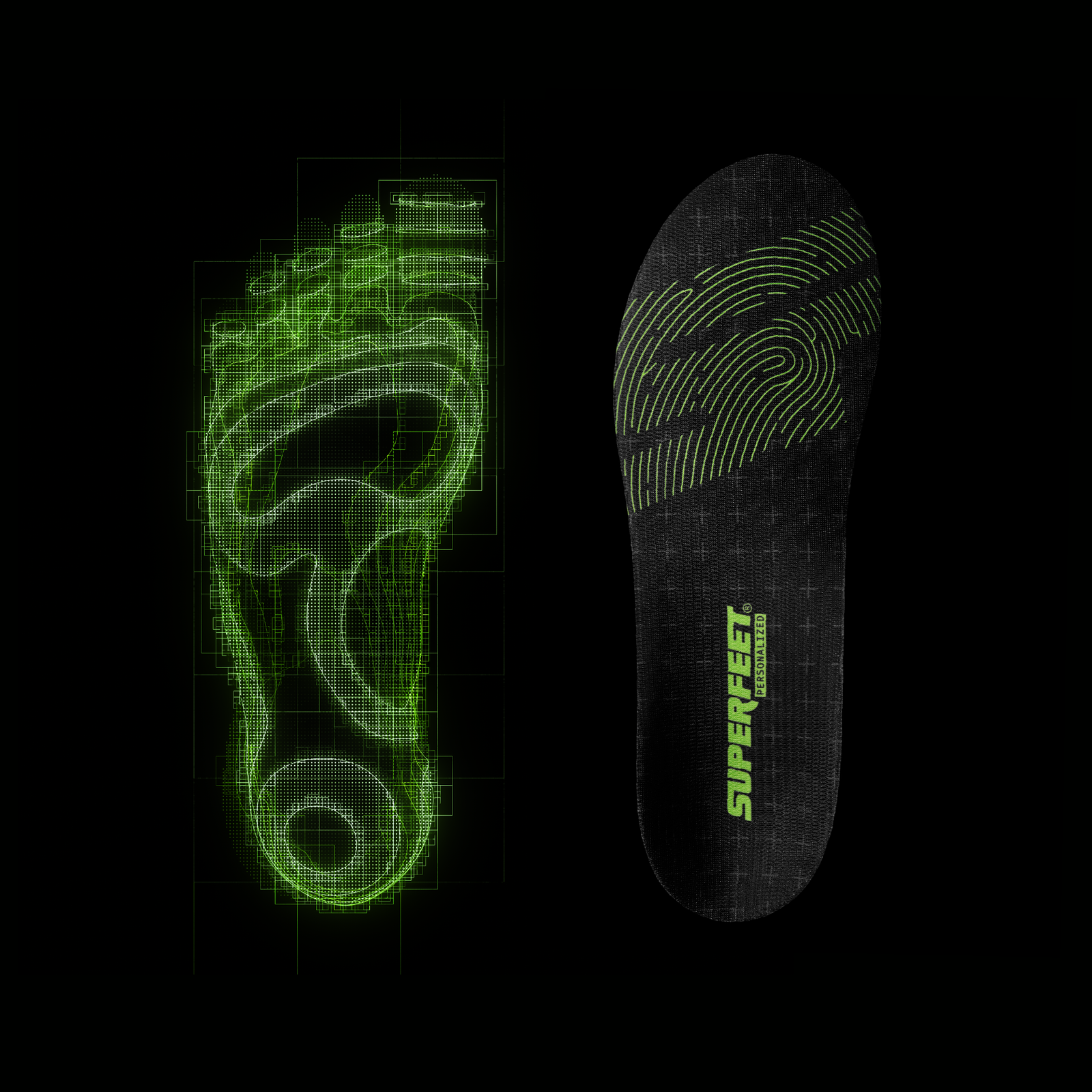
For decades, the insole conversation went like this: you walked into a running retailer like Fleet Feet, stood or walked across a pressure plate, let a fit expert read the data, and hoped they had a shoe that was close enough to what your body actually needed. For most runners, that was good enough. For Superfeet, it never was.
The brand launched its ME3D platform to solve the custom insole problem at scale. The catch? You had to go to a participating specialty retailer to access it.
That ends today.
Superfeet just unveiled the ME3D Mobile Enhancement, a direct-to-consumer update that lets you generate a high-precision, 3D-printed personalized insole directly from an iPhone scan on superfeet.com. Essentially, custom insoles, from your couch.
The Tech Behind It
This isn’t a simplified version of the ME3D process. It’s the same proprietary algorithm, rooted in podiatric data and biomechanical research, now accessible through a guided mobile scan.
After scanning, you unlock a fully interactive experience: analyze your unique foot profile (shoe size, arch height), preview a 3D rendering of your actual insoles, and choose your foam. The biometric data goes directly to Superfeet’s 3D-printing facility in Bellingham, Washington, where your insoles are built to your exact specifications.
“This evolution allows us to deliver a level of individualized engineering that was once only possible through specialized in-person experiences,” said Superfeet CEO Trip Randall. “By putting this power into the hands of consumers, we ensure that whether you are at home or on the go, the highest standard of personalized support is just a few clicks away.”
The printed cap comes with a custom arch profile matched to your foot’s geometry, a stability lattice that scales in thickness based on body mass, and a heel cutout engineered to absorb impact while keeping the ride flexible and cushioned. Right and left caps are printed independently because your two feet are not the same, and Superfeet knows that.
You can also engrave your name on the heel of each insole. But for us, I’d just include the date so we know how long we’ve had them for.
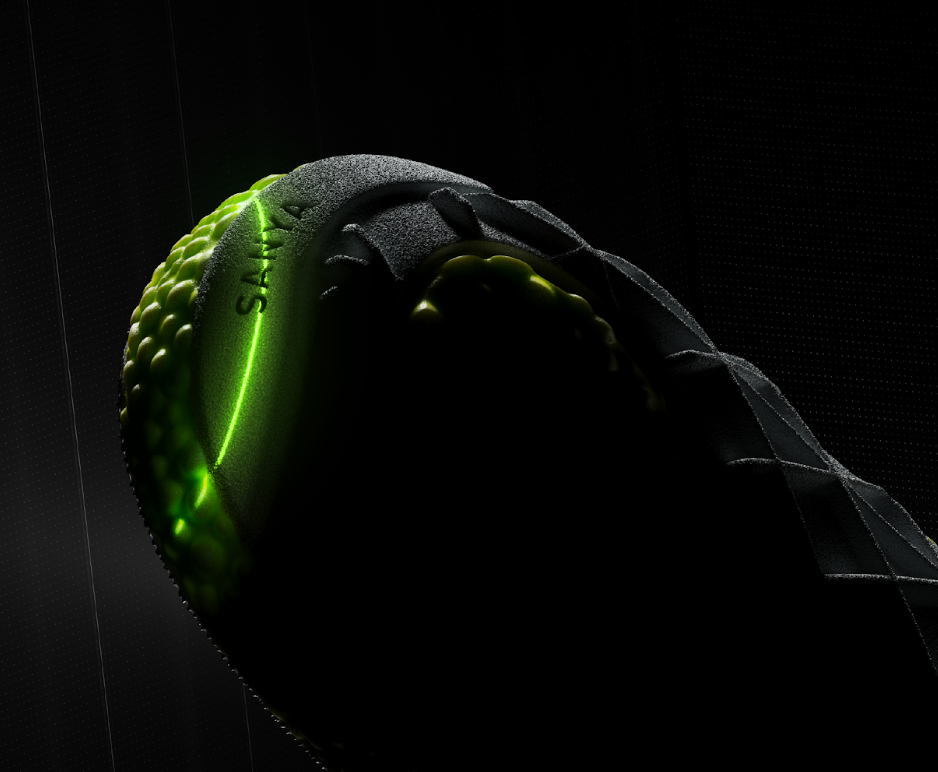
Custom engraving optional
Two Foam Options, One Decision
The updated ME3D introduces two foam platforms built for different feet and different footwear:
SuperRev™ is the performance-first option and $110. It is lightweight, thin, designed for tighter-fitting running shoes where stack height and fit precision matter. If you’re racing or training in performance footwear that doesn’t have a lot of extra room, this is your pick.
SuperRev™ Max, is $140, and runs a supercritical beaded foam matrix engineered for kinetic cushioning and high-rebound feel. It fits best in roomier running footwear and is the right call for training and longer efforts where energy return matters as much as structure.
Let’s Talk About the Price
Here’s the part Superfeet’s press release doesn’t dwell on: this isn’t the only game in town anymore, and the math for a runner’s wallet is getting complicated.
SuperRev comes in at $110 and SuperRev Max at $140. Compared to the field, that’s actually reasonable. Groov ($150) lands above both, and Stride Soles ($250) charges a significant premium for the added step of having a podiatrist review your scan before printing.
But here’s the real number that stings: pair the SuperRev Max with a $160 pair of trainers and you’re at $300 before you’ve logged a single mile. That’s in some cases, a car payment just to go for a run.
We like Superfeet. We’ve run in their insoles, we trust the brand, and the depth of their biomechanical research is legitimately class-leading. What they bring that Groov and Stride Soles are still building toward is a production process that scales and costs less. That institutional credibility probably puts them at the top of the field.
But just know, there are options, even if you might spend a little more. And if $110 feels steep after you’ve already spent a lot on shoes, maybe stick with the original Superfeet insole option.
Who Should Actually Buy This
If you’re running serious volume, training for a triathlon, or dealing with plantar fasciitis, arch fatigue, or knee tracking issues that stock insoles haven’t fixed, the ME3D has always been worth looking at. The mobile version makes the math even simpler and you don’t need to go to a retailer.
Runners with even modest pronation or supination, low arches, or foot fatigue that compounds over long efforts are the primary targets. And if you just like an in-store experience and feel better talking to an “expert,” there’s genuine value in a knowledgeable specialty run associate walking you through the process.
And lastly, cyclists dealing with hot spots and cleat alignment issues will also find value here, especially if you’re putting in hundreds or thousands of miles.
The Takeaway
Superfeet’s mobile ME3D is a real step forward for access. Custom, 3D-printed insoles built from a scan of your actual feet is where the entire category was always headed. Superfeet just got there with a decade of printing experience behind them.
The price is real but moderate compared to others and if you’ve been putting off doing something about your foot support because the process felt like too much friction, that excuse is officially gone.
Scan at superfeet.com/products/superrev-me3d. It does require iPhone 13 or newer, running iOS 26.
Leave a Reply
You must be logged in to post a comment.