

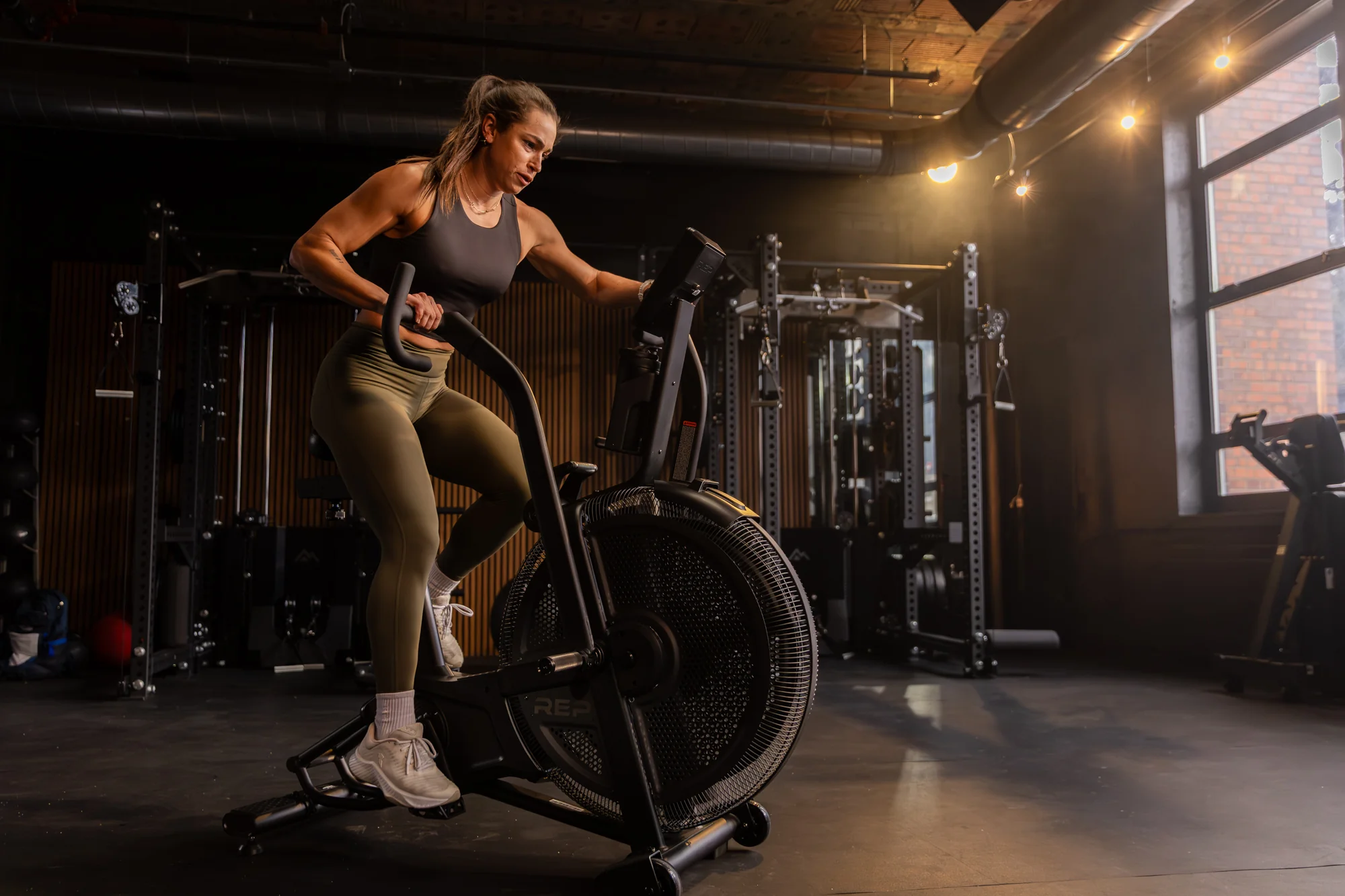
The air bike hasn’t changed in a decade. You pedal harder, resistance goes up. Pedal easier, resistance drops. That’s it. That’s the whole deal.
Whether you’re on a $500 bike or a $1,500 one. It’s been the same fixed-fan formula since air bikes became a CrossFit staple. REP is saying they’ve broken the code.
What’s Actually New Here
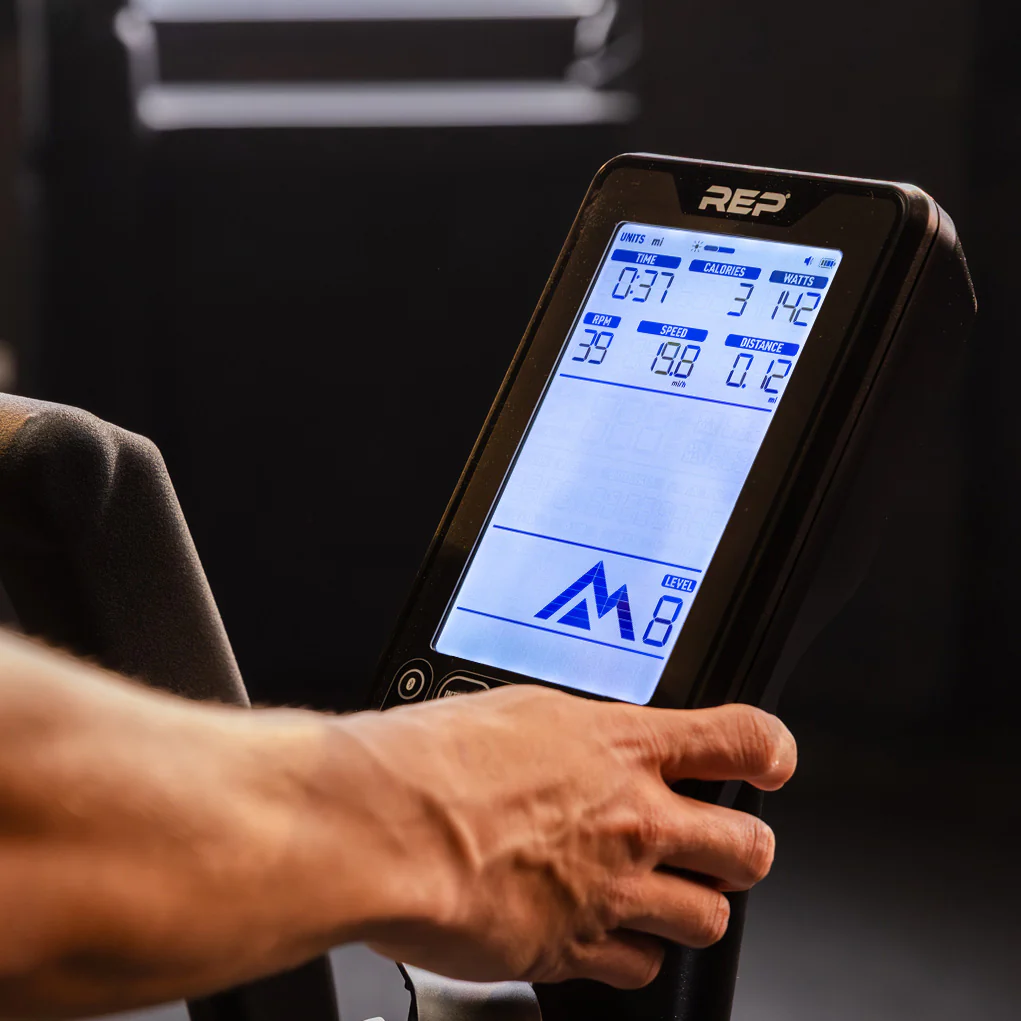
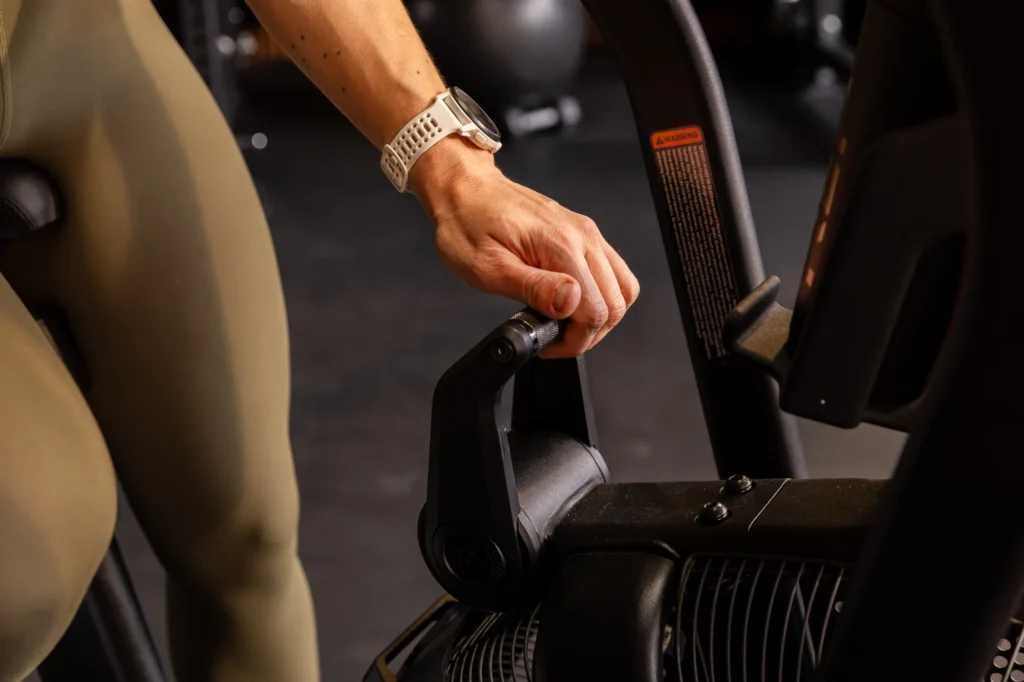
The Strive™ Air Bike, introduces something called Variable Pitch Resistance, or VPR for short. Instead of resistance being a byproduct of how hard you’re pedaling, VPR lets you physically adjust the pitch of the fan blades.
There are eight levels, all dialed in by hand, and completely independent of cadence.
Like the rower we just reviewed, there is no motor, electronics or batteries required to change resistance. You simply do it with a mechanical adjustment that changes how much air the fan is fighting against.
On a normal air bike, going slow means going easy. There’s no way around it.
The Strive breaks that link.
Levels 1-3 give you a legitimate recovery ride; something fixed-fan bikes have never really been able to offer. Levels 4-6 are built for VO2 max work and the classic air-bike suffer-fest. Levels 7-8 are for strength intervals and hill-climb efforts where you want serious load even at low RPM.
Suddenly, you have one bike with four different training zones.
Why It Matters
Endurance athletes have been stuck making air bikes do things they weren’t designed to do. They’ve been nearly impossible to dial recovery rides down to a crawl just to keep the resistance bearable, or stacking intervals that all feel roughly the same regardless of intent.
VPR is REP directly addressing the biggest limitation of the category.
“Every air bike on the market ties resistance to how hard you pedal,” said Joe Travers, REP’s Chief Product Officer. “VPR breaks that limitation… It’s a fundamentally different way to ride, engineered to the REP standard.”
Whether that translates into different training outcomes or just a nicer training experience remains to be seen, but the concept solves a real, specific complaint anyone who’s used an air bike for structured training has had.
The Rest of the Package
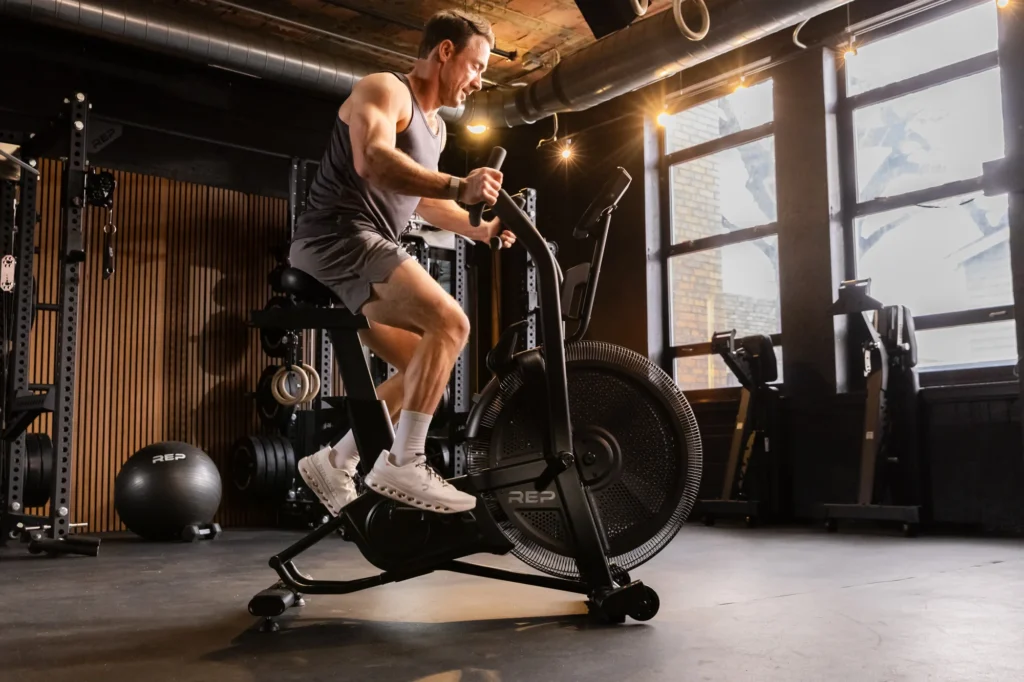
REP didn’t just bolt VPR onto a stripped-down frame. The Strive comes with:
- 14-gauge steel frame rated for riders up to 350 lbs
- Dual-stage belt drive — quieter and lower-maintenance than chain-driven competitors
- Bluetooth LCD console (FTMS-compatible) tracking watts, calories, RPM, speed, distance, and heart rate via ANT+
- Quick-adjust seat — no pins, no knobs, just slide and go
- Adjustable magnetic wind diverter to point airflow where you actually want it
- Multi-grip handles, integrated phone and water bottle holders, and transport wheels for moving it out of the way post-workout
The console runs on two D batteries for roughly 300 hours, or you can plug in an optional 9V adapter if you’d rather not think about it.
Backing it: a 5-year warranty on frame welds and 2 years on moving parts — solid numbers for a bike at this price point.
The Price Check
$1,299.99 MSRP puts the Strive in the same conversation as the premium end of the air bike market, but the resistance range is the differentiator REP is banking on.
If VPR delivers on the training-zone versatility they’re describing, it makes it completely unique.
Available now at repfitness.com and REP’s showrooms in California and Pennsylvania.
Leave a Reply
You must be logged in to post a comment.