

There are certain moments in an athlete’s life that reframe everything.
For me, that moment came on May 6 when I broke my ankle. I knew right away the coming months wouldn’t be normal.
And as someone who relies on my physical health and has spent years grinding through early mornings, long weekends, and results that become part of who you are — the injury didn’t just take away my entire daily routine, it took away part of my sanity.
Running was out. Cycling was out. Swimming was out. Even walking became a production as I found myself navigating life in a boot, and then on a knee scooter, watching the leg I’d spent years conditioning start to visibly shrink in front of me.
The downtime was needed but sucked so much joy from me.
Within weeks, my right leg had noticeably atrophied compared to its twin, which was now doing all the work. The asymmetry was jarring. For someone obsessed with training balance, watching one leg carry the load while the other wasted away felt like a slow countdown on everything I had built.
So I needed to figure out something to just keep moving.
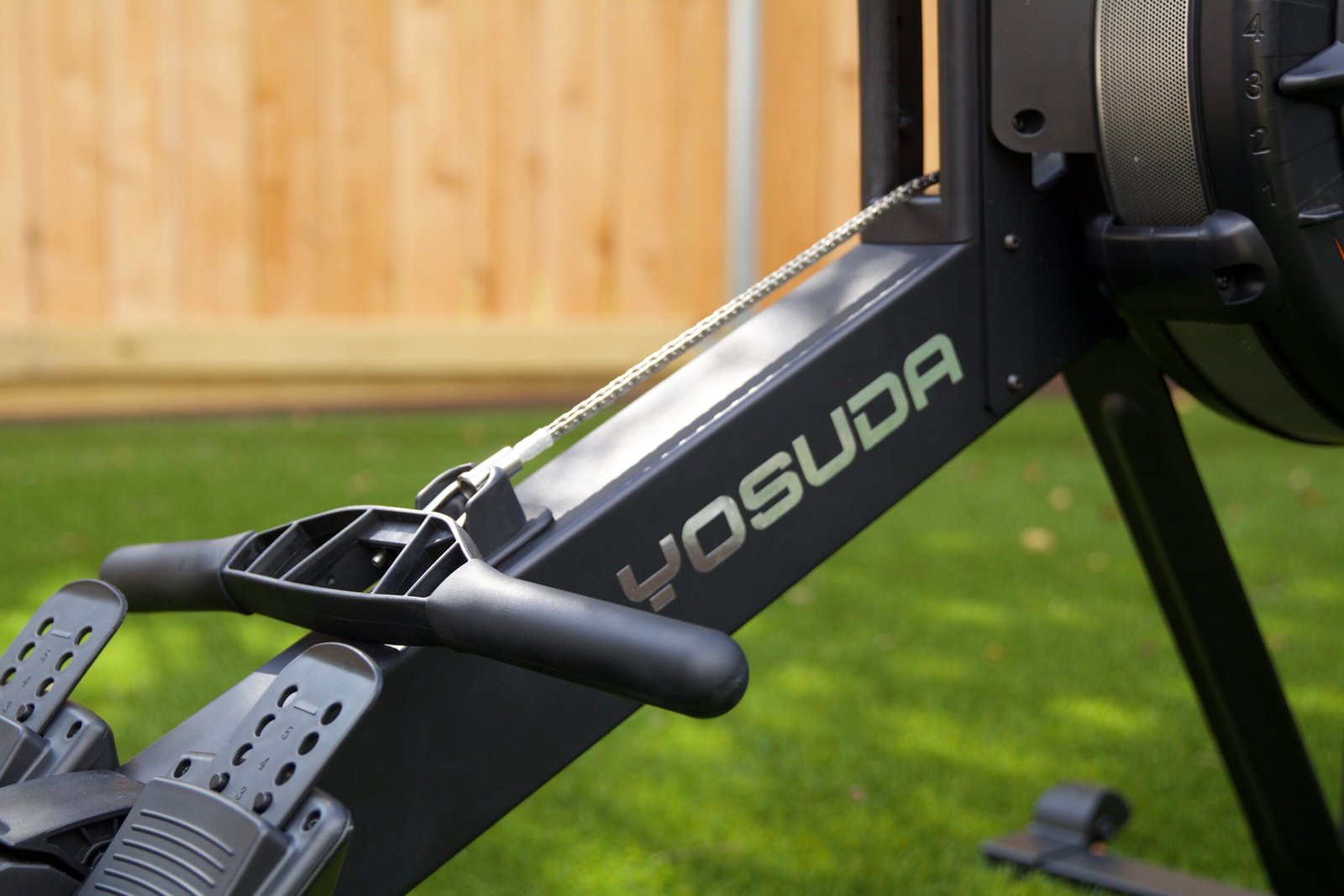
And that’s what led me to the FED Fitness Yosuda R2.
Not because I wanted to become someone who was into crew. But because I wanted to keep moving.
First Impressions
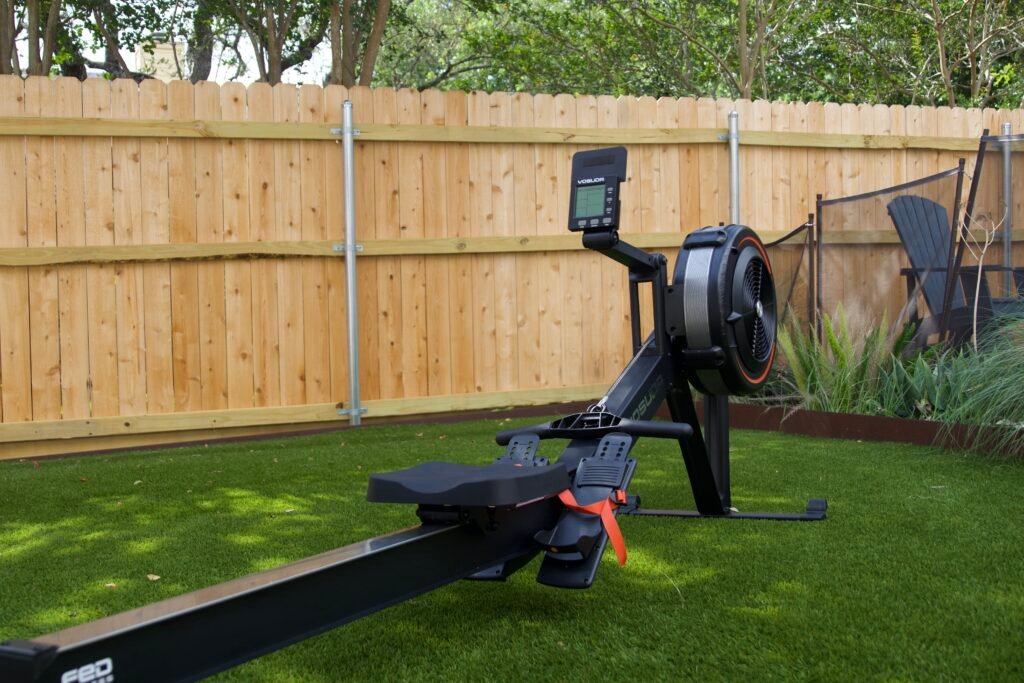
The R2 falls into an interesting category. It isn’t trying to be a premium connected fitness platform. It doesn’t come with flashy subscriptions, virtual coaches, or an ecosystem designed to keep you paying every month.
It’s a rowing machine.
And honestly, that’s one of the things I appreciate most about it.
Assembly was straightforward, arriving in two pieces you put together and the footprint was reasonable, and within a short amount of time I was pulling my first strokes.
The air resistance feels smooth and predictable. Pull harder and the resistance increases. Ease up and the machine responds accordingly. It’s simple, intuitive, and doesn’t require a learning curve.
More importantly, it immediately felt like a legitimate workout. It gave me everything I want and feel at peace with – elevated heart rate, sweat rolling down our face, and tension we felt for the first time since our injury. I felt like I had found something that could replace at least a small piece of what I had lost.
Sometimes Simple Is Better
One of the more common criticisms you’ll find in reviews of budget fitness equipment is the lack of advanced technology.
The Yosuda R2 absolutely falls into that category, and I couldn’t care less. Would it be nice if the resistance automatically changed or the monitor was packed with 15 workouts, sure. But all that comes at a cost.
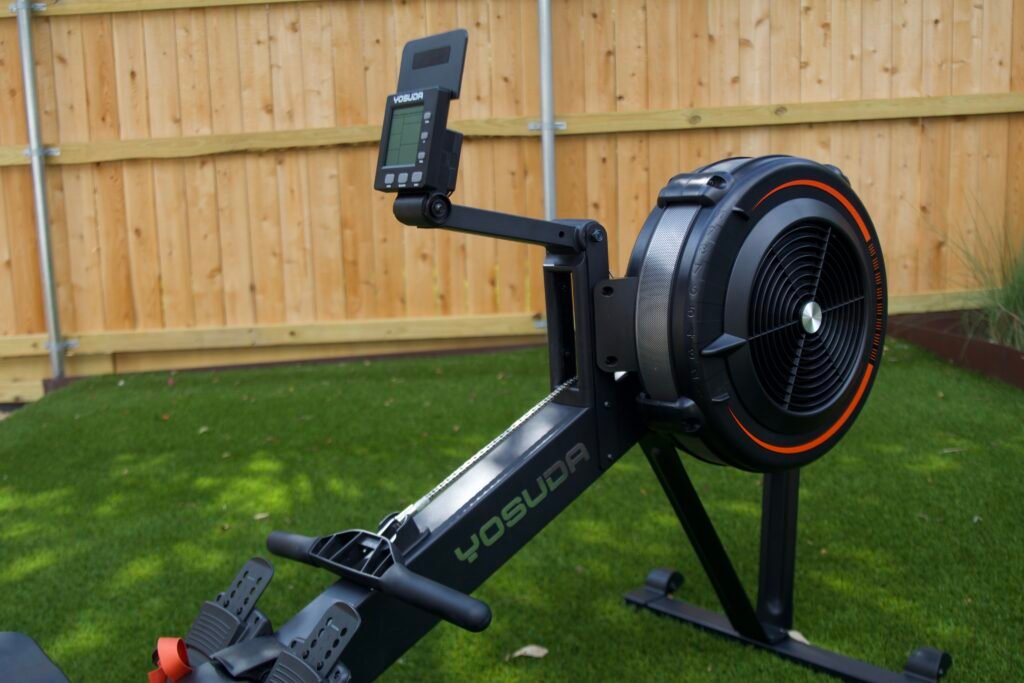
The monitor on the R2 tells me exactly what I want to know: distance, time, watts, and a handful of basic workout metrics. That’s enough.
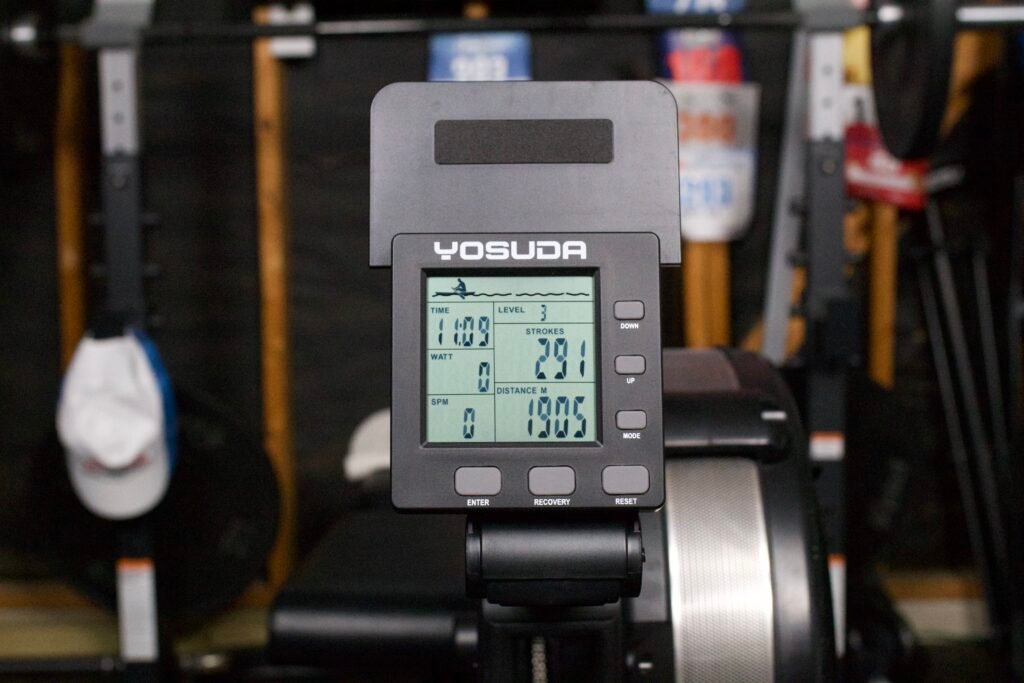
I spend plenty of time looking at data. My watch tracks every workout and my WHOOP tells me everything known to man. My training platforms tell me how recovered I am. Every endurance athlete today has access to more information than they know what to do with. This is refreshingly simple.
The simplicity keeps me focused on the workout rather than the screen, albeit its kind of boring after a while.
In a fitness industry obsessed with adding more features, the R2 feels refreshingly uncomplicated.
The Real Test: Injury Recovery
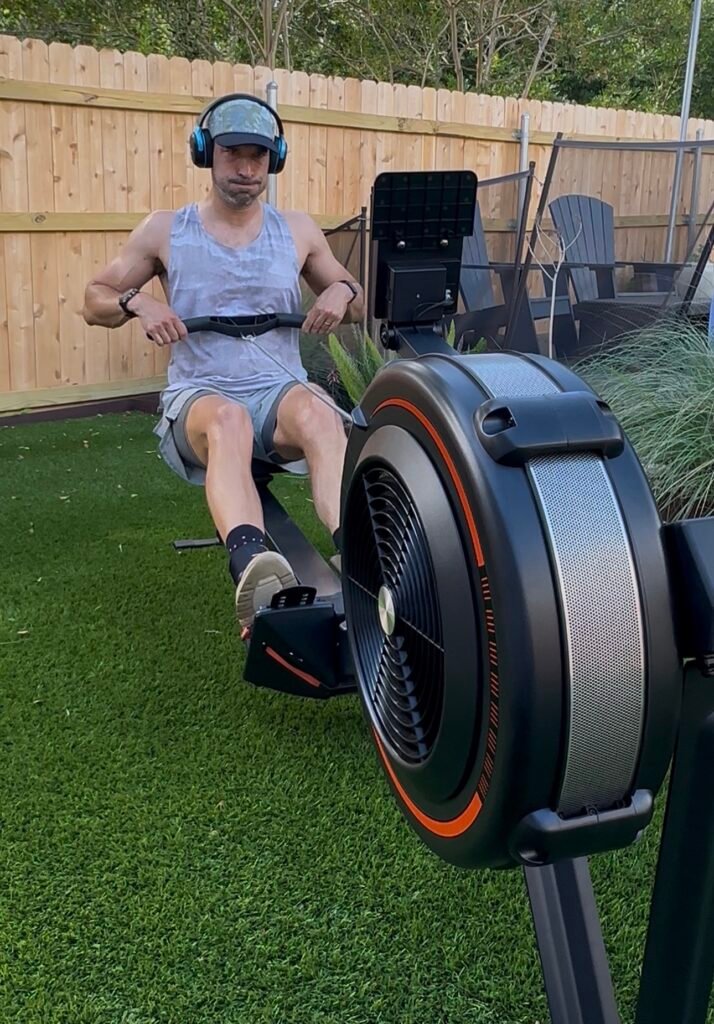
The biggest question I had wasn’t whether the rower worked well, it was whether it could help me maintain fitness while recovering from a broken ankle.
The answer has been yes. It wont ever replace running or cycling for me, but I absolutely see it becoming a part of my routine. I love trying to trick my muscles and body to get the most out of it and this works the shoulders, heart and lungs in different ways that other work.
Its also played a mental role in my injury recovery that often gets overlooked.
The Yosuda R2 gave me a way to keep showing up when I was feeling down on myself. Every workout became a reminder that while my ankle wasn’t ready, the rest of me still could be.
🔥 Here’s What Works
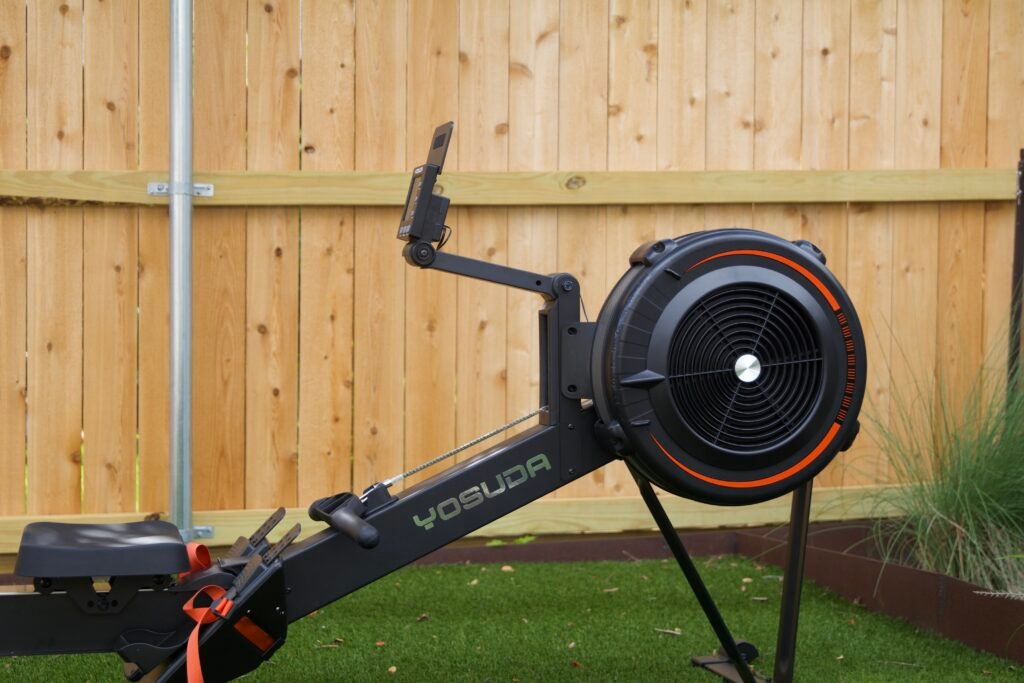
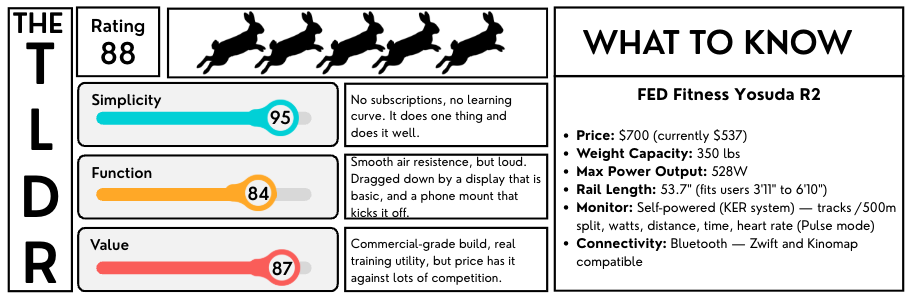
Simplicity: The biggest strength of the R2 is that it simply gets out of the way and lets you work. The air resistance feels smooth, the rowing motion is natural, and the machine provides a legitimate cardiovascular workout without requiring a learning curve or a monthly subscription. Unlike many modern fitness products that seem obsessed with adding more technology, the R2 focuses on doing one thing well: helping you row.
I also appreciated the simplicity of the monitor. Some reviewers may see that as a drawback, but I found it refreshing. During my recovery, I wasn’t trying to optimize rowing performance or analyze stroke efficiency. I wanted to know how long I’d been working and how far I’d gone. The screen gave me exactly what I needed and nothing more.
For endurance athletes looking for low-impact aerobic training or a high intensity burn, the R2 punches well above its price point and gives you everything.
🤢 Here’s What Sucks
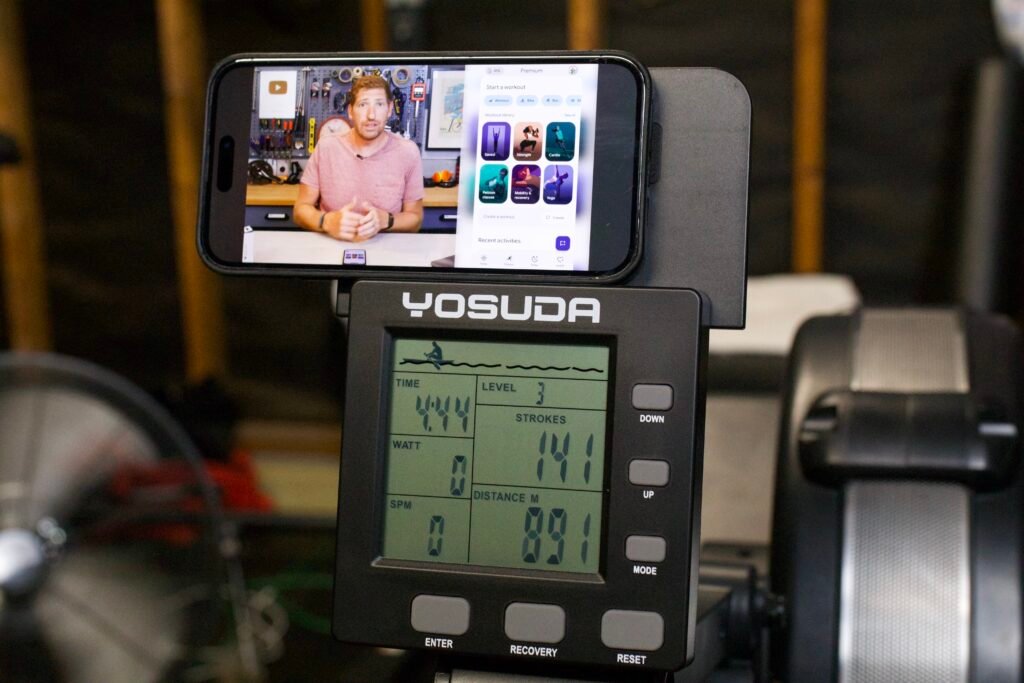
The Phone/Tablet Holder: A total afterthought and not a good one. The holder that ships with the R2 is simply too small and too unstable to actually hold a tablet in place during a rowing session. With an iPhone it mostly stays put, but it shifts left with every stroke like clockwork. Put an iPad on it and the whole premise falls apart. We tried multiple times. We eventually resorted to a rubber band to keep it from completely toppling, which tells you everything you need to know about the design. I ended up moving my tablet to a separate stand nearby. Not a dealbreaker, but an annoyance that greets you every single workout until you just stop trying.
The Display Times Out Way Too Fast: This one genuinely bothered me. The R2 monitor shuts off quickly after you stop rowing — and it doesn’t hold your session data when it does. My routine during recovery involved hitting the rower for 10 minutes, moving to ab work for a few sets, then coming back. Every time I returned, the display had reset. The session was gone. For a machine that markets itself as a legitimate workout tool, losing your data mid-circuit feels like a real oversight. There’s no pause mode, no session memory, no grace period. Just a blank screen. If you’re doing purely straight rowing sessions this won’t bother you. But if you train in intervals or circuits — which plenty of endurance athletes do — it’s a frustrating limitation.
Noise: The R2 is an air rower, which means it’s louder than magnetic alternatives. The 32-blade flywheel creates a consistent whooshing sound that’s part of the experience — and for some athletes that feedback is satisfying. But if you’re rowing at 5am in a shared space, the noise level is a real consideration. It’s not disruptive at a moderate pace, but pick up the intensity and the room knows about it.
My Experience With The R2
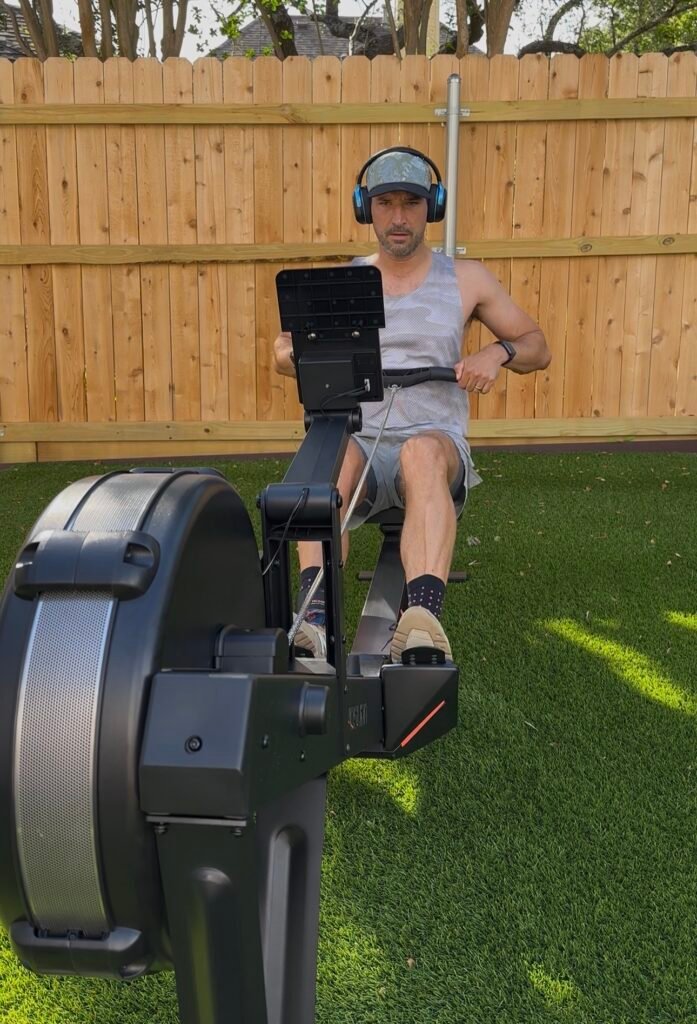
The R2 became my way of fighting back against inactivity.
What I didn’t expect was how well the machine would respond to whatever I threw at it.
The R2 has 10 adjustable airflow settings, and whether you’re a complete beginner just trying to figure out what rowing even feels like or an athlete pushing threshold efforts, the machine scales with you. We actually read the manual — yes, the whole thing — and followed the recommendation to start at level 3. That felt right. Challenging enough to get the heart rate moving, approachable enough to focus on form. We’ve moved up from there, though we’ve yet to touch level 10. Mostly because we’re not here to break any records. We’re here to keep the engine running until we can get back to doing what we really enjoy.
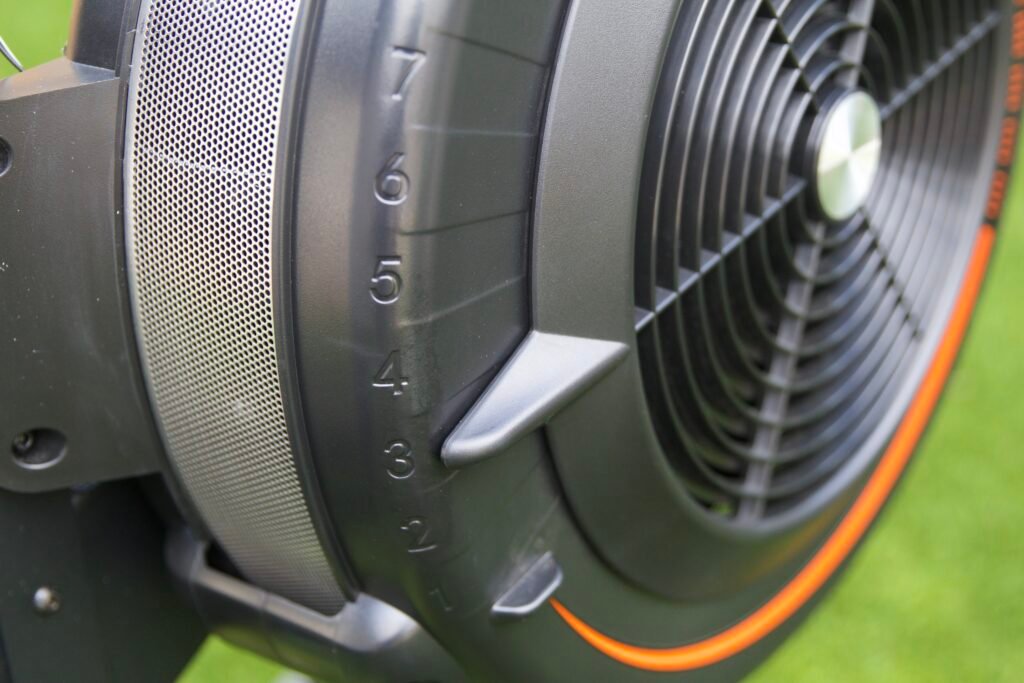
What makes the resistance system genuinely smart is how it ties directly into Zwift which is amazing. Through Zwift, track your distance, time, and calories in real time. For an athlete used to structured training and using Zwift all the time, this was a nice add-value.
Over the following weeks, I started with 5 minute intervals and then would jump into weights but after a week of so, I jumped to 10 minute intervals, then 20 minutes, and so on. The R2 allowed me to keep my heart rate elevated, maintain some aerobic fitness, and preserve the routine that training provides. It wasn’t a replacement for running or cycling, but it was enough to keep me moving forward while my ankle healed.
In many ways, the machine became less about fitness and more about maintaining some momentum.
The Real Takeaway
The R2 reminded me of something every injured athlete eventually learns: movement matters.
Not because we’re chasing PRs. Not because we’re trying to close rings or hit training targets. Because movement helps us feel like ourselves.
During injury recovery, it’s easy to become consumed by what you can’t do. The R2 shifted my focus back toward what I still could do best, sweat. Every workout became an opportunity to build rather than simply wait.
That’s ultimately what made this machine valuable.
What To Know
- Price: $537 ($700 retail)
- Resistance: Air, 10-stage airflow control, 32 aerodynamic blades
- Max Power Output: 528W
- Rail Length: 53.7″ (fits users 3’11” to 6’10”)
- Weight Capacity: 350 lbs
- Monitor: Self-powered (KER system) — tracks /500m split, watts, distance, time, heart rate (Pulse mode)
- Connectivity: Bluetooth — Zwift and Kinomap compatible
- Frame: Aircraft-grade aluminum rails, military-spec nickel-plated steel chain
Verdict
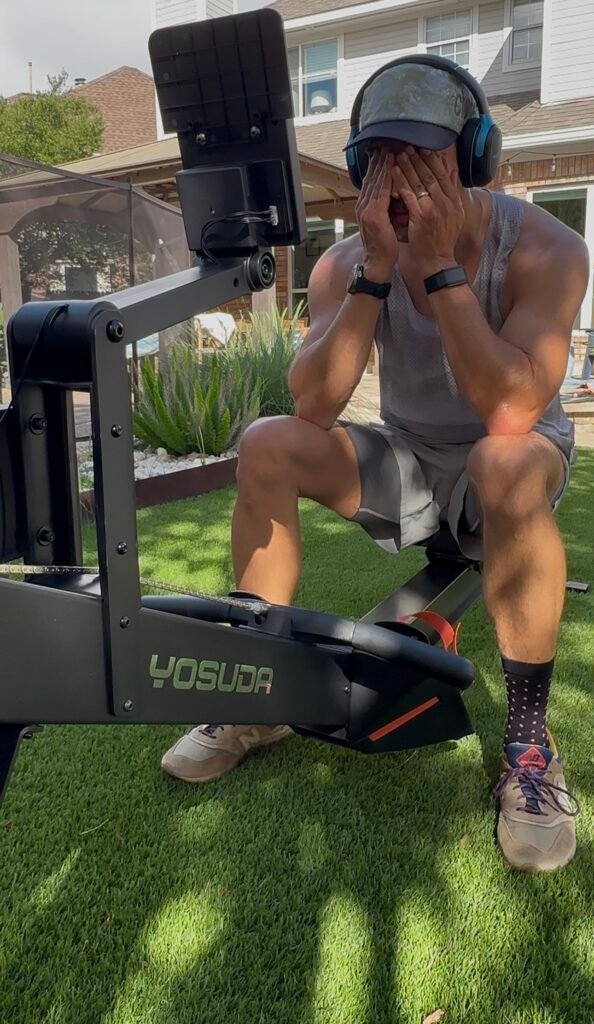
The Yosuda R2 arrived in my life at exactly the right time which sounds downright silly. But what started as an injury recovery opportunity has turned into one of the most-used pieces of fitness equipment in my garage gym. Not because it’s revolutionary, but because it’s effective. And you can drag it anywhere.
The machine feels solid, is easy to put together, and depending on how challenging you want to make your workout, it will respond in kind. It accomplishes the one thing I needed it to accomplish: keeping me active when almost everything else was off limits.
Should You Buy It?
Buy it if you’re a Hyrid bro, runner, cyclist, triathlete, or endurance athlete looking for a low-impact way to build or maintain aerobic fitness.
Buy it if you’re recovering from an injury and need something that allows you to train without the pounding that comes with running.
Buy it if you appreciate simplicity and don’t need every workout to be data driven beyond the basics.
Skip it if you’re a serious rower looking for elite-level performance metrics or if rock-solid tablet integration is important to your setup.
For everyone else, the FED Fitness Yosuda R2 delivers exactly what most athletes actually need: a hard workout that challenges you in new ways.
Purchase from Amazon today.
Leave a Reply
You must be logged in to post a comment.