

This isn’t a surprise.
But my god, am I really going to watch daily trainers inch closer to $200?
Because that’s where this is heading. And some of them are already there.
What’s Happening

US retail footwear prices hit a seasonally adjusted record in October, and so did men’s and women’s footwear prices on their own, according to the Footwear Distributors and Retailers of America (FDRA).
There’s a small asterisk. Year-over-year numbers aren’t available because of last year’s federal government shutdown. So FDRA looked at the six-month change instead and prices are up 2.1 percent, which is the slowest pace in a few months.
Slower. Not lower.
FDRA chief economist Gary Raines told Footwear News that prices remain on track for a record year in 2026, driven by higher import costs. “As we anticipated earlier, we have more early evidence that retail footwear prices are set to continue rising — albeit at a decelerating rate — as we head into 2027,” Raines said.
All of this is happening against a hot backdrop. The Bureau of Labor Statistics’ Consumer Price Index rose 0.4 percent in October, above the 0.3 percent economists expected, per SGB Media.
Blame the Boat (and the Tariffs)
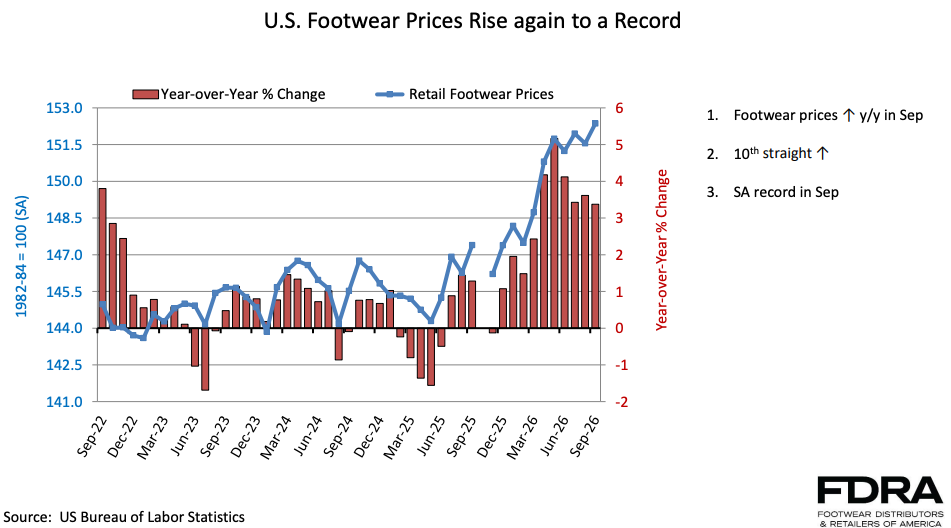
Shoes are an import story. FDRA’s own October member presentation includes a slide (above) highlighting the increase. Right now, its costing footwear companies more to land a pair in the US, so you’re going to see the increase. Simple economics.
And tariffs are a big part of that cost. FDRA president and CEO Matt Priest said, “footwear remains among the most heavily taxed consumer products in America, with combined tariffs on many children’s shoes reaching as high as 87.5 percent.”
That same piece points to oil, too, which feeds rubber, synthetics, shipping and factory energy costs.
So it isn’t one thing. It’s everything, stacked and getting more expensive.
What a Daily Trainer Costs Right Now
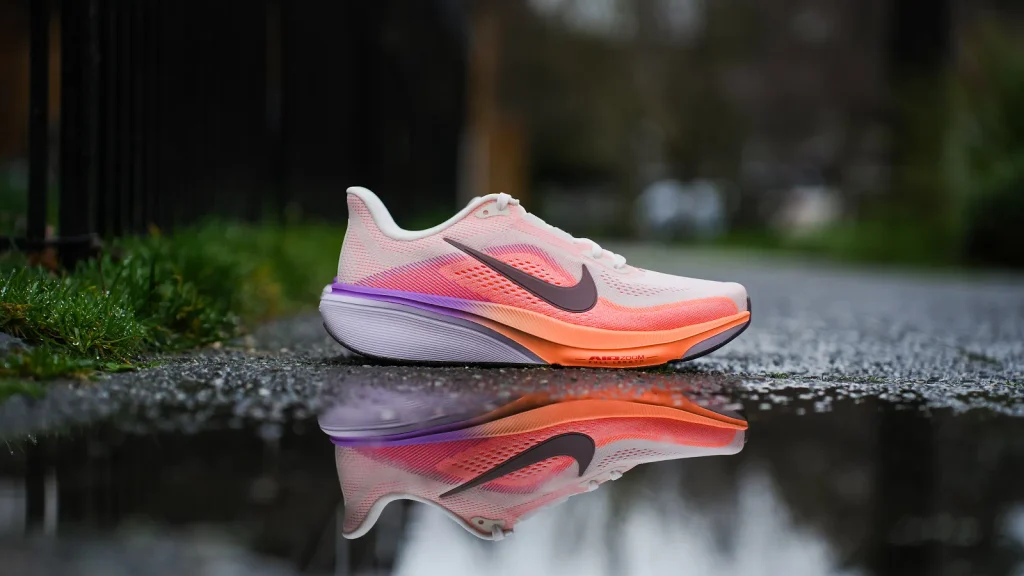
You’ll see below, prices are already stacking and here’s what I found on sites as of November. These are list prices.
- Nike Pegasus 42: $145 (Nike)
- Saucony Ride 19: $145 (Saucony)
- Nike Pegasus Plus 2: $170 (Nike)
- Saucony Triumph 24: $170 (Saucony)
- Saucony Triumph 24 GTX: $200 (Saucony)
And there you have it . A $200 daily trainer, today.
Just last week, I said a pair of $160 running shoes should last at least 300 miles. At $170 to $200, I’m going to be even less forgiving about foam that dies early.
Super Shoes Set the Ceiling
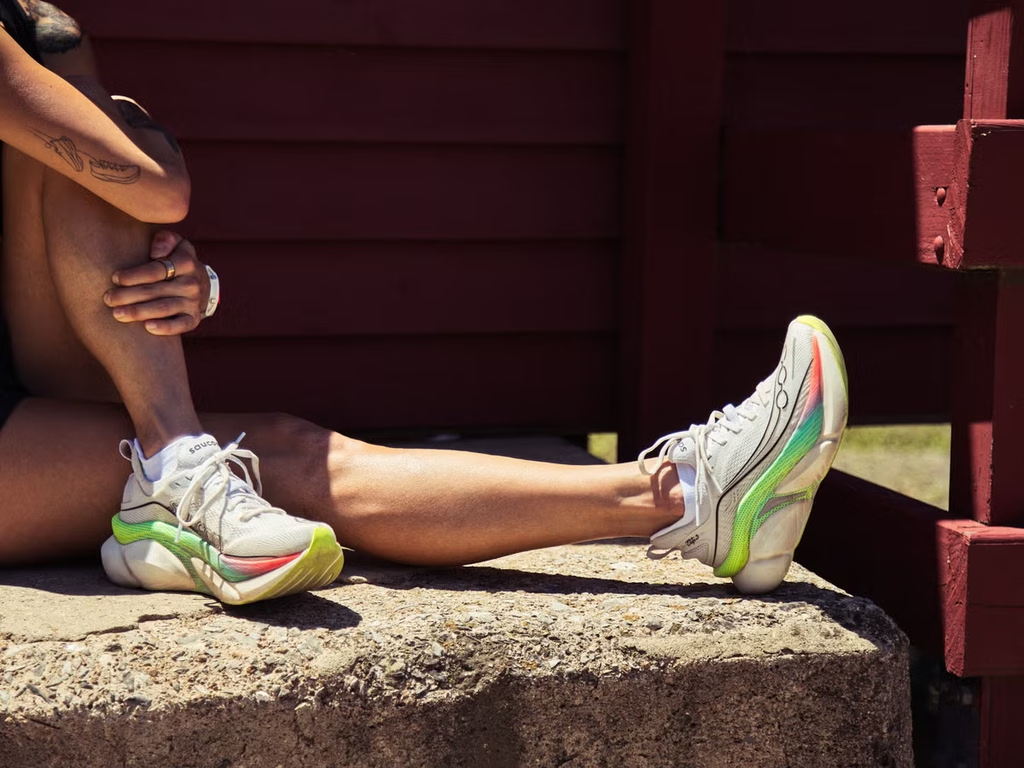
And then there are race day shoes which are always even more expensive.
- Saucony Endorphin Pro 5: $240 (Saucony)
- Nike Alphafly 4: $280 (Nike)
- Saucony Endorphin Elite 3: $290 (Saucony)
When I covered the Alphafly 4 launch, the headline was that it got cheaper and that was less than a month ago.
My worry is what that ceiling does to the middle. When race shoes creep up to $250 to $300, a $170 “premium trainer” starts looking reasonable. Then $180. Then $200, with a GORE-TEX upper as the excuse.
What I Tell the Athletes I Coach
As an endurance coach, I get some version of this question every season: what should I actually spend?
My answer hasn’t changed, but the prices are.
Buy one great daily trainer first and that will come at a cost. It’s the shoe that carries most of your miles. If the budget only allows one pair, this is the one, not the carbon racer.
Last year’s model is your friend. I’m huge into this actually. I did it with Asics all the time. When the new version drops, the old one gets marked down. On Nike’s own Pegasus 42 page, some colorways were marked down to as low as $82.97 when I checked.
Save super shoes for when they matter. Races and the key workouts that rehearse race pace. Not recovery jogs. They’re expensive, and you don’t need to burn their foam on easy days.
Rotate if you can afford to and two shoes that you alternate can spread the miles. But a rotation is a luxury, not a requirement. A runner with one good pair and a consistent plan beats a runner with five pairs and no plan.
Track your miles. Strava is a great way to log your shoe miles so you know exactly where things stand. When the price of your favorite shoes climbs, and if yours are near end life, act accordingly.
My Thoughts
None of this is shocking. Import costs went up, tariffs stacked on top, and oil gets it all over to the States.
What bugs me is how normal it’s becoming. FDRA expects prices to keep rising into 2027, just more slowly. Slower increases still compound.
So I’ll keep saying it. If brands want $170 to $200 for a daily trainer, it’d better last. And if it doesn’t, I’ll say so.
In the meantime, buy smart, buy last year’s colorway, and save the expensive foam for race day.
Leave a Reply
You must be logged in to post a comment.