

We’re an independent brand expressing our own opinions. When you buy through our links, you’re supporting us, and we may earn a commission.
I hate paying for wearable subscriptions and you should too. And just maybe by the end of this review, you’ll reconsider paying for another.
I wore the QALO SL-1 next to my WHOOP for 3-weeks, and for $200, it’s not perfect but once I understood the data coming out of both, I can’t justify renting my own health numbers anymore.
I like ownership and making my life easier. Earlier this year, I paid off my car and recently switched from T-Mobile to Mint Mobile because its cheaper and runs on the exact same network. Yes, you’re paying for branding.
And in the fitness smart band space, a lot of the same is happening. WHOOP is the undeniable leader and I’ll say so throughout.
Today, I wont dispute that.
The question is whether WHOOP is worth the monthly rental and subscription.
Like I said. I like owning things, so when I look at my bank account and see a monthly charge for the privilege of seeing my own sleep. That drives me up the wall.
I already covered the QALO SL-1 smart band when it launched and after weeks of it being on my wrist next to WHOOP, the numbers lined up close enough for me to make the switch.
As always, this is an honest look at what’s good, what sucks, and what you save.
Who is QALO?
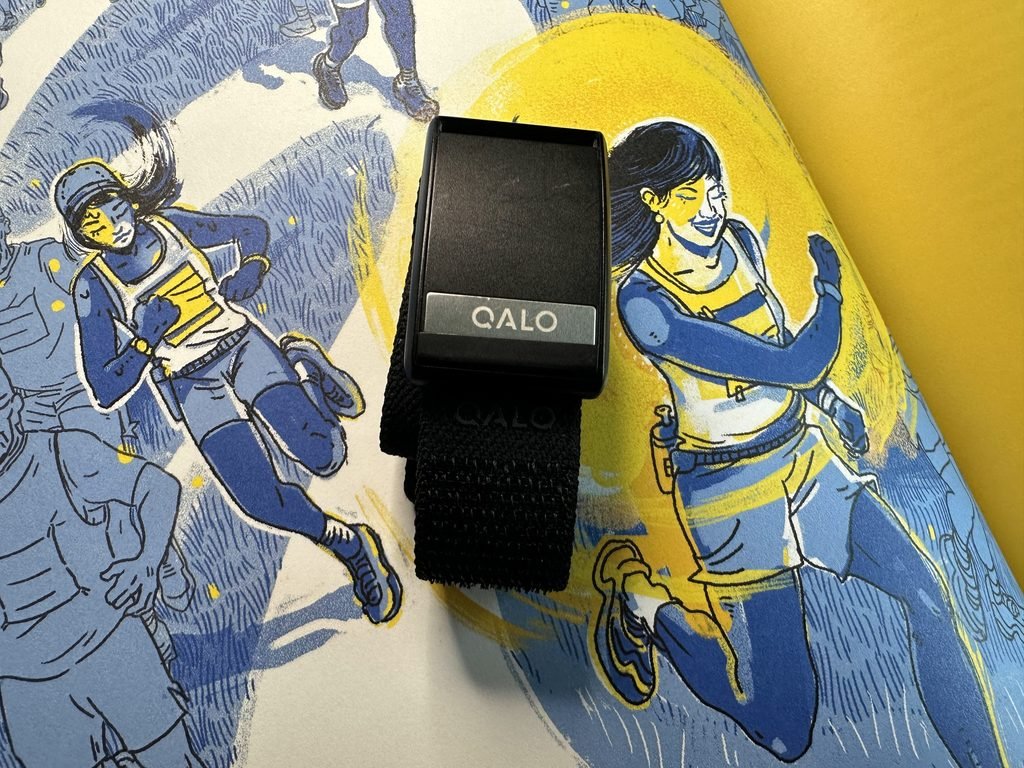
QALO stands for Quality, Athletics, Love, and Outdoors and is the company that launched the silicone wedding ring in 2013, and after owning that market, they launched their first smart wearable, the QALO smart ring in 2025. Now they’ve added the SL-1 smart band.
The whole thing is led by CEO Jake Curreri, who has been in the fitness space since he was a teen. We’ve spoken a few times now during the course of this review, and he’s accessible, committed to his customers, and genuinely yearns for feedback on how to get better. Also, every QALO employee has to work events to get in front of athletes and learn from them. In our experience, that’s not something you can say about every wearable company.
First Impressions
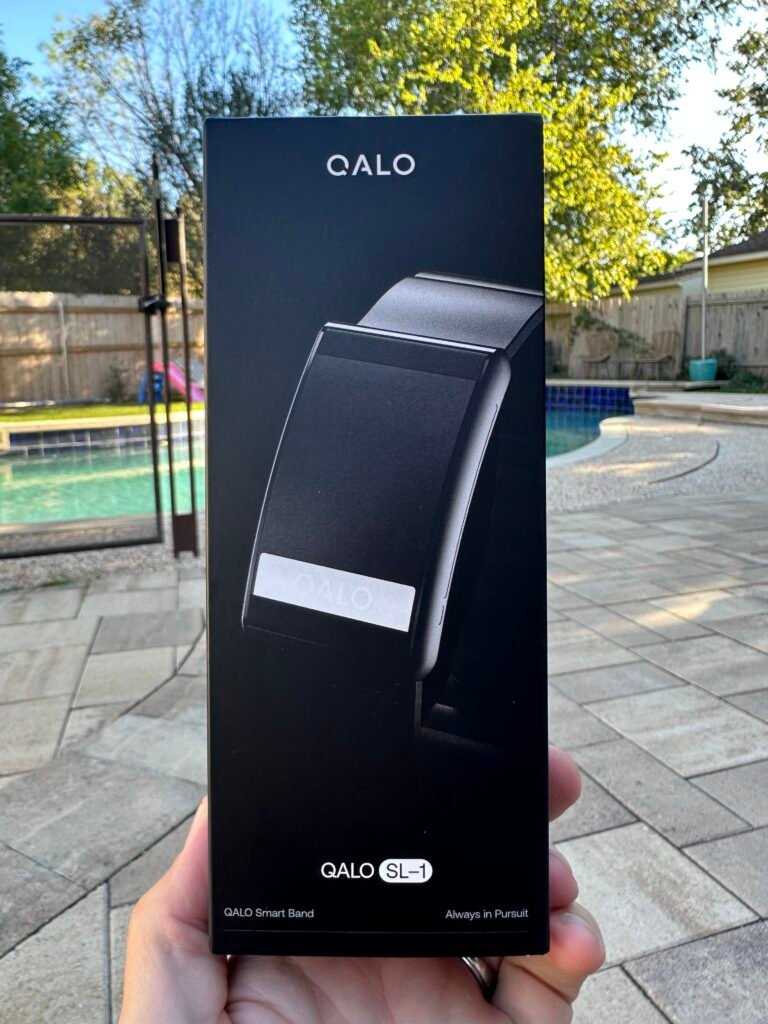
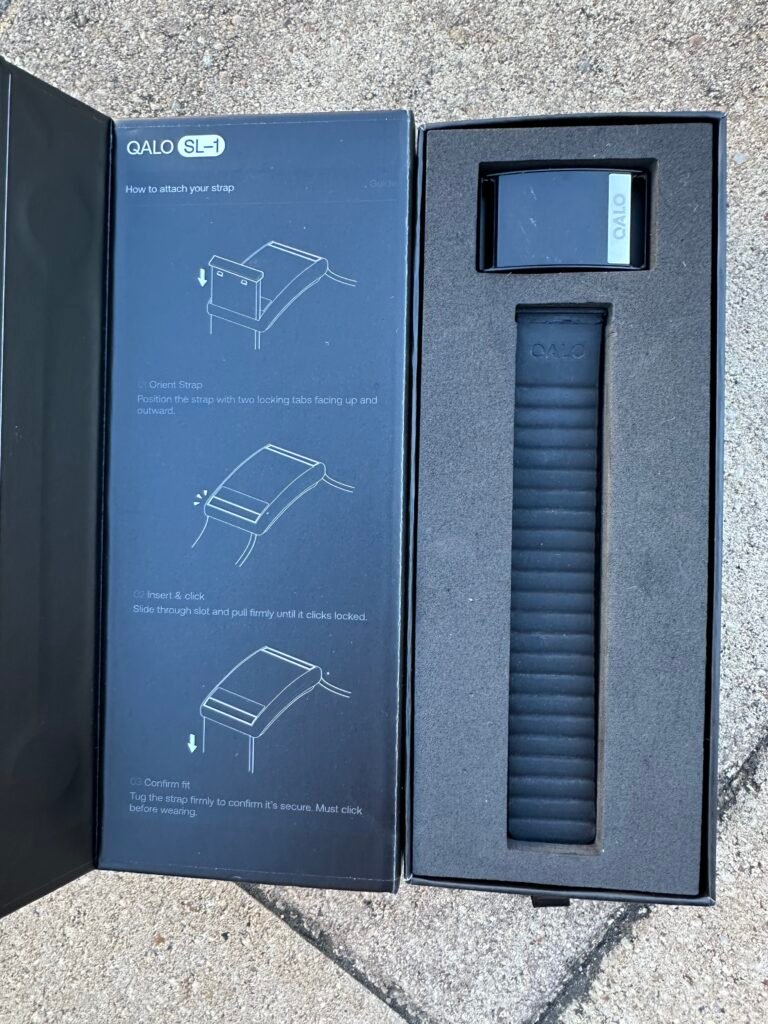
What impressed me most from the jump was the presentation.
For a $200 smart band, QALO’s package is as sleek and nicely put together as anything from WHOOP or Oura, and the way the band connects to the main tracker is genuinely well thought out. No insert clips but instead the band slides through the main body to secure it.
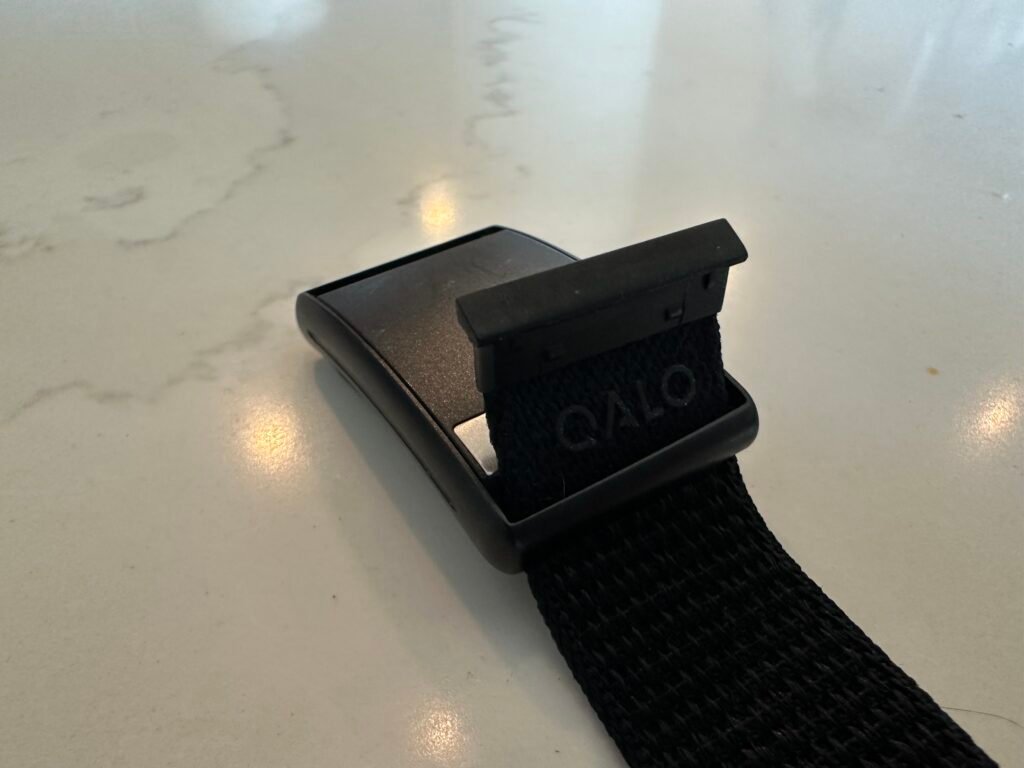
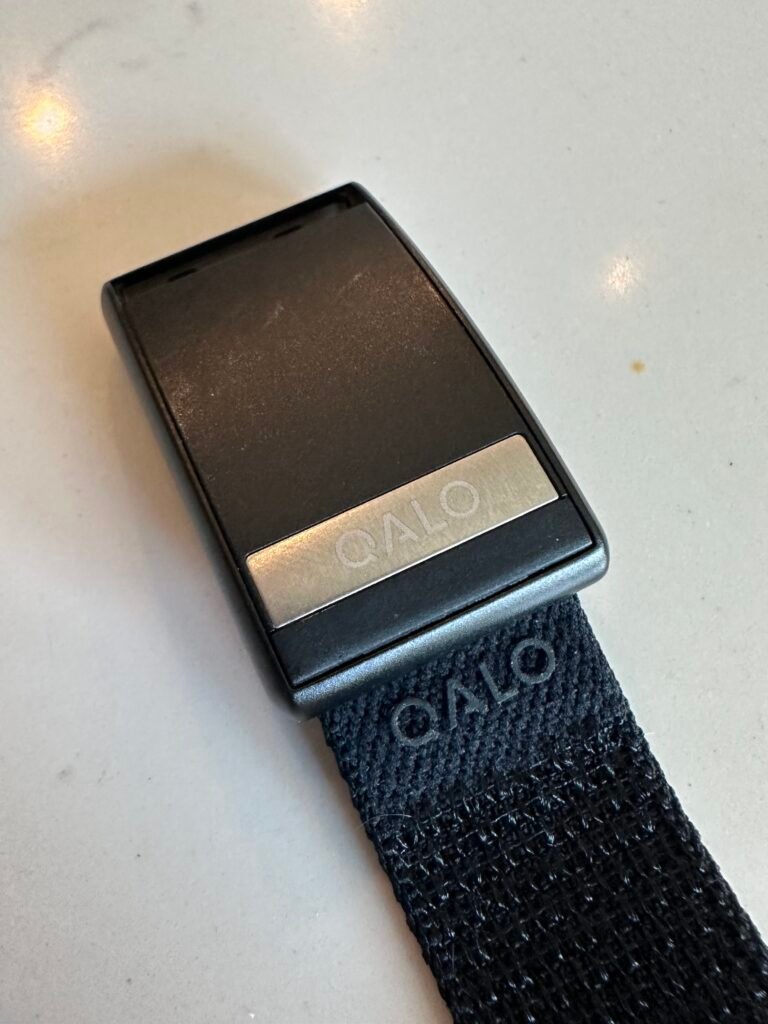
This isn’t a smart ring review, but the same goes for their ring. We don’t know our ring size, so we ordered the sizing kit first, and once we confirmed our size, the ring showed up fast and was just as nicely done. I was excited to open it, not left wondering if I’d bought some secondhand TEMU setup.
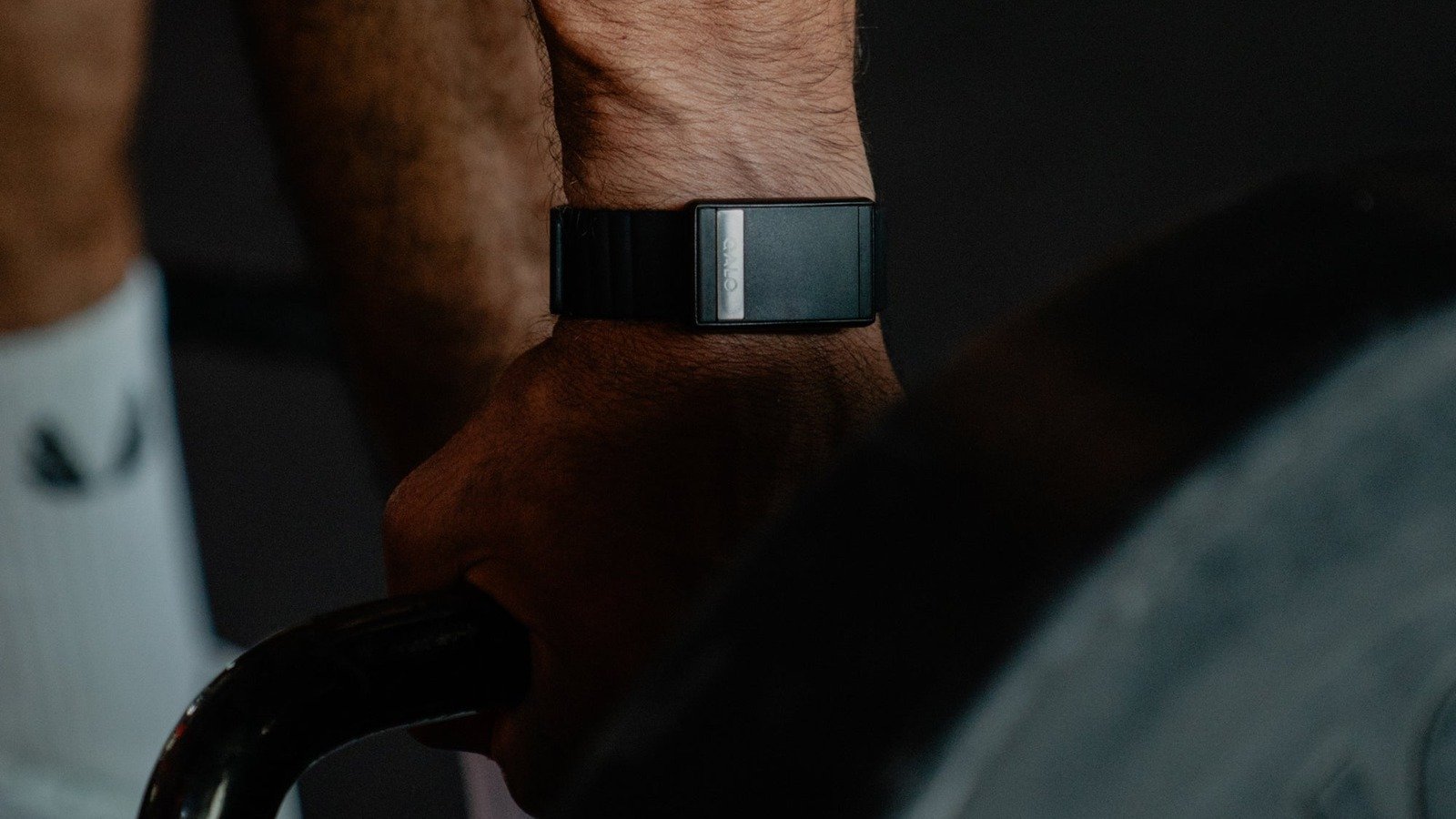
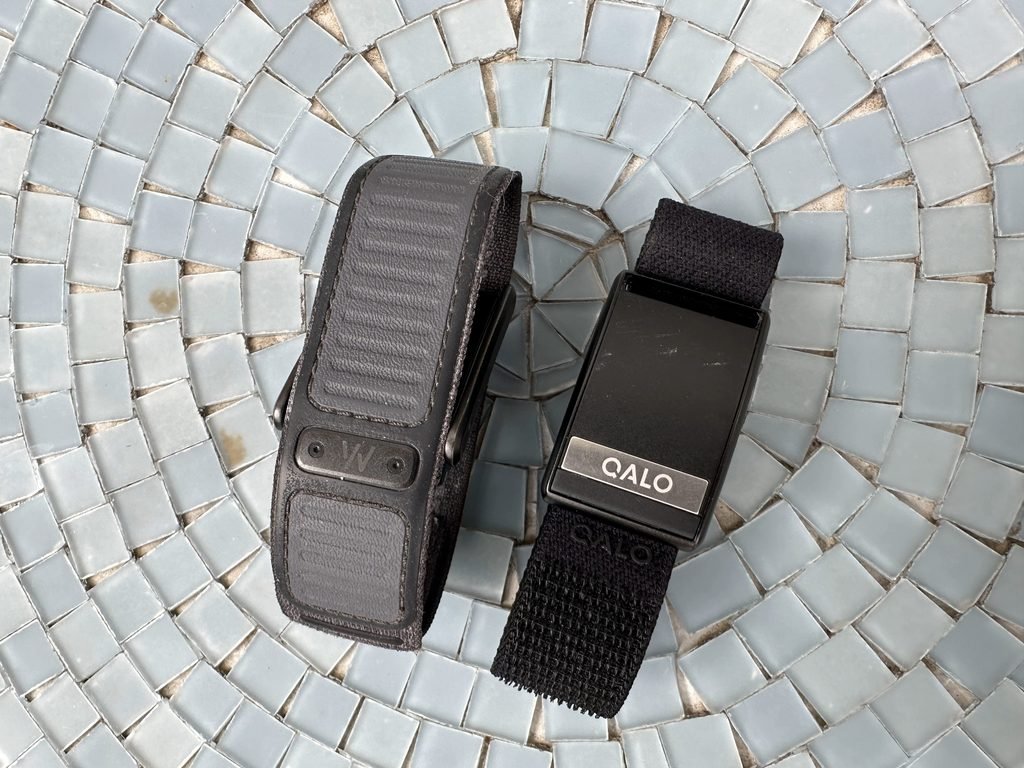
The SL-1 is about the size of a WHOOP, a touch longer but not as thick. On the wrist it disappears like you expect, which is the whole point of a screenless band. I’ve wore it 24/7 for the last few weeks, including sleep, swimming, running, cycling, and never thought about it. Expect for, “Do I need to charge this?”
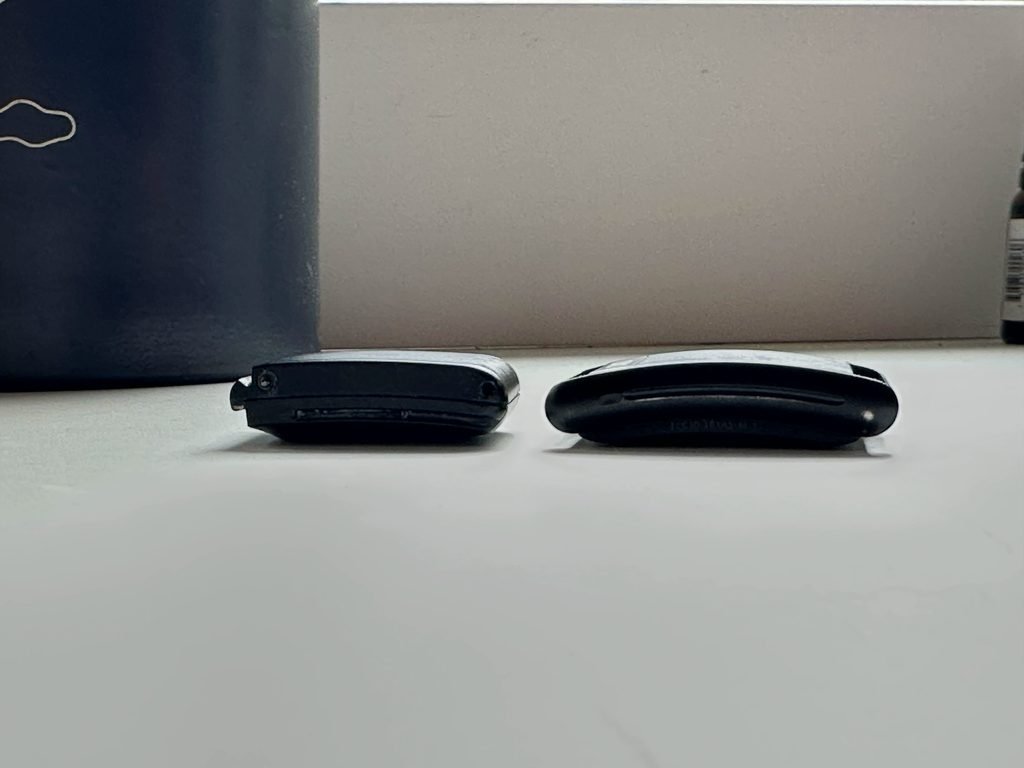
Setup is simple and the one QALO app to flawlessly swap between the band and the ring without starting over is very nice.
🔥 Here’s What Works
No Subscription. You pay once and the band is yours for life and they’re consistently updating. No monthly bill, no tier upsell, no annual renewal you forgot about.
Heart Rate Tracking. This is hugely important to me because if you’re an athlete, heart rate is something we all track, almost everyday. Over three weeks of Zwift trainer rides, we tracked in the QALO app on our phone to see how its heart rate compared with the Wahoo TICKR chest strap feeding Zwift. It wasn’t exact, but it was always within 3 to 4 beats of the strap. When we surged with a power burst, it followed, and when we hit recovery, it scaled back down with our heart rate. That’s not exact science or some UC Berkley lab test, but it passed the shit sniffing test for us. It’s pretty good for a wrist strap.
Sleep Data. This all goes to say, who is actually correct? But the sleep data from QALO is very close to what WHOOP had. Sleep duration landed within 6 minutes on three of five nights, and sleep score within 2 points on three of five.
Size. The SL-1 isn’t revolutionary and doesn’t pivot from what’s already on the market but that’s ok. It is about the size of WHOOP, but slightly shorter and thicker. We actually found the nylon band of QALO to work better in the pool. It’s more stable.
The App is Easy. Q Score rolls Sleep, Vitality and Movement into one number, and the vitals (heart rate, HRV, SpO2, skin temperature) sit underneath as “x of 4 optimal.” It’s something you can pull up and quickly understand in seconds.
The Swap. QALO got this right and it makes everything easier. If you swap the band for the ring, just click which device you’re on in the app and it adjusts all through the same app, in your same account. Wear whichever device fits your vibe for the situation without going through 87 steps to get it right.
Women’s Health. This is a big focus for QALO and they’re putting a ton of R&D behind it. We didn’t know this but they we’re the first to launch menstruation and ovulation tracking. And they’re building out perimenopause and menopause support. Plenty of wearables treat this as an afterthought. QALO doesn’t.
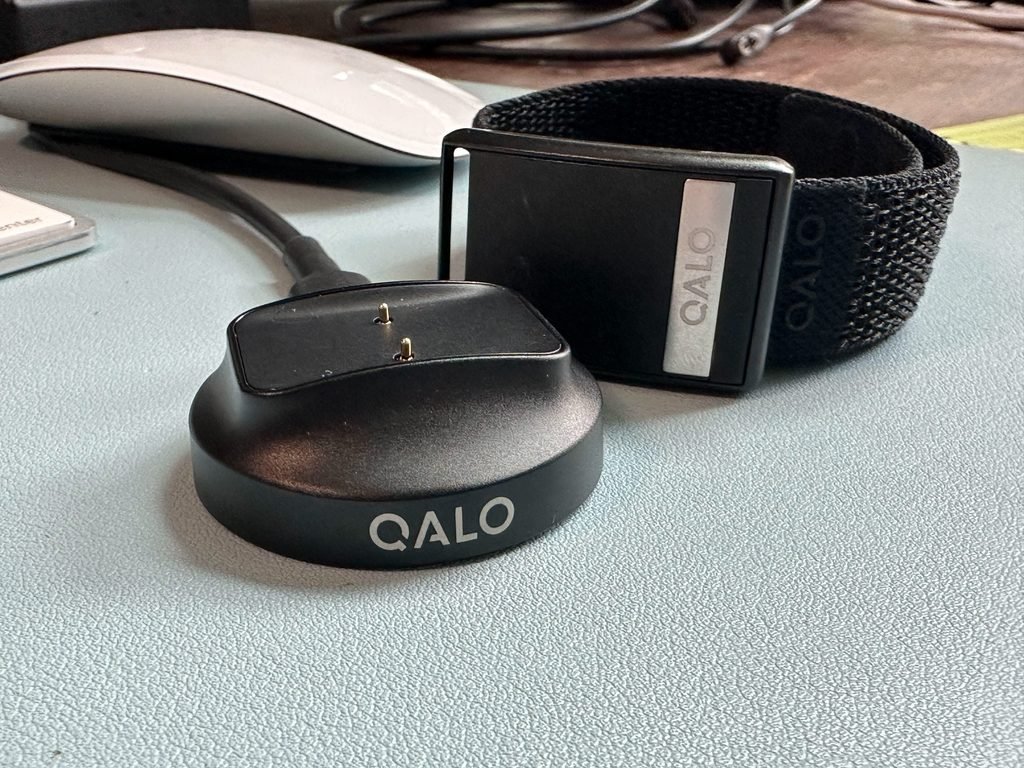
Battery. We’re getting roughly 13 – 17 days on a single charge which is longer than the 12 days the company highlights. Once you put the device on the included puck, you can get it powered up in under 90 minutes.
❌ Here’s What Stinks
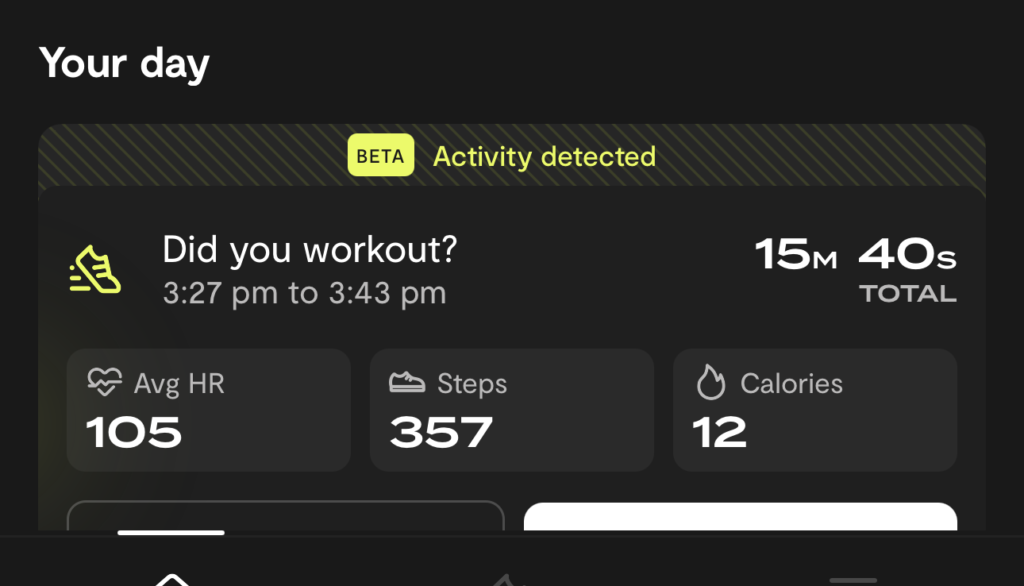
Auto Workout Detection. Coming from WHOOP which does an unreal job at knowing what workout you’re doing and when (we wrote about it), QALO still has a long way to go. The app asked me 8 to 10 times a day whether I’d worked out, usually highlighting 6 to 10 minute intervals of activity that was me just me getting up from my desk and walking around. One day it flagged 16 activities, and another “workout” was 10 minutes with 46 steps and 2 calories. This is where WHOOP is much better. But the good news is, you can just log workouts yourself, you don’t need auto detection.
Want more no-BS endurance news and gear takes? Get my free newsletter.
Off Wrist Charging. Another thing we grew accustomed to with WHOOP was charging the device while its still on the wrist. Their charger is wireless and amazing. Unless you forget its on and jump in the shower. Then that sucks and you’ll find yourself ordering a new one. Oops. But with the SL-1, taking it off to charge leaves gaps in your data, so there is just no great time to take it off. WHOOP’s on-the-go charger is the better design, and it’s the one thing I’d steal for the SL-1.
Steps Run Low. Or do they because that’s the thing. If we hold WHOOP to the gold standard in data tracking then yes, QALO reads low. One more than a few days, our QALO data counted 3%, 16% and 20% fewer steps than WHOOP. But steps are generally not something I concern myself with. As athletes we know when we’ve had big days and when we don’t, but if you’re a normie and really care about steps, it is something to consider.
HRV Continues to Improve. We’ve been wearing WHOOP for a few years now and with each changing day, QALO got more stable and accurate. A few days, it just didn’t record HRV at all which was annoying but I’m guessing that may have been more user error.
QALO vs. WHOOP: How Close Is the Data?
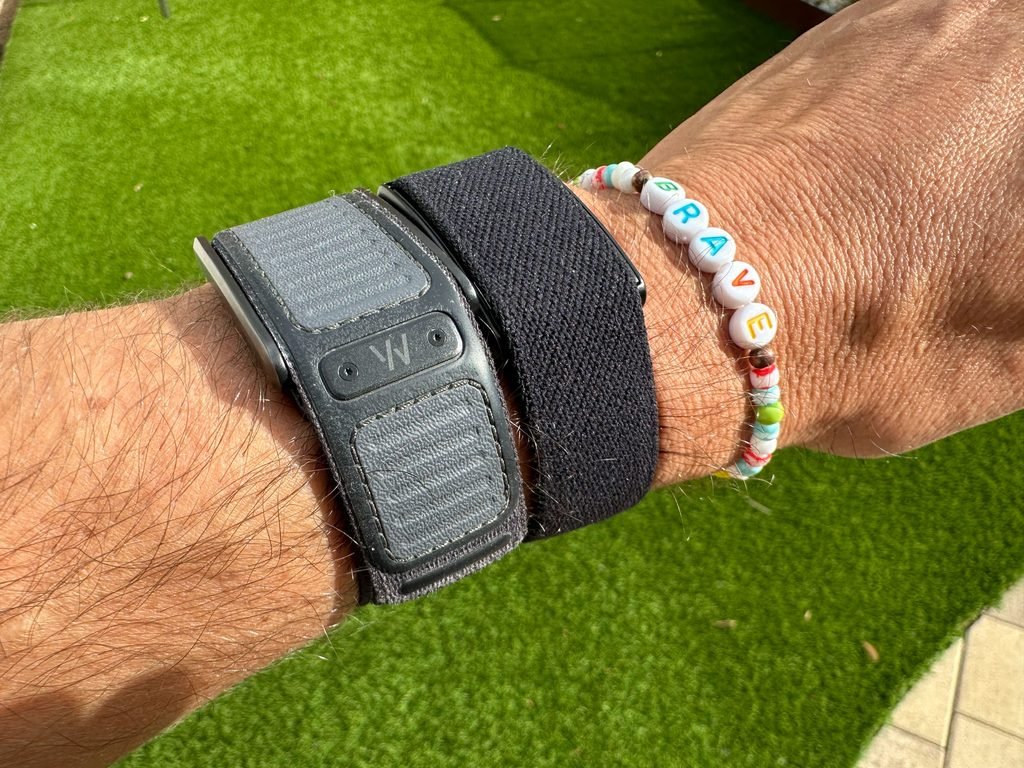
Let me say it plainly: WHOOP is the leader. It’s the more polished, more consistent product, and after three weeks with both strapped to my wrist like an absolute doofus, my opinion didn’t change that.
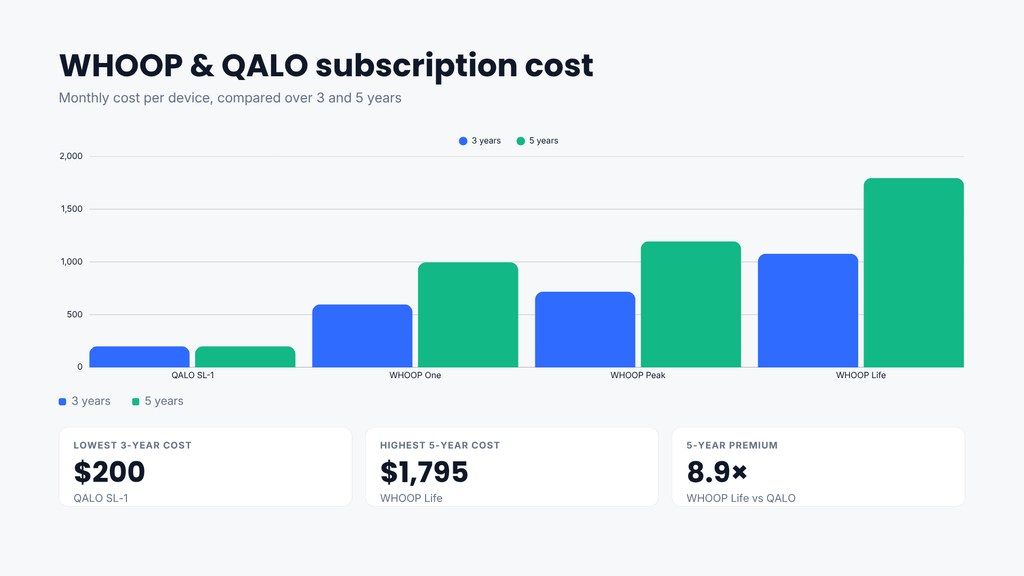
The real question isn’t whether WHOOP is better. It’s whether it’s roughly $520 better over three years. Here’s how they stacked up.
Sleep is where QALO knocked it out of the park. Sleep duration landed within 6 minutes of WHOOP on 9 of 14 nights, and our sleep score landed within 2 points. But there were other times when the durations were a bit further off, like Oct 5 when QALO showed 28 minutes more sleep and a score 14 points lower, and on Oct 6 when QALO read 33 minutes longer. Overall, these variations don’t bother me, if things were wildly squirelly, I’d lift my eye brows a bit more but they’re not. And listen, of all my data, sleep is top 3 for me. But I also don’t look at it every single day and worry about it. You know when you get back sleep and you know when you get good sleep but what I really am interested in is how seemingly capable and within reach QALO is to a leader like WHOOP, and for someone who looks once a week, it tells the same story.
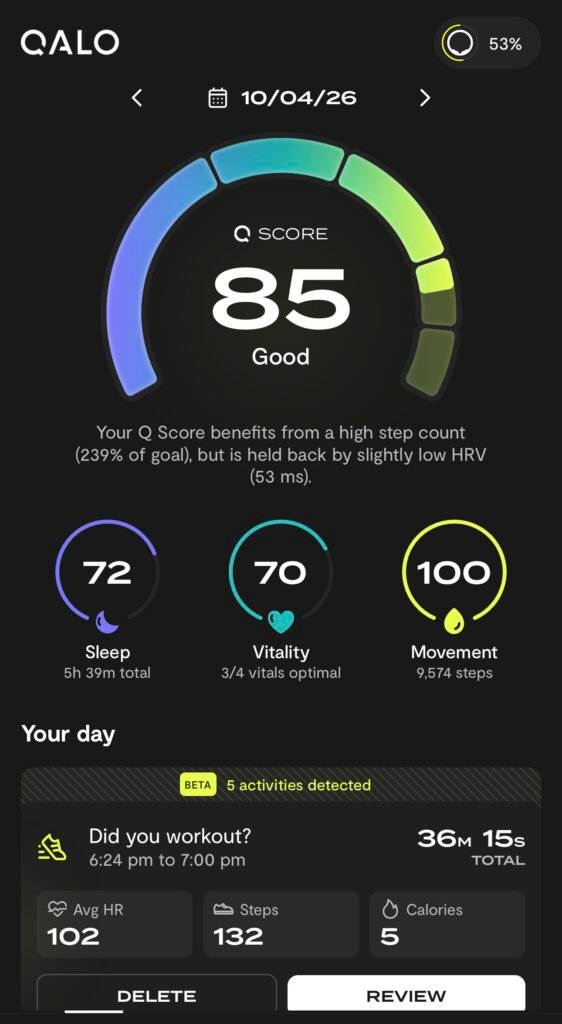
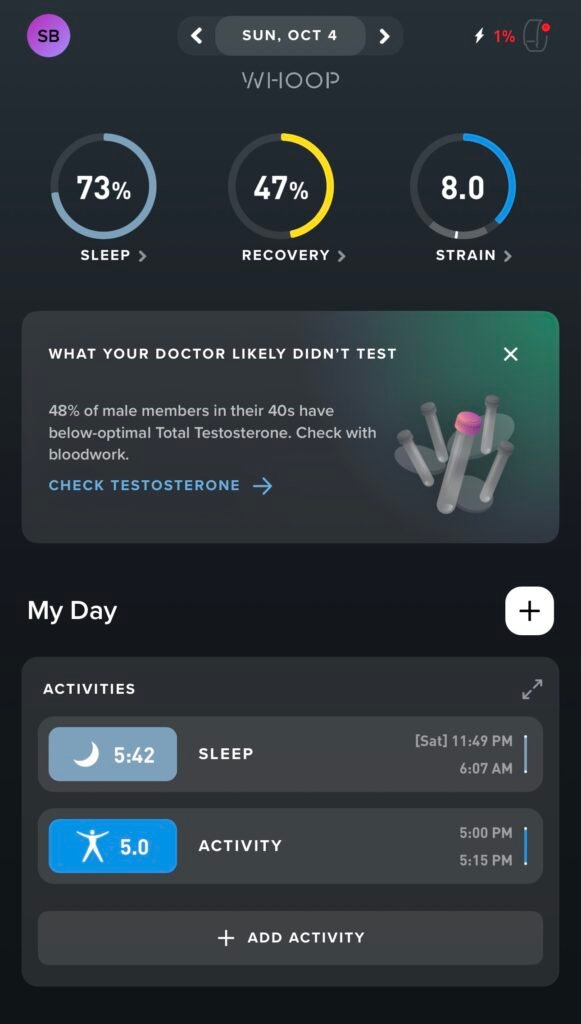
Heart rate is close, too. QALO’s heart rate came in within 8 bpm of WHOOP’s resting heart rate every day, about 6 bpm apart on average. On Oct 2 it was 41 vs. 48. That’s close enough to spot a trend, not close enough to call identical. The better test was on the bike. On Zwift trainer rides, QALO’s heart rate stayed within 3 to 4 beats of our Wahoo TICKR chest strap, and followed our power surges, and scaled back down in recovery. That was good enought for me.
But recovery vs. Vitality is where WHOOP pulls away for now. Looking only at the days both bands gave me a number, they didn’t agree. For example, on Oct 3, 4 and 5, WHOOP’s Recovery read 52%, 47% and 51%, and QALO’s Vitality, its closest equivalent, read 69%, 70% and 69%.
The closest day was Oct 3, and it was still 17 points apart. On Oct 4 the gap was 23. But. All things are not the same and the two companies have different algorithms and different formulas, so I wouldn’t read one as the other, but I want to highlight it.
HRV was the bigger split but our educated guess is that QALO is still learning who we are? For example, on two consecutive days WHOOP read 96 and 94, and QALO read 53 and 41, with the app flagging that second night as “very low.” Thats a big discrepency with QALO on a day to day basis when WHOOP’s numbers stayed steady across the week.
Steps are close. During our testing, there were days where QALO counted 20,737 steps to WHOOP’s 21,466, within 3%. On other days, we hit it 26,645 vs. 31,750 and 9,574 vs. 11,893, which is 16% and 20% fewer. Like we said, QALO seems to runs a little low, but the two bands tell the same story about how active the day was.
Is WHOOP worth the money?
That’s the nearly $600 question over three years and it depends on what you’re paying for. WHOOP’s lead is polish where every score every morning, workout detection that doesn’t cry wolf, and a charger you can use while wearing it. The thing I actually check once a week, how I slept, is close on both.
If you live and get off on things like your daily recovery number, pay for WHOOP. If you’re like me and glance at your data every few days or even weekly, the SL-1 gets you most of the way there for a one-time $200 fee with consistent updates you mostly won’t question.
The Subscription Math
Over three to five years WHOOP costs between $600 – $1,795 depending on the tier, and the SL-1 costs $200, once.
I’ll scream it from the mountains and look for the people in the back to hear me but nothing pisses me off more than renting my own data. In our opinion, the data we got back from QALO was close enough that we would ditch an ongoing subscription.
With 2.5 million users on the WHOOP platform, they clearly meet the demands of a lot of people are I want to say, we’re not knocking them in the least. But it is the Mercedes-Benz of wearables, when sometimes all you need is an ultra reliable Toyota 4Runner.
What to Know
- Price. $200. No subscription
- Form Factor. A screenless band similarly sized to competitors
- Tracks. Sleep, heart rate, HRV, SpO2, skin temperature, steps, workouts, menstrual and ovulation cycles
- Scores. Q Score = Sleep + Vitality + Movement; Vitality is graded on “x of 4 vitals optimal”
- Ecosystem. One app for both the SL-1 band and the QALO ring
- Charging. USB-C with an included puck. Must take the device off the wrist
Real Life
I don’t stare at my data everyday but if I’m feeling extra tired or especially worm out, or putting in huge training blocks for weeks on end, that’s when I start dissecting things. But for this review, I did look and compared everyday; seeing how I slept, and how my body is trending during my latest strength and endurance block as I gear up for another season.
The QALO SL-1 does the job I want it to so, and the price keeps me from resenting it.
But not everything is perfect. Auto detection or the lack of is our biggest annoyance, and I had to turn it off. Then there is the gap in my data during a charge. Those are the two things I’d fix first.
The ring and band swap turned out to be the feature I didn’t know I wanted but loved. Same app, same history, so switching form factor doesn’t reset anything.
Should You Buy?
WHOOP is the more polished product, but I don’t think it’s nearly $600 better or $1,800 better over 3 and 5 years, respectively.
Buy the QALO if you check your data a few times a week and hate subscriptions. You get sleep numbers that tracked WHOOP closely, a small comfortable band, an easy app, and real attention to women’s health, for a one-time $200.
Skip it, or wait, if you are so obsessed with data you have to look at it everyday, multiple times, live by workout detection, want the on-the-wrist charger, or need step counts and HRV you can trust to the decimal. WHOOP is still better at auto-detecting workouts and charging without losing data.
In our opinion, fitness shouldn’t be a subscription and the SL-1 is the first smart band that makes me believe that.
Leave a Reply
You must be logged in to post a comment.