

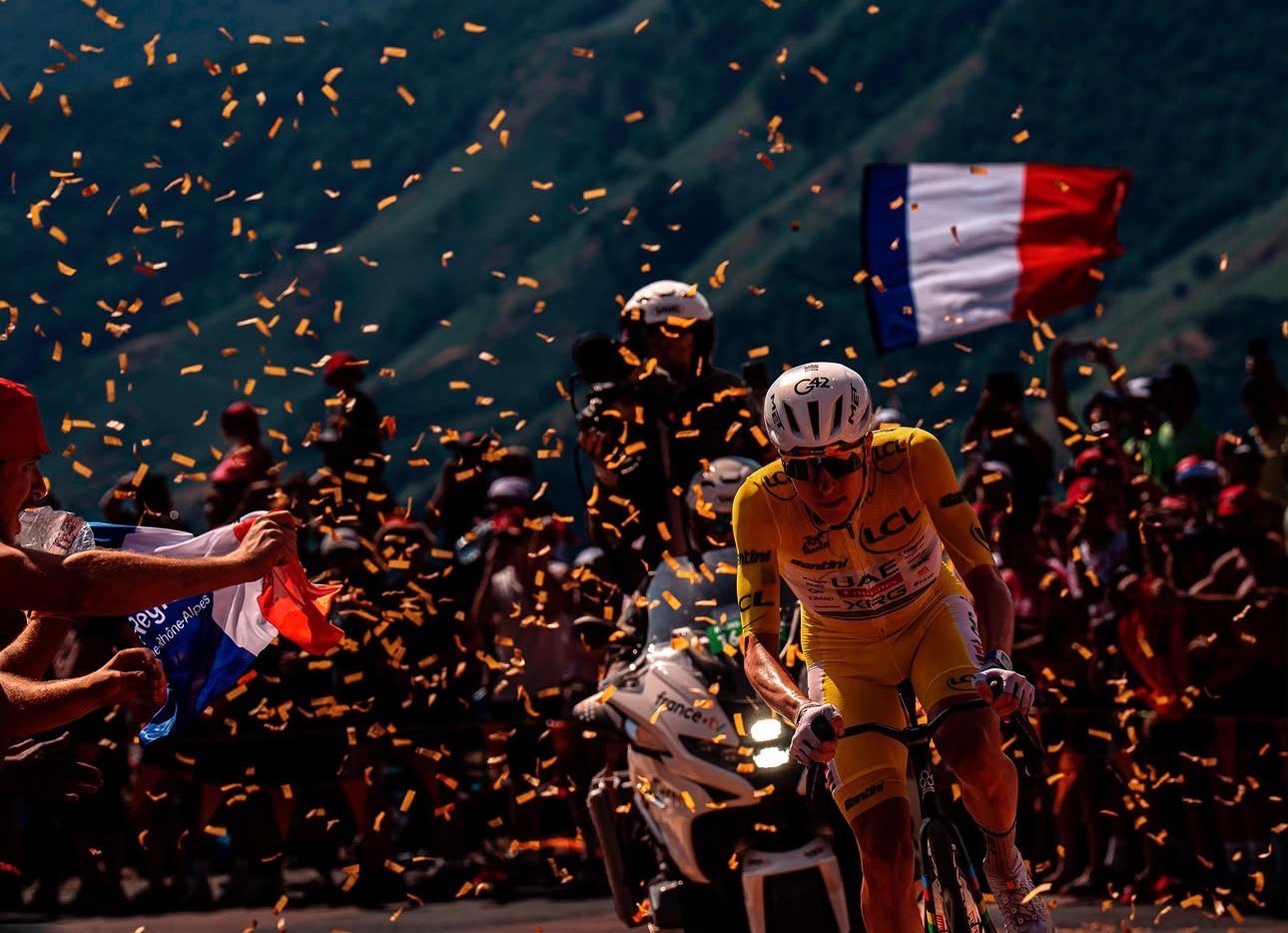
Every summer, cycling fans try to explain Tadej Pogačar to family and friends. Yes, beyond the dude is a certified freak and likely the GOAT of the Tour de France. A ton point to genetics while others crediting talent, him having the strongest team in the peloton, or simply the fact that he’s riding at a level nobody else can touch.
So we reached out to WHOOP and asked them for his data. And they obliged.
Whoop came back to us after analyzing nearly 1,400 rider-nights collected from Pogačar and six UAE Team Emirates teammates between January 1 and Stage 15 of the 2026 Tour de France. So not the complete tour but almost.
Because almost every rider wore a Whoop strap nearly every night, the dataset offers something we rarely get in professional sports: an opportunity to compare one of the greatest riders in the world against athletes following the same training plan, preparing for the same race, and competing at the same level.
The findings are fascinating, but probably not for the reasons you’d expect.
Tadej is an Outlier — but that is not the full story
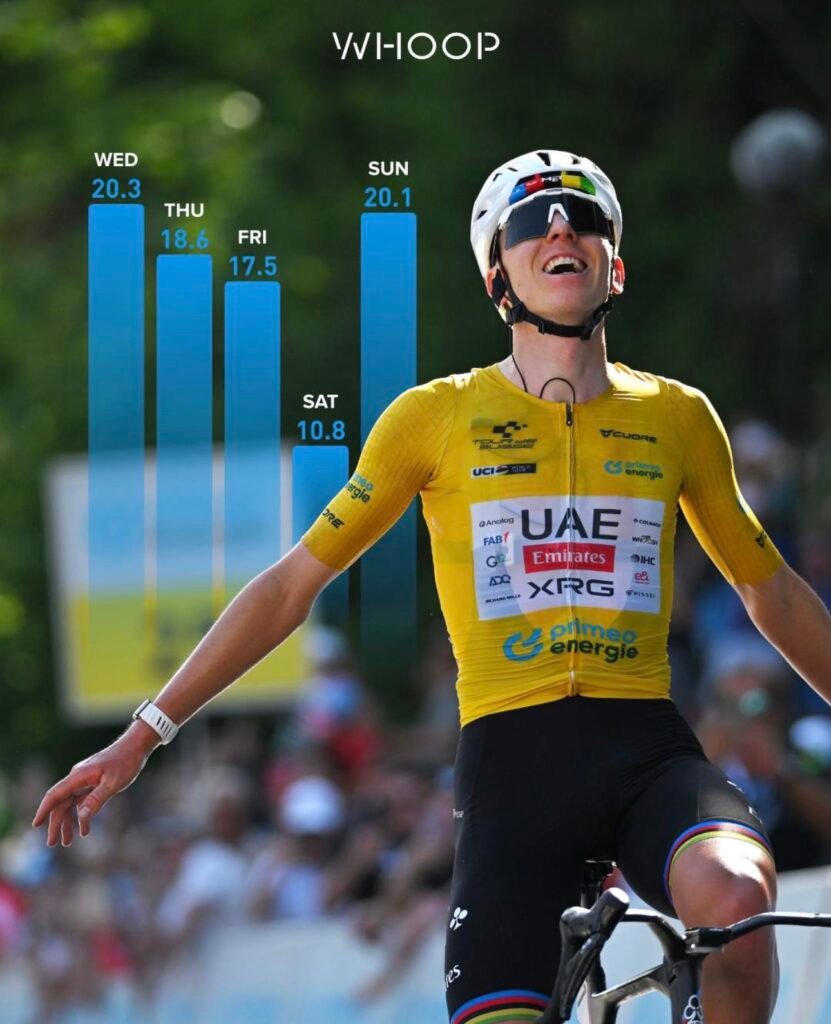
When you compare Pogačar to the average Whoop member, the numbers are exactly what you’d expect from a 5x Tour de France champion.
His resting heart rate averages just 42 bpm compared to 59 for the typical user. His heart rate variability (HRV) sits at 100 milliseconds versus an average of 66, and he consistently logs more sleep than most average joe’s balancing work, family, and everyday life. But surprisingly, he’s only averaging only 26 more minutes a night, with 19 points higher sleep consistency.
WHOOP even estimates his physiological age to be roughly 12 years younger than his actual age, largely because of an elite VO₂ max. Which at 27, he’s got the body of a 16 year old.
As impressive as those numbers are, they don’t really tell us much. Nobody expected the best cyclist in the world to look normal next to weekend warriors.
Surprisingly, against elite riders, the physiological gap almost disappears. When Pogačar is compared with his UAE teammates, most of the dramatic differences fade away. The resting heart rates, HRV numbers, and aerobic engine are roughly equal.
That doesn’t mean they’re identical, but it does challenge the easy explanation that Pogačar wins simply because he has a bigger engine than everyone else. Within his own team, there isn’t some massive physiological advantage separating him from the riders helping him win the Tour. If raw fitness alone doesn’t explain his dominance, then something else has to.
Tadej Simply Recovers Differently
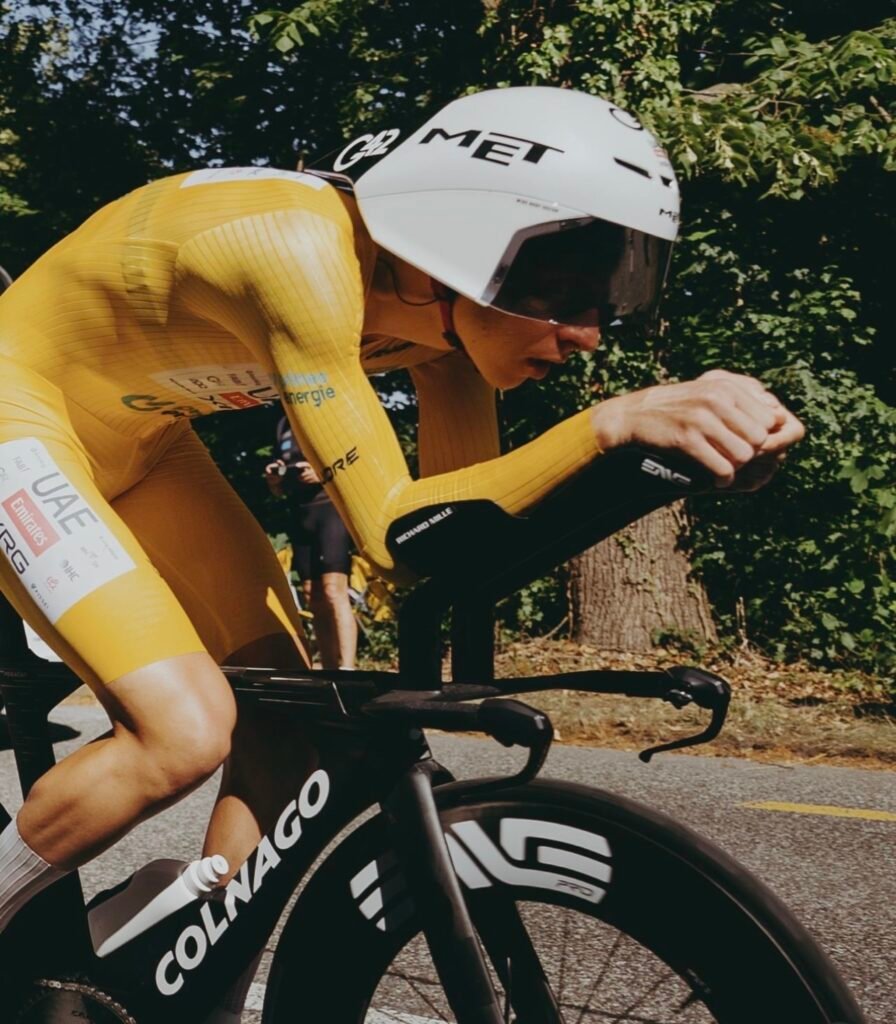
Like most WorldTour teams, UAE built toward the Tour with a heavy overload block, followed by winning the Tour de Suisse roughly two weeks out, before tapering into July.
That workload pushed every rider’s physiology downward, and Pogačar was no exception. During the hardest part of the block, his HRV dropped to 88 milliseconds while his recovery score fell to just 43 percent. The lowest readings of his season.
The Tour Rebound
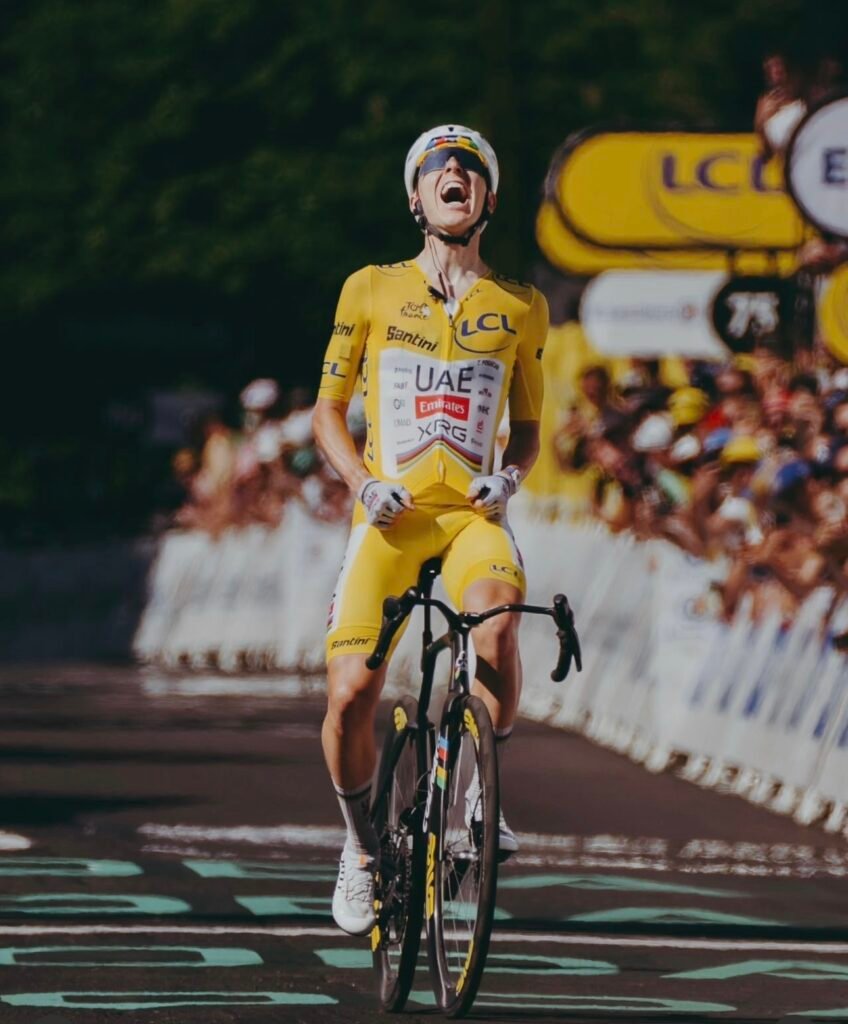
By the time the Tour began, his body didn’t simply recover back to baseline, it rebounded to its strongest physiological state of the entire year. His HRV climbed to 121 milliseconds, his resting heart rate dropped to 38.2 bpm, and his recovery score jumped to 78 percent.
More importantly, his rebound from that training low was nearly 79 percent, compared to 44 percent for the next-best teammate.
Everyone completed essentially the same preparation and everyone experienced the same fatigue but Pogačar was simply able to come out the other side fresher than everyone else.
More Sleep, Better Recovery
One of the more surprising findings is that Pogačar actually sleeps more during the Tour than he did during his taper. Conventional wisdom would suggest the opposite, especially since it goes beyond racing and includes racing, transfers, media obligations, and daily stress. Not exactly the most ideal racing conditions.
Instead, his data shows he averaged 8.1 hours of sleep during the Tour compared to 6.9 hours during the taper leading into it. Everything you hear is that 8 hours of sleep a night is the sweet spot and it likely played a meaningful role in helping him absorb the enormous workload of racing while keeping his physiology remarkably stable from one stage to the next.
Consistency is His Greatest Superpower
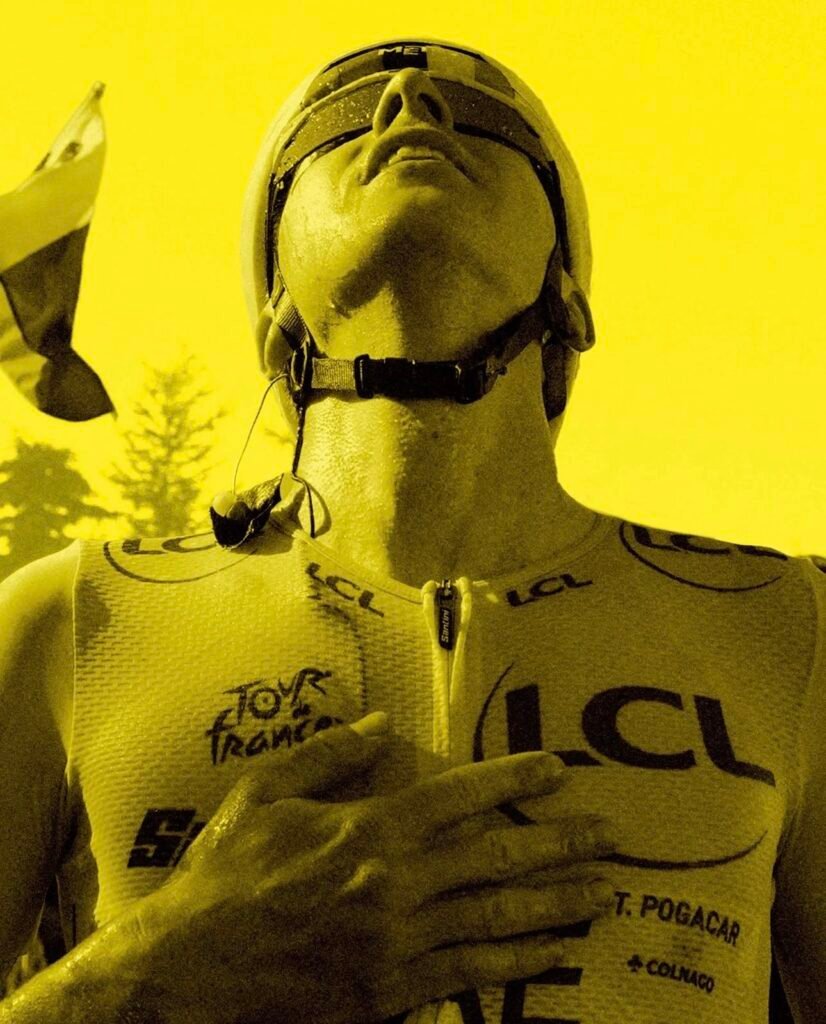
Perhaps the most revealing metric in the report isn’t heart rate, recovery, or sleep. It’s Tadej’s consistency.
Whoop measured how much each rider’s HRV fluctuated throughout the Tour using a coefficient of variation. Pogačar recorded just 13.4 percent compared to a teammate average of 19.4 percent.
What that means is his body changes less from day-to-day than the other elite riders around him. And during a three-week Grand Tour, that’s an enormous advantage as most riders experience constant physiological swings as fatigue accumulates, recovery ebbs and flows, and the stress of racing compounds. But Pogačar’s numbers remain comparatively steady, allowing him to string together high-level performances day-after-day, without the dramatic highs and lows many riders experience.
Winning Stages Comes at a Cost
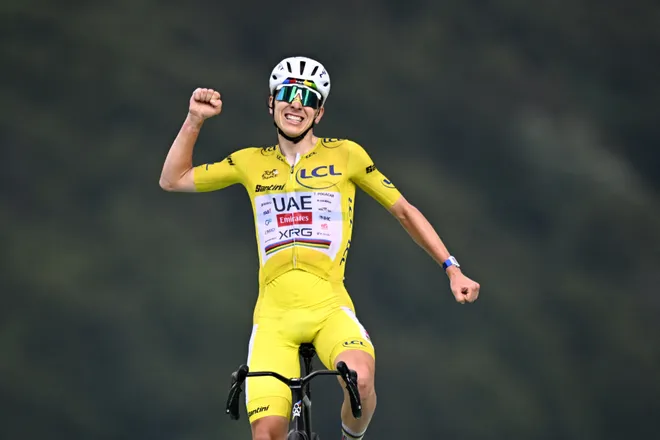
The data also illustrates just how much work Pogačar is actually doing to win stages. Whoop tracked time spent above threshold, essentially measuring the amount of racing performed in Zone 4 and Zone 5. On stages that Pogačar won, he accumulated roughly 89 minutes above threshold compared to just 34 minutes for his teammates riding those same stages.
After winning Stage 14, Pogačar dealt with an early wake-up and managed only about four hours of sleep. Under normal circumstances, you’d expect that combination of maximal effort and minimal sleep to produce terrible recovery metrics the next morning. Instead, he still woke up with a 62 percent recovery score and an elevated HRV, suggesting his body was absorbing stress at a level that’s difficult even for other elite professionals to match.
The Numbers
Across the Tour, Pogačar averaged a strain score of 19.9, with his hardest efforts coming on Stages 2, 3, 6, 7, 10, and 20, all registering at 20.5 or higher. Even the Tour’s scheduled rest days carried strain scores of 11.6 and 10.2, a reminder that recovery during a Grand Tour is rarely passive. His maximum recorded heart rate reached 198 bpm on Stage 10, while his average sleep performance sat at 88 percent.
Through July 25, he had recorded just one red recovery day during the entire race, maintaining an average recovery score of 57 percent alongside a resting heart rate of 42 bpm.
The Takeaway
The easy conclusion from all of this is that Tadej Pogačar is simply a physiological freak and we’re not worthy. Which is true. But the data paints to a more nuanced picture.
His engine is undeniably elite, but so are the engines of the riders sitting beside him on UAE Team Emirates. What separates him isn’t necessarily producing dramatically higher numbers than everyone else, it’s how consistently he responds to the same training, how effectively he recovers from enormous workloads, and how little his physiology fluctuates when the pressure of the Tour is at its highest.
That’s probably the biggest lesson hidden in Whoop’s data report. The talent of Tadej Pogačar is undeniable, but his ability to recover, adapt, and string it all together day after day and show up almost exactly the same allows him to keep performing when everyone else falters.
Leave a Reply
You must be logged in to post a comment.