

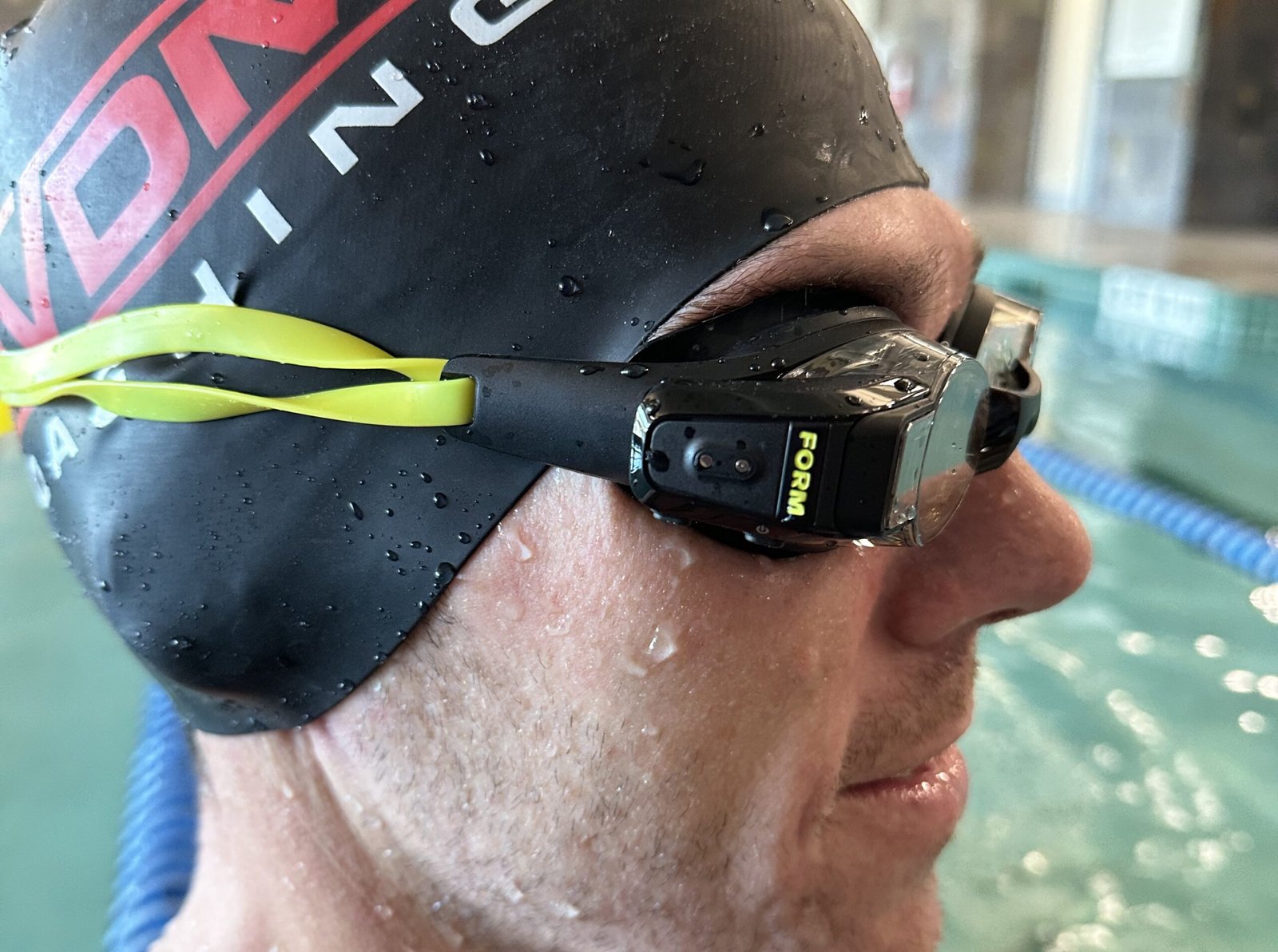
Is less tech better? When it comes to swimming — especially focusing on form — I think the answer is yes. And that’s not coming from someone who hates technology. I’ve been swimming for 38 years and still lose track of what lap I’m on.
Which is why I’ve spent most of my life wishing goggles like the FORM Smart Swim 2 existed — and why I really wanted to love them.
On paper, these goggles are impressive and it’s easy to see why. You get real-time pacing. Heart-rate tracking. Lap counting. Built-in workouts. A heads-up display. Long (enough) battery life. An easy setup and seamless connection to your phone and Strava for the data dorks.
For a data-driven athlete, it feels like swimming has finally caught up to running and cycling. Just what we need, all that tech right in front of your eyes.
But after six weeks of using the FORM Smart Swim 2 goggles, I landed somewhere I didn’t expect. I don’t love them — and I wouldn’t recommend them as everyday goggles. Just like I wouldn’t recommend carbon shoes as daily trainers.
🔥 Here’s What Works
Setup & App Experience: FORM does a great job here. The goggles pair easily with the app, syncing workouts and data without friction. Everything feels intuitive, and with an up/down and back button on the goggles, everything is easy to navigate.
Lap Counting & Pace Accuracy: This is where FORM shines. The lap tracking is consistent and reliable, which matters because nothing kills a swim faster than tech that lies to you. Smartwatches notoriously do a terrible job tracking any kick sets because they track via arm/watch movement. But with FORM, pace data felt steady and believable, even if a little slow.
Built-In Workouts: FORM’s guided workouts are legitimately good if you have no point of reference or don’t know where to even begin. They’re structured, clear, and accessible for swimmers at every level. If you want a “coach,” it’s there.
Battery Life: Put it this way, after not charging for 10 days, I showed up to the pool and they were dead. So lesson learned and that is user error. Outside of that, no complaints here. The battery lasts long enough that charging never became a thing I had to think about.
Upfront Price (for the tech): Sitting around $199, these goggles aren’t cheap, but they’re also not outrageous given what’s packed into them. When you compare them to premium options like Magic5 ($90) or other high-end goggles—without tech—they start to look reasonable if you want screens in your swim life. Add in the programmed workouts as your “coaching” and you might even argue these are a deal.
😷 Here’s What Sucks
Screens Are Still Screens: Maybe I’m old-school but this is the heart of it for me. Anything with a screen is a distraction. Period. As an athlete and someone who swims under an hour in an Ironman, I consistently found myself losing focus while wearing FORM goggles. Instead of swimming straight down the center of the lane, I was wandering. Instead of focusing on my catch and pull-through, I was looking at the screen.
Form Suffers with FORM: The irony is that FORM is designed to help with form, but the presence of data mid-stroke actually pulled my attention away from the fundamentals that matter most in the water. When I went back to old-school goggles and stopped thinking about pace and laps, and my body immediately settled. My pull cleaned up. My line straightened. My awareness improved. I “felt” the water again. IMO, swimming is different than running or cycling. I tell athletes all the time “time in water. time in water.” Because you don’t glance at data in a pool or race, you need to actually feel it. When you’re 800 meters into a 4K IRONMAN swim, you should not be stopping to look at what your pace is, you should already know what it feels like. And FORM interrupts that feeling more than I’d like.
Limited Sighting: The tech has to go somewhere and on the FORM goggles, the computer, HRM and charging all sit to the right side of where you’re looking, therefore cutting out that peripheral vision swimmers love to have. Rather than swimming on an open road, you’re definitely feeling like you’ve got tunnel vision.
Proprietary Charging: That’s right, the charging cable is not USB-C or something we all own a million of. Instead it is it’s own magnetic cable that you better not lose because that will be an extra $19.
Subscription: Like everything in this world these days, there is a subscription which is $99/yr. It is self explanatory but I just really hate that shit. Let me purchase something without a fee attached one time.
My Experience: Athlete vs. Coach
As an athlete, I get the appeal. I really do. When I was 12 years old, I literally drew these goggles, dreaming about not having to count laps or guess my pace ever again. Decades later, and thousands of forgotten lap counts behind me, seeing numbers floating in front of my eye for the first time felt… magical.
But as a coach and masters swimmer, I cringe. The magic was millimeters from my eye, yet it wasn’t the euphoric experience I’d imagined.
When a new athlete tells me they’re using FORM goggles and they’re not a strong swimmer, I have a visceral reaction. Beginners and developing swimmers need to be locked into the fundamentals: body position, breathing, pull, balance, awareness. Adding a screen too early is like handing a new driver an iPhone and saying, “Go ahead — drive and play with this.”
Screens are distracting by nature. You’re not allowed to drive while staring at your phone for a reason and you can’t be on your phone and fully present with spouse either – something always gets missed.
Swimming is no different. Attention is finite.
FORM’s HeadCoach is designed to guide you toward improvement. The goggles cue you to pick up the pace, slow down, adjust effort, even offer feedback on head positioning. On paper, that sounds helpful. But this is where my issue lies.
Trying to improve while processing real-time feedback mid-stroke is counterproductive. Swimming already demands precision and awareness. Adding instructions in the middle of a stroke pulls attention away from the very things you’re trying to fix.
For beginners? Absolutely distracting.
For advanced swimmers? I could ignore most of the on-screen prompts — but I still didn’t love what I saw it doing to my stroke. I wasn’t myself. Instead I was all over the lane and pulling my arms under. All very small things I wouldn’t do with dumb goggles.
I can see the case for occasional, intentional use but don’t recommend them as a default training tool.
The Design & Fit
Yes, I’m nitpicking here — but the goggle design itself bothered me more than I expected, likely due to the embedded screen.
Like many high-end goggles, FORM includes multiple nose bridges, and dialing in fit wasn’t an issue. No complaints there.
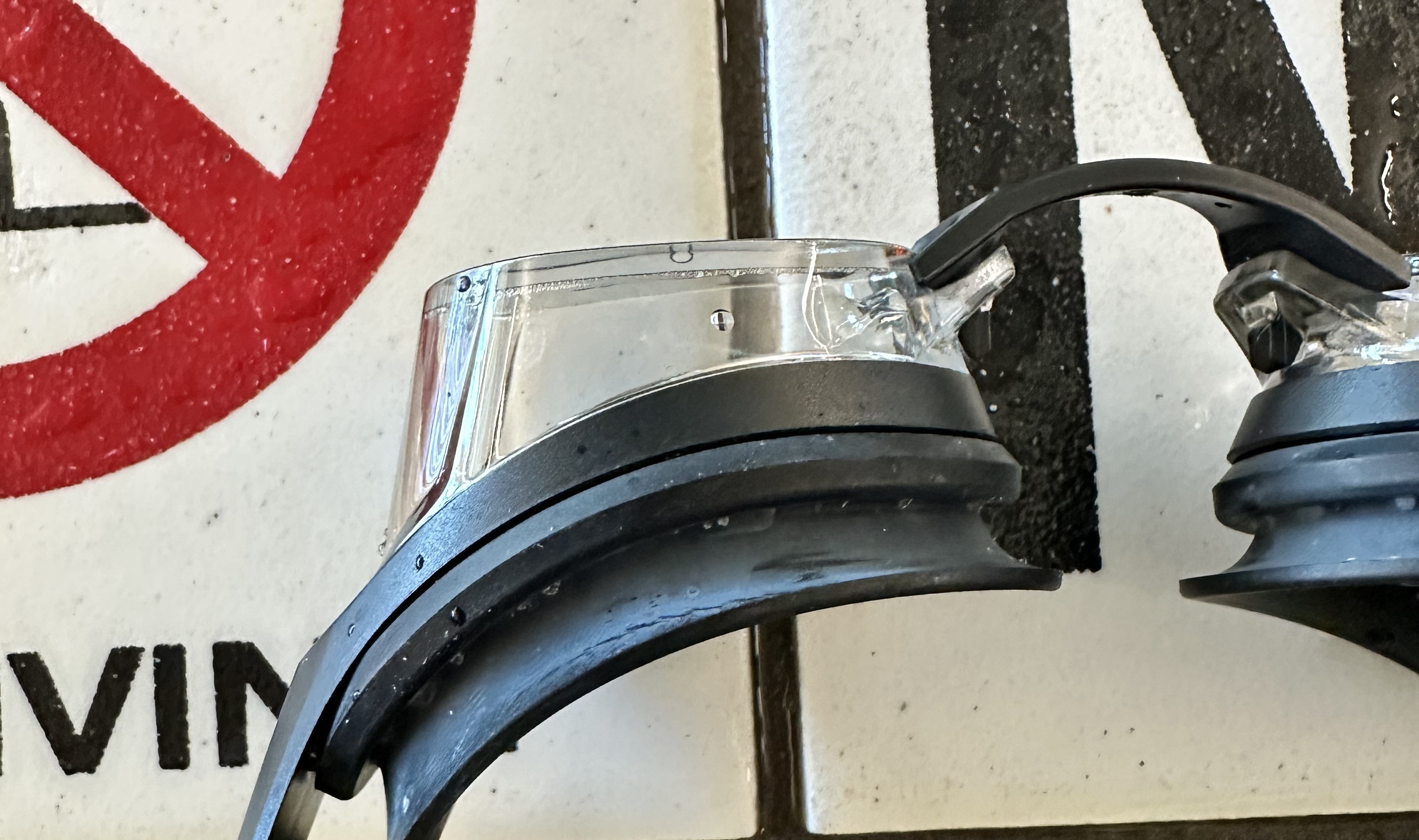
But the first thing you notice putting them on is that they’re big and they’re not aerodynamic. For us, the squared-off edges trapped small air bubbles near the top of the lens when your head returns to the water from taking a breath. It’s minor, but once you notice it, you can’t unsee it — and it pulled my focus more than it should have. I couldn’t make it go away.
Specific? Yes. Annoying? Also yes.
The Workouts
One place FORM truly shines is the quality of the workouts in the app.
Outside of the goggles themselves, the FORM ecosystem is thoughtfully built. The workouts are well-structured, progressive, and clearly designed by coaches who understand how to move swimmers forward. For athletes who struggle with swim programming or don’t have a human coach, the app removes a huge barrier: what should I actually do when I get in the pool?
The sessions range from technique-focused work to endurance and threshold sets, and they’re easy to follow whether you’re training for a triathlon, improving general fitness, or just trying to become more comfortable in the water. Even without staring at the heads-up display every stroke, the structure alone adds real value.
Ironically, this is where I found myself using FORM the most — not as a constant in-pool companion, but as a planning and programming tool. In that context, it works. Really well.
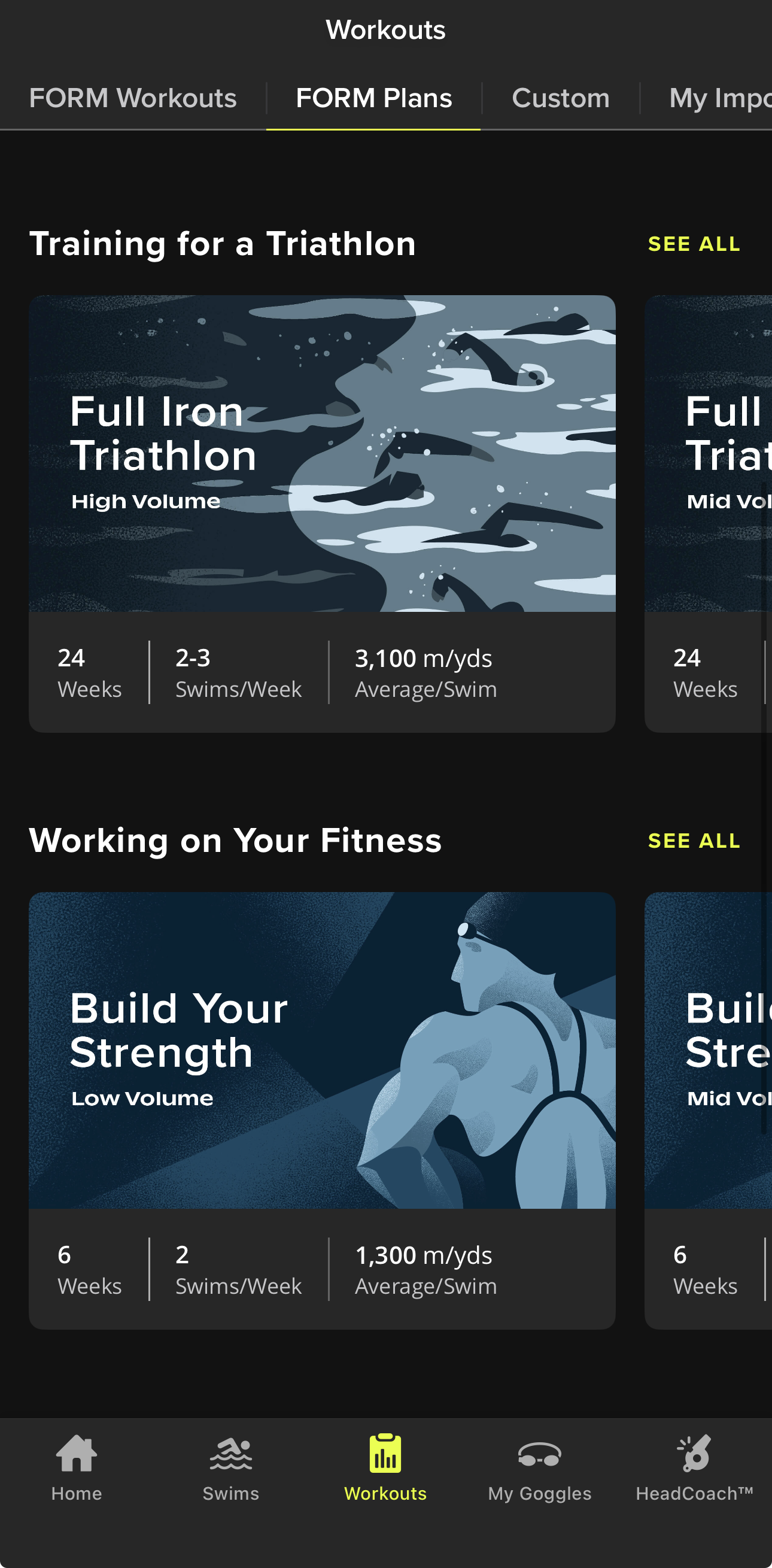
Yes, its tied to a subscription but if you have no plan to hire a real coach, these alone could be an option.
What to Know
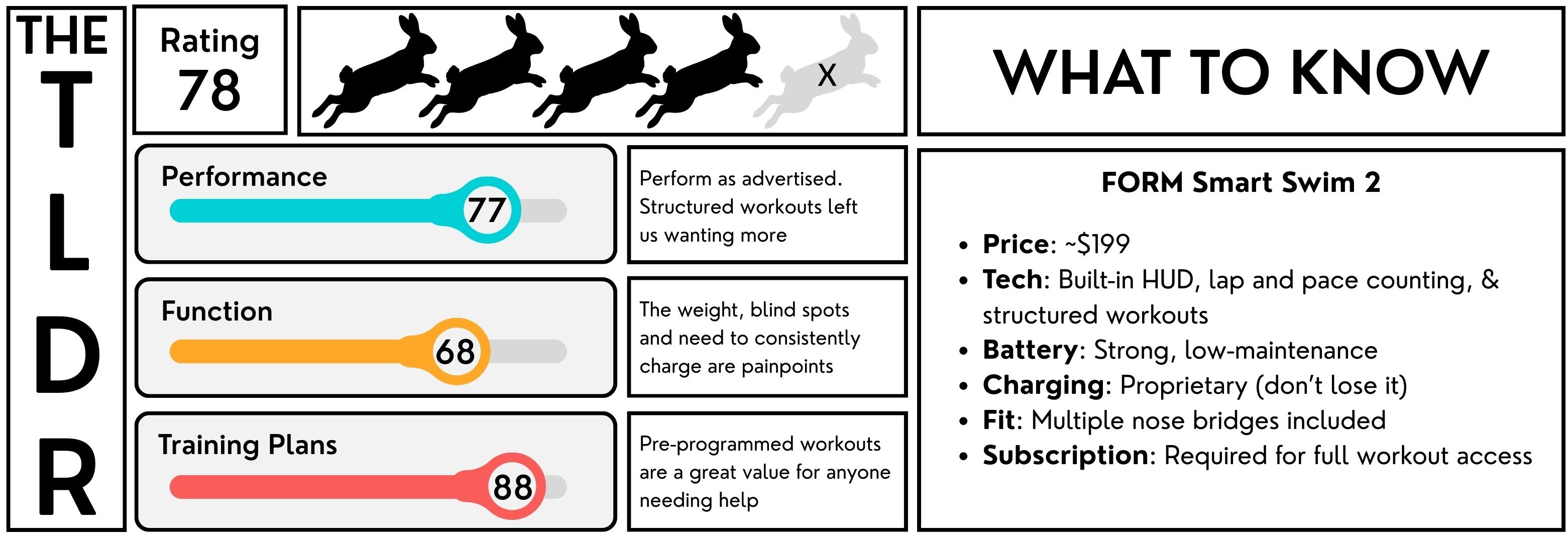
Price: ~$199
Tech: Built-in HUD, lap counting, pace, structured workouts
Battery: Strong, low-maintenance
Fit: Multiple nose bridges included
Subscription: Required for full workout access
Verdict
The FORM Smart Swim 2 goggles are thoughtfully built, well-executed, and genuinely impressive from a technology standpoint. They solve real problems like lap counting, pacing, and helping with workout structure. And they do it reliably.
But swimming is a sport of long periods of isolation, loneliness, and repeating the same song hundreds of times. LOL.
Let me try that again….
In all seriousness, swimming is about feel, rhythm, and internal awareness. For me, the screen became a distraction more than a benefit.
If you love data and need it like you need air, struggle with motivation in the pool, or want guided workouts to keep things interesting, FORM may be a great fit.
If you’re a newer swimmer or someone trying to truly dial in technique, I’d argue less tech will actually make you better. Go find a Masters swim program.
Sometimes forgetting what lap you’re on is part of the process.
Should You Buy?
If your goal is better form, deeper focus, and cleaner swimming? I’d stick with old-school goggles… even if it means miscounting a few laps.
If you want tech in your swim life and understand the tradeoffs noted throughout, yes, these are well done and fairly priced even if there is a subscription.
Just do me a favor and don’t make these a crutch because you’ll likely regret it.
Disclaimer: All opinions are my own and written by me, a human. FORM did not send us these for testing and if these were a game-changer, we’d say so. They weren’t and that’s okay too.

Leave a Reply
You must be logged in to post a comment.