

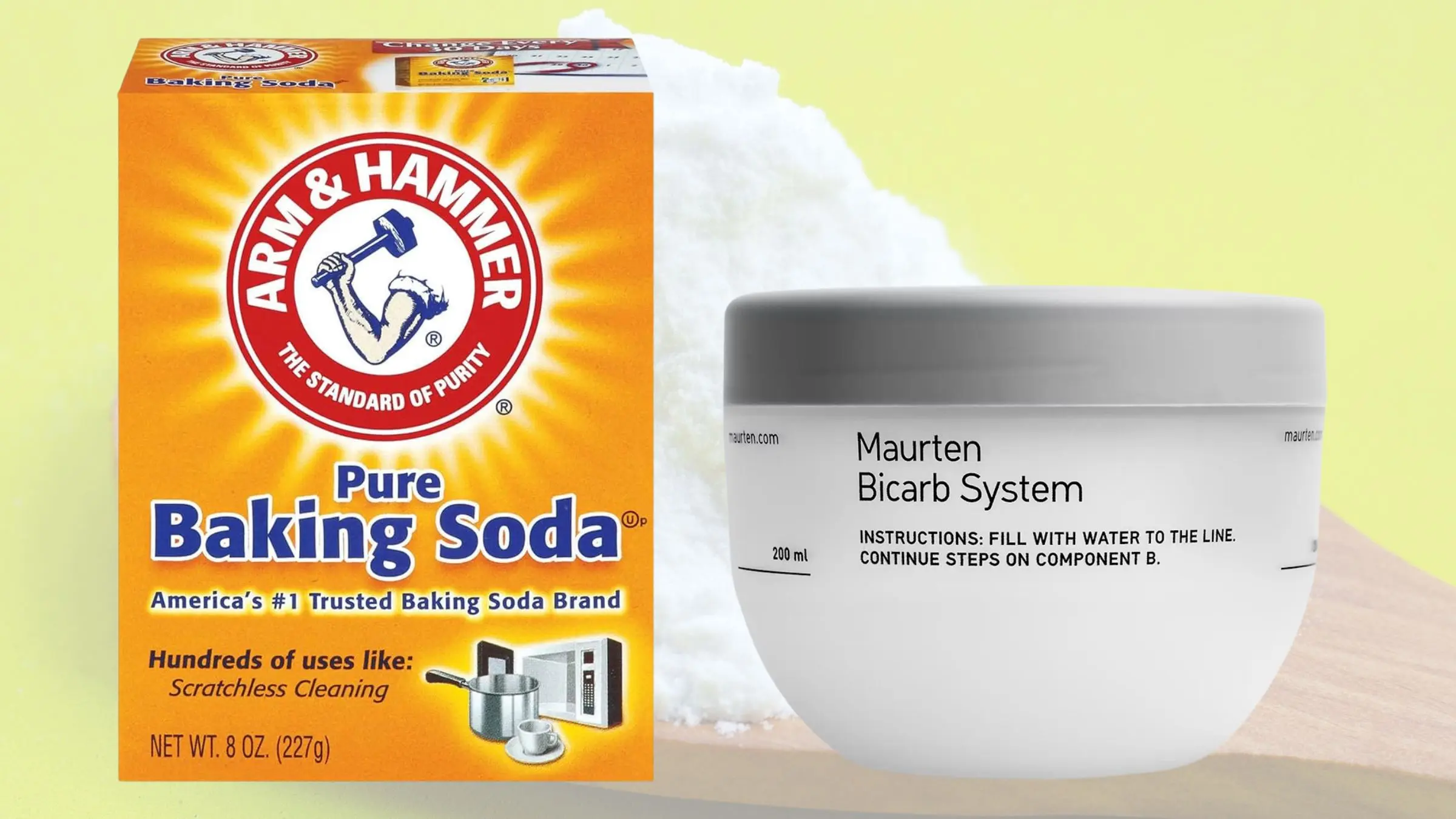
Over the last 18 months or so, bicarb has gone from a niche trick to something you hear about at races, during group runs, and in the comments of Facebook endurance groups.
It’s a supplement that used to mean stirring baking soda into water and hoping you didn’t sh*t yourself.
But now, its an entire product category built on performance you can find online.
CARBS Fuel just pushed out a 2026 industry report that lists a dozen or so brands selling bicarb made for endurance athletes in the US alone, spread across powders, enteric capsules, multi-part kits, gels, and even bars.
In our opinion, Maurten helped kick off the kit format a few years back (more on that), and a wave of competitors followed with their own versions. When that many companies pile into one ingredient, athletes start getting curious about it.
But curiosity isn’t the same as understanding.
Plenty of people are hearing “bicarb” and “PR” in the same sentence without knowing what it is, what it’s supposed to do, or whether it’s meant for them. So before we get into our own experience, which involves a fair bit of gagging because it is gross, let’s start with the basics.
What is Bicarb?

Sodium bicarbonate is baking soda and when in the body it acts as a buffer, helping neutralize the acid that builds up in working muscle during hard efforts.
The idea is simple: raise your blood’s buffering capacity before you go hard, and you may hold intensity a little longer before the burn forces you to back off.
Why it Matters
Bicarb is one of the more studied supplements in endurance sports. Reviews and meta-analyses across the board have found a small but real performance benefit, and it shows up in major sports nutrition consensus statements as a supplement with supporting evidence.
From our experience, it’s not magic and responses vary a lot from athlete to athlete, but we believe when we’ve taken it, it helped us push harder for longer.
But the gut and your gag reflex is usually the limiting factor.
Who should use it?
The clearest benefit of going bicarb is going to be what you get out of it ahead of high-intensity efforts where acid buildup is the limiter. So think:
- Hard intervals and repeated surges
- Short-to-mid duration events (track, criteriums, HYROX-style efforts)
- Week out race-simulation sessions where you want to hit goal pacing
If you notice anything from the above, the data and studies all talk about pretty fast paced hard intervals.
But for long, steady efforts, the case is thinner. It can still help with the hard moments inside a long race, but it won’t change your pacing or your fueling. I believe it works but the data for 70.3 and full Ironman, lacks.
I’m also not a doctor so even before taking it, if you do have health issues, consult a doctor because at the end of the day, bicarb is a big dose of sodium so if you have high blood pressure, kidney issues, or are sodium-sensitive, do your own research.
Our Experience: Two PRs and a Lot of Gagging

Over the last 3 years, we’ve used the Maurten bicarb system twice, both times before a big race.
First was in our car (like a crack head) the morning of Ironman 70.3 Texas.
The second was when we were waiting to kick things off at Ironman Arizona along the waterfront. At the end of the day, we PR’d both those races, going 4:40 at the 70.3 and 9:57 at the full. NBD.
Was it all bicarb? No. Because we put in a ton of work on our fitness, pacing, fueling, and strategy. But we do think it helped.
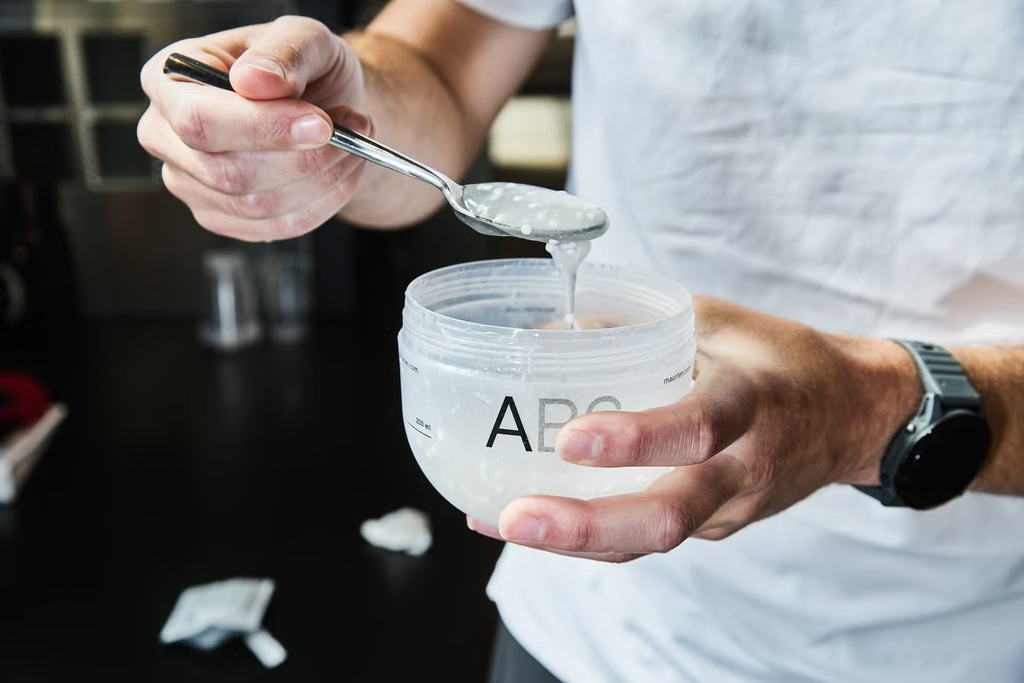
Both times we took it roughly 90 minutes before the start and with the Maurten kit, the system is made up of three individual components – the mixing bowl, the hydrogel component, and the bicarbonate component. You mix it all together and slurp it down. We used a spoon once and just drank directly from the bowl the other time.
But here’s the part nobody highlights: it’s rough.
Maurten’s system is borderline barf-worthy. Hold your nose and slurp it down because holy hell its just gross. We never actually threw up, but we came close a few times. What helped us was drinking a bunch of water right after and a granola bar, which seemed to calm the stomach. But seriously, take it was in advance, this isn’t a gel 15 minutes before the start. You want it to go through the digestive tract with plenty of time.
Tolerance and perfoemance is the whole game and sometimes getting uncomfortable is what you have to do for results.
But on the race days I did take it, I found my performance coming out of the water and on to the bike just felt stronger for longer, and thats the point, it counteracts the acidity build up during big efforts that overwhelms the muscles and leads to exhaustion. My legs felt bulletproof ans I remember it as clear as day.
The Catch is in Your Stomach
Reading the CARBS report, most research protocols use roughly 0.2 to 0.4 grams per kilogram of body weight, taken in the hours before the effort.
If you go the plain baking soda in water route, you’ll likely learn why bicarb has a reputation problem. The CARBS report says the same, noting that the traditional grocery-store method carries significant GI risk and delivers less than intended results because it reacts with stomach acid early.
Essentially, don’t play chemist yourself.
Not All Bicarbs Are The Same
The report sorts the market into three buckets:
- Powders (Flycarb, Nduranz, OTE). For these, you put a mix into water and drink. People say it is fast and simple, but taste is on you.
- Capsules (CARBS Fuel, MNSTRY, Nduranz, Voom, Pacemaker). These are acid-resistant 1-gram capsules designed to skip the stomach-acid and near barfing reaction. It’s the most flexible option but also means you need to swallow a lot of them to get a full dose that matters.
- Multi-Part Systems (Maurten, plus Blank’s, Bicarb 3.0, and Bicarb+). You’ll get a bowl, powdered gel, and mini-tablets. These systems have human trial support, but the multi-step prep makes them an impractical mid-race solution. They’re for pre-race only.
On price, the report puts Maurten’s system at the top of the price range, at roughly $1.46 per gram in the 12g serving. But that’s Maurten for you, they’re expensive but also generally the best, IMO.
It lists capsules as generally the most affordable category, with its own product at $2.50 for a 15g single serving, and Flycarb starting at $9.99 per serving.
Our Thoughts
If you’ve never taken bicarb and like to race hard, its certainly something worth knowing about and even testing with in training.
I found it helpful and it felt like it let me pushed harder for longer without feeling the effects of going hard.
Given we’ve pretty much nearly barfed every time, it’s not a race-morning experiment and if you do, make sure its with plenty of time before the start.
Find the dose and timing your stomach tolerates, and expect it to be unpleasant. Water and gel or bar afterward worked for us.
And if you can’t imagine slurping down a bunch of baking soda in the name of performance, at least you’ll be educated enough to hold a conversation about it during your next long run.
Leave a Reply
You must be logged in to post a comment.