

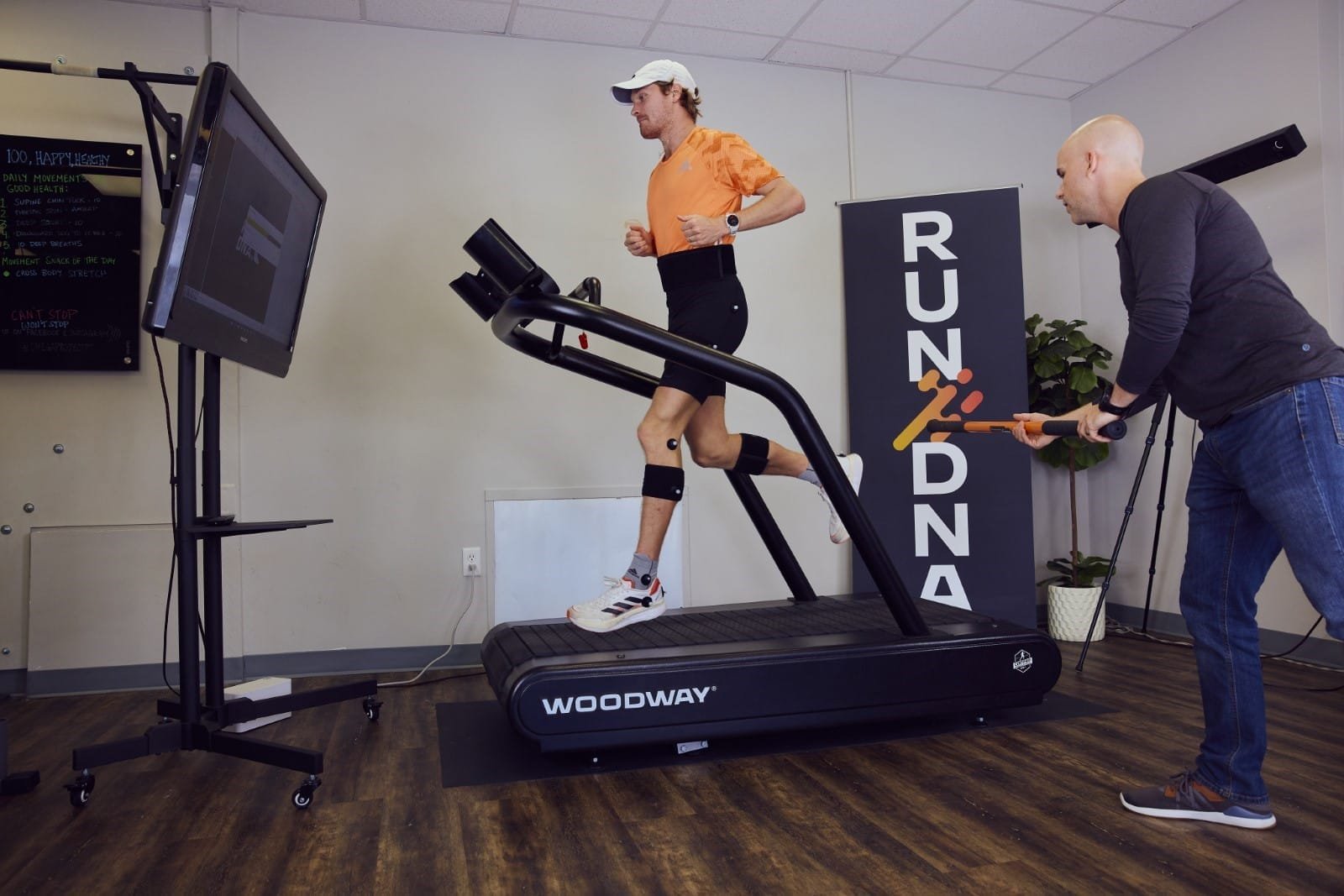
Written with Doug Adams, PT, DPT, founder and CEO of RunDNA.
What if I told you there are nine minutes hiding in your next marathon, and you don’t have to run a single extra mile to pull it out?
Yeah, I know. Every running shortcut you’ve ever tried turned out to be a gimmick, and running has a way of punishing shortcuts. But this one comes from one of the most studied ideas in running science, and most runners were never taught it. It’s called running economy.
If you’re a stranger to Front Pack, lets me introduce you to Doug Adams. Doug is a physical therapist, the founder and CEO of RunDNA, and one of the sharpest running-form minds I know.
Together, we put the below together.
He did the heavy lifting on the science, and I’m the guy translating it into something us normies can understand.
If you’re looking to save time, every athlete should do some homework and download the RunDNA app and get your form looked at.
Your Engine vs. Your Miles Per Gallon
Most runners think fitness is one thing: how big your engine is. That’s your VO2 max, the number your watch loves to flash at you after a hard workout or what you talk about with friends.
But here’s what surprises people. Take two runners with the exact same VO2 max, line them up in the same race, and one will often beat the other. Badly. Same engine, totally different result.
Doug’s answer is running economy.
If VO2 max is the size of your engine, running economy is your miles per gallon. It’s how much energy it costs you to hold a given pace. A runner with great economy burns less fuel at the same speed, and over 26.2 miles, that’s a lot of fuel left in the tank.
According to Doug, in groups of trained runners with similar engines, economy is what separates the fast from the faster, and it can differ between two runners by as much as 20 to 30 percent. That’s the difference between cruising at mile 20 and doing the death shuffle for the last 6 miles.
The Math Behind the Nine Minutes
Here’s where it gets practical.
Researchers at the University of Colorado ran a sneaky-smart study. They quietly added weight to runners’ shoes, which made their economy a little worse, then had them race. The slower economy showed up as slower race times, right in line with what the lab predicted. Doug’s takeaway: changes in economy carry straight over to race day.
His short version goes like this.
At a 4-hour marathon pace, improvements in running economy carry over to your finish time almost one-for-one. The carryover shrinks as you get faster, so this math favors the mid-pack, which is most of the field. Improve your economy by about 4 percent, and you run about 4 percent faster.
For a 4-hour marathoner, 4 percent is over nine minutes. That’s roughly the gap between 4:00 and 3:50. Not from more miles. Not from harder workouts. From burning less fuel at the pace you already run.
Want more no-BS endurance news and gear takes? Get my free newsletter.
What Moves Your Economy
The good news is that your economy isn’t set in stone, you can change it.
Doug points to three things that move the needle.
Strength is the first. Stronger muscles and springier tendons hand back more free energy with every step. It’s why strength training keeps showing up in the research as a way to improve economy, even in runners who never get any bigger. So no, lifting won’t turn you into being slower.
Tissue capacity is the second. Tendons and muscles that are ready for the load of running waste less energy just absorbing it.
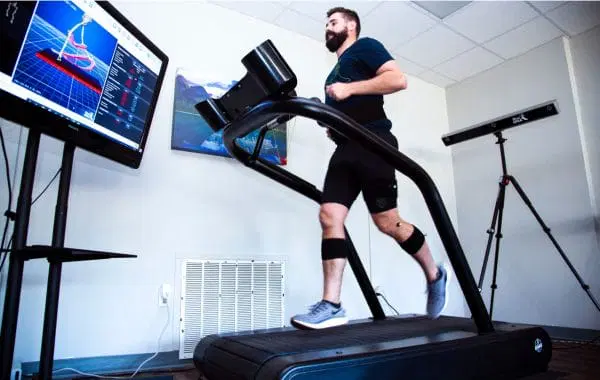
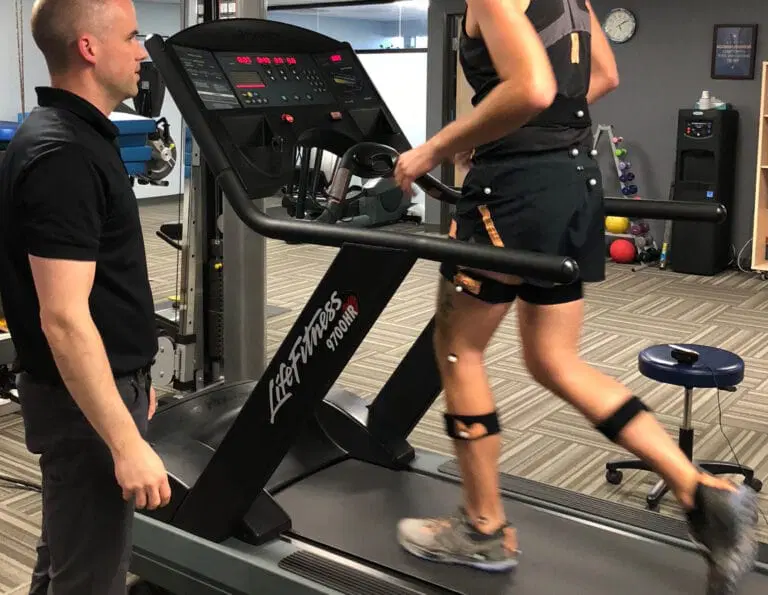
Form is third. A study out of Loughborough University put 97 runners through full 3D motion analysis and found that technique explained close to 40 percent of the differences in running economy between them. How your pelvis moves. How much you bounce. How your leg lands under you. Where your trunk sits. These aren’t style points. They’re fuel efficiency.
Form is the one that matters most for these nine minutes, because it’s the thing you can change without adding a single workout. You’re already doing the training. The question is how much of it is leaking out of an inefficient stride. I swam growing up, so running form has never been my strong suit. I know it. Now you know it too. Work on it, get it better and be more efficient.
A Warning About Instagram
This is where Doug saves you from the internet.
You’ve seen the reels. “Stop heel striking.” “Run at 180 steps per minute.” “Lean forward more.” Generic form tips, handed to a million runners at once by someone with great lighting.
The problem is that the same research showing form matters also showed that runners get there in very different ways. A cue that fixes one runner’s stride can wreck another’s. Doug has watched a runner’s efficiency get worse in real time because they were forcing a cadence that was never meant for their body.
His point, and I’m stealing it, is that your form is like your fingerprint. Fixing it starts with looking at yours, not at a stranger’s highlight reel. Don’t fall for what works for others, figure out what works for you.
Go Look at Your Own Stride
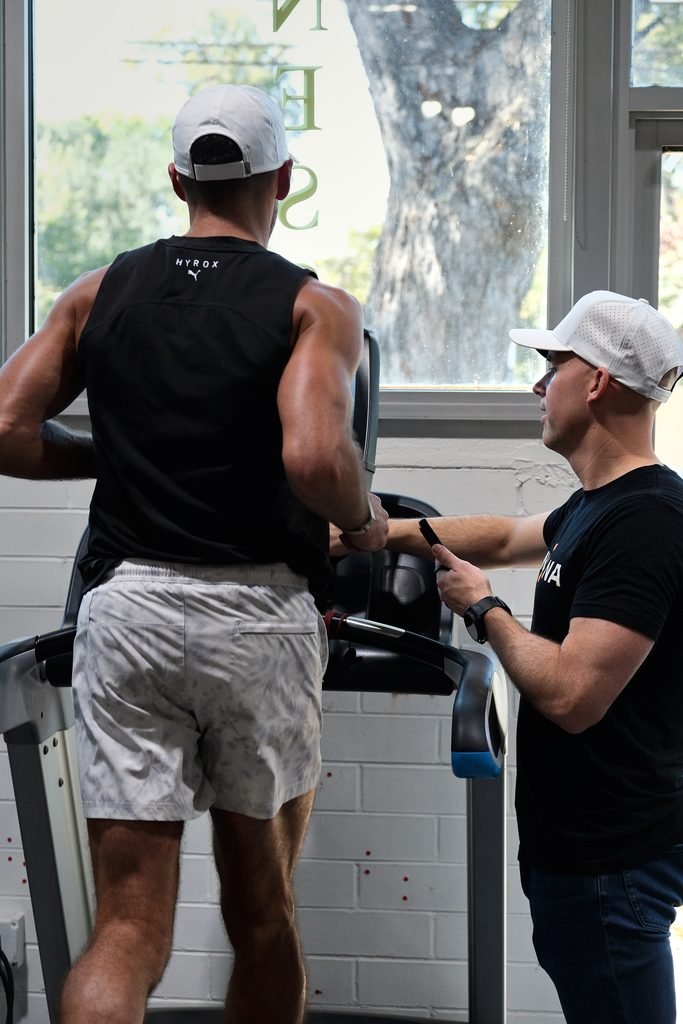
For a long time, the only way to see what your stride was doing was a lab or a specialty clinic. That’s exactly why Doug and his team built the RunDNA app, and why the form analysis in it is free.
You film a few seconds of yourself running on your phone. The app, built on the same methods RunDNA uses with thousands of runners and teaches to thousands of running specialists, breaks down your stride and shows you what your body is doing. Then it gives you drills and cues matched to your form that you can fold into the runs already on your schedule.
No extra workouts. No generic tips. Just your stride, measured, and a plan to make the pace you already hold cheaper to run.
This is the part where I say this again. Download and use this app.
Every athlete I coach gets told to download RunDNA and run the analysis. It’s free, and it beats guessing.
Grab it on the App Store or Google Play, or start at rundna.ai.
Hear It Straight From Doug
If you want the long version, Doug came on the Front Pack Podcast and I got to nerd out with him on running mechanics. Is heel striking really that bad? Is there a magic cadence number? Do runners need to lift? What are super shoes doing to your body? It’s all in there.
Watch “You’re Running Wrong (And How to Fix It)” on YouTube
My Thoughts
I love this one because it flips how most runners train.
People think to get the most out of performances, you need to stack mile son miles, add workouts, and add suffering and the potential for injury.
Doug’s math says a chunk of your next PR is already sitting in your legs, and leaking out of your stride. Finding it costs you a few seconds of video and a little honesty about what you see.
So if you’re looking for nine minutes of improvement. What do you have to lose? Go find out where yours are hiding.
Leave a Reply
You must be logged in to post a comment.