

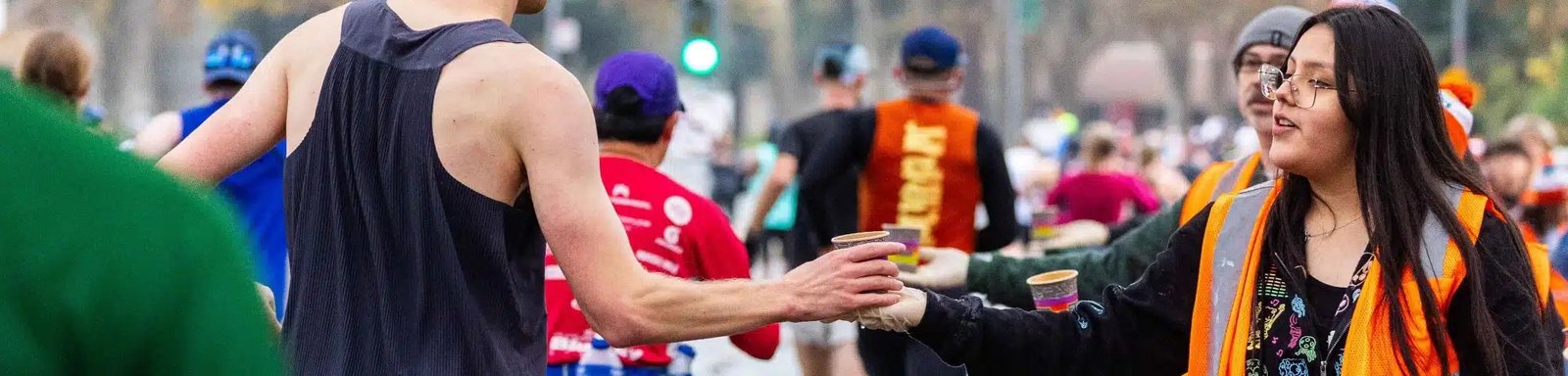
CIM is where people go to run fast. It’s net downhill, it’s in December, and every year it’s packed with runners chasing PRs and Boston qualifiers. This year the race is adding a side quest: can you hit those goals without grabbing a single cup?
What’s Happening
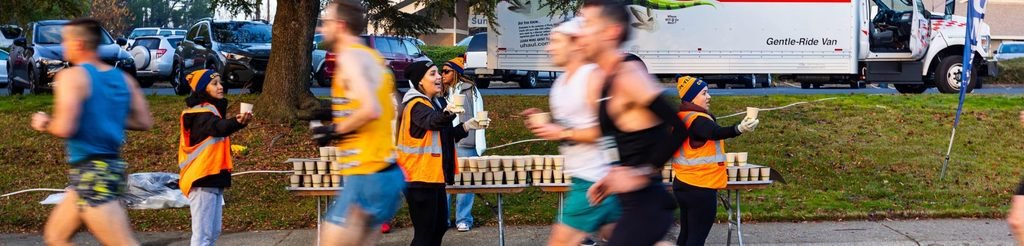
HydraPak is the Official Sustainability Partner of the California International Marathon for 2026. The partnership adds three HydraPak water refill stations to the course and launches the “Carry Your Own” Athlete Cohort.
Climate activist, author and elite runner Tina Muir is spearheading the group of 25 athletes. On Sunday, Dec. 6, 2026, they’ll run the full marathon from Folsom Dam to the State Capitol in Sacramento, carrying their own water and fuel in custom CIM-branded HydraPak gear and refilling along the way. CIM boiled the experiment down to one question: can runners pursue and achieve ambitious race goals while carrying and refilling their own hydration and fuel?
How It Works
The refill stations sit at about mile 6.7, mile 14 and mile 20.5, roughly a quarter mile past Aid Stations 3, 7 and 12. You fill your own bottle or flask from quick-fill spouts on a water tank. It’s water only, so there’s no electrolyte mix at these stops.
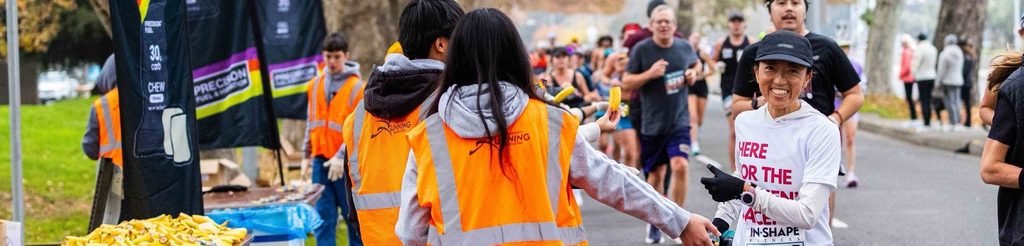
Nobody is taking your cups away. All 17 traditional aid stations are staying, each with water and Precision Hydration drink, and three of them also have Precision Fuel gels and fruit. The cohort is simply opting out of them. CIM is encouraging everyone else in the race to bring a bottle or handheld and use the refill stations too.
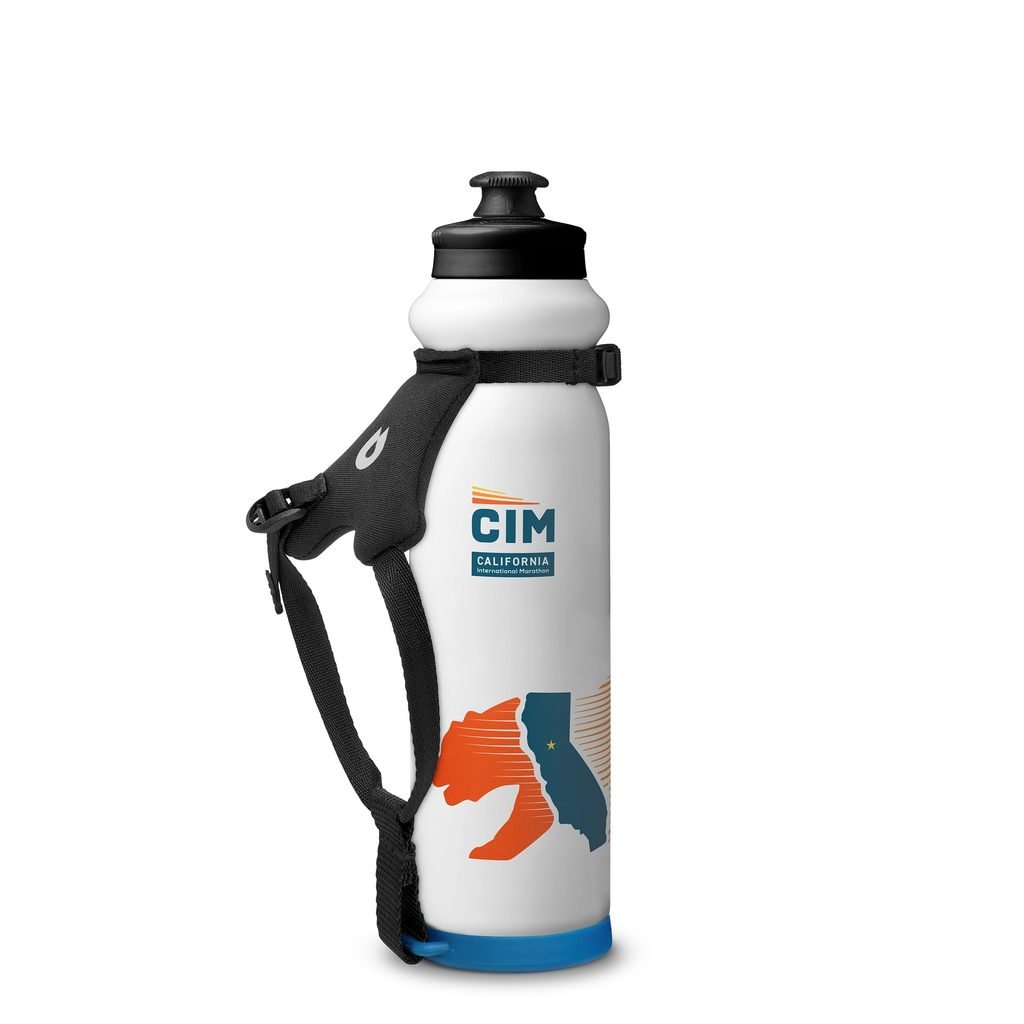
If you want the matching gear, HydraPak sells a limited-edition CIM Tempo Pro, a 525ml handheld with an adjustable strap, for $23.
The Cup Math
According to CIM, each aid-station cup holds about 5 ounces of liquid. A 525ml bottle holds about 17.75 ounces, so one full Tempo Pro is roughly three and a half cups that you don’t have to pinch, sip and half-spill at goal pace.
The catch is the spacing. Here’s what the gaps look like if you rely only on the refill stations:
- Start to mile 6.7: 6.7 miles
- Mile 6.7 to mile 14: 7.3 miles
- Mile 14 to mile 20.5: 6.5 miles
- Mile 20.5 to the finish: about 5.7 miles
That’s a doable plan for a lot of runners, but it takes commitment. If you’re skipping the cups, there’s no grabbing a quick drink at mile 10 because you feel a little off. You run to the next refill.
Why CIM Is Doing It
Scott Abbott, executive director of the Sacramento Running Association and CIM, put it simply: “We don’t think runners should have to choose between a PR and a lighter footprint. This cohort is a real-world test on a course where every second counts.”
Jennifer Krupey, HydraPak’s VP of Marketing, framed it around fueling: “Every runner has a unique fueling strategy, and we believe they should have the flexibility to execute it on race day.”
This isn’t new territory for CIM. The race has been certified Gold Level by the Council for Responsible Sport since 2017. It already has a water refill station at the start, and it gives finishers reusable bottles instead of single-use plastic ones.
Refill stations are also spreading fast. Chicago added on-course refill stations this fall, run by Culligan, with HydraPak on board as an official vendor partner supplying hydration products. New York added Culligan refill stations this year too, and HydraPak signed on as an official licensee selling co-branded bottles. What makes CIM different is that it’s putting a group of runners on the course to actually test the idea in a race built for fast times.
My Thoughts
I love this. Cup handoffs are one of the most chaotic parts of a fast marathon. You swerve to the tables, crush the cup, get maybe half of it in your mouth and lose a few seconds every time. A bottle you control fixes a lot of that, as long as you know where your next refill is.
If you’re tempted to try it at CIM, practice first. Carry that exact bottle on your long runs and marathon-pace sessions so the weight and the strap feel normal. Rehearse a refill stop, too. And since the refill stations are water only, plan your carbs and electrolytes accordingly: carry your own mix or gels, or grab the on-course drink when you need it.
I’m really curious how those 25 runners do. If they come through Sacramento with fast times and no cups, a lot of race directors are going to be paying attention.
Leave a Reply
You must be logged in to post a comment.