

I’m glad this exists. I also don’t think it solves the problem it’s being sold against.
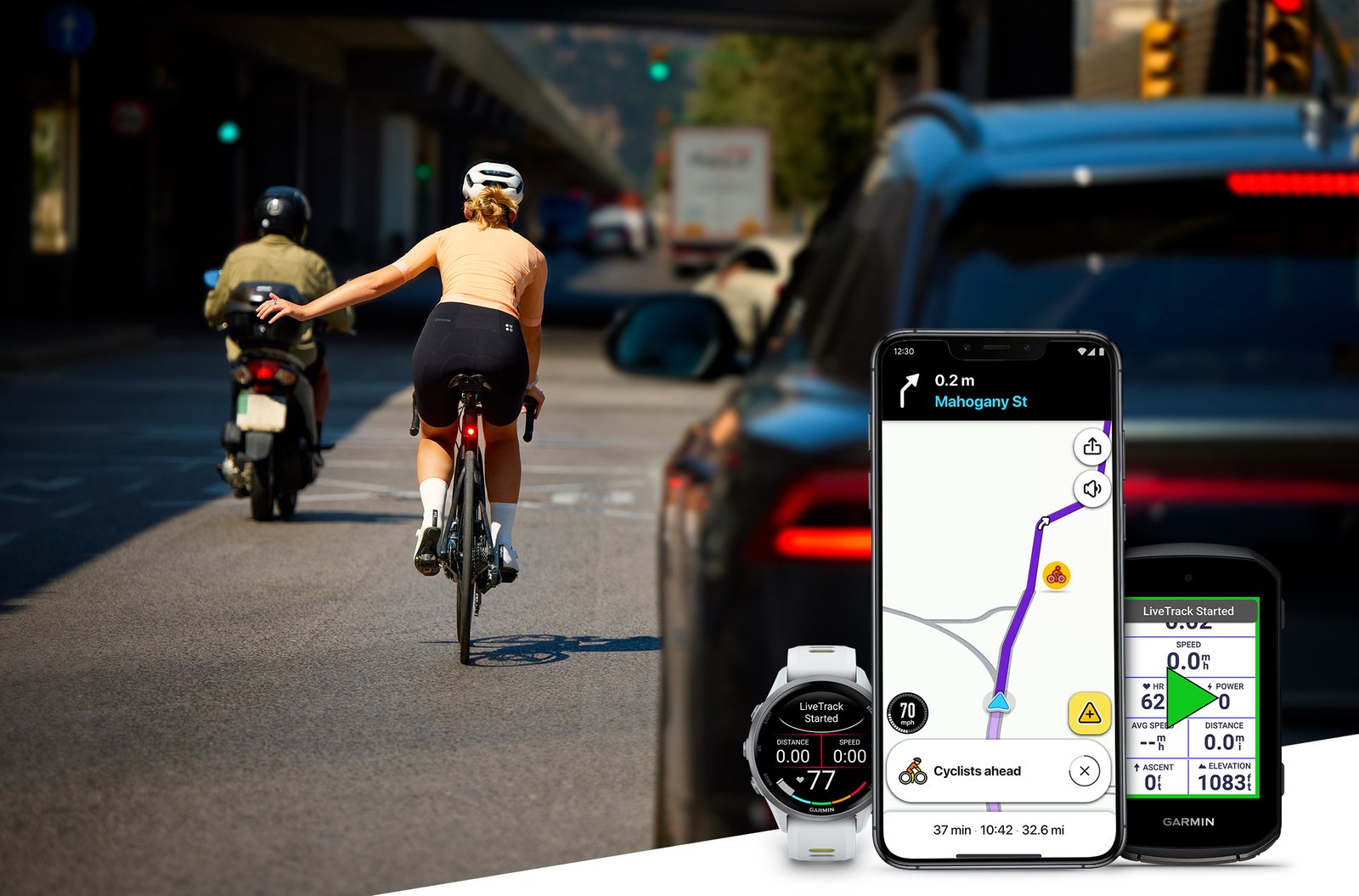
Garmin announced today that cyclists using a compatible Edge bike computer or Garmin smartwatch can share their LiveTrack location with Waze. When you’re riding nearby, Waze drivers see you as what the companies call a “Live Cycling Alert,” an active, moving icon on the road.
Waze is “used by 200 million drivers around the world,” according to Garmin’s release. That’s a big audience to put a cyclist icon in front of.
It also lands in a hard week for anyone who rides on public roads.
A Hard Week in North Carolina
On Saturday, November 7, a car hit a group of about 30 riders on Optimist Farm Road near Apex, in Wake County, North Carolina, according to WRAL. Patrick Turner, 63, of Cary, was killed. Twenty other riders were injured, seven of them seriously, according to the Holly Springs Fire Chief.
The driver, a 76-year-old Apex man, is charged with felony death by vehicle, seven counts of felony serious injury by vehicle, eight counts of felony hit-and-run, DWI and other offenses. The State Highway Patrol says he crossed the center line, hit members of the club and kept driving about half a mile before crashing into a ditch. A judge kept his $1 million bond in place on Monday. Those are charges, not a conviction, and the case is ongoing.
Capital Cycling Club President Tim Charlino told WRAL, “Ultimately, we want to see accountability and justice for our friends.” A candlelight vigil for Turner is planned for Sunday.
To be clear, nothing in Garmin’s announcement connects the two. The timing is a coincidence. But it’s impossible to read a cycling-safety press release this week without thinking about that road in Wake County, and my thoughts are with Patrick Turner’s family, the riders still in the hospital and everyone in that club.
What Garmin and Waze Actually Launched
Here’s what the release says, and only what it says:
- Opt-in. Cyclists choose to share their LiveTrack location with Waze drivers through Garmin Connect when they start an outdoor cycling activity.
- Session-based. Garmin says “Location sharing is temporary and session-based, and the cyclist’s personal information will not be shared or displayed in Waze.”
- What drivers see. “Waze shows Live Cycling Alerts when a Garmin cyclist is nearby as active, moving icons on the road.”
- What you need. A compatible Edge or Garmin watch, plus a compatible smartphone and the Garmin Connect app.
- Price. LiveTrack itself is described as “a free feature for Garmin users with a compatible bike computer or smartwatch.”
What the release doesn’t say: which devices are compatible, which countries it works in, how close you have to be before a driver sees you, or how the alert actually appears on a driver’s screen. I’d want all four answered before calling this anything more than promising.
Waze VP and GM Gai Berkovich said, “By bringing Live Cycling Alerts to Waze, we’re giving drivers a helpful heads-up so they can slow down, stay aware and safely share the road.”
Does a Phone Alert Protect Anyone?
Here’s my honest take. An alert is only as good as the driver who reads it.
It only helps if the driver is using Waze, has it open, notices the icon and then actually changes how they drive. That’s a lot of ifs. The drivers who’d react well to an alert are mostly the attentive ones, and attentive drivers were never the main problem.
No app fixes an impaired driver. No icon fixes a driver who isn’t looking at the road, or a road built with a painted line and nothing else between you and a car. I wrote about exactly that when Strava’s Commute Report showed how far U.S. bike infrastructure lags.
There’s also a quieter shift here that I don’t love. For this to work, the cyclist has to own the right Garmin, own a compatible phone, opt in and remember to share. The burden of being seen lands on the person with the least protection. Drivers don’t have to do anything new.
I don’t think that’s Garmin’s intent. But “the rider should have broadcast their location” is a line I never want to hear after a crash.
Privacy, Honestly
Garmin deserves credit for how the privacy side is built. Opt-in, temporary and session-based, with no personal information shown in Waze, is the right default.
Still, I’d go in with my eyes open. You’re sharing a live location feed with a second company’s platform, and the release doesn’t say what Waze keeps, for how long, or whether that data is used for anything beyond the alert. I’d want that in plain English on a support page before I flip the switch.
The Walled Garden, Again
This only works if you ride with Garmin. If you’re on Wahoo, COROS, Hammerhead or just your phone, you don’t show up.
That’s not a shock. When Garmin posted its record Q3, I pointed out how it’s building a full ecosystem around you, and how that could turn into a very comfy walled garden. Safety is the one place I’d love to see an open standard instead. Right now, a driver’s screen can only see some of the riders on the road.
My Thoughts
This is a good feature and I’d probably turn it on. Anything that puts a rider in front of a distracted driver’s eyes for even a second is worth having.
But I’m not going to call a phone notification a safety solution. Safety is protected lanes, enforcement and drivers who aren’t impaired. This is a helpful extra layer on top of that, not a replacement for it.
So, Garmin and Waze, I’d love to see three things: a published list of compatible devices, clear data-retention terms from Waze, and an open door for riders on other platforms. Do that and this goes from a nice feature to something the whole sport can lean on.
Ride safe out there, and look out for each other.
Leave a Reply
You must be logged in to post a comment.