

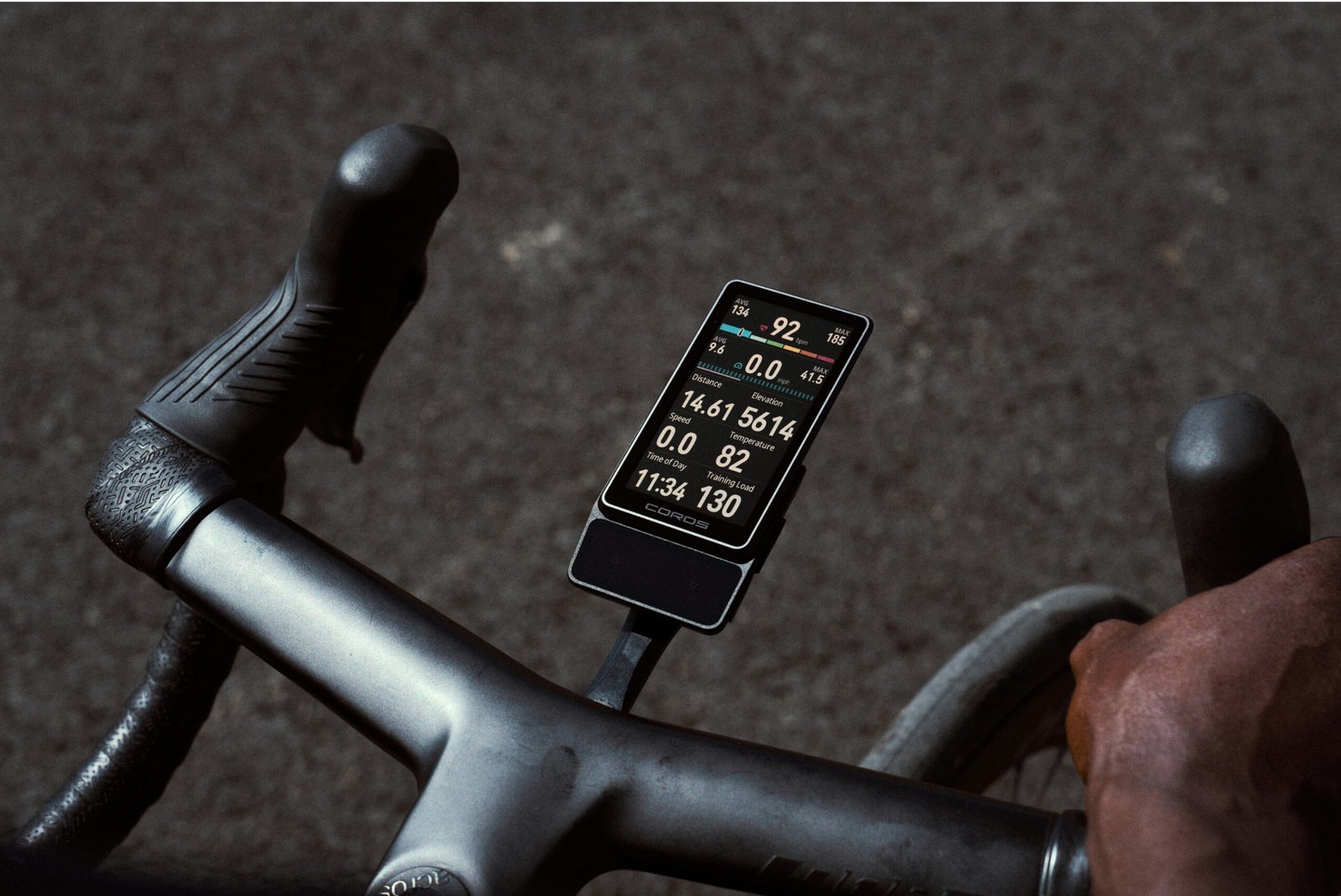
I liked the original COROS Dura and I liked it enough to be our bike computer of choice for Unbound XL and have been using it for the last two years.
At Unbound, I ran it for more than 30 hours straight, and it made it the whole way, but the battery did got low enough to start beeping at us in those final hours. After exhaustion, it was the most stressful thing on our mind. I spent that stretch honestly not sure it would last to the finish. But it did, and earned our trust.
The Dura held up but there was still plenty I actually didn’t love about it. The first one had rough edges, felt “cheap” compared to competitors, and the giant forehead that housed the solar panel was a decision.
The new Dura 2 SOLAR is the company’s answer, and it isn’t a refresh. It’s a whole new, completely different computer.
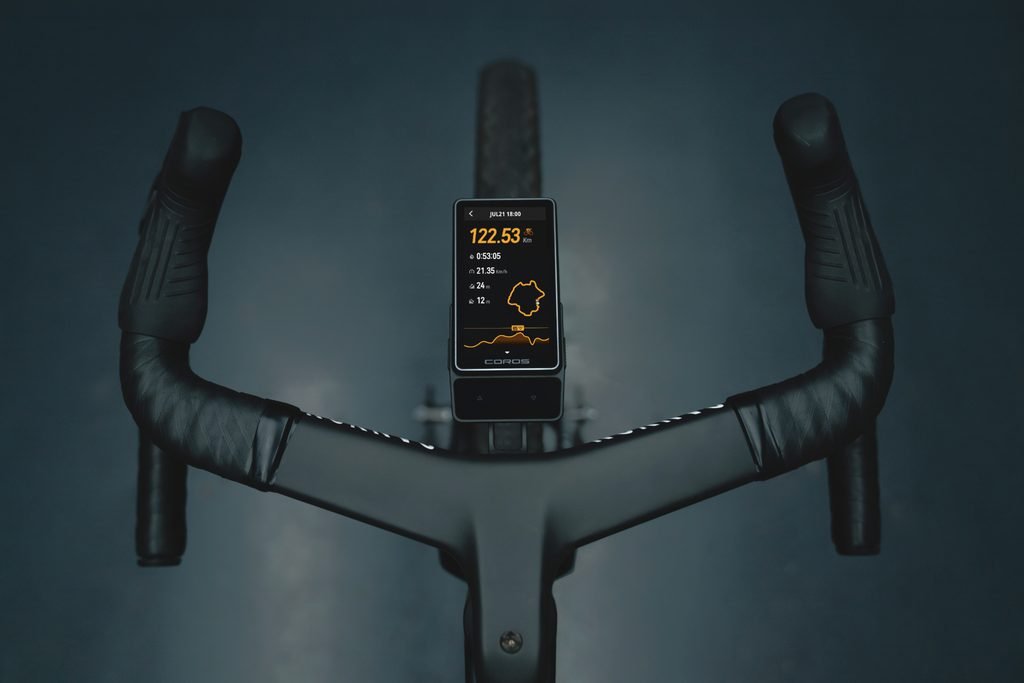
Here’s what’s changed, what hasn’t, and what I want to find out when I actually receive it; because Front Pack did not get a review unit, yet.
The Solar Has Moved.
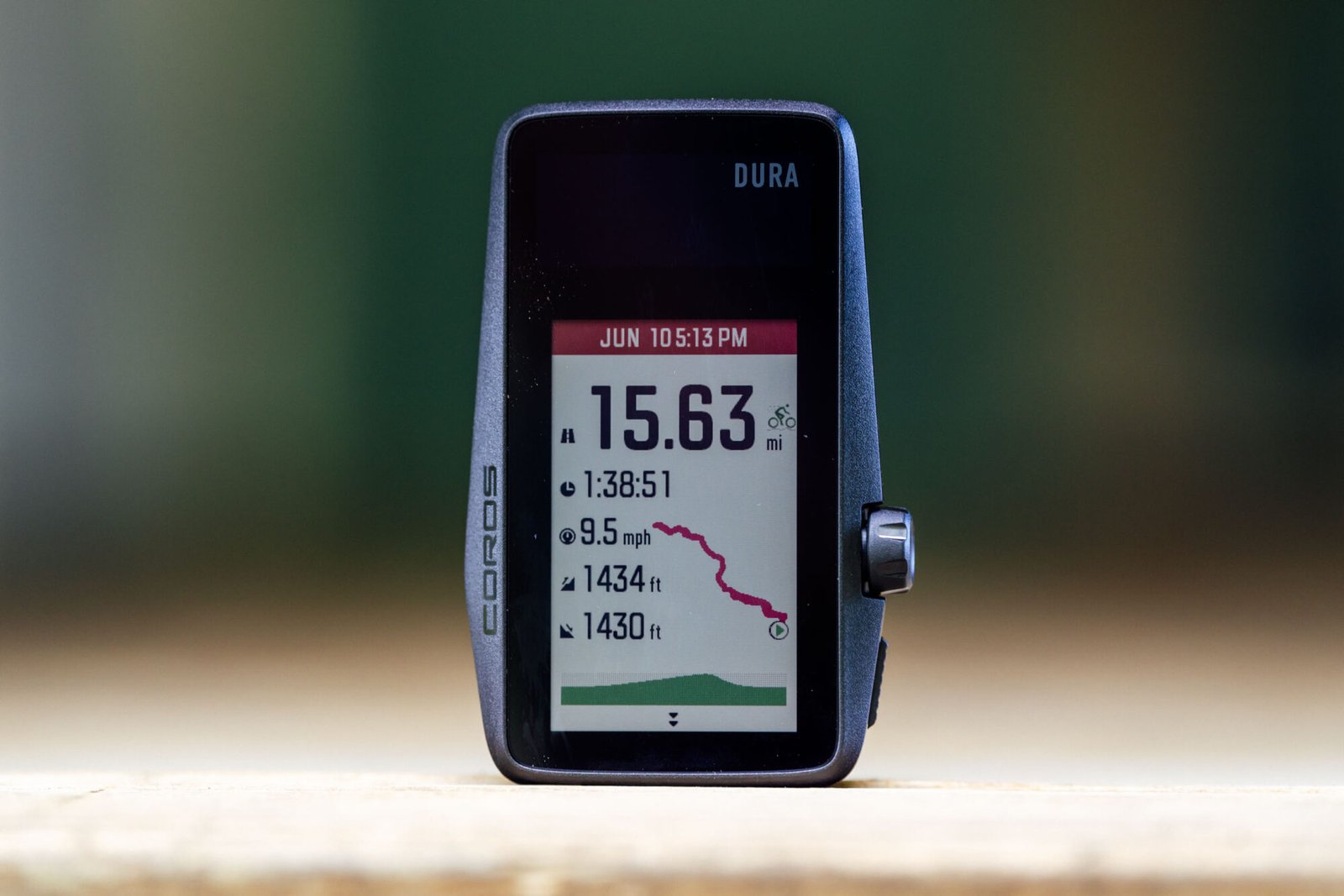
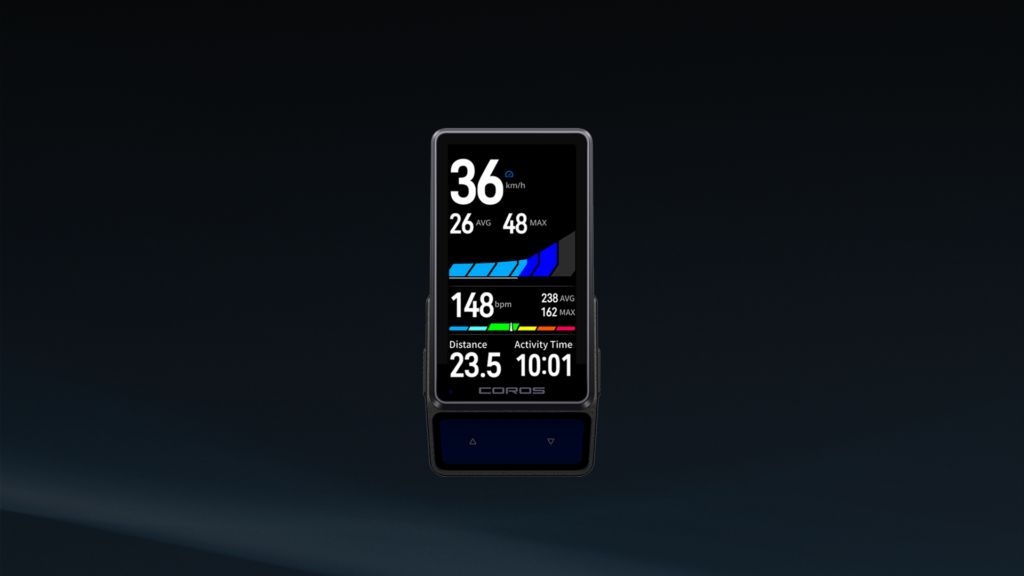
If you’ve ridden the original Dura, you know the look. The solar panel sat above the screen, which gave the unit what even COROS admits was a big forehead, and the space couldn’t be used for anything else. It felt wasted.
On the Dura 2 SOLAR, the solar panel moves to the bottom of the unit and the two haptic buttons now sit directly on top of it, so that space does double duty. COROS says the buttons don’t hurt solar gain, which is the problem you run into when you try to hide solar under a screen.
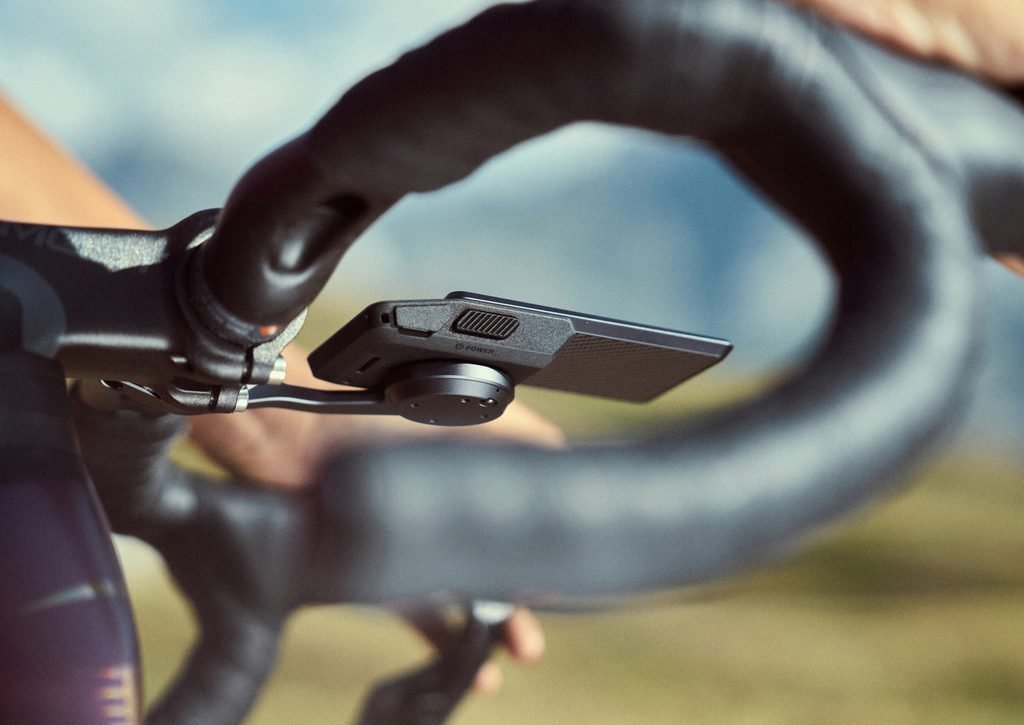
The top of the unit is now just 5.7 millimeters thin at the upper bezel and the whole thing weighs 99 grams (the Dura weighed 102 grams). From the specs, the construction seems beefier and stronger, rocking a carbon fiber backplate and an anodized aluminum alloy bezel.
COROS says, the backplate adds stability and the alloy keeps weight down, and both are there to handle rain, mud, and rough gravel. Our first reaction when seeing it for the first time during a media briefing was that it looks like a Motorola Razr. Thin with a slight, sharp angled curve. But I kind of like it. It for one, original and that’s something COROS is never afraid of doing.
Materials and software are what I care about most so let’s start there. Like I said, our one consistent gripe with the original Dura was that it felt cheap(ish) next to competitors like Garmin and Hammerhead. The battery was great and the concept was right, but when you held it, it didn’t feel like a computer worth the money. And maybe that was the point, because the original Dura was a great price at $249. And COROS seems to have heard that because the new unit moves to carbon and anodized alloy, and the mount is now aluminum too, where the original shipped with what COROS itself calls a relatively inexpensive plastic mount.
No More Dial
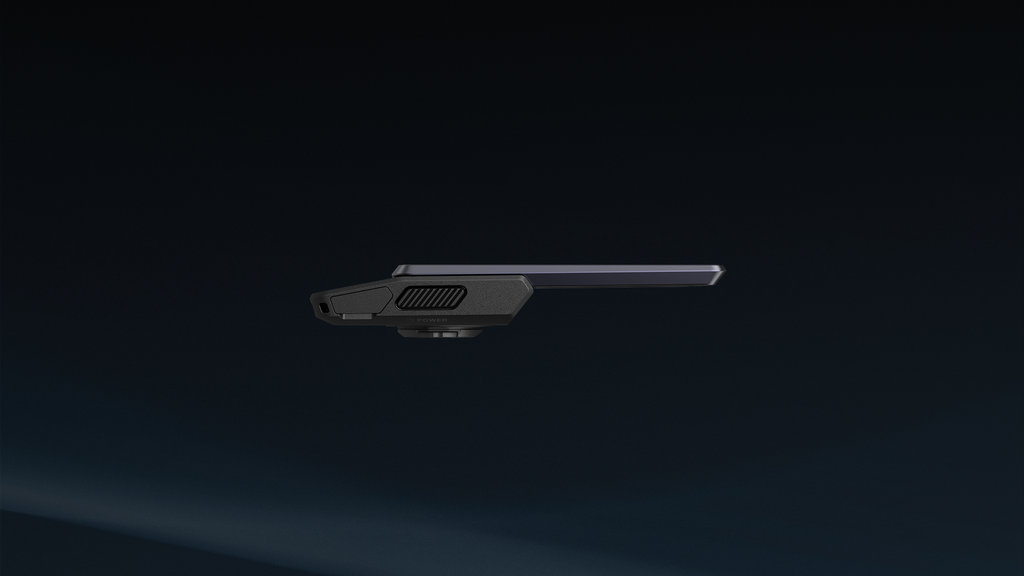
The original Dura had a dial. The Dura 2 SOLAR doesn’t, and that’s the change that will make or break it for some cyclists.
In its place you get three ways to control the unit, which is really four. There’s the touchscreen, two mechanical buttons on the side, and two haptic buttons on the bottom that buzz when you press them. There’s also voice control through a built-in dual microphone: hold the left button, then start a ride, change settings, start a workout, add a nutrition alert, or drop a pin.
The haptic buttons scroll vertically through your data pages. The touchscreen swipes you horizontally to maps or media controls.
If you’d rather use the side buttons for laps, COROS is adding a map page you can drop right into your data pages, so you can still get to navigation without touching the screen. COROS says it tested the touchscreen with gloves and in cold weather and found it very responsive, but we’ll be the judge of that on a wet, and cold winter day.
Oh and one thing to know. You can’t run the whole unit from just the two side buttons. You need the touchscreen or the haptics for navigation.
A Bigger, Sharper Screen
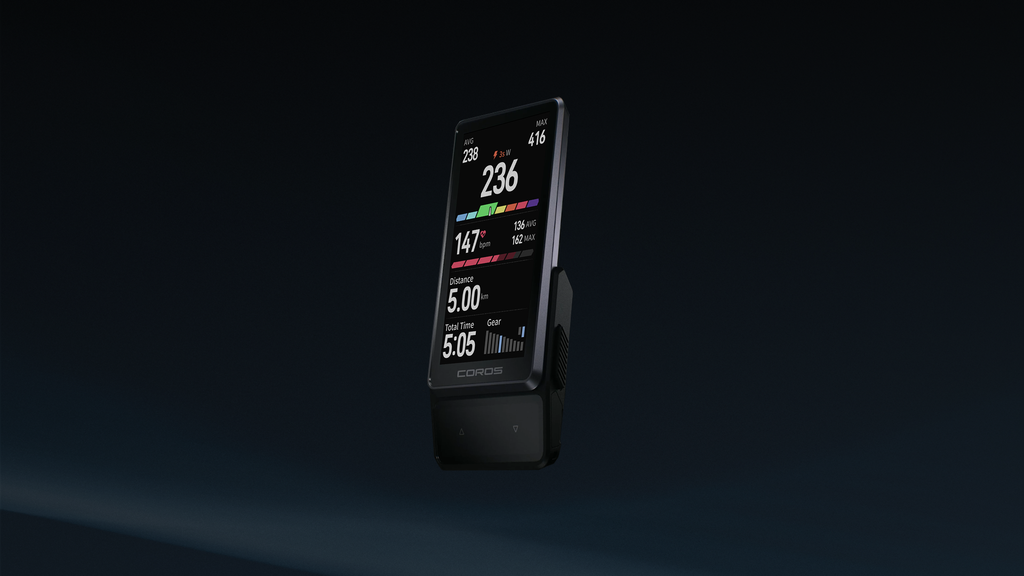
The display jumps to 3.5 inches at 336 x 620 resolution, about 201 pixels per inch.
COROS puts that at 60 percent more screen area than the original and 17 percent higher pixel density.
It’s still a SHARP memory-in-pixel (MIP) display, which is a deliberate choice for battery life and sunlight readability. And the refresh rate is the fastest on a MIP display, according to COROS.
Under the glass is the same processor used in COROS’s latest watches, the Ambiq Apollo510, meaning the maps should be loading faster and have quicker panning and pinch-to-zoom. COROS says the scroll speed should feel like an APEX 4. and maps get street and trail names, points of interest, and surface-type indicators, and you can flip between north-up and heading-up views.
Battery and Solar Numbers
Since battery was the one thing that nearly left us in the middle of nowhere at Unbound XL, lets talk numbers.
The Dura 2 SOLAR is rated for 120 hours in all-systems GPS and 70 hours in dual-frequency, both before any solar.
COROS claims up to 2 hours of battery gained for every hour of riding in sun. The panel is about 17 percent bigger than the original’s and 25 percent more efficient, though that 2:1 claim is the same as the first Dura, which we honestly felt underwhelmed in real world usage.
Measuring how much solar makes a difference is interesting. COROS measures solar gain at 75,000 lux, roughly an early-summer day around lunchtime. A dense cloudy day might sit between 1,000 and 10,000 lux, so don’t expect miracles in winter months or late rides.
Charging is USB-C, and is IP67 rated so it can get wet but you’re not dunking this in streams. Storage is 32 GB.
Navigation Upgrades
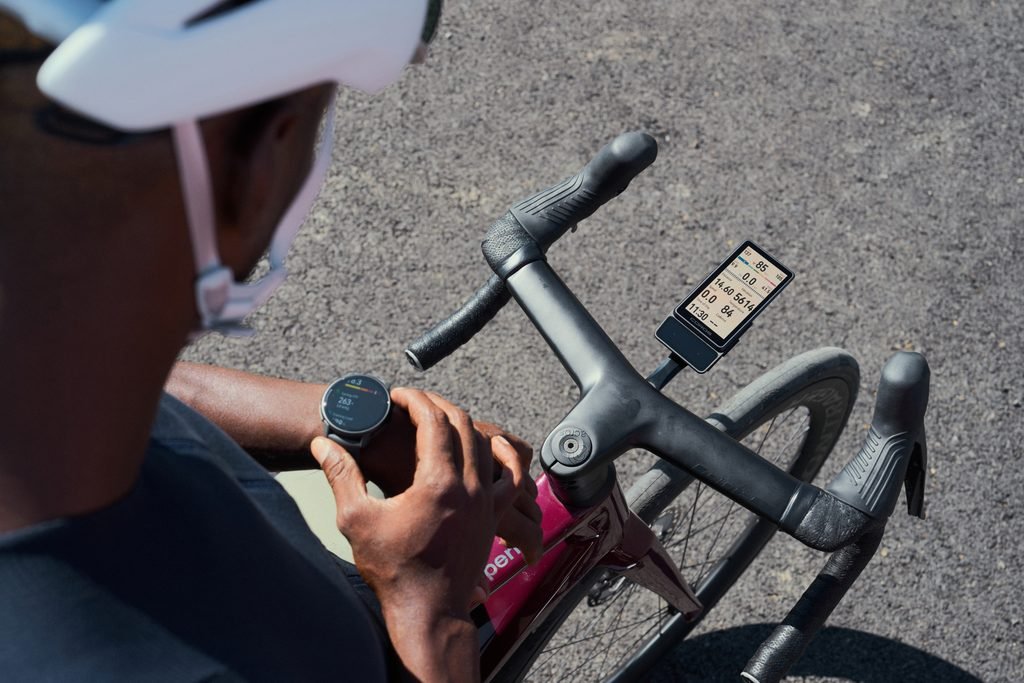
COROS made several navigation changes aimed at long rides. Climb alerts now work on every ride, with or without a route, as long as you’ve downloaded the regional map. There’s offline rerouting, which leans on your phone: the COROS app does the compute and sends the new route back over Bluetooth, so you need your phone along. Routes can still be built in the COROS app or imported and maps remain free, as always.
Training features include a workout player that lets you pause or cancel a structured workout without stopping the ride recording, and the old combined fitness test has been split into separate FTP and max power tests of roughly 20 minutes each, plus a 3-minute power test. There’s also cycling-specific VO2 max at launch, with multiple bike profiles and up to 32 connected sensors coming.
Camera control for Insta360, GoPro, and DJI is built in, along with a media player and radar and light controls.
There’s no subscription for any of it.
A Big Price Jump
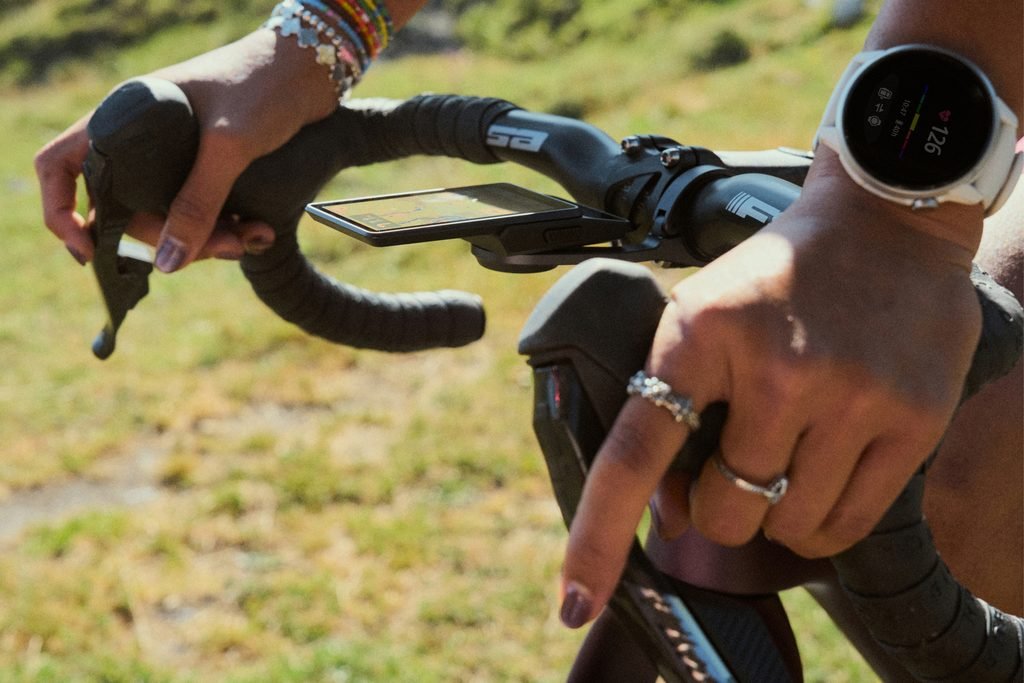
The Dura 2 SOLAR costs $499 on its own, $549 with an aluminum standard mount, and the mount alone is $79.
The original Dura was $249, so yes, the price has roughly doubled which is a theme we’re seeing. The brands argument is that this is a new, more premium platform and should be compared against Garmin Edge and Wahoo, not against the first Dura. Which is fair enough, but I think the original did so well because it was affordable.
This Dura 2 Solar now enteres new territory and at $499, it has to deliver on durability and software from day one.
The mount is a 38-gram aluminum piece with camera and light mounting. Sadly, the out-front for integrated bars mount is delayed and will not be available at launch and could be a couple of months out from being available.
Our Thoughts
We haven’t ridden with the Dura 2 SOLAR yet, so here’s what we’re watching out for and I’m sure what everyone else will cover.
For the price, does this feel premium? Does the touchscreen hold up with wet gloves and road spray? Does losing the dial feel like progress or a miss when you’re deep into a long day? And the big one: with a larger screen, a faster processor, and the solar moved from the top to the bottom, will the battery last longer?
The original Dura proved COROS could build a bike computer that lasts. The Dura 2 SOLAR is a lot more ambitious, has a new design that wont be for everyone and is a lot more expensive.
Bravo to COROS for taking risk and we look forward to testing this one.
You can purchase the COROS Dura 2 Solar on November 3, 2026.
Leave a Reply
You must be logged in to post a comment.