

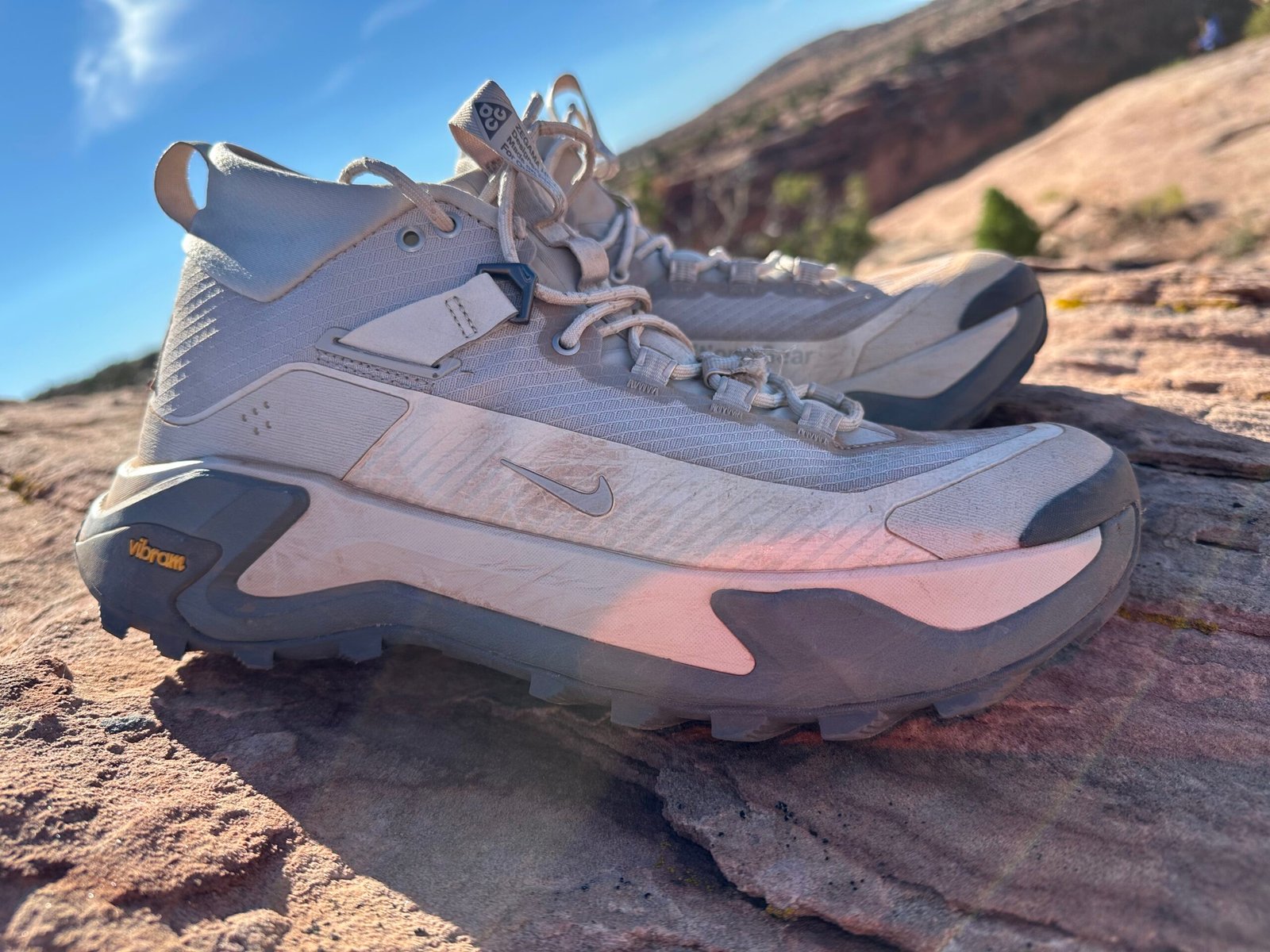
A hiking shoe built on a trail running platform is easy to love in theory. But how would it hold up over multiple days of hiking? Would it respond like the hiking shoe you expect for $190, or would its downfall be the very thing that is supposed to elevate it – a hiking shoe built for the trail.
That’s what we wanted to figure out when we first laced up the Zegama Hike, which is built on the Zegama Trail platform.
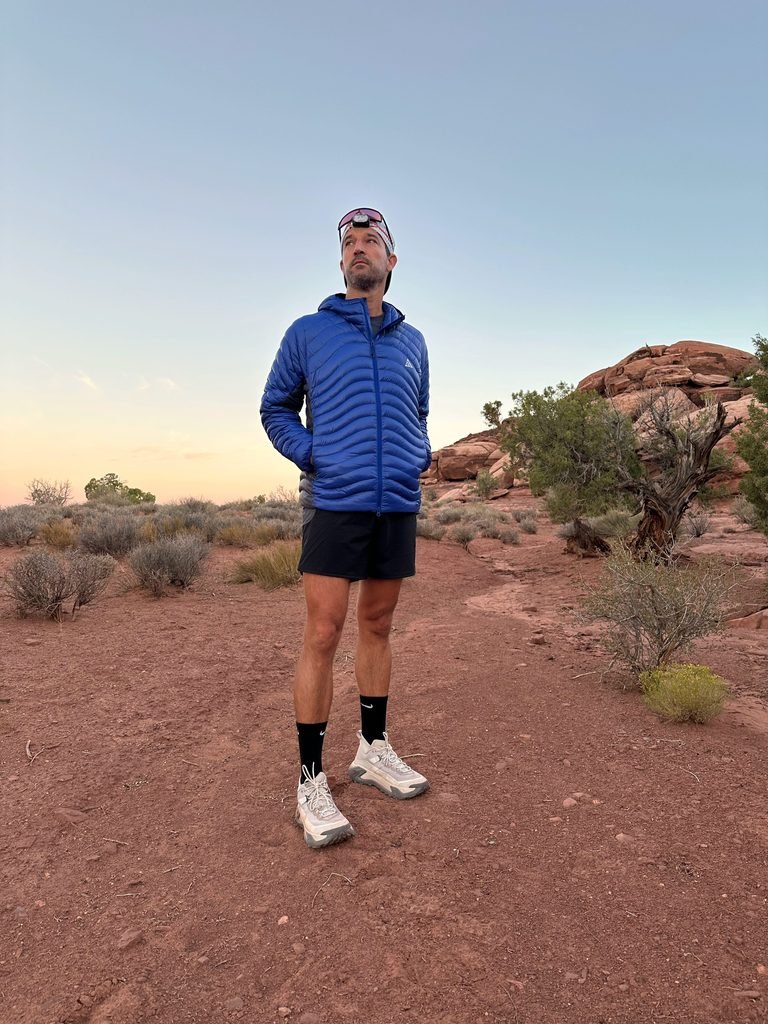
So we did what we do best and took it on a 48-hour, off-the-grid adventure. From 12 hours of hiking to a 1,500-foot descent down switchbacks, with a 20-pound pack strapped to our backs in 107°F heat, how would our feet hold up through all of that discomfort? You can read the full story of the trip here.
First Impressions
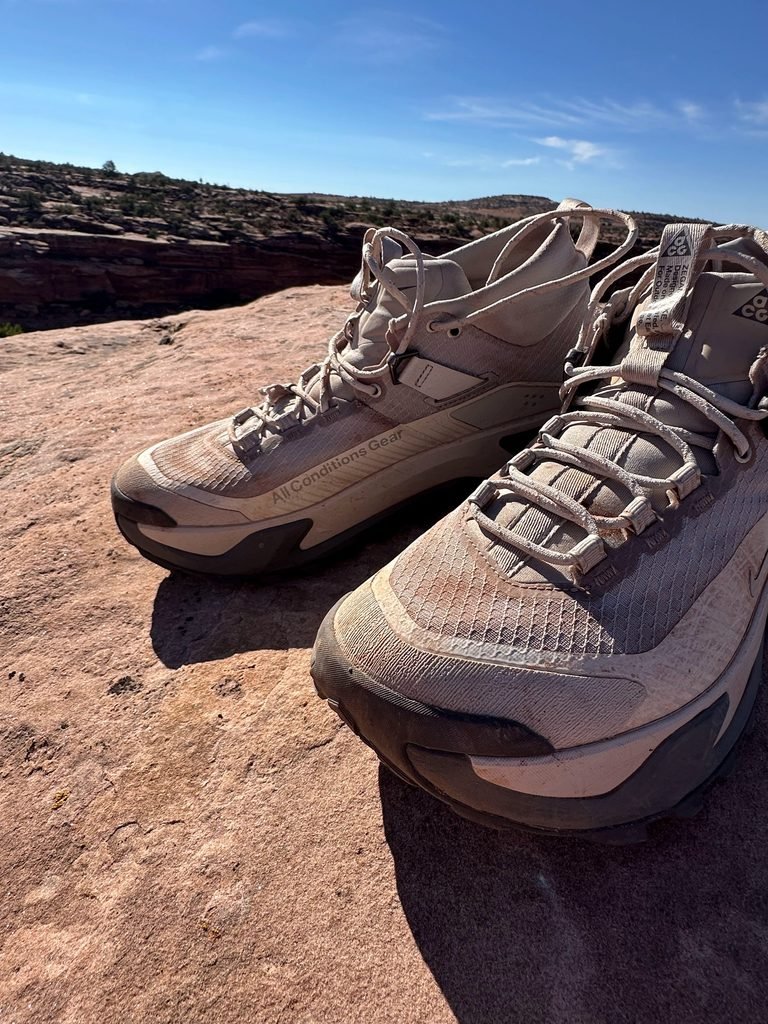
It still blows my mind how a pair of shoes can be this good while the included insoles are total trash. That’s not a Nike thing, it’s an every-brand thing, so the first thing I did with the Zegama Hike was pull them out. Before I’d taken a single step, I swapped in a pair of Superfeet we swear by. Everything after that is a test of the shoe underneath, which is the part Nike should be proud of.
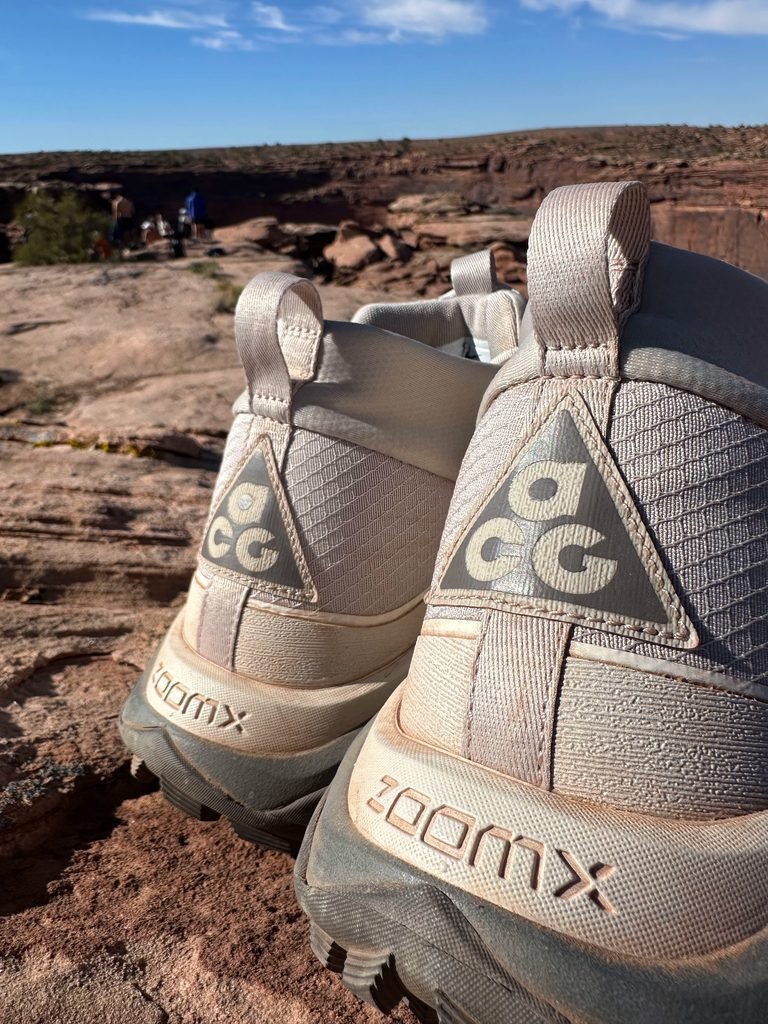
The Nike Zegama Hike pitch these as “a rock-solid, lightweight hiking boot built from a high-speed trail runner.” They have an ultra cushioned midsole paired with 5mm Vibram MegaGrip lugs and a soft, stretchy ankle cuff that keeps trail debris out.
On paper, its a trail runner’s recipe in a hiker’s body. My first real taste of how these would perform came about an hour after we reached our Moab camp in 97-degree heat which included a one-mile hike in with roughly 20 pounds on my back and a dri-fit shirt that was anything but dry.
But my feet were happy. The grip was the first thing I noted. Going up and down slick rock that thousands of years of wind and rain have worn smooth, you need it, and the Zegama Hike delivered. My feet weren’t cooking and the shoe wasn’t asking for attention. They were comfortable and breathable, which is more than I can say for my back.
🔥 Here’s What Works
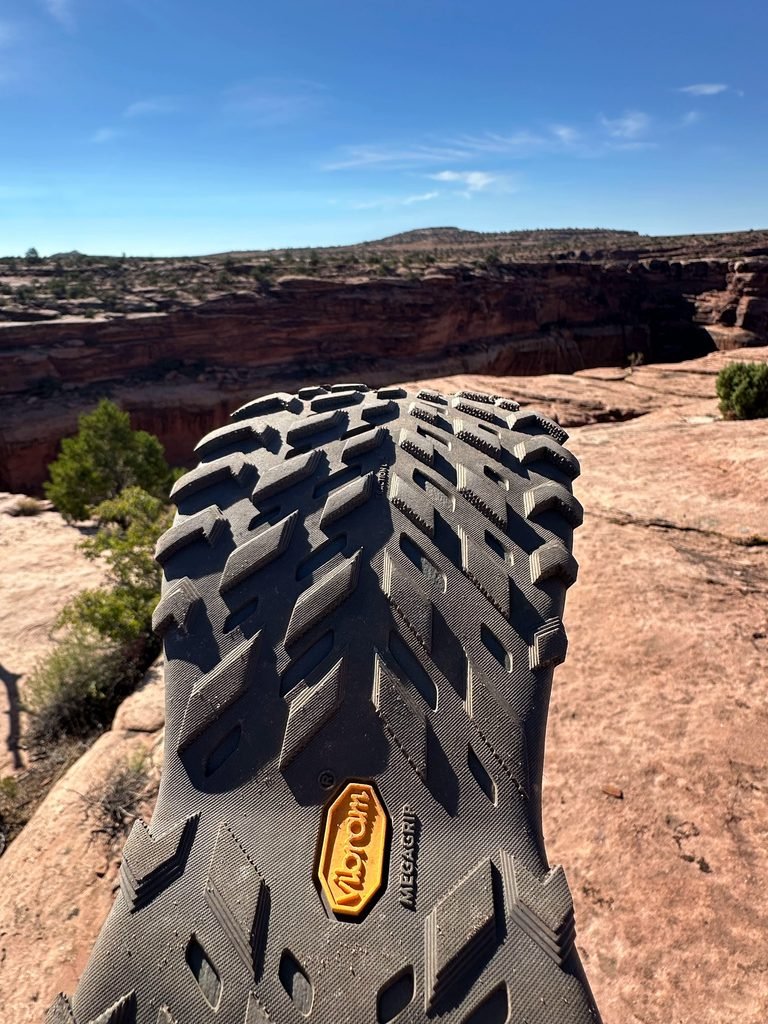
The Traction. This was the first thing I noticed and it never changed. Moab is a mix of loose desert, rock and steep, uneven footing, and the Vibram MegaGrip outsole never gave me a reason to doubt it. The lug layout helps, with sideways lugs that hold an edge and vertical ones through the middle of the shoe for braking downhill. We went straight vertical without having to death grip the side of a rock with our hands. Just toe to rock and push up. Like a stairclimber at the gym.
These Breathe. We hiked in both 97°F and 107°F over two days, and these were never too warm or sweaty, even paired with Nike Dri-FIT socks. If anything, the socks were too hot but the shoes were a pleasure. Nike skipped a waterproof membrane and went all-in on airflow, which is the right call for a desert and an important detail and something to consider if you hike somewhere wet.
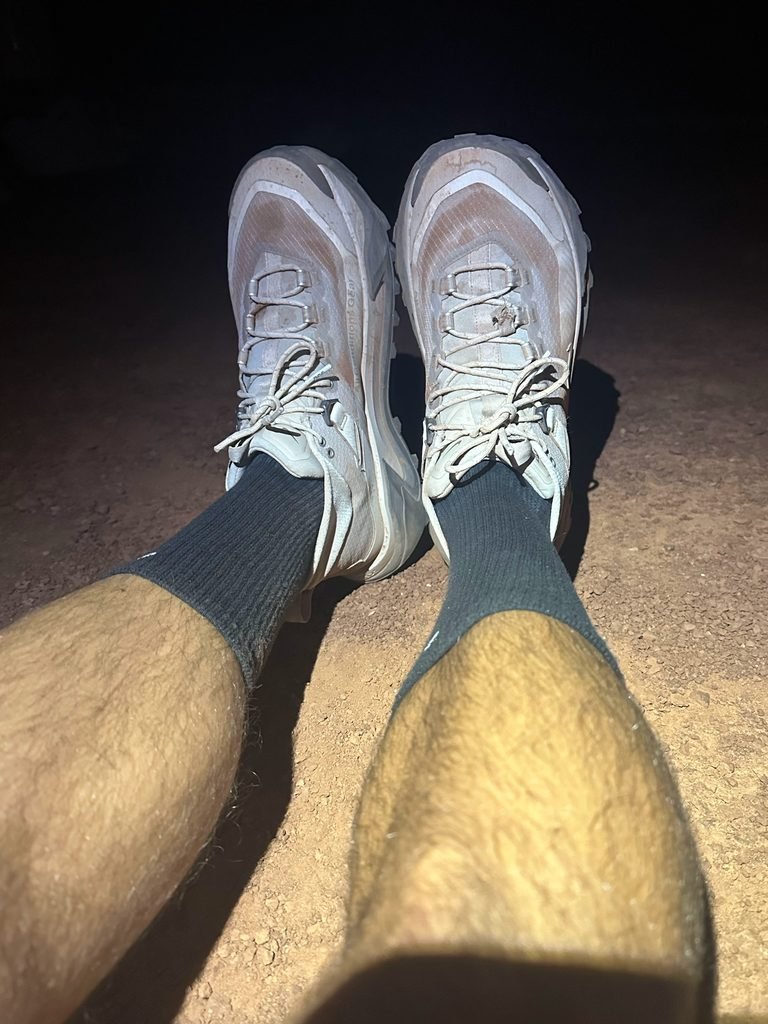
Comfort That Doesn’t Bark. Nike told me this is built on the Zegama Trail platform, and I felt it. Even with 10 to 12 hours a day on my feet, not once did the shoes start to bark or distract me from the mission. They also felt nimble, even for a hiking shoe. The toe box was plentiful and it never felt tight when I took these off for a mid-day breather or when putting them back on to conquer our next desert quest.
Good Enough to Run In. Not something I’d recommend on the daily but hiking just wasn’t enough for me. I had to get a run in while in Moab and shoot, if these are built off shoes, why not give them a go. And at the end of the day, maybe, you’ll need to run from a bear one day. You never know. And if so, these are a good go to for that. They’re responsive but as highlighted above don’t ever slip or slide. The platform locks in your foot and not once did we ever feel like we’d twist our ankle, or even crash out going from sand to rock and back again. They’re too heavy to be a running shoe but were a pleasant over a few miles. Not once did we have, “these suck” pop into our head.
Load Management. I carried roughly 20 pounds of gear on day one, and then a 30-pound pack of water, sleeping bag and sleeping pad down a three-mile switchback on day two. The shoes were never an issue, much like. when you load your car up with gear or bags of mulch at Home Depot. Yea, the load gets heavier, but thats where these shine. They’re built with the athlete hiking with gear in mind. If anything, they were the thing I thought of the least and that’s the best compliment I can give. Part of the credit goes to a broad base and a flared heel, which add stability without the bulk of a full boot.
😷 Here’s What Stinks
The Included Insoles. I swapped these out immediately and hated the ones in the box. They’re so thin, floppy, and just stupid. Maybe one day, insoles will be as important as I already think they are. They weren’t something I wanted under my feet for hours, and there’s very little plushness to them. If you’re doing multi-day hikes, or long day trips, or anything that relies on complete foot comfort, do the same. Budget for a good aftermarket insole when you buy these, because a $190, a shoe shouldn’t ship with ones you have to replace. It also means I can’t tell you how much of the comfort above belongs to the shoe and how much belongs to my Superfeet. I’m being honest about that.
The Eyelet. The part you thread your shoelace through, ripped on our pair about a day and a half into the trip. It’s probably just the pair we had, and I’ll say Nike actually seemed embarrassed by it, but it happened and I can’t pretend it didn’t. This may well be a one-off, but a lacing point failing mid-trip matters when you’re a mile or 15 miles from camp. It wasn’t a huge deal and I figured it out but something worse that wouldn’t allow you to finish your adventure. You expect more, especially, for $190.
Weight, Water, & More. At 15.5 ounces per shoe these are similar to other hiking shoes like the Merrell Moab 3 (15.3 ounces), though they felt nimble to us on trail and during our short run. But if this is your first hike, it might be noticeable. With regard to these being narrow, we didn’t notice but just want to point out that if you do have a wide foot, no wide size is offered, so just try them on first. And lastly. These have no waterproof membrane but are “water resistant”. Just want to point that out.
And lastly, lets talk durability. It’s not something I can speak to at the moment. Since Moab, we’ve put another 30 miles into these with my kids on the trails and nothing I said above changes. I can tell you these hold up through heat, sweat, sandstone and 10-to-12-hour days. I can’t yet tell you how the midsole feels after a season, a few downpours, or whether more eyelets are waiting to explode.
Real Life with the Zegama Hike
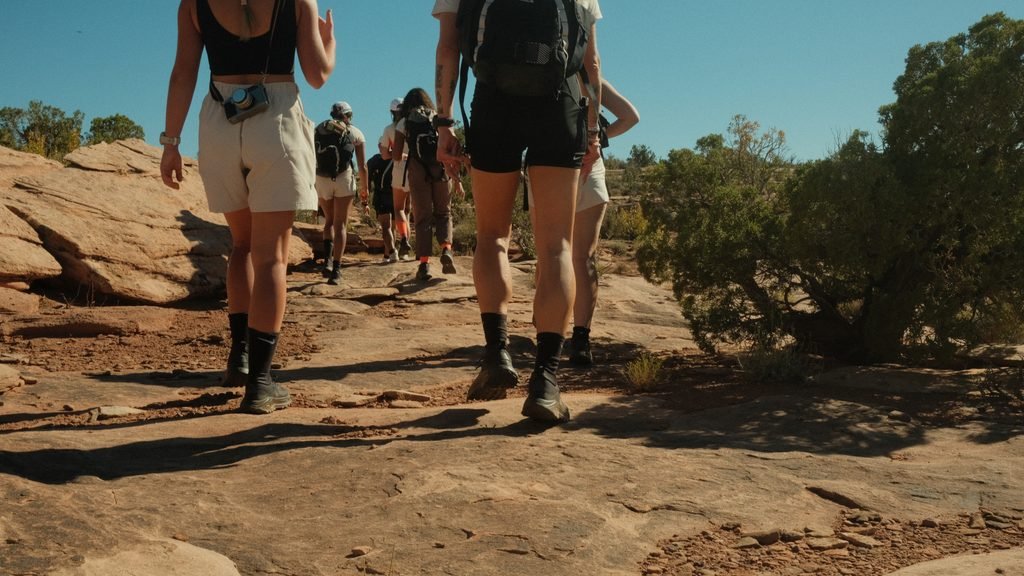
This wasn’t a weekend of casual walking. Nike’s ACG team ran us on a regimented schedule from 5 a.m. to 10:30 p.m., and the shoes spent all of it on my feet: scrambling, hiking, building camp and standing around a rotunda eating dinner.
Day one was a one-mile hike to camp, then a first group hike where our guide Ian walked us through biocrust, a living desert surface that takes 250 years to grow and one wrong step to destroy. It’s a good reminder that footing matters in Moab so shoes that suck would not pass the sniff test here.
Throughout each day, our group of 27 “researchers” snaked along stopping and starting. I mention this because it wasn’t just hiking I was testing while wearing these, it was standing around time. Which is important. Hiking shoes are great for hiking, but also for traveling when you may be standing around for long periods of time, in lines, or staring at some museum painting.
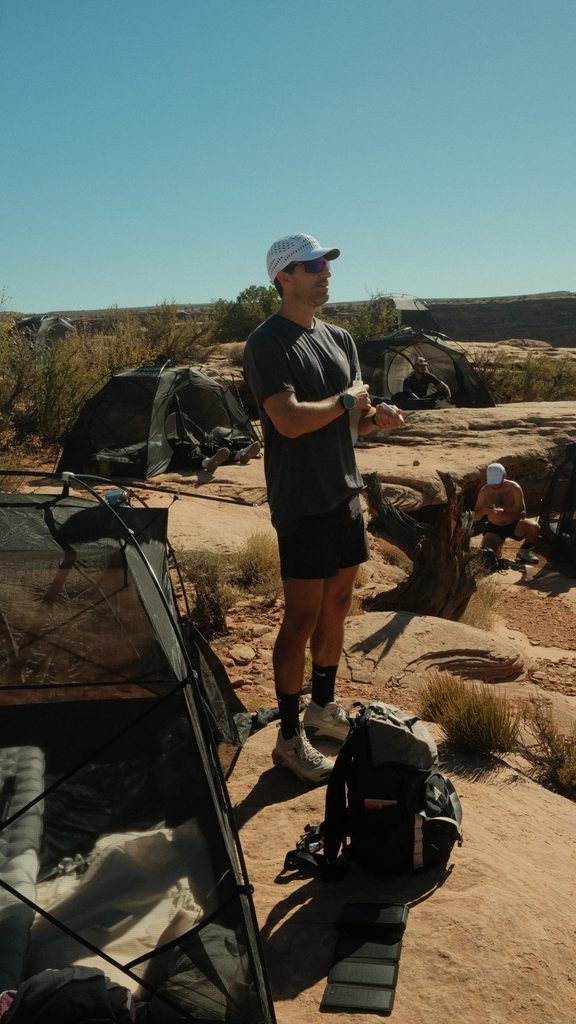
On Day 2, we got up again at 5 a.m. for a 12-mile hike toward the Arches. My feet weren’t toast but felt refreshed. Sleep of course helped but I wasn’t feeling any sore spots or dreaded slipping my feet back in into the Zegama Hike. On this particular hike, the temperature at the top of the canyon would hit 107°F, finishing with that three-mile switchback that dropped 1,500 feet to our cowboy camp, all with a 30-pound pack of water, a sleeping bag and a pad. My watch ended the day at 12 miles total. I felt fine, and so did my feet.
By the time headlamps started moving around camp like worker ants, I’d been on my feet 10 to 12 hours and wasn’t thinking about my shoes, just that I knew I wanted to finally sit down.
By Sunday AM, we woke up again and headed for the airport where I’d spend another 12 hours traveling with my feet loaded into the Zegama Hike. Even while I was on that plane headed from Grand Junction, to Dallas and finally Austin and in the Uber home, my feet never paid the toll, even if my body was finally saying enough.
What to Know
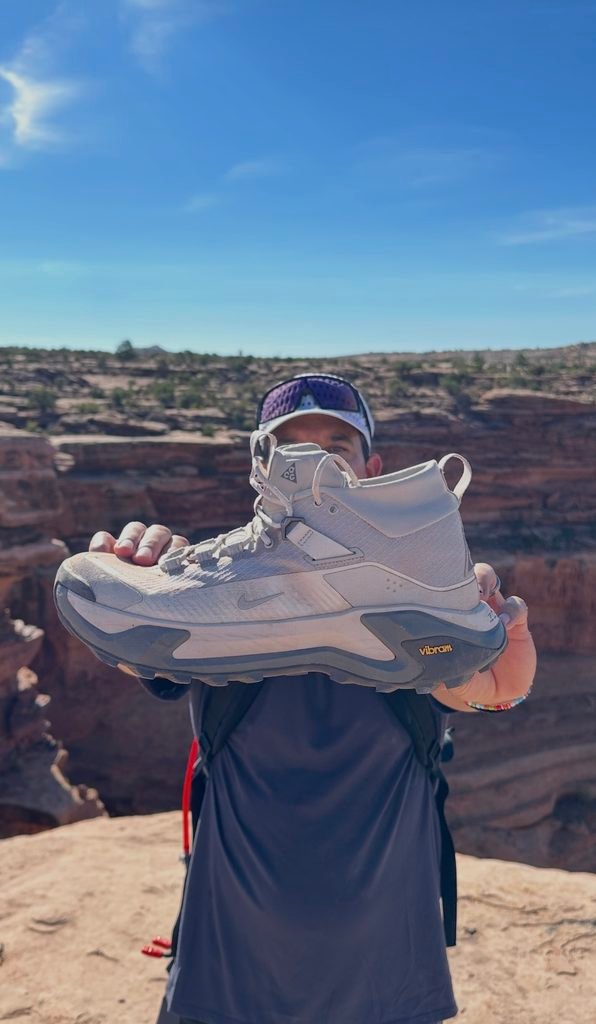
- Price: $190 USD
- Platform: Built on the Nike Zegama Trail
- Midsole: ZoomX foam which is lightweight and ultra-cushioned
- Outsole: Vibram MegaGrip traction lugs
- Upper: Breathable textile with a soft, stretchy ankle cuff to keep out trail debris
- Waterproofing: No but water resistant. These are built for airflow
- Weight: 15.5 oz per shoe
- Lug Depth: 5mm
- Stack height: 32 mm heel / 28 mm forefoot
- Fit: True to size, with a slightly narrow midfoot and no wide option
- Insoles: Removable. We swapped them for Superfeet
- How we tested: 48 hours in Moab, Utah on ACG Research Mission 01, in 97 to 107°F heat with a 20 to 30-pound pack
Verdict
The Zegama Hike earned its place on my feet for 48 hours in Moab. It gripped on every up and down, breathed through 107°F days and never once barked after 10 to 12 hours on my feet with a loaded pack. That’s what a hiking shoe is for.
It also let me down in two ways. The included insoles aren’t up to a multi-day trip, and a lacing eyelet ripped about a day and a half in. One of those is an easy fix, and the other is a quality-control question I can’t answer from a single pair. But Nike didn’t pretend this was normal, reiterating how much testing these go through.
Should You Buy?
If you’re a multi-day hiker who wants run-shoe comfort and real traction, especially somewhere warm and dry, these are really great.
If you need waterproofing, have a wide foot, want the lightest shoe possible or are shopping on a budget, look elsewhere. The Zegama Hike is also not the lightest option, so if you want something lighter without a waterproof membrane, the Merrell Moab Speed 2 and Hoka Anacapa Breeze are worth a look.
Our call is a conditional yes to these. After living in them, I’d take the Zegama Hike on another 48-hour trip or even to Europe where we could backpack, explore, and feel completely comfortable for days on end.
Leave a Reply
You must be logged in to post a comment.