

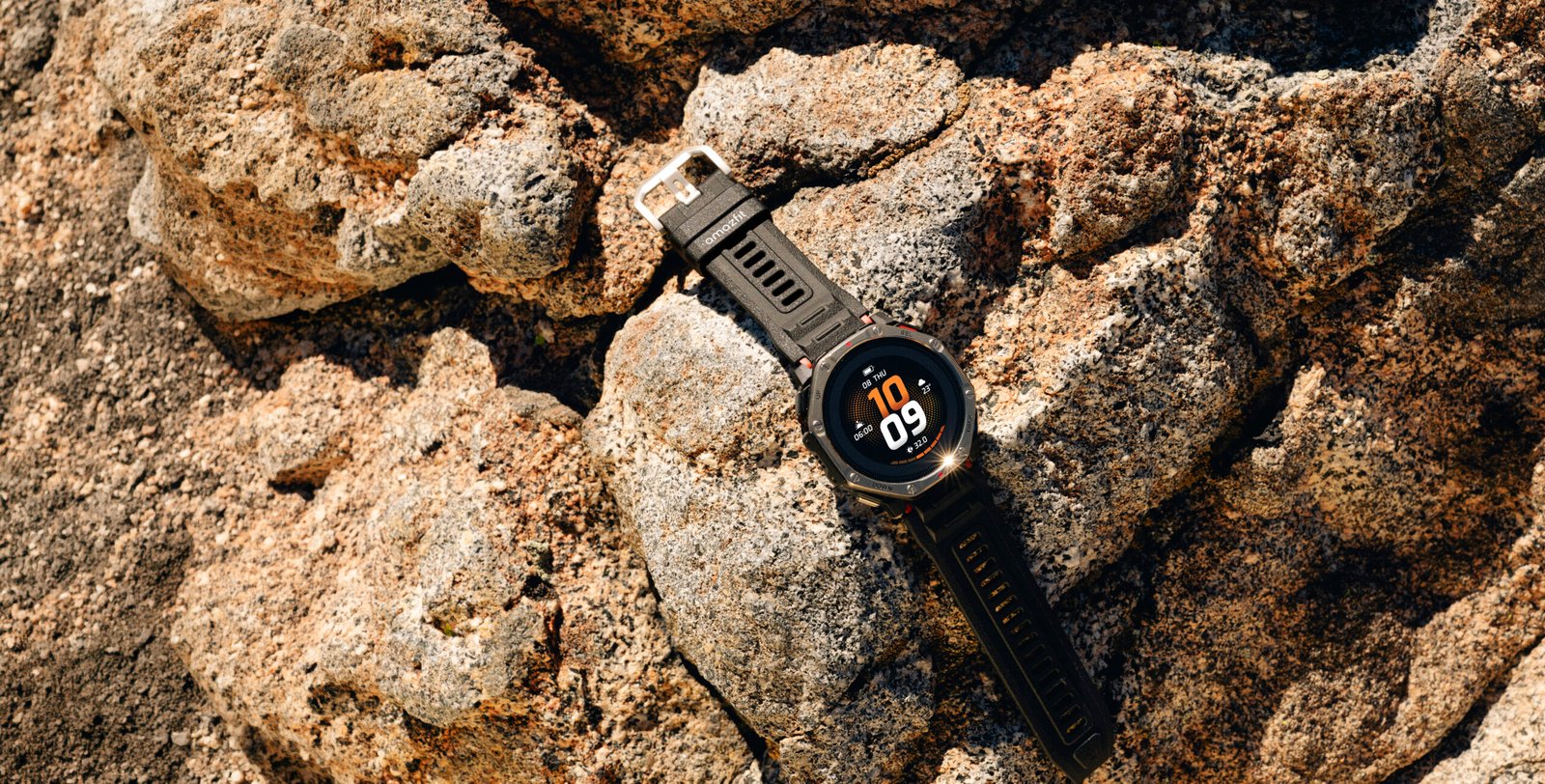
Amazfit announced the T-Rex Dual Solar today. At $650, it’s their first AMOLED smartwatch with solar charging built into both the front display and the back plate. Interesting.
What’s New
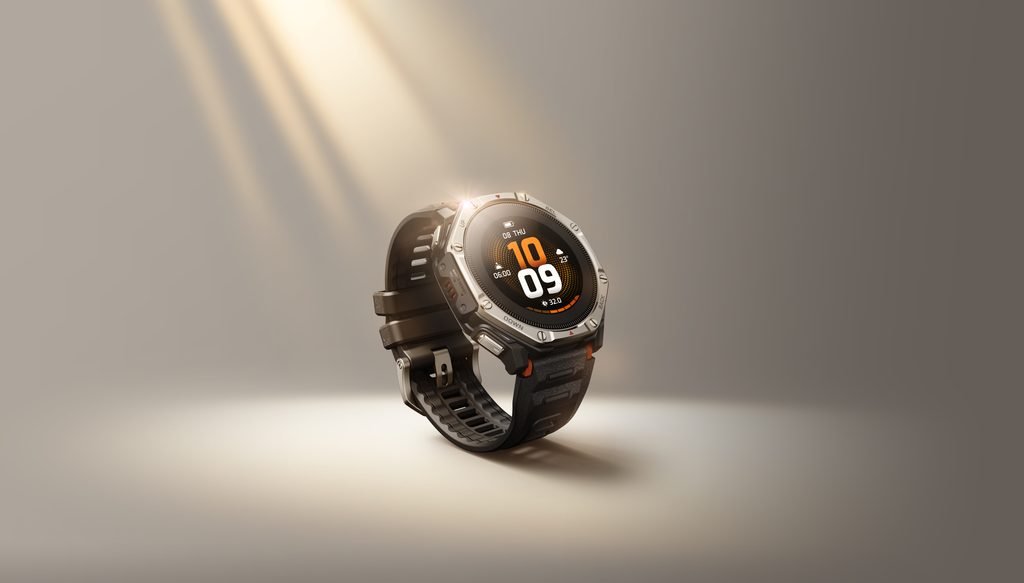
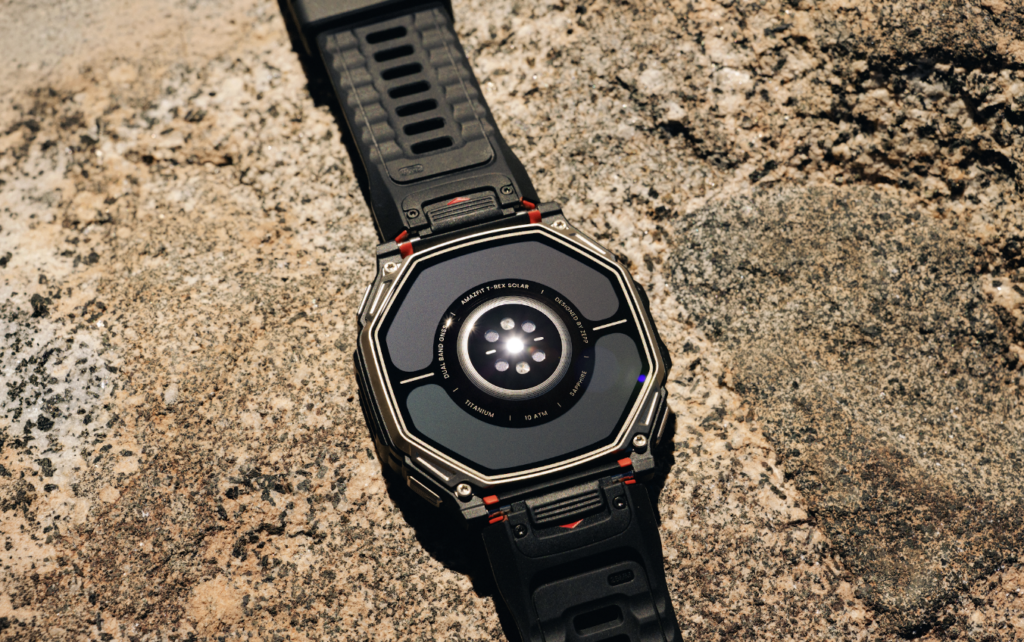
That’s right. The headline feature is dual-sided solar charging which is unique. The watch has a front solar layer under the display, plus a larger glass-ceramic rear panel with roughly double the front’s collection area.
Amazfit built in a Solar Priority Mode specifically for off-wrist solar recovery, and under its testing conditions (3 hours/day at 50,000 lux), front-panel solar alone can stretch the watch’s 660mAh battery from 25 days of typical use up to 34 days — with a ceiling of 41 hours in Accuracy GPS Mode. On top of that, an Outdoor Extreme battery mode and a new Expedition activity mode round out the power side, built to keep GPS track points running on multi-day trips.
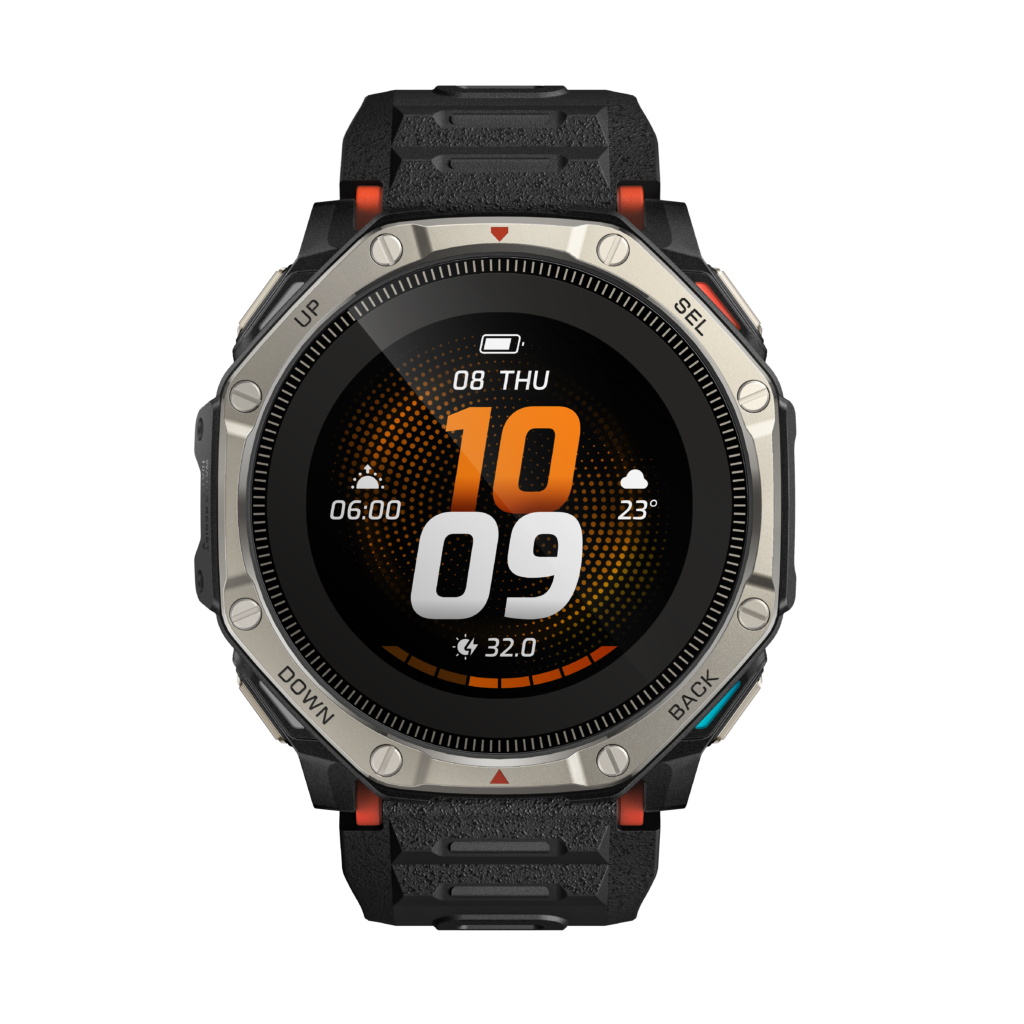
On the hardware side, the T-Rex line is built to last and this is no different, and includes a grade 5 titanium bezel with sapphire crystal and a 1.32″ AMOLED display at up to 3,000 nits, rated for 10 ATM water resistance with recreational diving support to 50 meters — a first for the T-Rex line.
It also adds a built-in flashlight with a red-light option for preserving night vision, a Navigation Gradient Curve that shows elevation changes at a glance, full-color maps with downloadable contour and ski layers, turn-by-turn navigation, and LiveShare for real-time location sharing.
The Zepp App, as always comes with no subscription required.
How it compares to the T-Rex Ultra 2
The Dual Solar is a different offering than the Ultra 2, so its not exactly a straight upgrade.
The Ultra 2 leaned on a bigger 1.5″ display and a higher flat battery ceiling — 30 days typical, 177 hours in GPS Max Battery mode — with no solar assist.
The Dual Solar’s unassisted number is lower at 25 days, but the solar system is designed to close that gap and then some in real outdoor use, not just sitting at your desk all day; plus it adds diving support and LiveShare that the Ultra 2 doesn’t have.
But it’s also $100 more expensive than the Ultra 2.
Whether the solar system actually holds up to Amazfit’s claims — and whether it’s worth the premium over the Ultra 2 is something we’re looking forward to seeing and trying for ourselves.
For now, if you want to take the leap, you can order at Amazfit.com and Amazon.
Leave a Reply
You must be logged in to post a comment.