

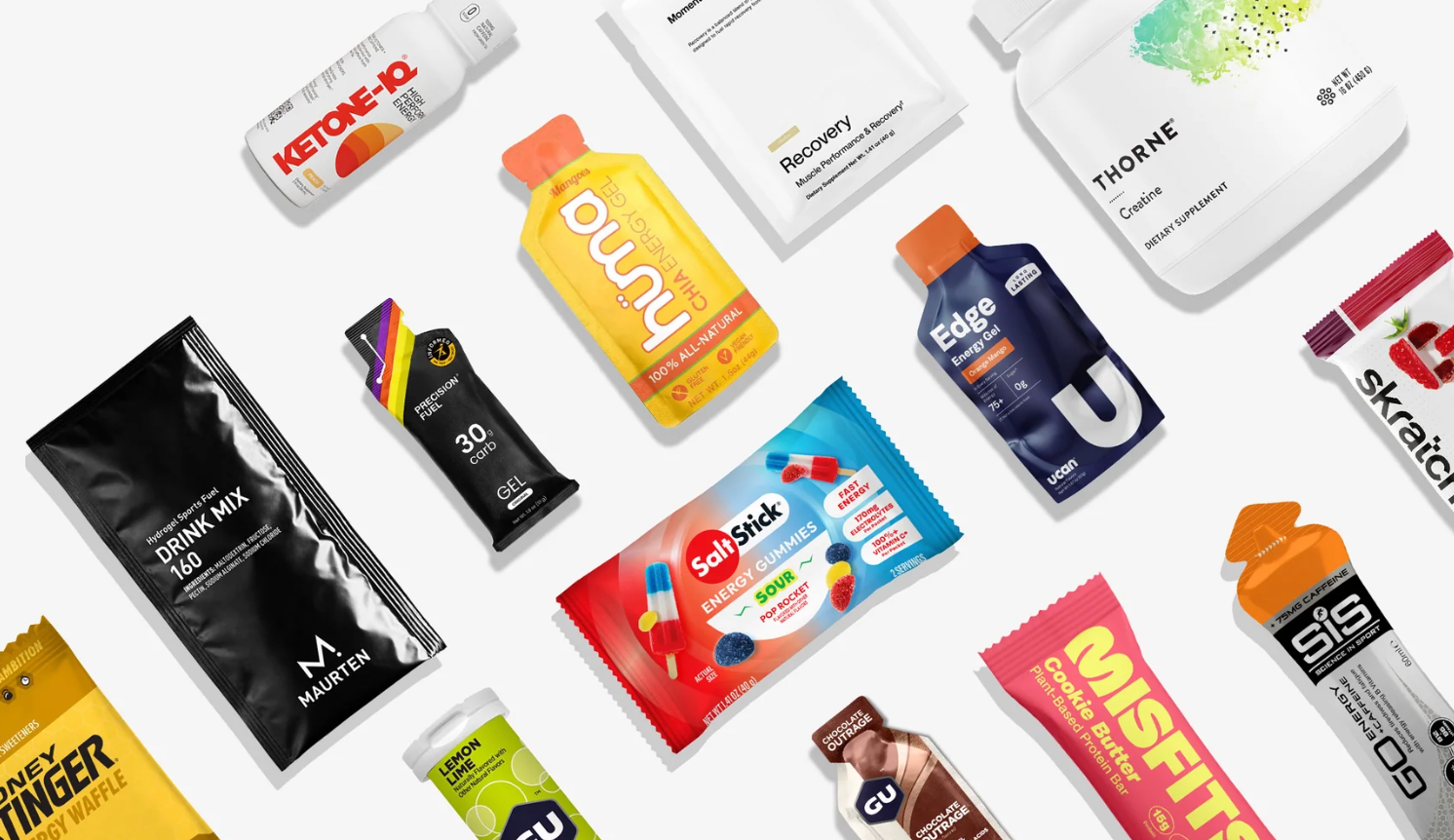
The most overused statement in endurance sports is “Fueling is the fourth discipline” and its overused because it is completely accurate.
Fueling has always been the hardest part of training nobody quite figures out unless you have an experienced coach or are experienced yourself.
Fuel Goods thinks it’s found the fix, and it’s giving it away for free.
The Gap It’s Trying to Close
Every fall, thousands of runners walk into Chicago, New York, Philadelphia, and a dozen other start lines with a dialed-in training block and a fueling strategy that’s still mostly guesswork.
Fuel Goods, the athlete-founded marketplace built by former professional cyclists Laura Jorgensen and Courteney Lowe, is betting that gap is bigger than most brands realize, and it just launched a free tool to close it.
The new Fueling Plans tool, powered by the company’s proprietary Fuelprint technology, takes an athlete’s actual training; that is whatever plan they’re already running, or one of Fuel Goods’ built-in options, and converts it into workout-by-workout fueling guidance: what to eat, drink, and when, then makes all of it instantly shoppable through the site.
If you’ve ever purchased a standalone training plan, they usually tell you what to do but almost never tell you how to fuel it. That disconnect is where athletes completely crash out with GI distress, bonking, and other race-day surprises.
How Fuelprint Actually Works
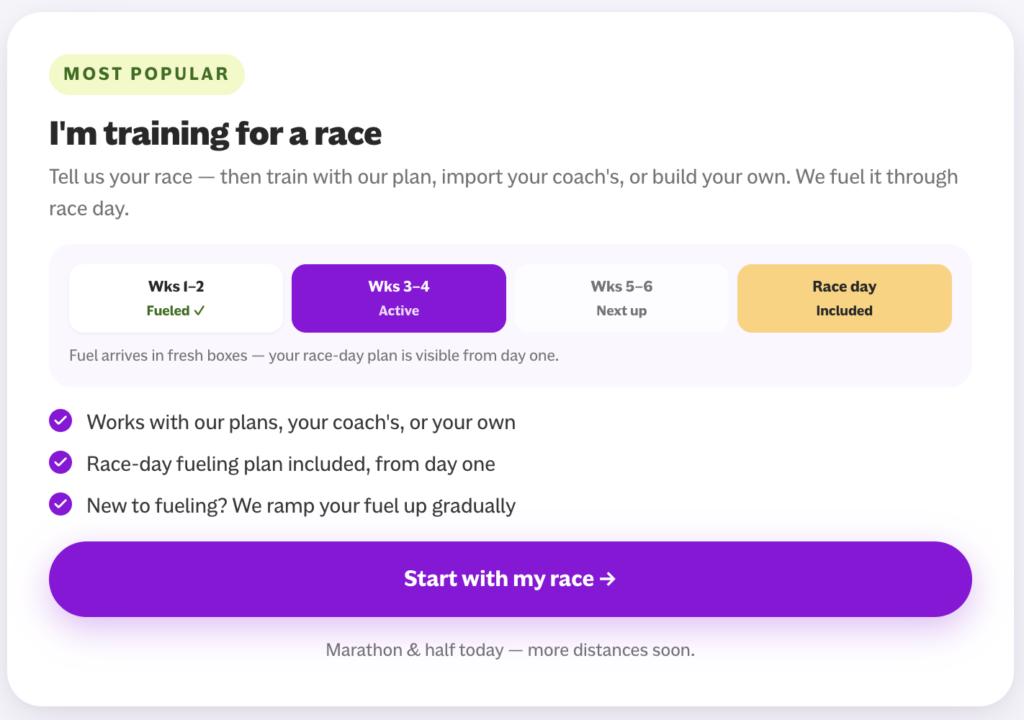
The headline claim of this being a “personalized fueling plan” is easy to say and hard to build well, so we pushed Fuel Goods for specifics on what’s actually happening under the hood.
The system is rules-based, not a black-box AI model. It was built using established sports nutrition guidance and developed with input from athletes, registered dietitians, and sports nutritionists, then applies those principles across carbohydrate intake, hydration, sodium, recovery, and gut training based on the demands of each individual workout.
To get started, athletes select ‘I’m training for a race’ (above) or ‘just training’ (below).
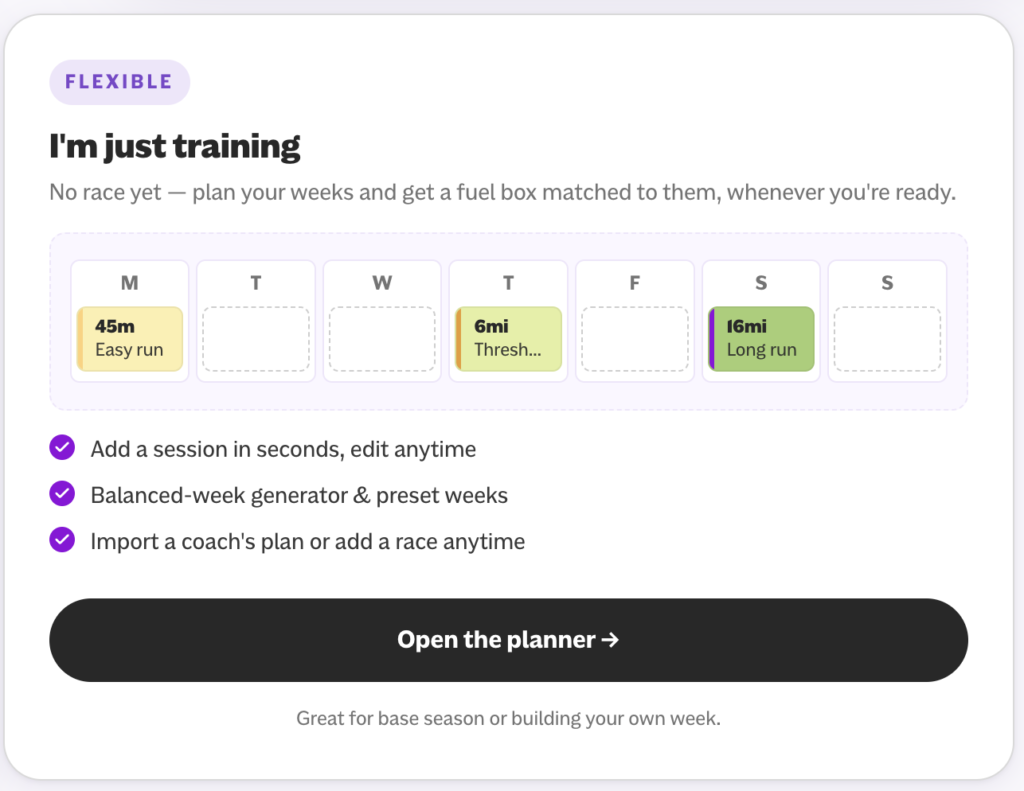
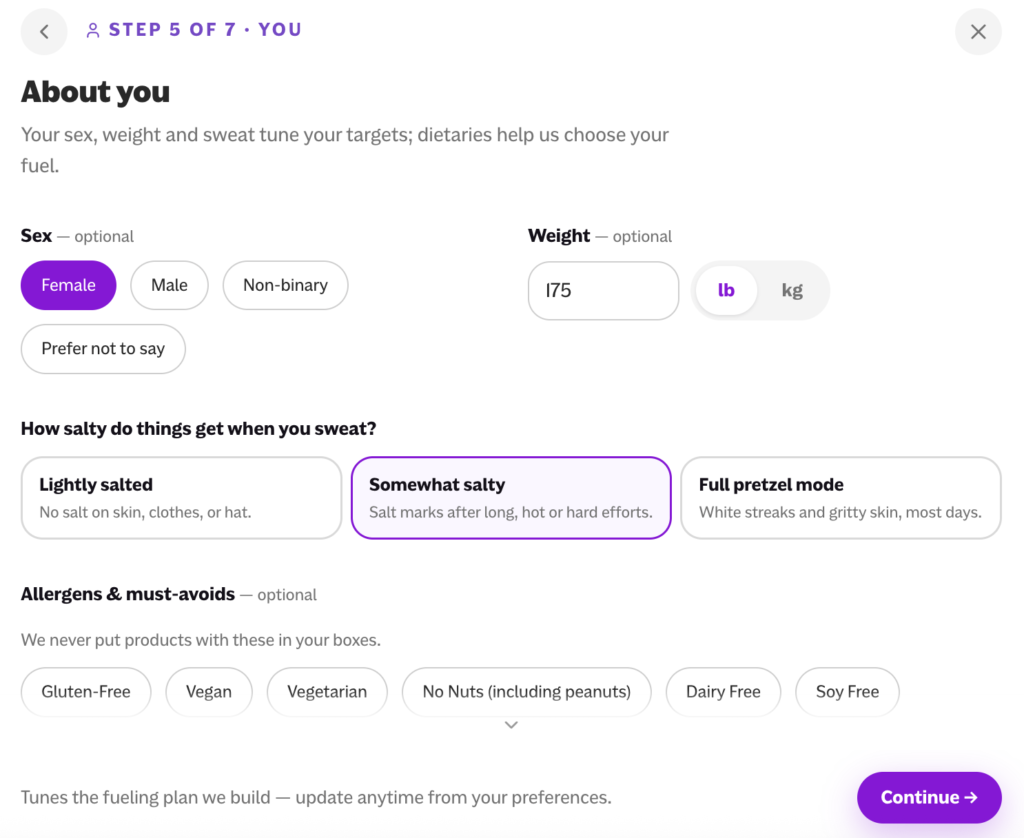
For us, we selected training for a race which then took us through a 7-Step plan of action. If that sounds daunting, it’s not and at a minimum, athletes enter a workout’s duration and self-reported intensity, along with gender identity, weight, and their familiarity with fueling. The plan then scales its recommendations from there.
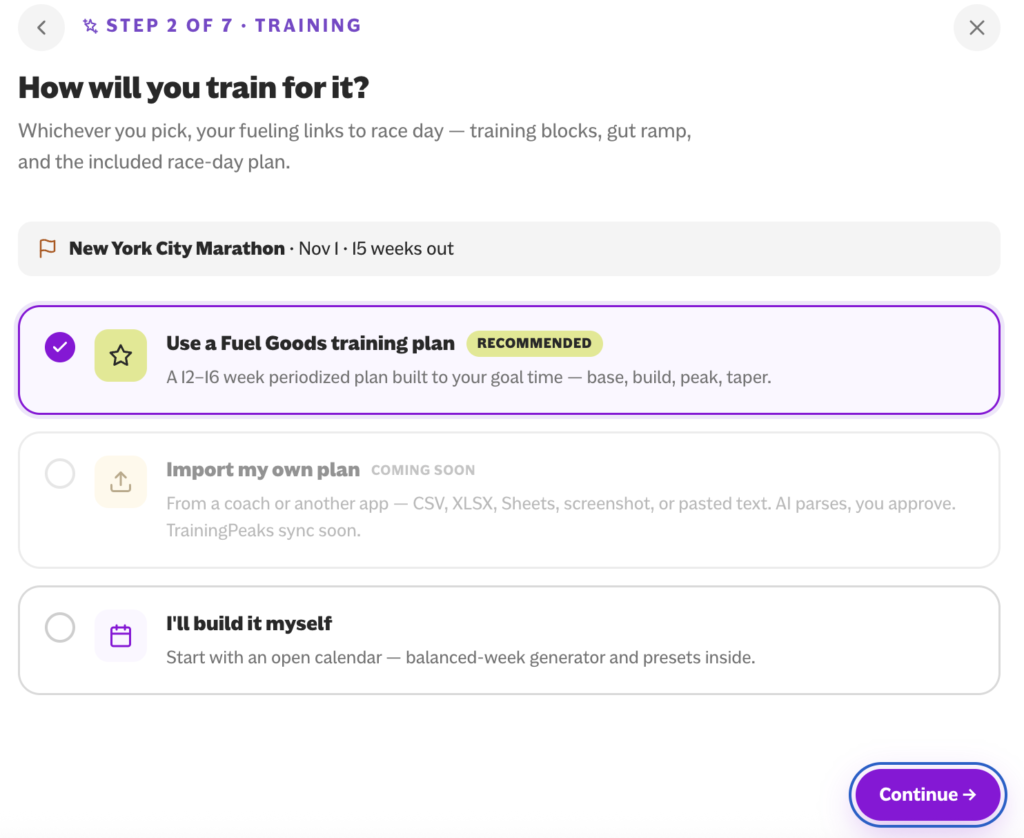
Under the hood, the technology is built to ingest a much wider range of data, like heart rate, HRV, intensity factor, suffer score, and other metrics pulled from training apps and wearables. But most of that infrastructure is aimed at integrations that are still rolling out. Direct connections to platforms like Strava, TrainingPeaks, and Garmin aren’t required to use the tool today, but Fuel Goods confirmed those integrations are already in motion.
It’s Built to Change With You — Not Be Sterile
One of the more notable design choices we asked Fuel Goods about is that this isn’t a one time output. Fuel Goods was direct that this is not meant to be a “set it and forget it” plan but something you use daily as part of your training.
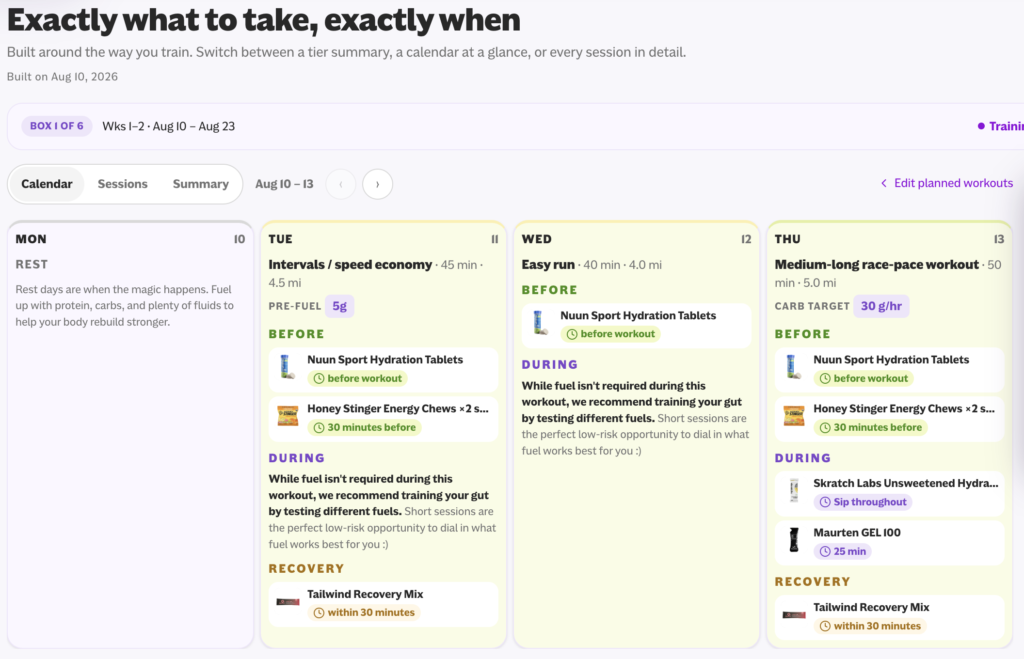
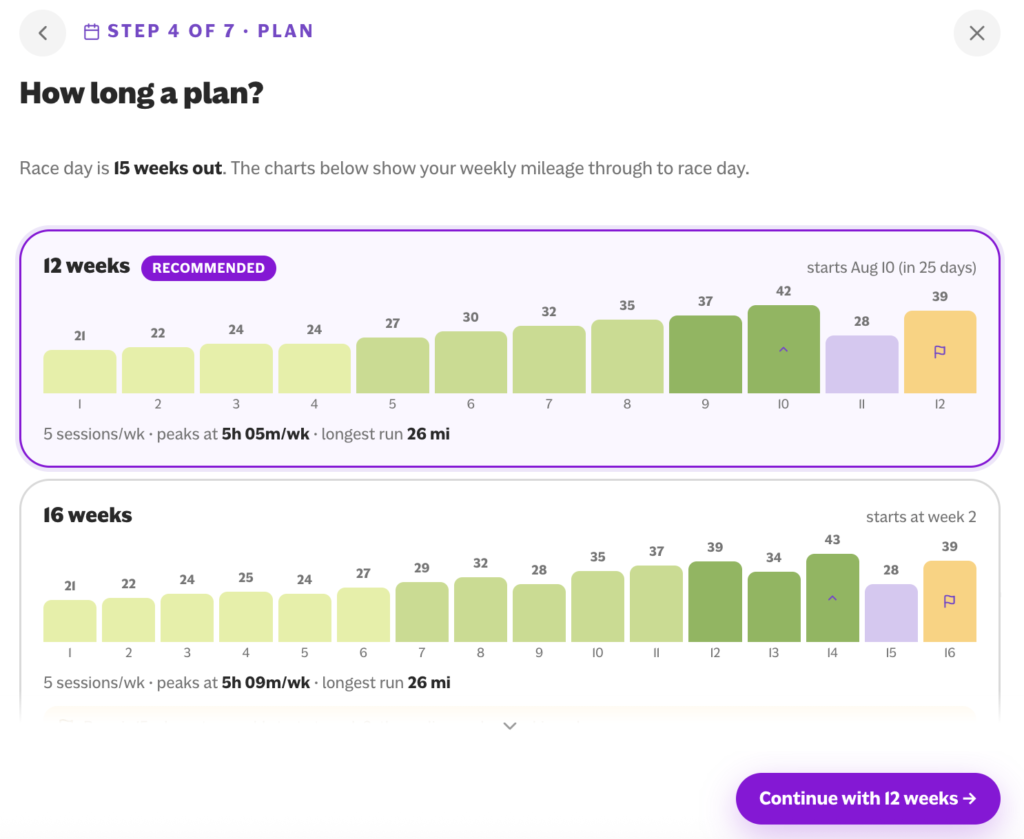
Nutrition plans coincide with how long of a training plan you select with athletes choosing how often they want fuel delivered, with every two weeks as the recommended cadence, and can regenerate their fueling recommendations any time their training shifts.
The plan lives inside a user’s Fuel Goods profile on FuelGoods.com and account creation isn’t required to build a plan, but it is required to save one, so you should just create a profile because athletes can return to view recommendations, swap products, update preferences, and shop directly.
Dialing In Gut Training, Not Just Macros
Fuel Goods was candid that fueling is deeply individual and what works for one athlete can send another sprinting for a bathroom. The tool lets athletes set dietary restrictions (vegan, gluten-free, and others) and specify brands, product types, and flavors they want or don’t want in their plan.
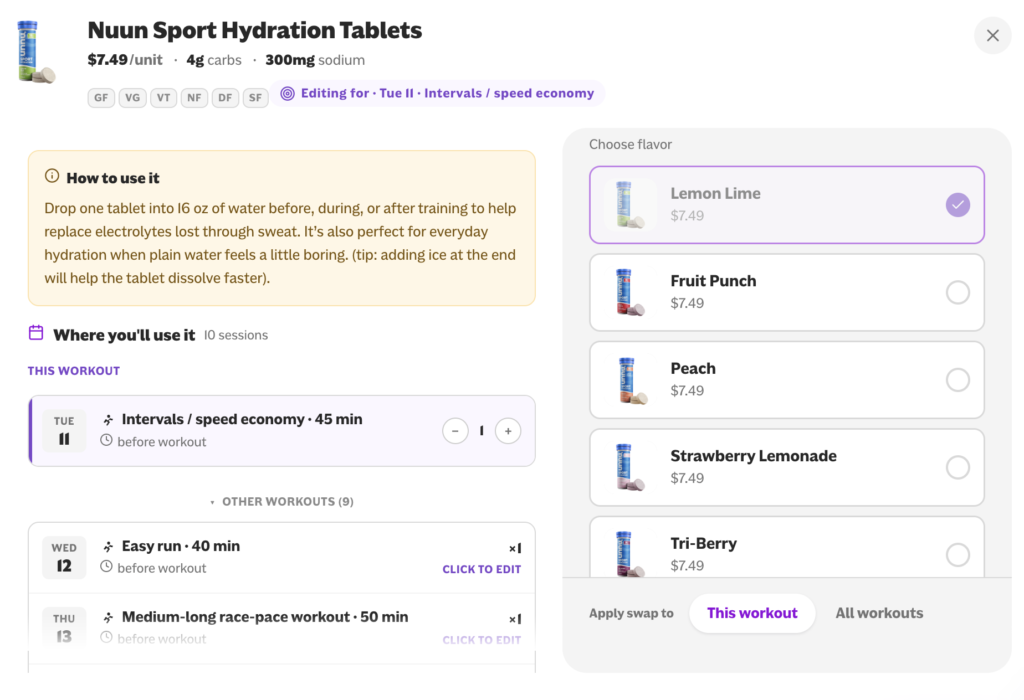
But the more interesting piece is the feedback loop: as athletes test products in training and learn what actually works for their gut, they can update those preferences so future recommendations sharpen over time with the explicit goal being fewer race-day GI surprises.
Who It’s Actually Built For Right Now
The Fuel Your Finish campaign is framed entirely around runners, and Fuel Goods confirmed that’s intentional as running is currently its largest audience and where it’s seen the clearest demand. But the tool itself isn’t running only.
Cyclists can already connect their training and build a personalized fueling plan, though Fuel Goods noted the running experience has had significantly more development time.
Triathletes are the notable gap: runners and cyclists can build plans separately, but there’s no unified triathlon experience yet. Fuel Goods called it a roadmap item, and pointed to the added complexity of three disciplines, transitions, and different fueling demands per sport as the reason it isn’t live yet.
For our endurance audience that skews multi-sport, this is an honest caveat worth flagging. We played around with the tool for 24-hours ahead of the launch and we will say, bravo as Fuel Goods has thought through nearly everything an athlete will need. The tool is real and free today for runners and cyclists, but triathletes should treat it as a running/cycling tool with a triathlon build still ahead.
The Sweepstakes
Every runner who builds a Fueling Plan is automatically entered into the Fuel Your Finish sweepstakes, with one winner drawn each week through fall marathon season.
The prize is a fully-fueled training block and the campaign runs through the Philadelphia Marathon on November 22, spanning race weekends including Chicago, New York, Philadelphia, Indianapolis Monumental, Baltimore, and Marine Corps.
Our Thoughts
This is dope and the Fuel Goods team has really thought through this. It’s not vibe coded or something they slapped together with Claude. Our first impression of the platform was, “Damn, this is really good,” and I think the biggest difference between Fuel Goods and someone like The Feed is that Fuel Goods really feels like it is built for everybody. The Feed’s vibe is that of, “I already know what I’m doing and how to fuel, I just need to purchase” while Fuel Good’s wants to invite you in for a sit-down and really figure things out and understand what is best for you, your body and what race. This launch only makes that much more apparent.
Having used it for 24-hours ahead of the launch, we kept finding a new little nugget to dive deeper into. We’re excited to hear from the Fuel Goods team how its received but as an athlete that knows what he is doing, I do wonder for ultra green athletes, will this still be too many steps and confusing for them, or is this finally the help and direction they can figure out for themselves to help them get across their first, or 100th finish line. Stay tuned.
Athletes can build a free Fueling Plan now at FuelGoods.com.
Leave a Reply
You must be logged in to post a comment.