

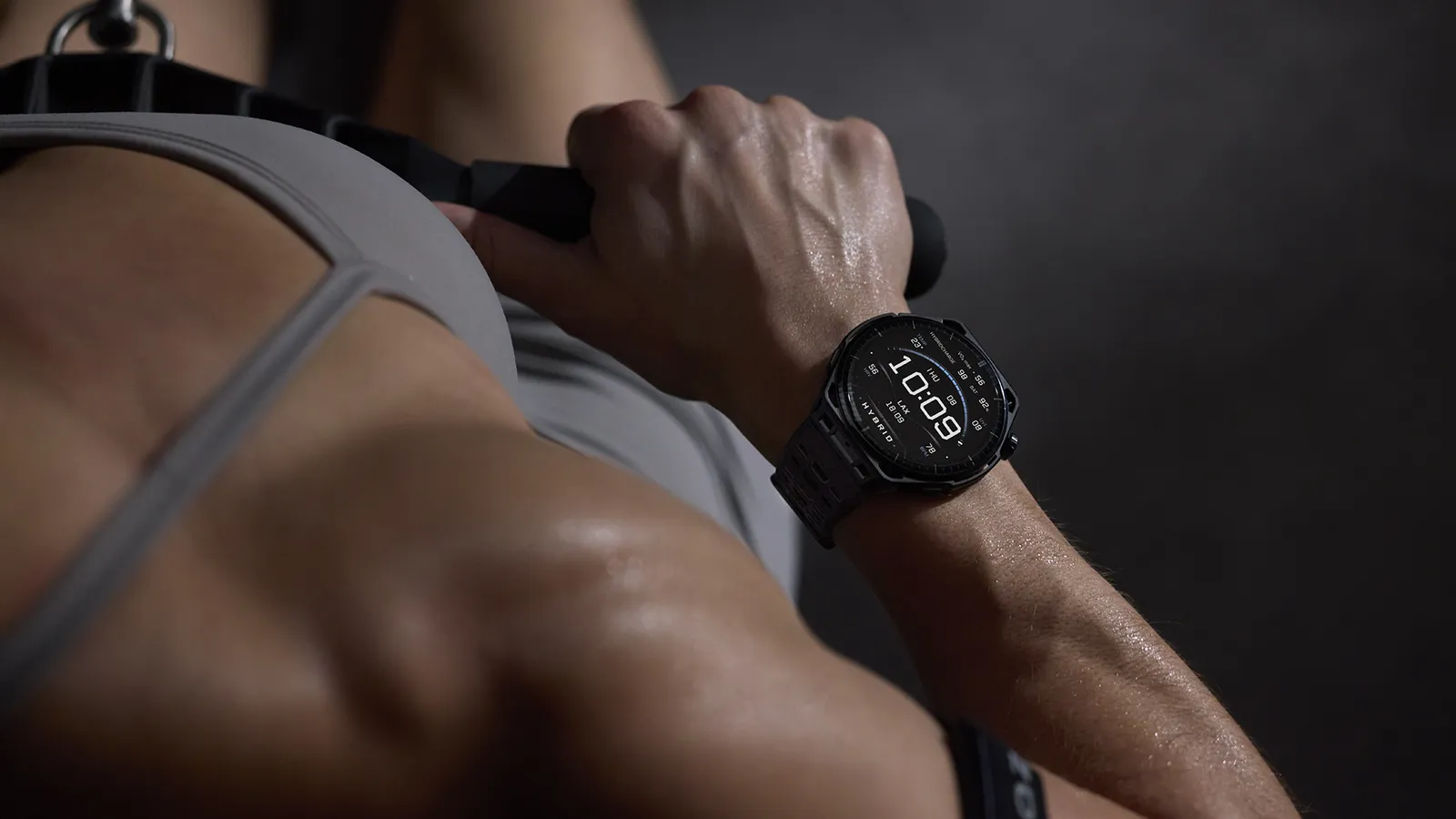
Hybrid athletes are nothing new, they’ve just gotten a lot faster.
They’re part endurance freak, part jacked, mostly shredded. And they exist somewhere in the space between marathon training and HYROX start line.
And for a long time, the wearable market had no real answer for them.
A smartwatch is great at a lot but hasn’t exactly nailed the kind of workouts HYROX athletes push through. Instead, we’re seeing optical sensors misfiring more than ever because your forearm is doing something no wrist-worn sensor was designed for.
Amazfit thinks its figured it out and is calling the answer, the Helio Strap Pro, a body-worn training “system” (more on that) designed to help HYROX and hybrid athletes better understand how their bodies perform under its highest stress.
At $200 (no subscription) – is Amazfit leading the way in hybrid tracking?
Not a Device. A System.
Before you read another word, I also wondered what “system” meant when I first read the announcement.
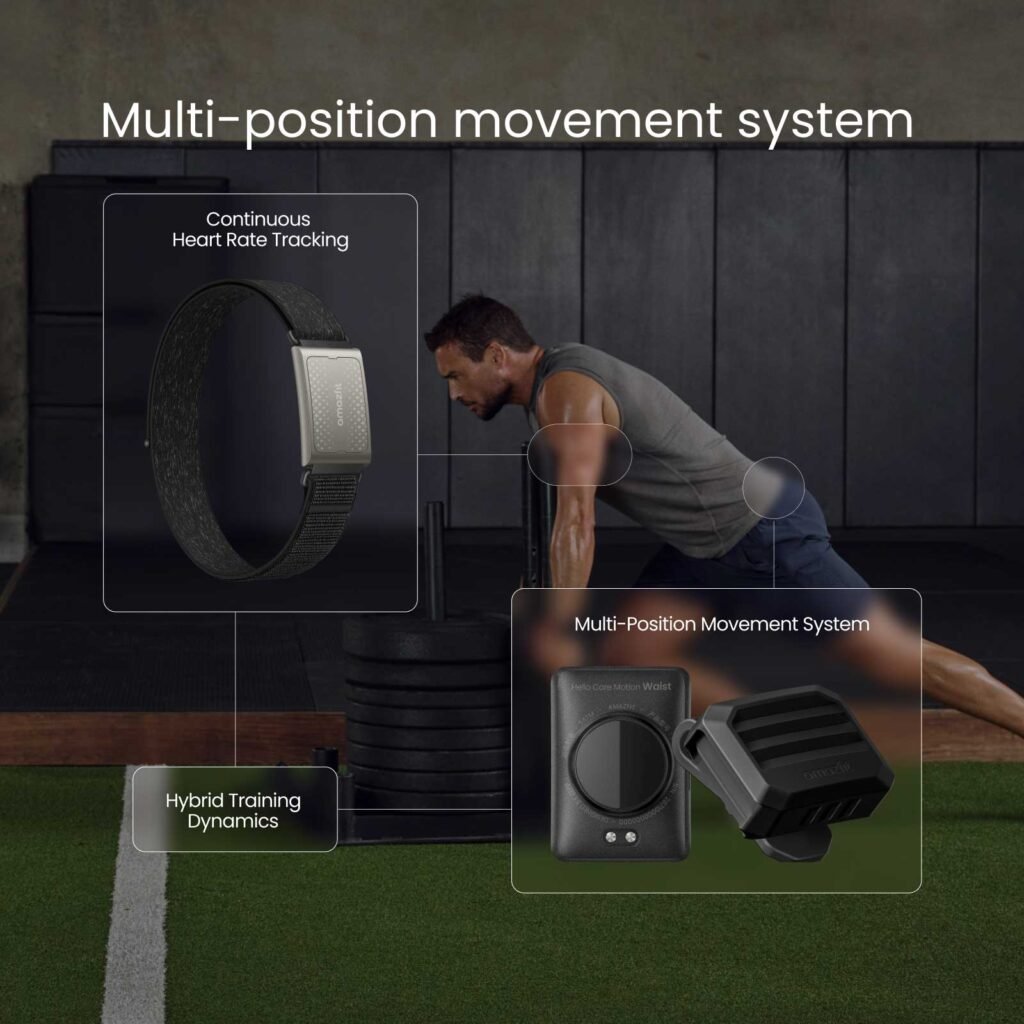
But Amazfit wants to get one thing straight: the Helio Strap Pro is not simply an upgraded version of the original Helio Strap. It is a two-module system where both sensors work together.
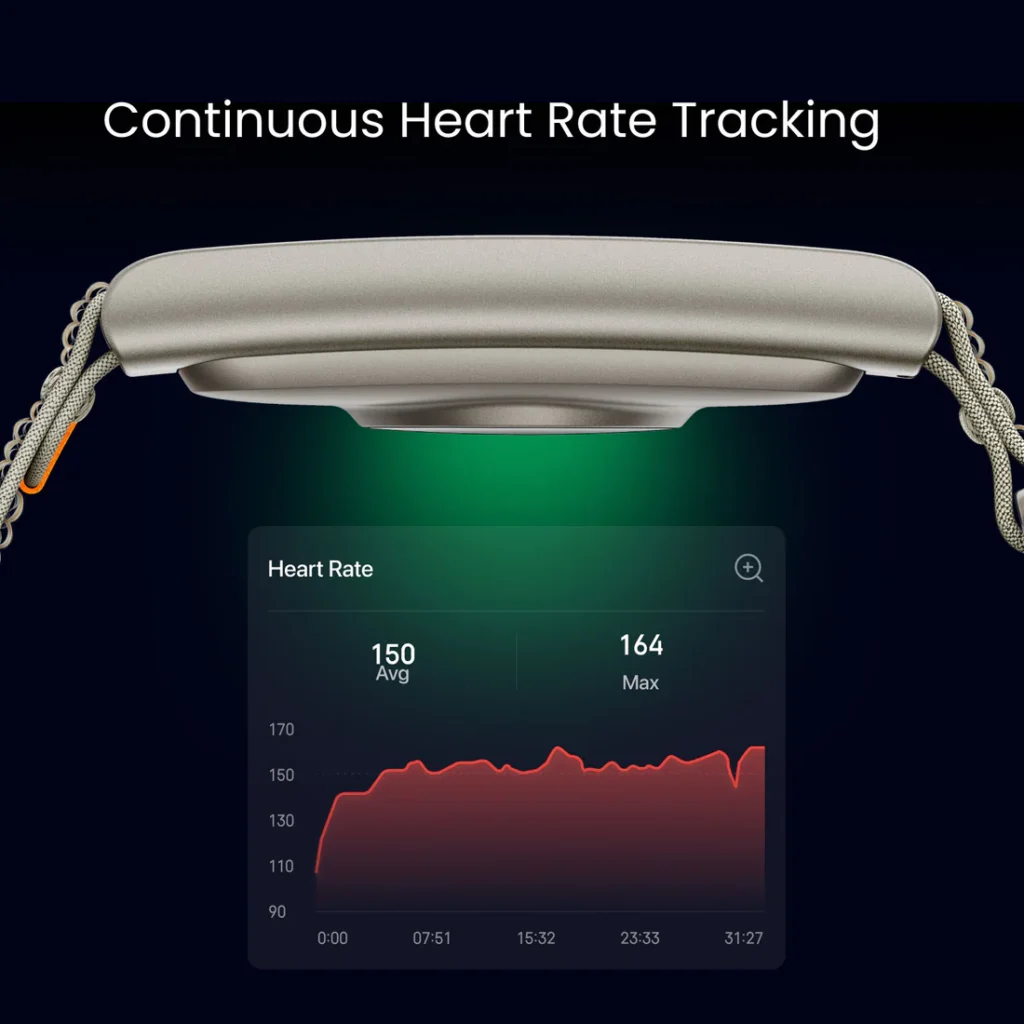
The first piece is the Helio Core Motion HR, which is worn on the upper arm and handles heart rate capture using Amazfit’s BioTracker 6.0 optical PPG sensor.
The second is the Helio Core Motion Waist, a 9-axis motion sensor that clips to the center of your waist and captures core-body movement, positioning, and stability under load.
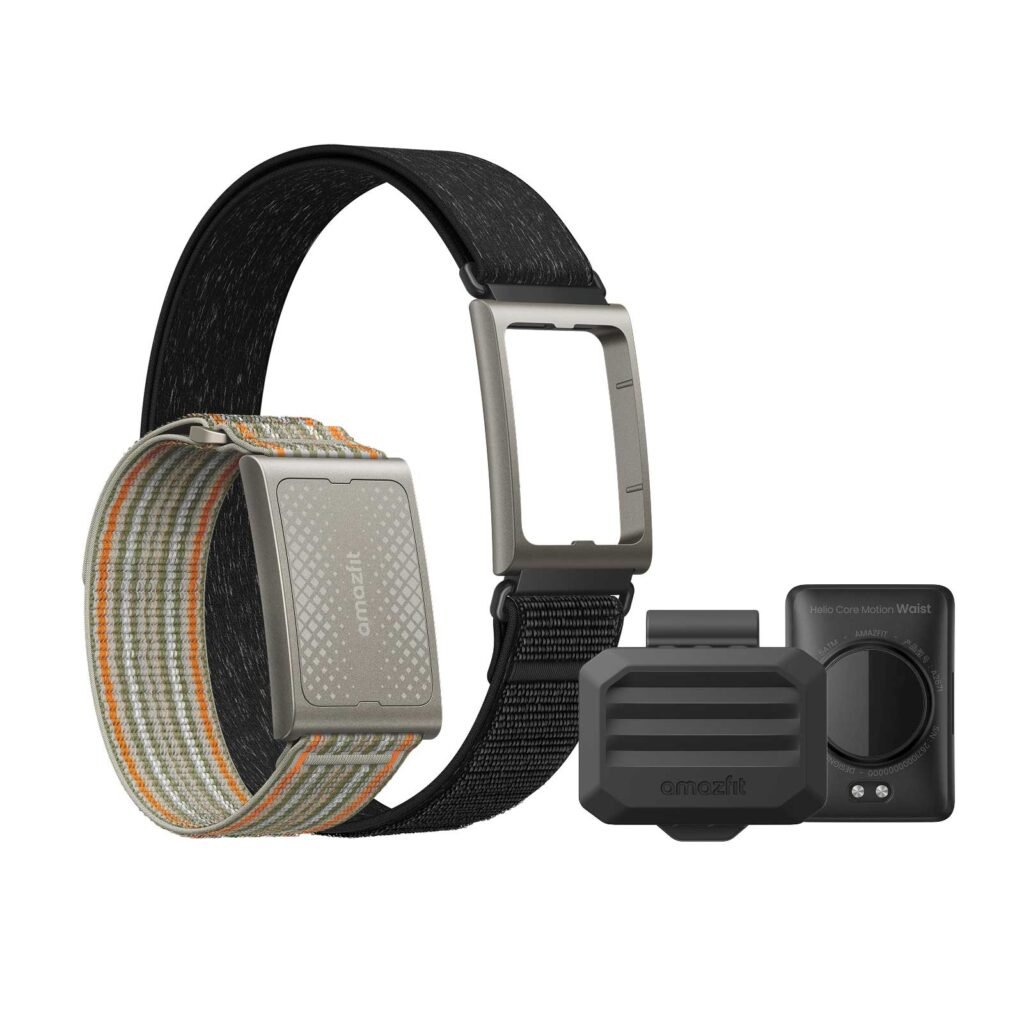
Post-workout, the Zepp App brings movement, muscle load, and cardio effort together into a structured performance overview and breaks it down by individual station, across all eight HYROX competition movements: SkiErg, sled push, sled pull, burpee broad jump, rowing, farmer’s carry, sandbag lunges, and wall balls.
The waist module works by cross-referencing movement signatures against a trained library, applying a coefficient based on whether the movement is whole-body or isolated, and using speed and acceleration data to estimate mechanical work. Because HYROX station weights are fixed by competition rules, the system can remove the one variable sensors can’t otherwise measure, giving you per-station muscular load data that no mainstream consumer wearable currently provides autonomously.
Very cool, and like we said, puts Amazfit at the front of the class with hybrid athletes.
Helio Strap vs. Helio Strap Pro: What Actually Changed
For anyone trying to decide which one belongs on their arm, let’s break it down.
At the sensor level, the core wrist module is essentially identical between generations.
Both carry the BioTracker 6.0 optical PPG sensor, 232 mAh battery, magnetic charging, Bluetooth 5.2, and 5 ATM water resistance. Dimensions are within a fraction of a millimeter of each other. The wristband is the same 22mm nylon strap.
What’s different is the waist module. That 9-axis IMU when combined with the arm sensor and a compatible watch, generates a motion signature for each exercise and estimates muscular load per station.
The Pro also introduces the HybridCharge Index, which indicates current training capacity on a 0-to-100 scale. Both modules on the Pro also feature 24-hour heart rate monitoring, SpO2, stress tracking, and sleep tracking — with the Core Motion HR adding a temperature sensor.
Battery life? The Core Motion HR is rated up to 11 days, while the Core Motion Waist is claimed to last 44 days on a single charge.
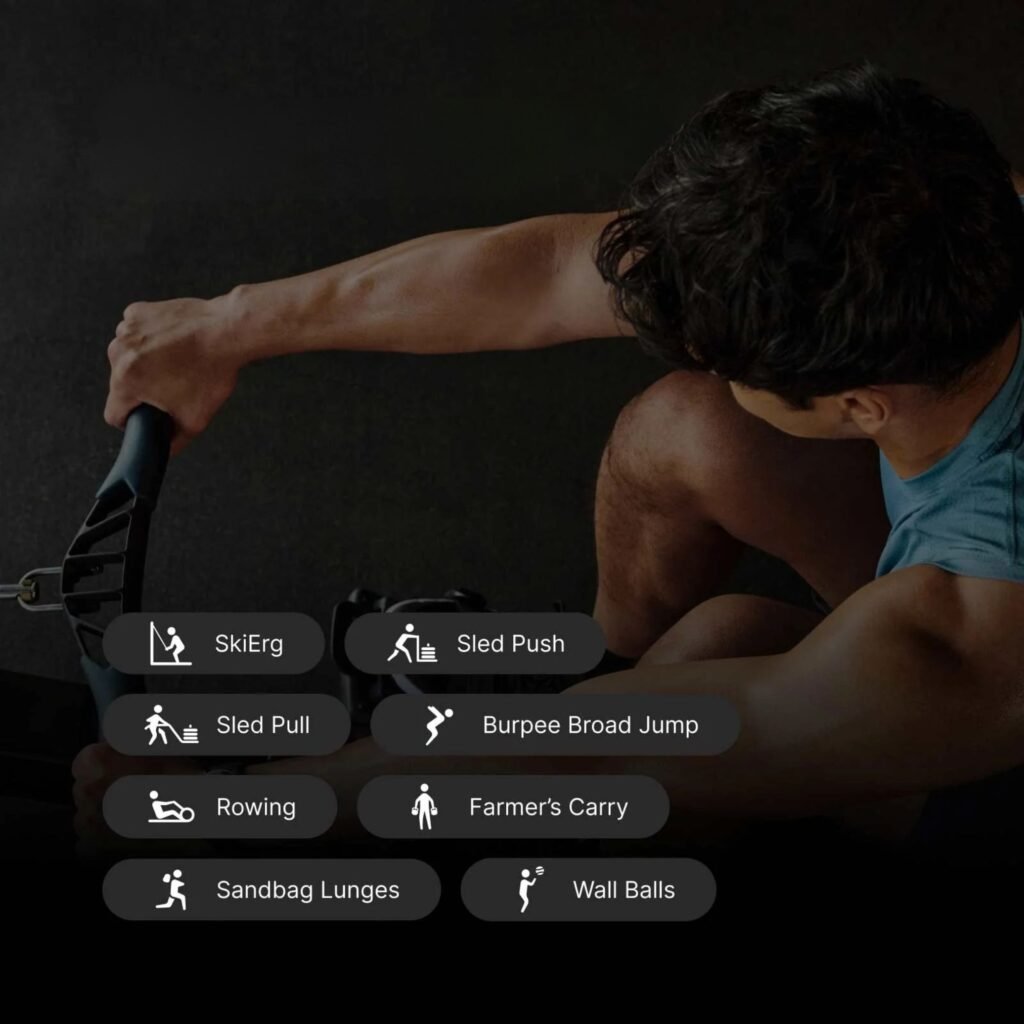
The full package includes both sensors, the Helio Pro Clip, a wristband, an armband, and a magnetic charging head. Everything you need is included in the box.
Who Should Buy It?
If you race HYROX or are actively training for one and love individualized data, this is a no-brainer purchase.
The subscription-free positioning is Amazfit’s most commercially distinctive feature in this category.
They’re different but Whoop 5.0 charges $12 to $30 per month depending on the tier — meaning Whoop costs more than the Helio Strap Pro within six to seventeen months of ownership.
Real-time heart rate data can also be shared over Bluetooth with compatible Amazfit smartwatches, third-party sports watches, cycling computers, fitness equipment, and training apps — giving athletes the flexibility to train within whatever ecosystem already works for them.
At launch, the full system works only with the Amazfit Balance 3 and Balance Ultra with support for additional watches is confirmed as coming, no timeline has been given. So, if you’re not already in the Amazfit ecosystem, factor that in.
And if you’re a pure endurance athlete — running, cycling, triathlon — the original Helio Strap at $99.99 still covers your bases. It tracks heart rate every second through a secure upper-arm design built to reduce movement interference during high-intensity training, broadcasts live heart rate to compatible devices, and delivers continuous HRV, sleep, blood oxygen, and recovery insight through the Zepp App — no subscription required.
The Pro is for athletes whose training doesn’t fit neatly inside one discipline.
Our Thoughts
Amazfit isn’t trying to compete with your GPS watch or even its own. They’re building around the workouts and events your watch can’t handle. The Helio Strap Pro fills that gap in a way nothing else at this price point currently does.
For hybrid athletes who want serious training data without an ongoing bill, the math here is hard to argue with.
You can purchase today at Amazfit.com and it is FSA and HSA eligible.
Leave a Reply
You must be logged in to post a comment.