

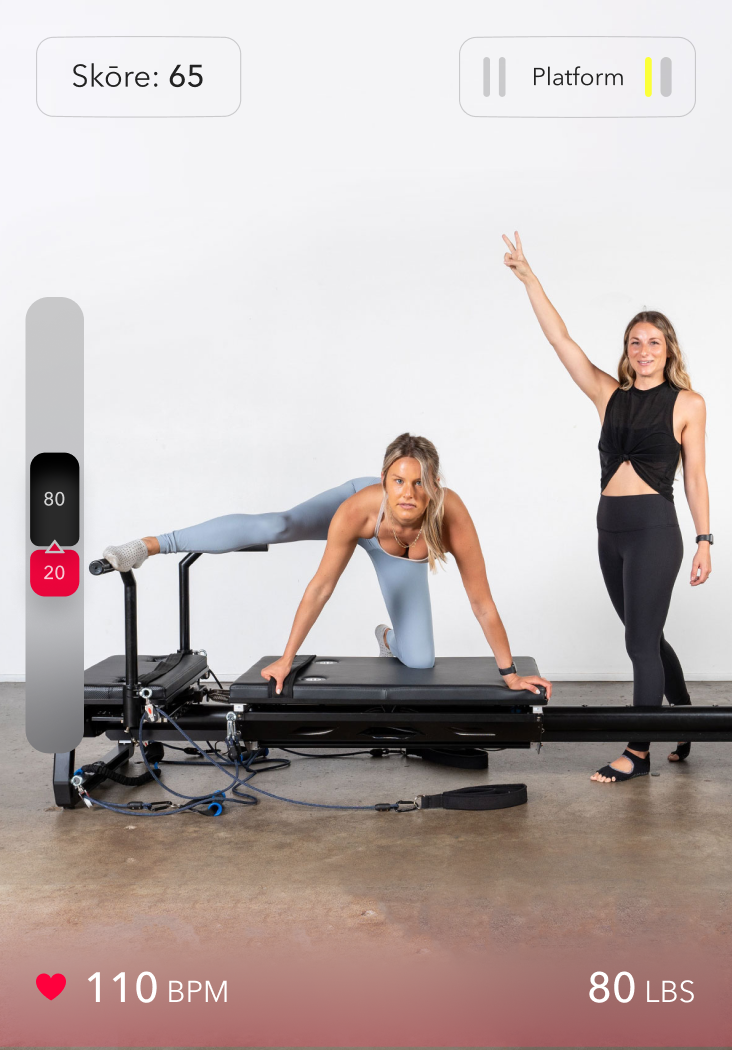
The company announced today that it has acquired Skōp, a California-designed connected Pilates reformer that was preselling at $7,995 a unit. Rather than rolling the Skōp machine out as a Peloton-branded product, Peloton is framing the deal as a technology and talent acquisition with the underlying IP and expertise folding into its R&D team, not a new SKU dropping in the holiday lineup.
CEO Peter Stern was blunt about the strategic logic. “Pilates is a category ripe for the same kind of experiential reinvention we brought to cardio,” he said, adding that Skōp “adds differentiated technology and specialized knowledge” to the team.
So what exactly did Peloton buy?
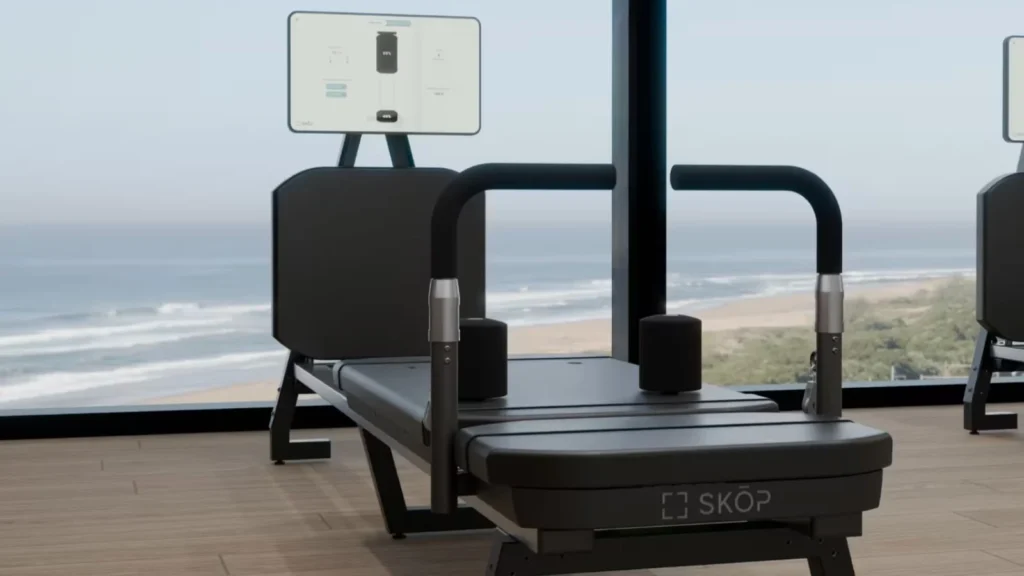
Skōp was founded in 2019 by a sports medicine and pre-and postpartum rehabilitation doctor, and billed itself as the world’s first connected reformer to measure real-time data. Specifically things like weight distribution across hands and feet, pace of movement, spring tension, range of motion, and rep counts. The reformer also included a physiotherapy mode that scored movement against preset clinical benchmarks, which had been pitched to hotels, commercial studios, and physical therapy settings. As of this week, Skōp’s website has gone dark.
The form-tracking technology is key, here. Peloton has been building in this direction for years when it introduced camera-based movement and rep tracking with the Peloton Guide in 2022 and expanded AI tracking through Peloton IQ on its Cross Training+ devices last fall.
Skōp’s sensor-based approach to Pilates form sits squarely in that roadmap.
Perfect Timing?
The timing isn’t an accident either. Peloton reported that member engagement with its Pilates content rose 48% year-over-year in Q3, and recently elevated Pilates to a top-level modality in its app. The SFIA pegged Pilates as the fastest-growing fitness modality in the U.S., with participation up nearly 40% in recent years.
Google data shows “Pilates” is now the third most-searched fitness term in the country, behind only running and yoga. Peloton is not so much on it’s heels with this one, but trying to stay ahead.
Acquisitions & Layoffs
This is Peloton’s second acquisition in recent months, following its pickup of breathwork app Breathwrk in October. On its most recent earnings call, Stern signaled the company had meaningful cash on its balance sheet and was open to targeted deals, noting that Peloton’s position as one of the few public companies in connected fitness makes it a natural landing spot for startups looking for an exit.
Which brings us back to the February layoffs. Those cuts hit approximately 11% of the company’s workforce — primarily engineering teams focused on technology and enterprise initiatives, as part of an effort to “create efficiencies that enable continued investment in areas that support return to growth.” In plain English, this screams they wanted to trim the org chart, free up capital, then redeploy it. The Skōp acquisition reads like act two of that plan.
Our Thoughts
Whether a connected Pilates reformer eventually emerges from Peloton’s R&D pipeline is something they only know. Stern has teased new strength products before, and with roughly two million Peloton members already engaging with strength training each quarter, there’s a ready-made audience if and when something ships.
For now, Peloton isn’t saying what a Pilates reformer with Peloton’s software layer would look like. Only that they’re working on it.
Leave a Reply
You must be logged in to post a comment.