


Every year, the footwear industry produces roughly 24 billion pairs of shoes. Roughly 90% of them end up in landfills at some point. Most are built on plastic-based foam midsoles like PU and EVA that perform well while you’re running in them and then take hundreds of years to break down, shedding microplastics into the environment along the way.
It’s a problem the industry has largely ignored until now.
But KEEN isn’t ignoring it; instead integrating a sustainable solution called EcoEnd to help address a huge footwear waste problem.
What EcoEnd Is
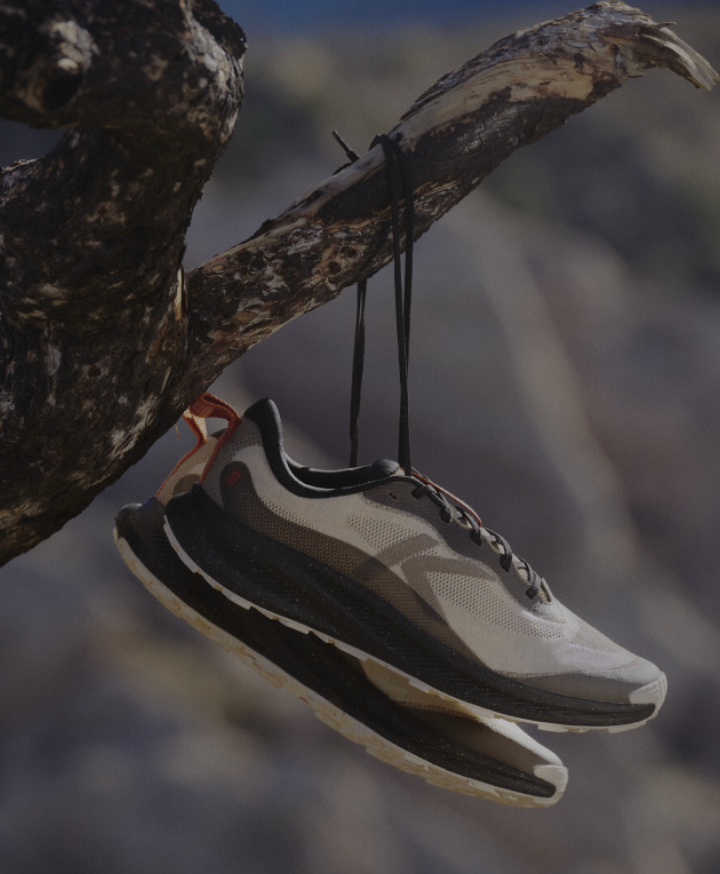
EcoEnd is a blend of organic compounds integrated directly into KEEN’s performance foam midsoles. The technology is designed to activate after disposal, specifically in the conditions found in active landfills by enabling microbes to naturally consume the plastic through organic biodegradation. KEEN says that during a shoe’s useful life, EcoEnd stays dormant and there are no performance trade-offs.
And internal numbers back this up with lab testing under ASTM D5511 standards shows EcoEnd-enhanced midsole foam biodegrades at a rate of 9.6% after just 30 days in a biologically active landfill. That compresses a decomposition timeline from several centuries down to just several years, which is massive. Huge. Incredible.
Why This Matters More Than Most “Green Initiatives”
We’ve been collecting used running shoes and shipping them off for recycling for years. When shoes are lasting 300 miles or less, which is sadly increasingly common in an era of soft, stacked midsoles engineered for feel over longevity, the math on landfill volume gets ugly fast. Sure, recycling programs help but they require consumer action, infrastructure, and brand commitment to actually move product through the chain. And to date, brands are more money driven than sustainable. Imagine that.
EcoEnd doesn’t require any of that from the runner. Simply buy the shoe, run in it, and when it’s done, the material handles its own exit allowing you to actually feel good about giving up another pair of dead shoes to the landfill.
KEEN has also made a decision that deserves direct acknowledgment.
They’re not keeping EcoEnd proprietary.
The brand is opening their EcoEnd findings to any brand that wants them, because, as Ann Radil, who leads corporate sustainability at KEEN, put it, “the climate doesn’t benefit from competitive advantage.” In an industry where sustainability announcements often function as marketing, more need to be like KEEN.
KEEN Walks the Walk

EcoEnd fits into a longer sustainability arc at KEEN. The brand has been PFAS-free since 2018. Their KEEN.FUSION direct-inject construction bonds uppers to soles through heat instead of harmful adhesives. The recently launched RE.KEEN resale program that extends product life before disposal is even a question.
The KEEN philosophy is clear: make shoes last as long as possible, and when they can’t last anymore, make sure the materials don’t outlive the planet’s ability to process them.
Beginning in 2026, EcoEnd rolls out across all KEEN trail running styles — debuting first in the new Wander trail shoe that just launched; with plans to expand into additional product categories over time.
The Bottom Line
As someone who receives a lot of shoes, I’m a part of the problem and it’s not beyond me. The footwear industry has a waste problem and is comfortable ignoring it. KEEN is putting a quantifiable solution directly into the midsole and then handing the blueprint to anyone willing to use jump in.
We hope others do.
Leave a Reply
You must be logged in to post a comment.