

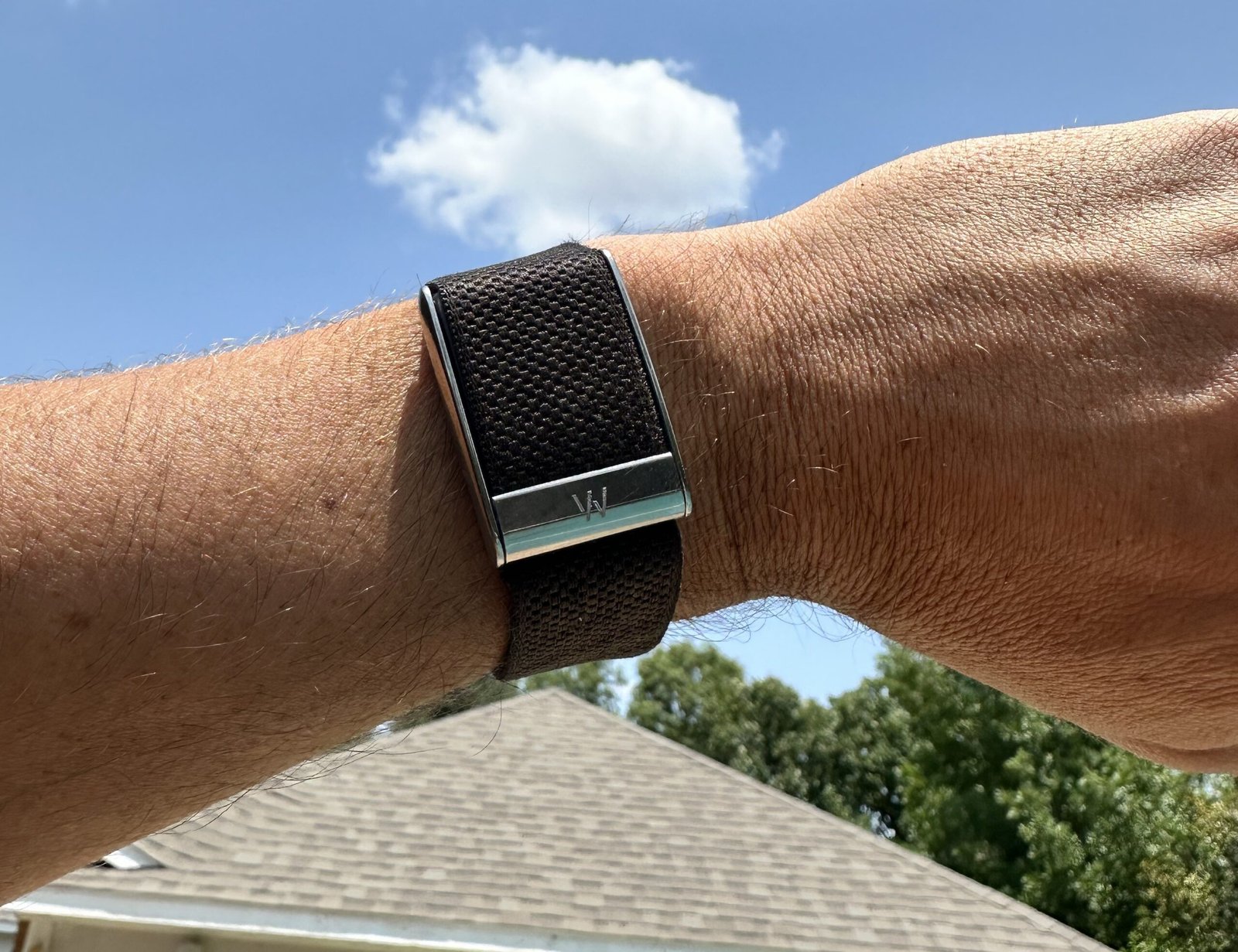
I’ve got a deadly secret. High blood pressure runs deep in my family and is always a quiet concern. Why the Whoop MG gives me peace of mind and may help you too!
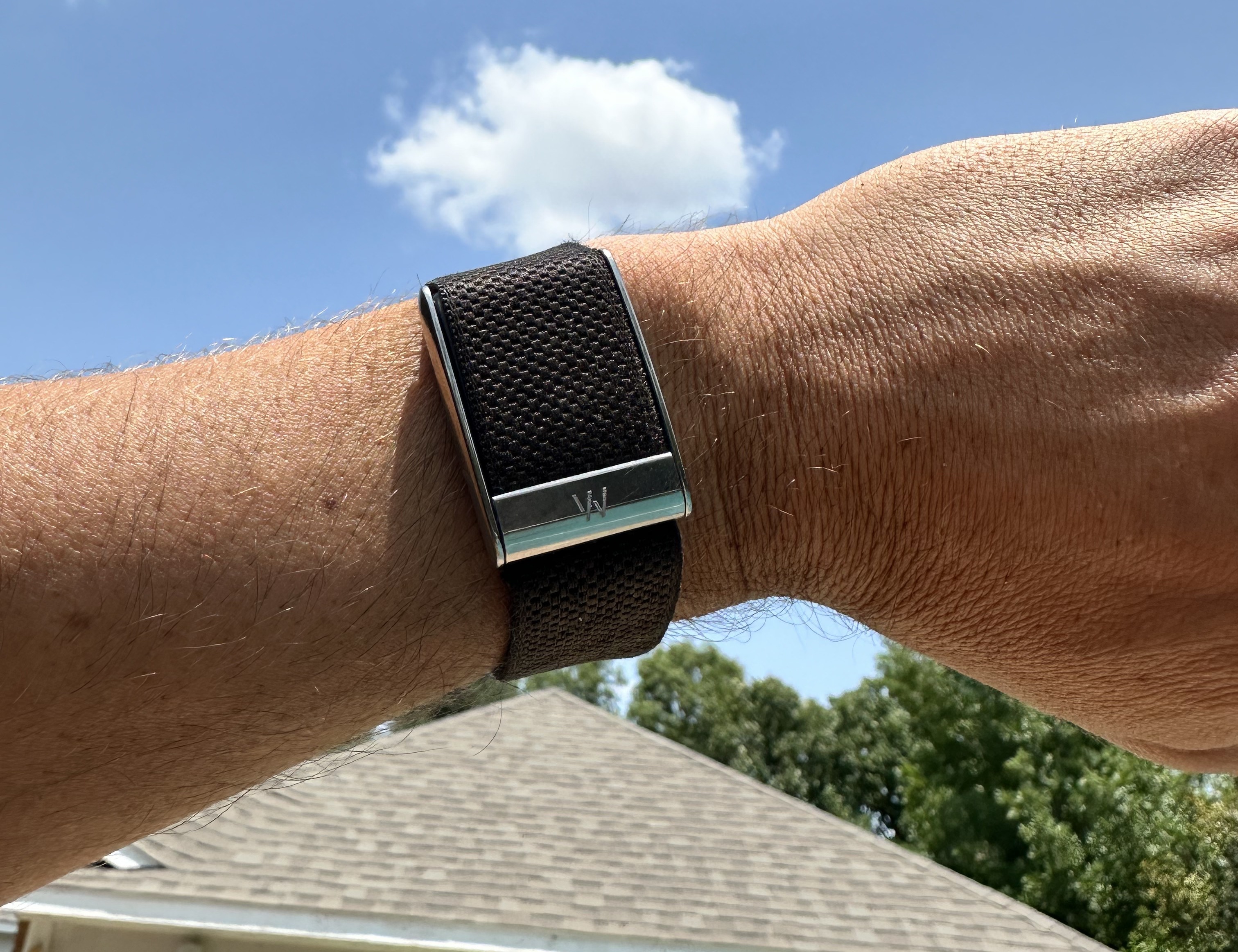
I didn’t want to like the Whoop MG.
Really. I’ve loved my Garmin Fenix 6X for years. I like having data front and center—heart rate, pace, training status—all at a glance.
So when I strapped on a new “fitness tracker” that showed nothing on my wrist and required an app to do…well…anything, I was skeptical.
But two months in, I haven’t taken it off.
What changed? I misunderstood Whoop because the company misled me.
From my POV, all I ever saw was sports stars like Patrick Mahomes and Ronaldo pushing Whoop, when all I really needed to see was everyday people like you and I.
Whoop isn’t trying to be Garmin.
It’s not about split times or turn-by-turn directions. It’s about long-term health, recovery, and understanding how your body actually responds to the stress you’re putting it through—inside and outside—of training.
Now that I’m 43, I care about those things a lot more than I used to.
Whoop vs. Garmin: Don’t Choose—use both-just not on the same wrist (nerd)
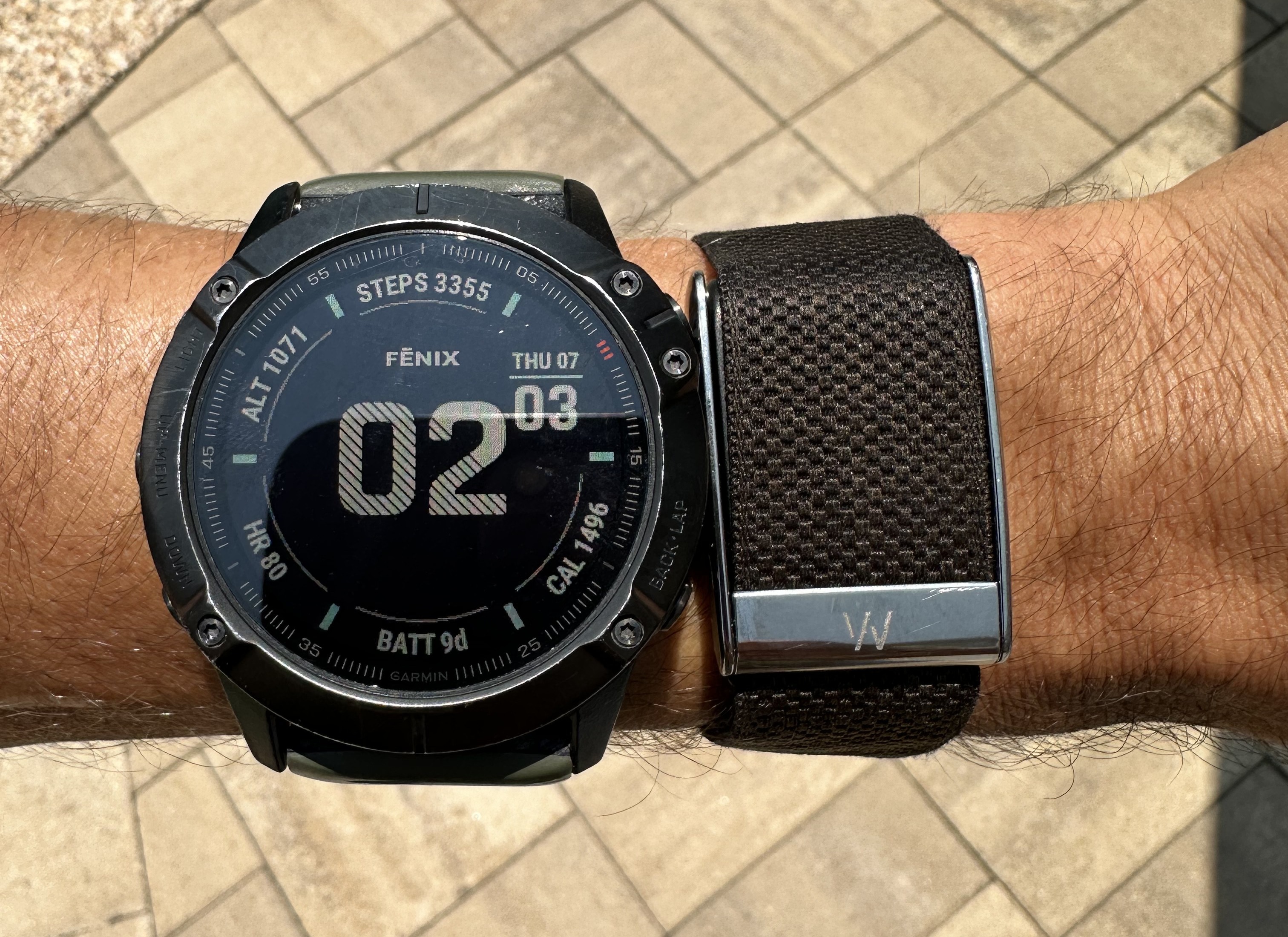
To be clear, Garmin is still the king of training. You get GPS, immediate feedback, workout structure, maps, and versatility. But Whoop offers something different: deep insight into how your body adapts and recovers.
If you’re chasing endurance goals—be it Ironman, gravel, or consecutive early morning workouts—Whoop becomes your internal coach.
Garmin says, “This is your pace.”
Whoop says, “This is what your body is doing with those miles.”
Here’s What’s Awesome
‘Forget it’s there’ comfort. Like a second skin, the WHOOP MG never feels like a tech device.
24/7 recovery and strain data that actually influences your behavior. It’s not just info for info’s sake.
Strain Coach + Recovery Score = smarter workouts. Garmin gives you what you did—Whoop tells you what you should do next.
Whoop Age is low-key brilliant. (More on this below.)
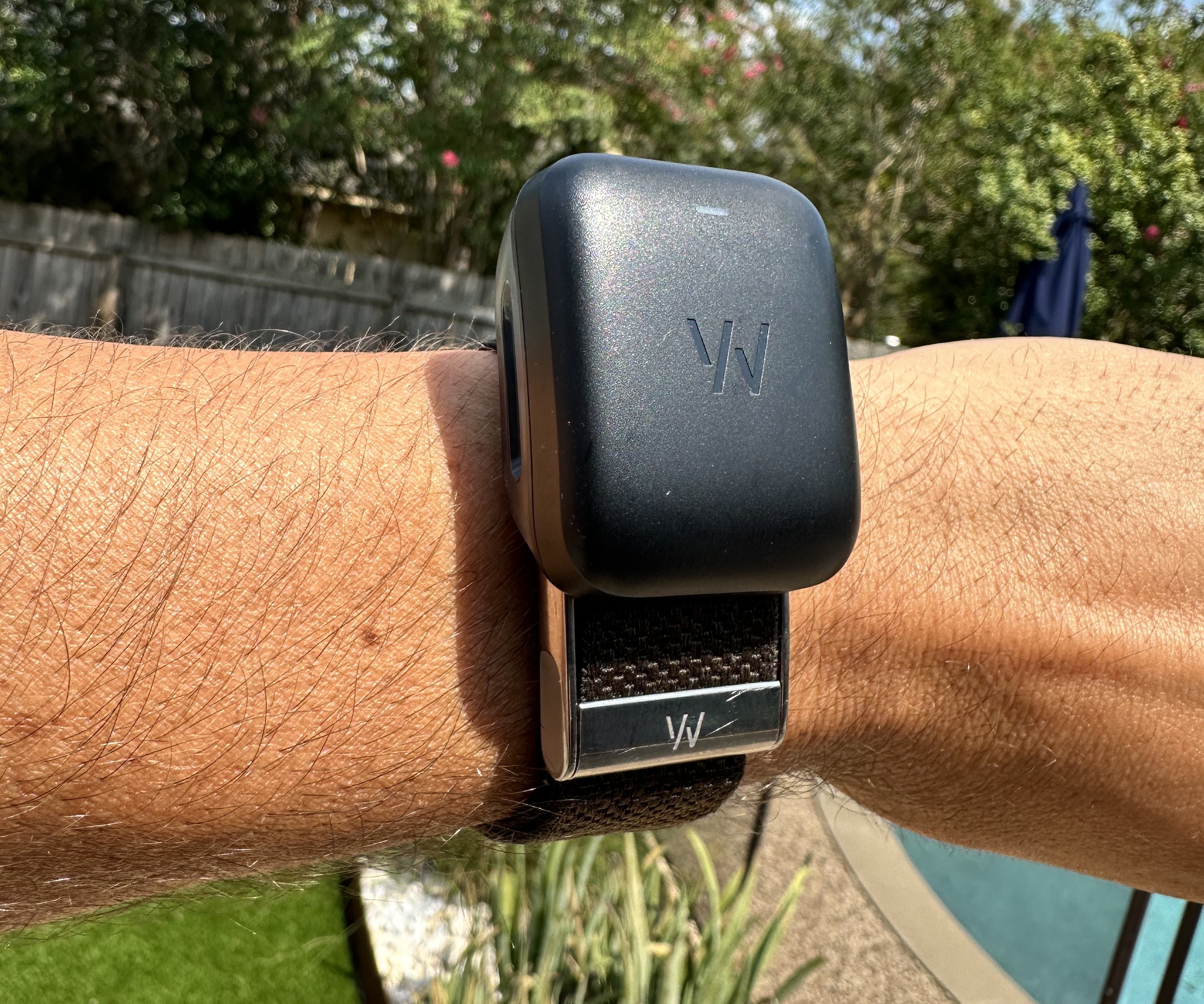
The Charger. Best (wireless) charger in the game. Slide-on over your Whoop and continue on with your day. Super easy! Take note Garmin.
Here’s What Stinks
The included band is lame: Maybe it’s the sun, chlorine, or sweat but the black band it comes with is already discolored, not to mention, totally annoying when I use it during swim workouts. It sucks that you have to pay more for other band options and use the Whoop hydrosleeve “condom” to swim.
No on-device display: You have to use the app to see anything. And you have to keep the app open 24/7 to get the most complete and updated info. That means there is potential for battery drain too!
No GPS: This will not replace your Garmin or Wahoo.
Subscription pricing: $359/year for everything I highlight below. That is expensive! Imagine getting an Apple Watch and then paying nearly $400 a year, every year to keep it working.
FDA Warning: The Blood Pressure Insights feature is under scrutiny. WHOOP calls it a wellness tool; the FDA says it’s an unapproved medical device. More on that below!
MG* with an Asterisk?
The “MG” in Whoop MG stands for Medical Grade—and it’s not just a buzzword. It reflects the device’s push into more clinical territory. Here’s what it includes:
✅ FDA-cleared ECG sensor: Detects normal sinus rhythm and can flag possible atrial fibrillation, keeping you informed if you’re about to have a heart attack!
📈 Blood Pressure Insights (Beta): Uses calibration to estimate your systolic and diastolic readings over time.
📤 Heart health reporting: Exportable ECG reports to share with your doctor so they can get a complete understanding of your heart health, NOT just an in office moment-in-time.
These are huge value-adds for anyone over 40 trying to stay ahead of their health—not just react to problems down the road. Whoop actually helps you take a peak at the road ahead!
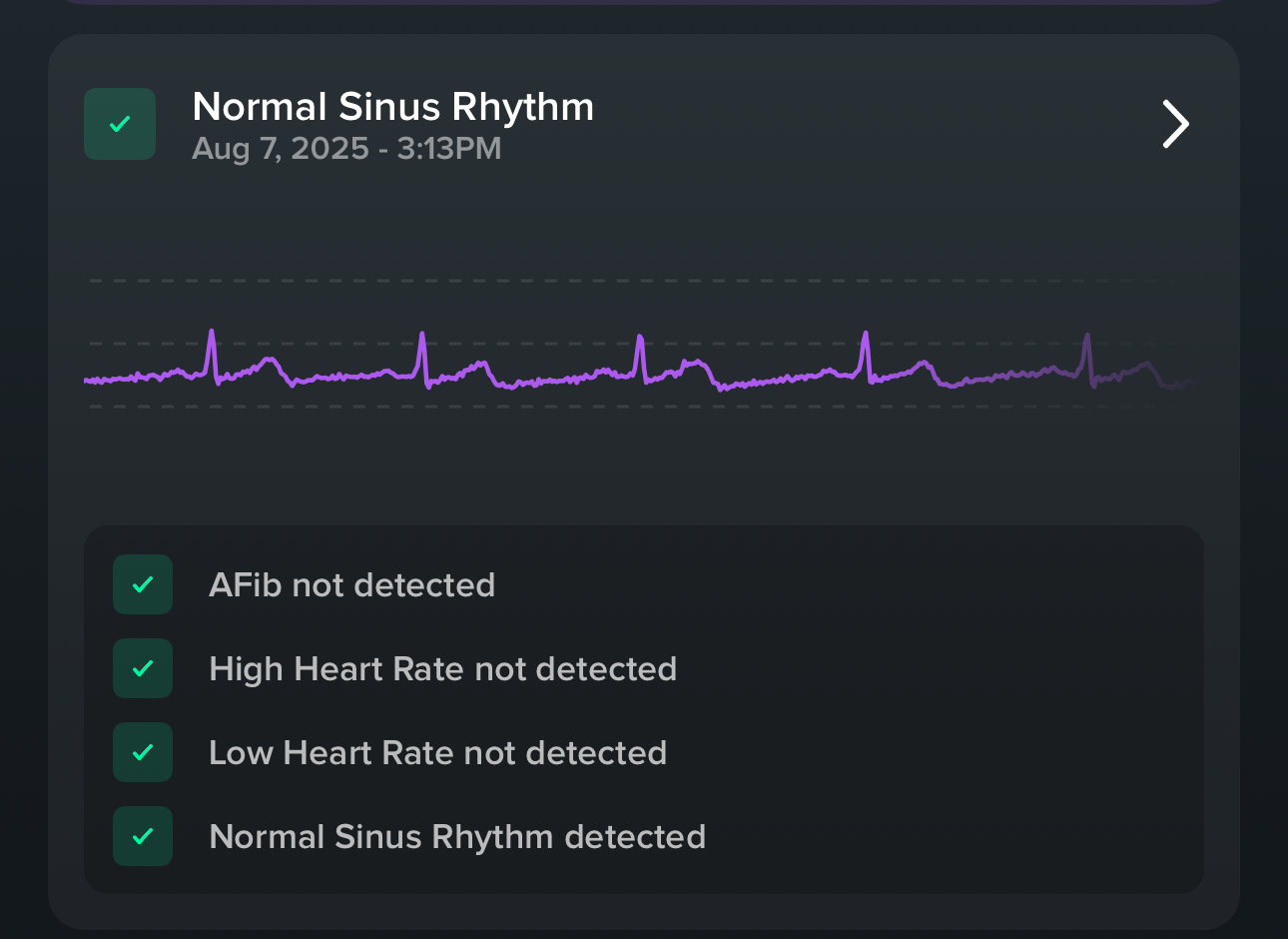
*Important asterisk:
That said, there are limitations.
While ECG is FDA-cleared, the blood pressure “insights” are explicitly categorized as wellness tools—not medical diagnostic devices. That’s something both sides have drawn a line in the sand on.
The FDA recently flagged Whoop for offering blood pressure data without full certification [link] which Whoops’ Founder/CEO took to LinkedIn to call out the hypocrisy.

With all that said, I find the context interesting but again, for me, I’ve tested many smartwatches which claim ECG and blood pressure features, and Whoop does it best. So FDA or not, I’m using both and saving my information to share with my doctor.
Why All of This Matters to Me!
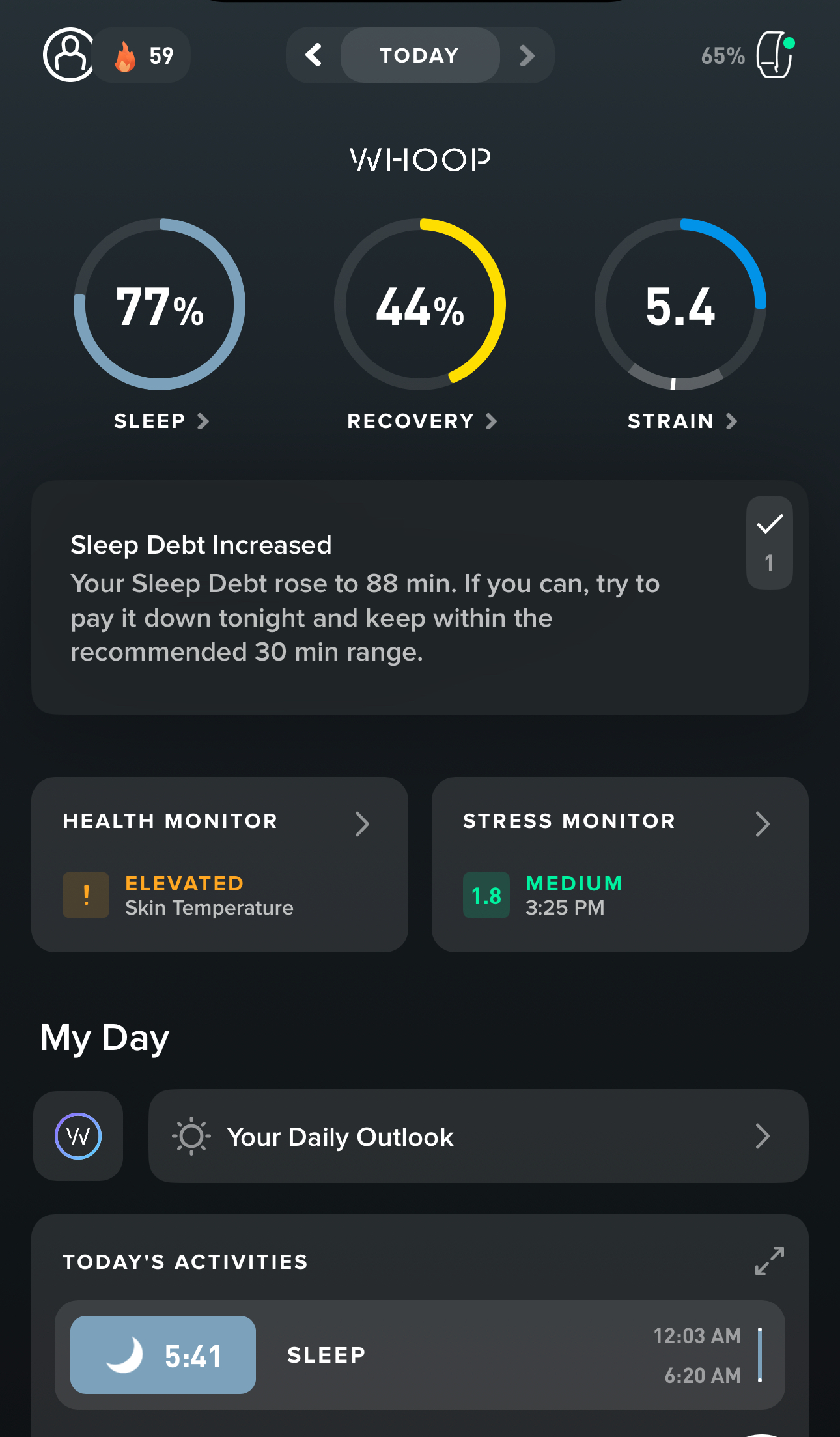
When I was in my 20s, I felt bulletproof. Now that I’m approaching my mid-40s, I no longer feel quite so invincible. I think about the future now, a lot. Call it evolution: I have kids, and a wife, it’s not all about just me anymore. My wellbeing impacts more than just me, myself, and I these days. I also have a family history of male heart disease, which means that I need to take care of myself. Not just push myself through everyday fitness or even endurance sports, but more long term, too.
This goes even deeper too. My fairly healthy uncle died of a heart attack in his 50’s. Following his brothers death, my dad also changed his life to combat heart disease because he was warned by his doctors.
I chalked up my high blood pressure in my twenties to a stressful job and a steady diet of Subway $5 footlongs. But my doctor saw it differently. He handed me a prescription and said I’d need it for life. That hit hard. I wasn’t ready to sign up for lifelong meds at 25. So I changed my life instead—slowly, stubbornly, and with more than a few setbacks. I’ve kept my numbers in check, but that diagnosis still kind of haunts me (kind of like the taste of one too many fast food subs).
Which brings me to this year.
One of my closest friends—slightly younger but same family history of heart disease—just had double bypass surgery at 41. Forty-one! He’s married, has a toddler, and his second baby was literally born yesterday. That one hit me like a giant blinking sign from the universe. I keep telling myself I’m healthy. But am I really? How sure am I of that?
So, without going to the doctor every other day (because who has time), I wanted to know what services or devices could truly help me—and people like my good friend and family members—out here?
Back to Blood Pressure Tracking … Stat!
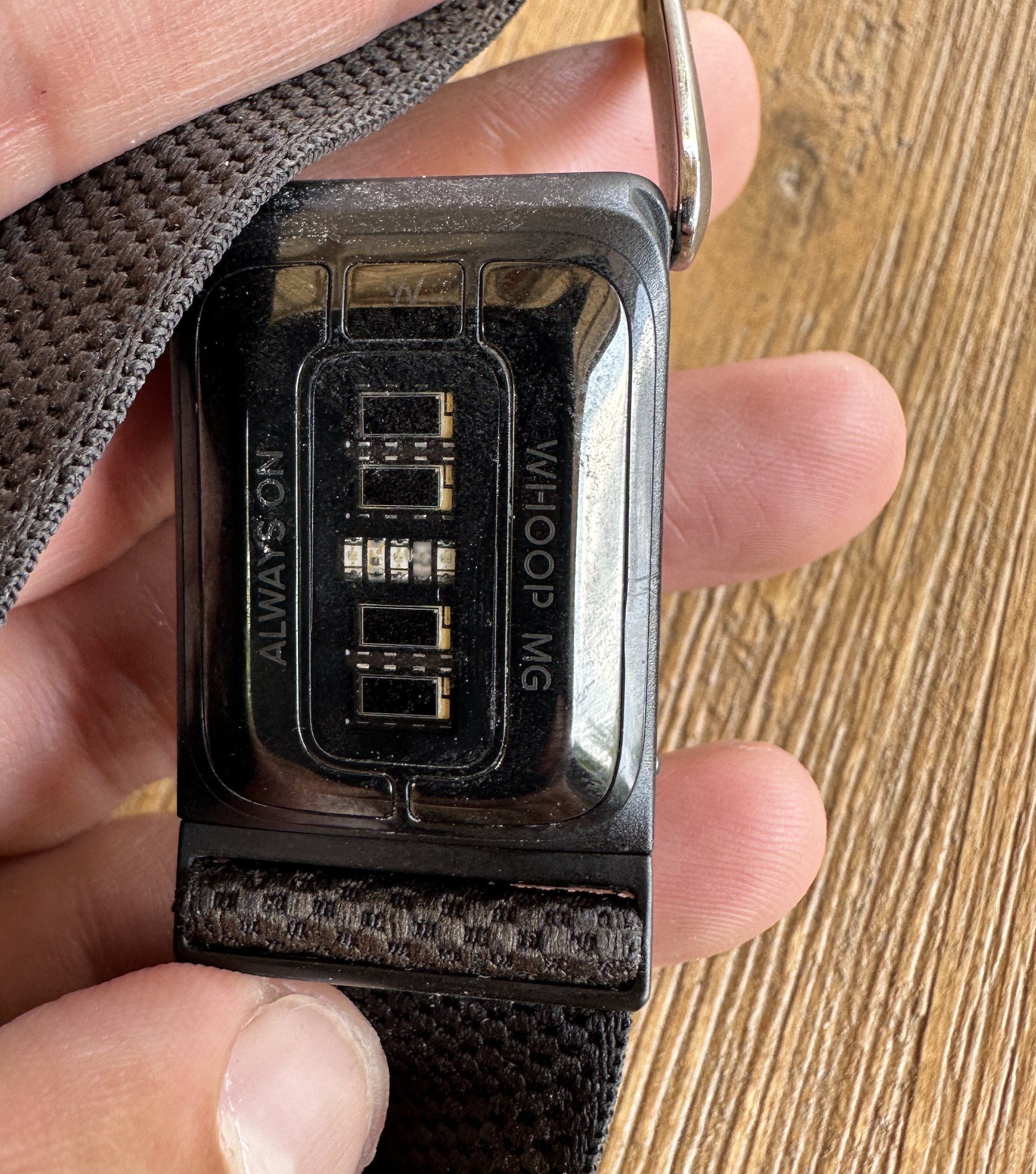
I love that I can now track my blood pressure weekly—without needing to bust out a cuff every time. The Whoop MG lets me monitor trends over time and even export the data to share with my doctor.
This is incredibly reassuring. I’ve already flagged a few days where my systolic readings jumped after poor sleep or high stress—and that awareness helps me course-correct before it snowballs. It’s not a medical device yet*, but for someone like me, with a family history of heart issues, it’s a massive upgrade in health awareness.
The Feature That Convinced Me: Whoop Age
And while Blood Pressure alone wouldn’t convince me to spend nearly $400 a year on the Whoop MG, let’s talk about the one feature that totally sucked me in: Whoop Age.
Whoop Age is Whoop’s way of turning a dense collection of biometrics—your heart rate variability (HRV), resting heart rate (RHR), recovery trends, sleep efficiency, and cardiovascular fitness—into one simple but powerful number: how old your body actually feels compared to how many candles are on your birthday cake.
I’m 43 chronologically, but if I’m doing all the things I should be doing—training consistently, sleeping like a pro, and recovering well—my Whoop Age theoretically should be/could be younger. And it is.
My Whoop Age—36.8!
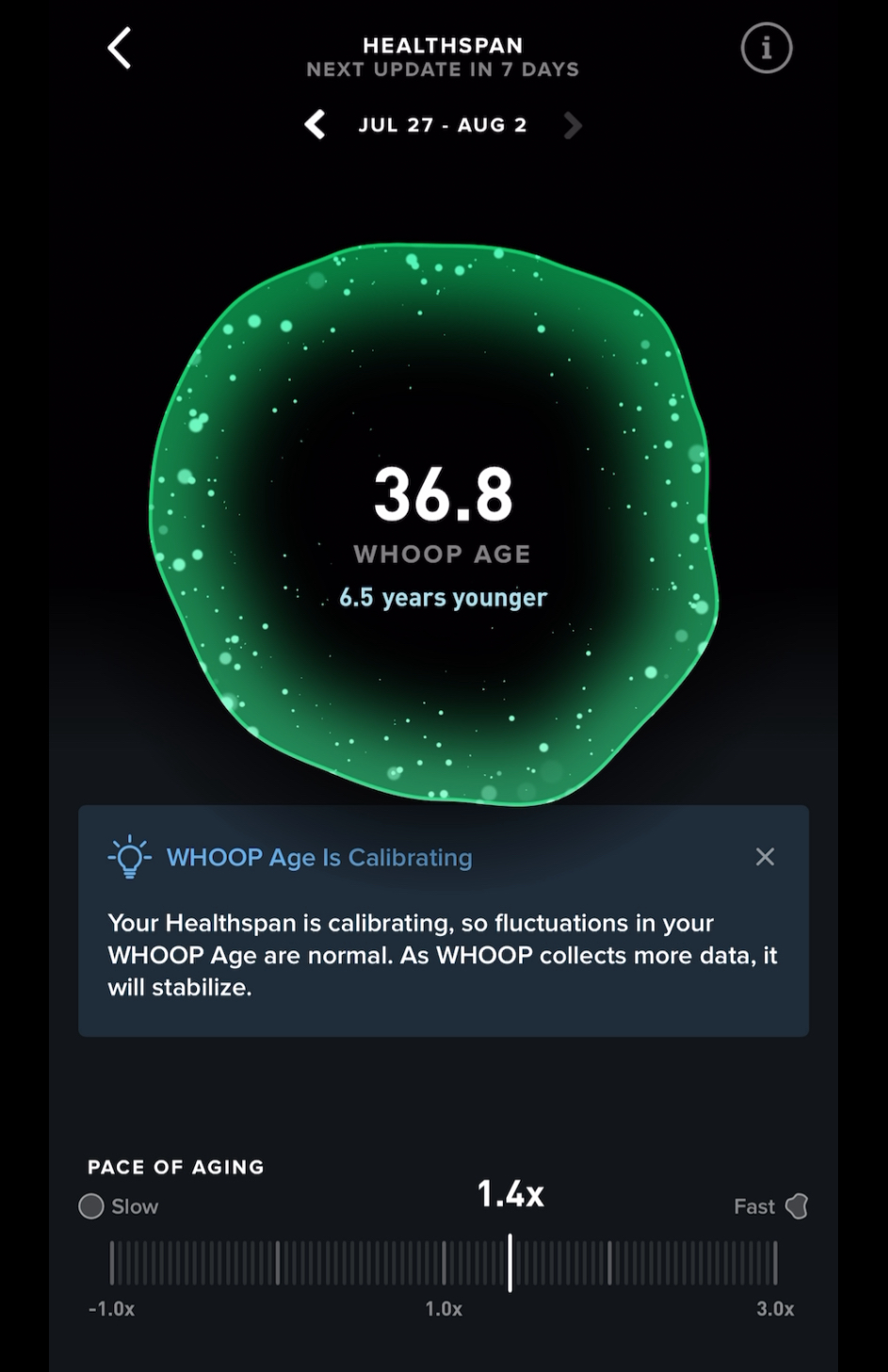
That number isn’t arbitrary—it’s a reflection of how my physiological systems perform benchmarked against population-level data.
On the surface, that might seem like a gimmick, but it felt really damn good to read that all the effort I’ve put in to becoming healthier is working because I really do feel a hell of a lot younger than my chronological age.
I’m a dad, I train six days a week, get up early, and I push hard. Garmin gives me the stats, but Whoop Age feels like validation for all the invisible work, including the nutrition tweaks, the early nights, the skipped drinks. It’s a reminder that my training isn’t only building fitness, but turning back the clock on the inevitable as well.
For any athlete in their 40s and beyond, this is the stat you didn’t know you needed. It reinforces consistency, not volume. It reminds you that recovery is training. And it shows your body’s story over time—not just your race splits.
Final Thoughts: Why I Came Around on Whoop
At 43, chasing endurance events also means preserving one’s body and mental edge. I’ve ridden and run through enough fatigue to know that going hard without feedback is reckless. Whoop MG taught me more about late-night sleep hygiene, recovery rhythms, and readiness than months of mileage ever could.
Yes, I still wear my Garmin for pace and map data but it stops there. Yes, Whoop requires a phone. And yes, it is a costly subscription. But after two months of wearing both? I’d choose Whoop every single night for sleep and recovery insight—and let Garmin handle the speed. Together they make me smarter, faster, and healthier.
Would I recommend it?
If you’re like me and starting to think about not only your immediate health but your long term well-being, then yes, Whoop MG is a legit step forward—and for the first time in years, I feel like a wearable is giving me something deeper than steps or split times.
Want to swap notes on Whoop or Garmin? Leave a comment
Leave a Reply
You must be logged in to post a comment.