

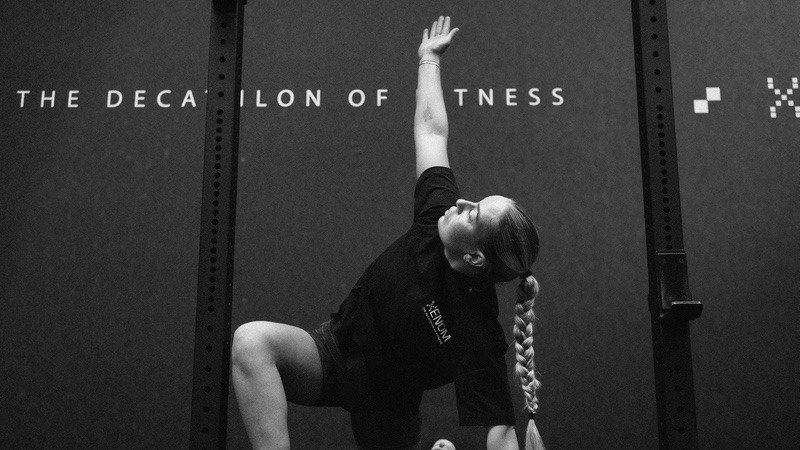
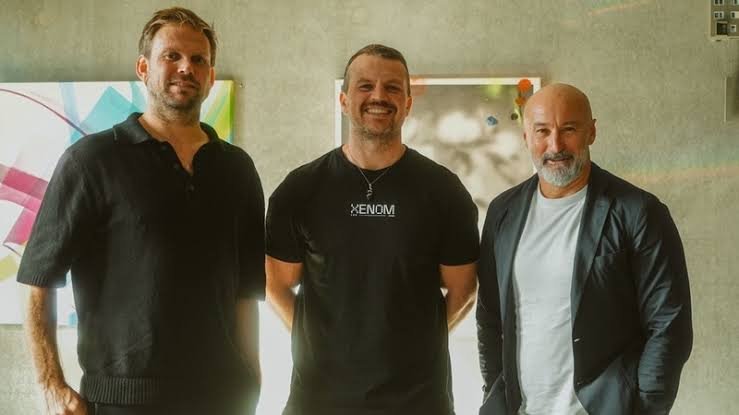
Hyrox co-founders Christian Toetzke and Moritz Fürste are investing in Xenom and joining its board. The two competitions are also forming a strategic partnership covering marketing, event activation and education.
It looks like two growing sports helping each other, but we’ll seen this before where one group is in the beginning stages of drawing the map for the whole category.
What’s Happening
Xenom is the “decathlon of fitness,” ten events over two days testing strength, gymnastics, endurance and metabolic conditioning. It debuted in Dallas in June and ran London in August, with Miami and Malaga next and a full international season planned for 2027.
If you’re wondering how it differs from Hyrox, Xenom is built for the CrossFit crowd, while Hyrox is built for the gym-goer. Toetzke and Fürste will sit on Xenom’s board beside Wndr, the Katzenberg-led firm that put $15 million of seed money into it.
This lands weeks after Hyrox itself changed hands. A consortium led by L Catterton, with the founders and Wndr, bought Infront’s majority stake, with reports putting the value around $700 million. The numbers are all over the map, but in 2025 the brand drew more than 1.4 million participants and about $130 million in revenue. Some outlets call it the founders regaining control and others call it a PE acquisition. Either way, new money is in the room and the Olympics are on the table.
It’s big business, and it’s only getting hotter.
Hyrox is Stacking Partners
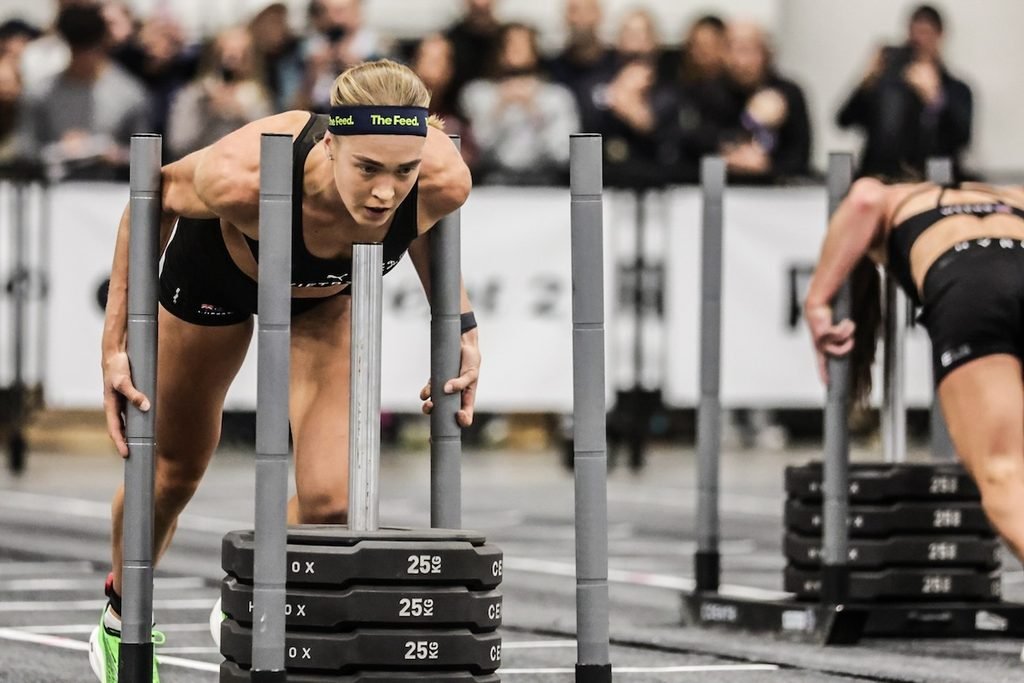
Amazon, Amazfit and Puma are the biggest names, but there have been plenty of smaller partners throughout 2026 too. Les Mills became Hyrox’s official group training partner in April, and Virgin Active signed a multi-year global deal the same month. The Health & Fitness Association is tying a Hyrox race to its Las Vegas trade show.
They have brands, gyms, training programs and industry events, all topped with a giant stake in the top of the mountain.
Two Playbooks, One Move
We’ve watched deep pockets consolidate endurance sports twice, and Hyrox is borrowing from both.
The first is Ironman. It’s owned by Advance, which paid $730 million in 2020. When the Challenge Family balked at Ironman taking over some of its races, those events switched to the Ironman brand with no fight. The result is a virtual monopoly in long-distance racing. Entry fees have climbed roughly 70% over four or five years, outpacing inflation. Even Ironman’s own survey found 28% of current Ironman and 70.3 athletes said cost was a barrier. The lesson is that leverage only exists when there’s somewhere else to go.
The second is Life Time. And it’s a bit quieter but we’ve noticed what they’re doing too.
The second is Life Time. We’ve noticed what it’s doing too. Life Time has the capital and the club footprint, and it keeps buying beloved races around the country. It now owns 30 events, including the Miami Marathon, Unbound Gravel and the Leadville Race Series. The pitch is that Life Time comes in, preserves the legacy and elevates the event, and that might be true. Life Time is a public company, which is arguably better than a private equity firm coming in and gutting things. But Hyrox now has a PE firm in its ownership group, so that comfort only goes so far.
Life Time’s own events pages also show members getting a registration window before everyone else. And Life Time has pushed into hybrid fitness with LT Games, which puts it in the same lane as Hyrox and Xenom.
Life Time deserves credit for putting real money into its events, and plenty of owner-operators are good stewards. But the pattern is the same one Ironman ran. Money buys the races people love, the owner controls the calendar, the rules and the access, and independent organizers get fewer places to land.
Hyrox isn’t buying small races. It’s buying position. Ironman and Life Time own the finish line, while Hyrox is working to own the whole pipeline to it.
Is Hyrox Building a Monopoly?

We don’t want to sound all doom and gloom, and no, we don’t think they’re building a monopoly yet.
Xenom is a separate company run by founder Keith Barlow, and this is a minority investment plus a partnership, not a takeover. Hyrox hasn’t swallowed a rival’s races. There’s still room to race elsewhere.
But the architecture is familiar. Hyrox owns the format, the rules, the licensing and the qualifying road to Worlds. Now it has a hand on the one event positioned to be its biggest alternative. You don’t buy into the top of the ladder to compete with it. In triathlon, the counterweight to Ironman has been a rival organizer willing to fight for the same athletes. In fitness racing, that counterweight is a board seat away from being a partner.
Is this Good for Athletes
For age-groupers, the near-term story is mostly good. More events, more cities, one standardized language of fitness, and a clearer path from your first Hyrox to something harder. Barlow says the backing lets Xenom build a global events system from day one instead of learning each market the hard way. That means a better race-day experience.
The long game is what worries us. Competition is what keeps entry fees honest and keeps race organizers innovating. When two organizers want the same athlete, they fight on price, on experience, and on who gets the cooler idea first. Hyrox itself exists because someone built a new format instead of copying an old one. Take away the competition and what’s left is different names under the same ownership groups.
The early signs are small, but they’re there. Hyrox uses dynamic pricing, so the price rises as spots fill. Tracked prices for the 2026/27 season put a solo entry in Washington, D.C. near $195, with the cheapest division starting around $95, and popular cities sell out before race day. That’s not Ironman money, and we’re not claiming it’s the result of consolidation. But it’s the exact setup we’d want to watch. Add Life Time’s member-first registration windows and you start to see how access gets tiered: whoever owns the start line decides who gets in, when, and at what price.
It kind of sucks.
Our Thoughts
If the athlete experience stays the same, great. But we see risk for the everyday athlete tomorrow. We’re wary, but not alarmed. This is just how things roll these days.
A big, well-funded Hyrox with a real Olympic push could do a lot for this sport, and Xenom deserves a shot at building something athletes love. But the best thing that ever happened to age-groupers was choice, and the fitness racing version of that just got less independent.
If entry fees stay reasonable, registration stays open to everyone, and independent races keep getting a seat at the table, we’ll happily say we were too cautious. If prices keep climbing and the options keep shrinking, we’ll know which playbook we’re watching.
Leave a Reply
You must be logged in to post a comment.