

“It’s been too long, we lost focus.”
That’s what a Nike product manager told me in December at the ACG booth at TRE in San Antonio.
And it wasn’t corporate spin.
You could hear the hunger in his voice, the underdog mentality you don’t usually associate with Nike.
There was a buzz around that booth that ACG hadn’t had in years, and I walked away convinced the trail category was wide open again and ACG was ready to run straight through it. We even wrote about it here.
For anyone who didn’t grow up on it, ACG stands for All Conditions Gear. Nike’s first outdoor shoes, like the Lava Dome, showed up in the late 70’s/ early ’80s, but ACG became official in 1989 as a full line of footwear and apparel built for hiking, climbing, trail running, and not caring what the weather was doing. The 1991 Air Mowabb, designed by Tinker Hatfield, became the icon, and the bright colors and tongue-in-cheek ads turned ACG into a cult favorite for outdoor people and sneakerheads alike.
We grew up on ACG and somewhere along the way, Nike shelved it.
Nike Trail was always fine, but it was never ACG.
Over the years, the brand became a cult classic, and nobody knew if it would ever come back.
So that conversation on the show floor stuck with me and throughout 2026, ACG has been as I predicted running straight through the trail scene.
So when an invite landed in our inbox ten months later to join them in Moab, Utah for a 48-hour expedition, I said, hell yes.
The Invite
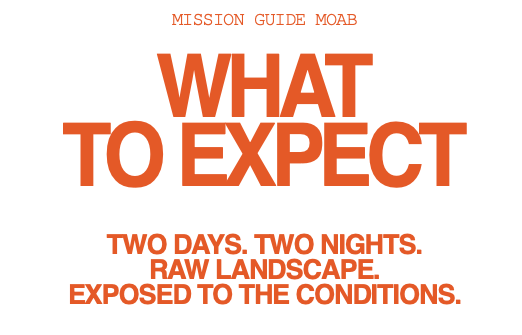
There weren’t many details, and that was the point.
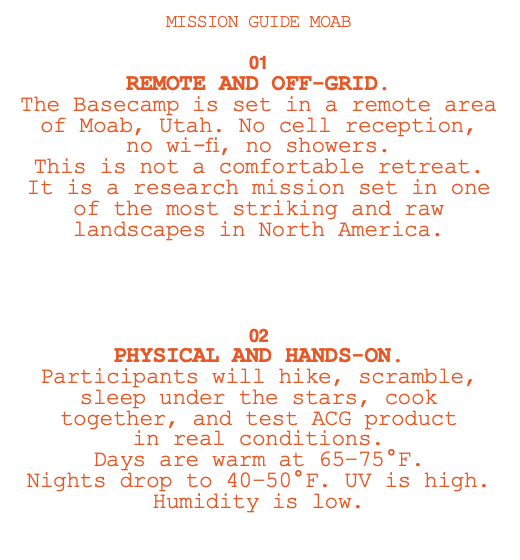
Pack this. Don’t pack that. Expect to live disconnected, in the elements, with no shower. One night in a tent, one night under the stars. The kind of thing you’d expect from ACG after so many years away. A little mystery with a lot of confidence in the products.
But hell, we’re a freaking endurance company and we’re excited. Give me heat, miles, a heavy pack, and a sleeping pad on the ground. This is exactly what we look for.
Day Zero: Thursday
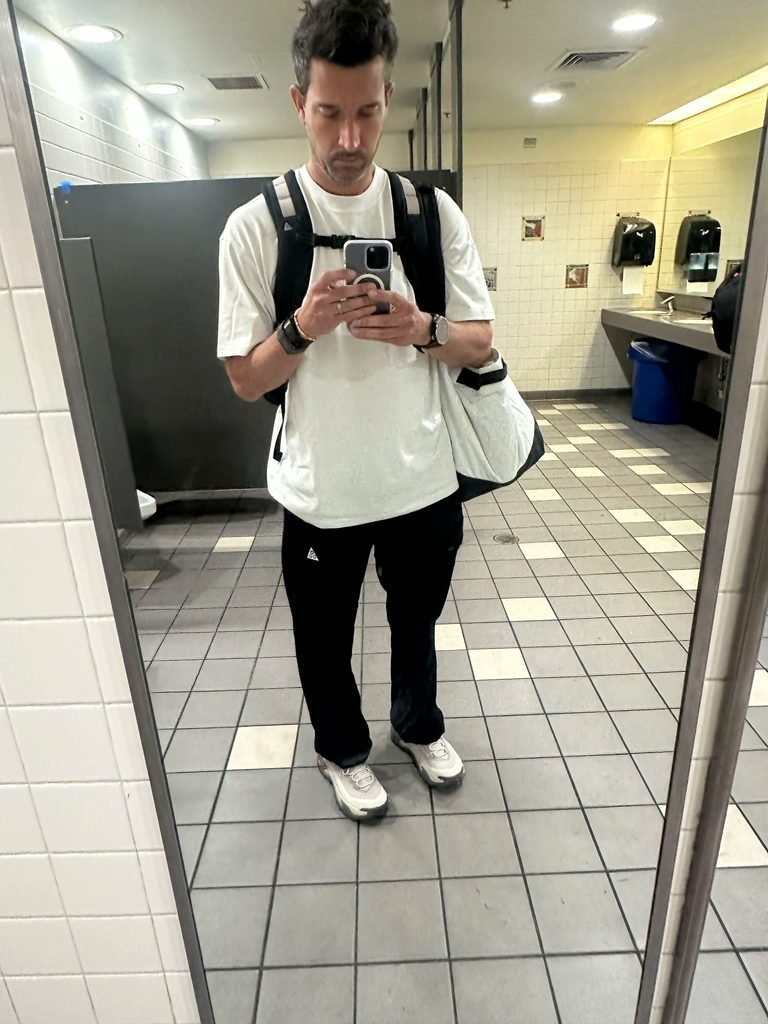
Nothing crazy. We’d fly from Austin early afternoon and arrive in Grand Junction, CO past 9:00 p.m.
There we’d meet a few other ACG adventurers in the airport and people would ask us what we’re doing and why we’re all dressed the same. We joke that we’re “On a mission” because we were, but in retrospect that probably seemed like some kind of cult.
I check in around 10 p.m., work, shower, post some videos, and get to bed around midnight. Too excited.
Day One: Friday
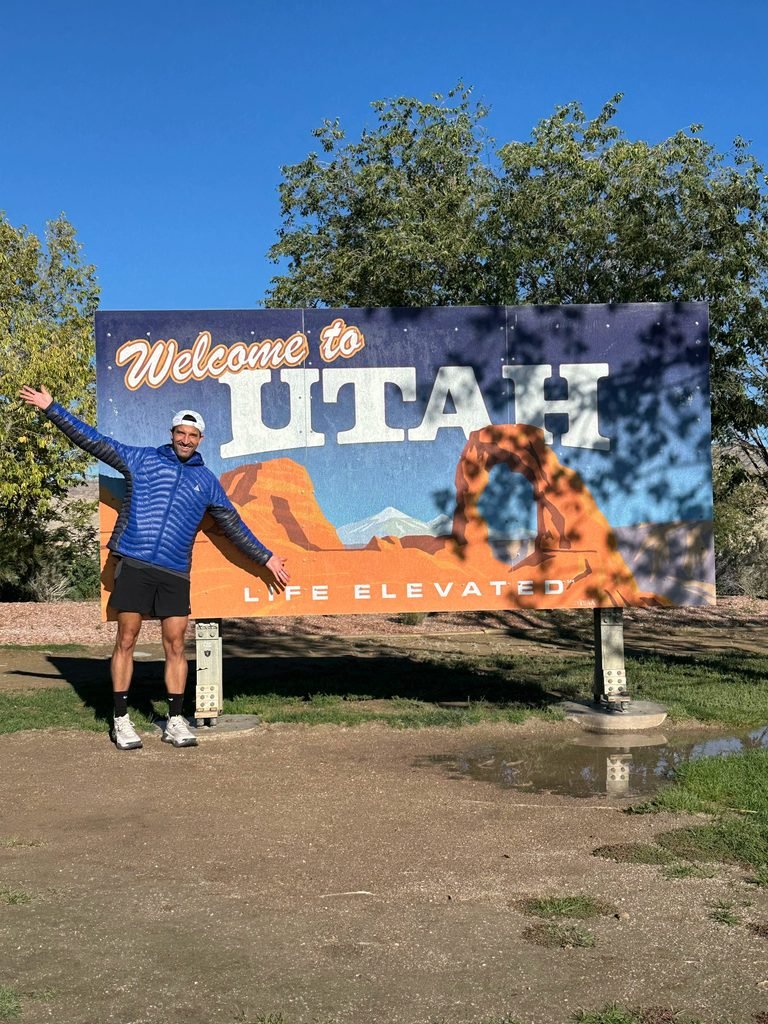
I woke up early, showered (the last one I’d get until Sunday night), and headed down to the lobby for coffee and one of the best bagels and lox I’d had in a long time.
Yes, I asked. The bagels were made locally.
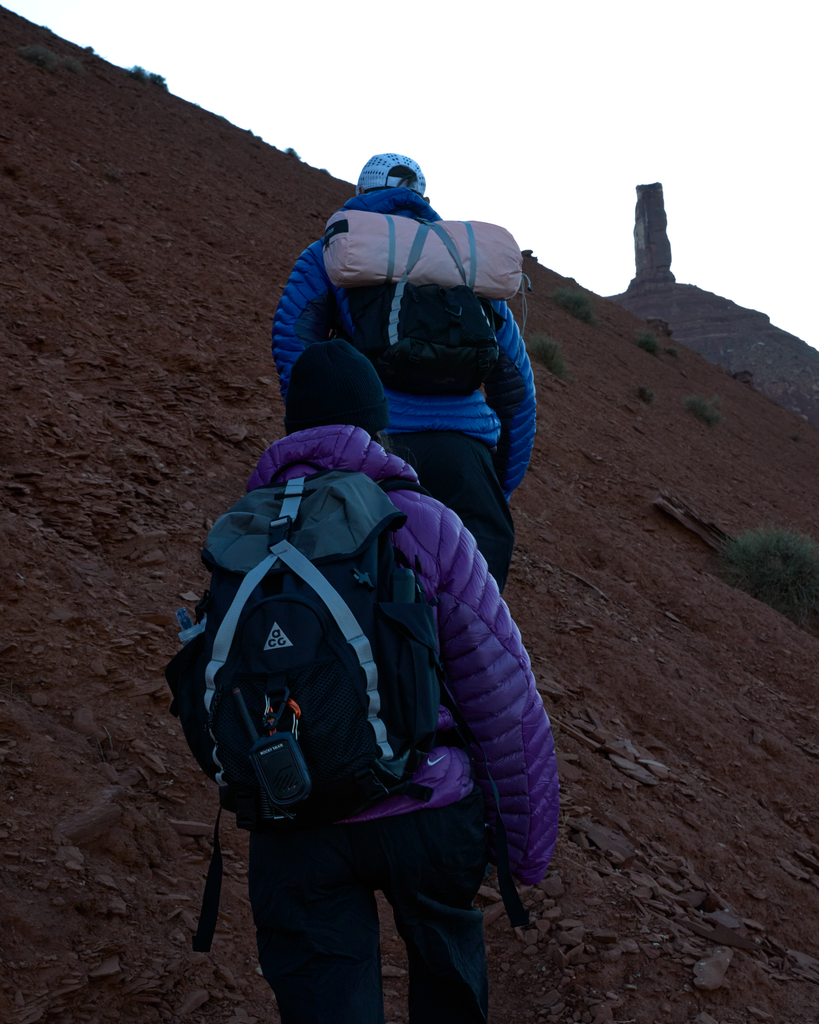
Then I packed everything I didn’t need for the next two days into one bag and loaded my assigned ACG gear into my backpack that I’d carry. All in, the pack is roughly 20 pounds and I did bring my hydration bladder, carbs, sodium, and gels, which came in super handy.
I left the big camera behind, and the computer too. It felt refreshing, and also strange, to be on a “work” trip without the expectation of posting and grinding out at a minimum three things a day. It must have been strange and risky for ACG too, lots of people, no immediate online content until we got back on the grid days later.
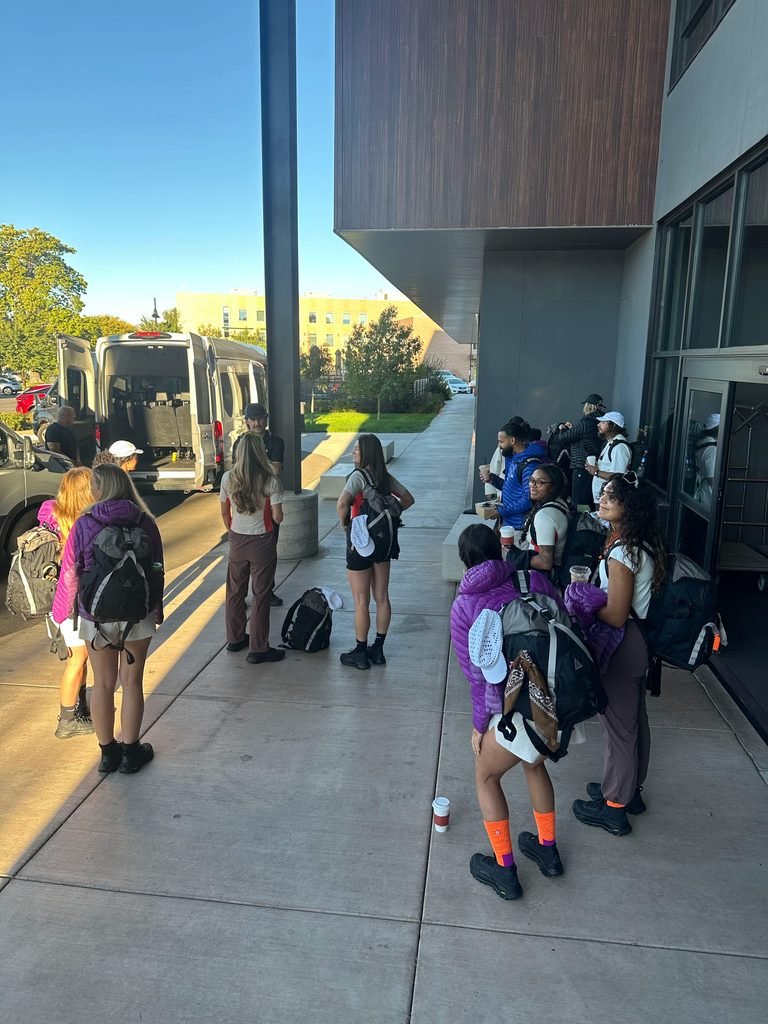
Downstairs, everyone collectively started to roll in and began speed dating. What was your name, where were you from, what might have brought you here to this exact moment.
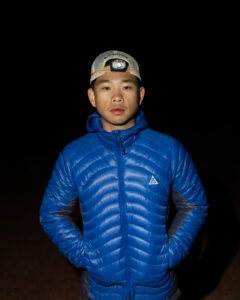
It was as diverse as the trails should be. I’m talking ethnicities and careers. There were filmmakers, run club leaders, outdoor retail, solo travelers, independent media, influencers, and sisters who started a trail running newspaper. It ran the gamut. Not everyone was an athlete in the traditional sense, and not everyone was training for the next big thing, but the love for their own passions and dreams stood out. We were all connected by how much we love getting outside.
We split into three Sprinter vans and headed for Moab. I sat with Nike’s North American PR and comms lead. She’s new to the role after having been at Red Bull for years. We talked about the changing landscape of comms, tech companies, life, and found a lot of common ground.
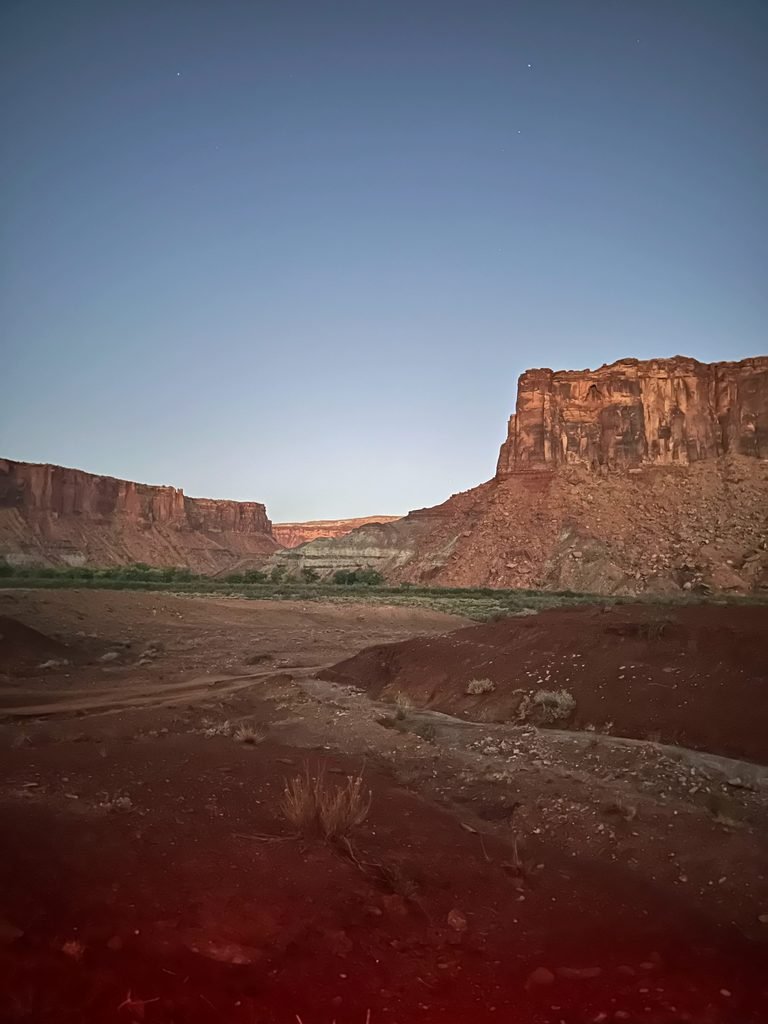
The views were stunning. Mountains and dry desert as far as you could see. With Moab 240 this week, normally empty desert was beginning to see campers and pop up cities. It was dope.
As the service came and went, the anxiety of being disconnected from the real world, family, and work started to creep in. But embrace it. Live in the moment, I told myself. This is amazing.
Two hours into the drive, we’d stop at a Chevron gas station and meet our next ride: huge military-style, open-air people movers, six rows deep and five seats across.
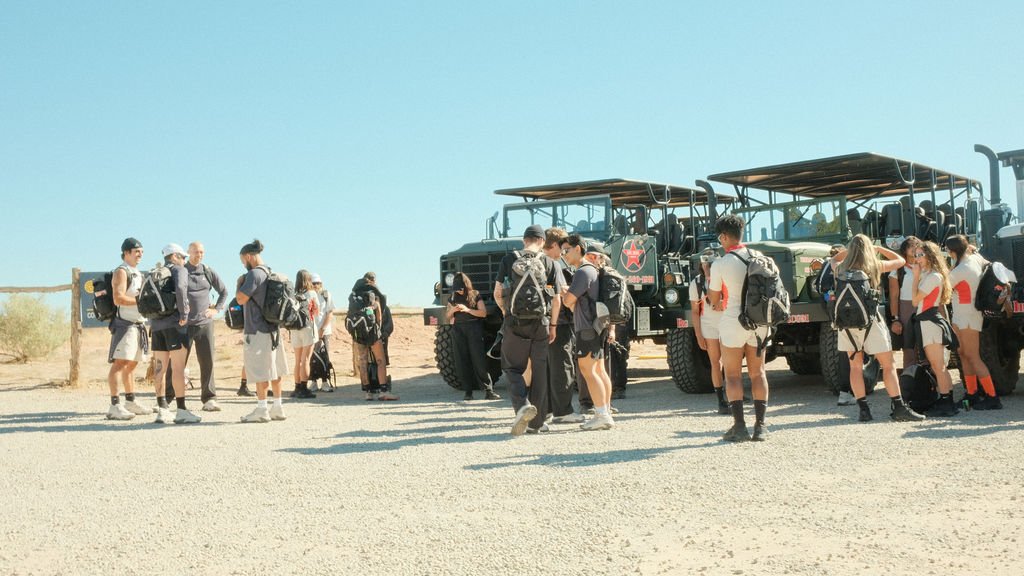
Each weighed 14,000 to 20,000 pounds and had tires taller than most sedans. Every seat had a Tomcat-style aircraft seatbelt system with lap and shoulder straps.
The veteran-owned crew double-checked that we were locked in, the energy was buzzing, and for the next 45 minutes we crossed paved and completely off-road terrain to our final stop. None of which would stop our Herculean vehicle to the final destination.
There, our guide, Ian, briefed us, and Margaret Mussman, Nike’s senior designer, walked us through the Lava Flow Ultralight jacket, the star product of the weekend.
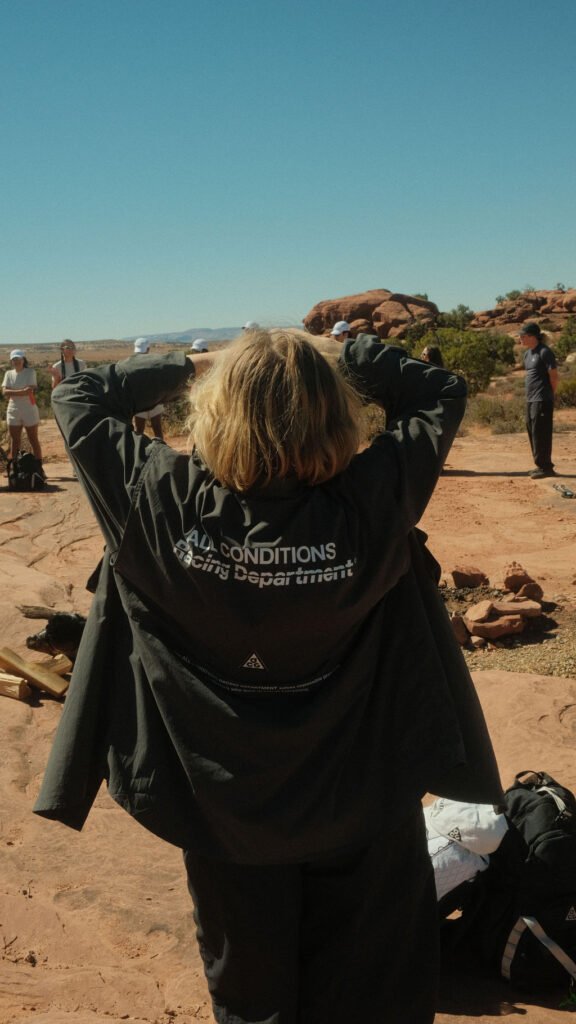
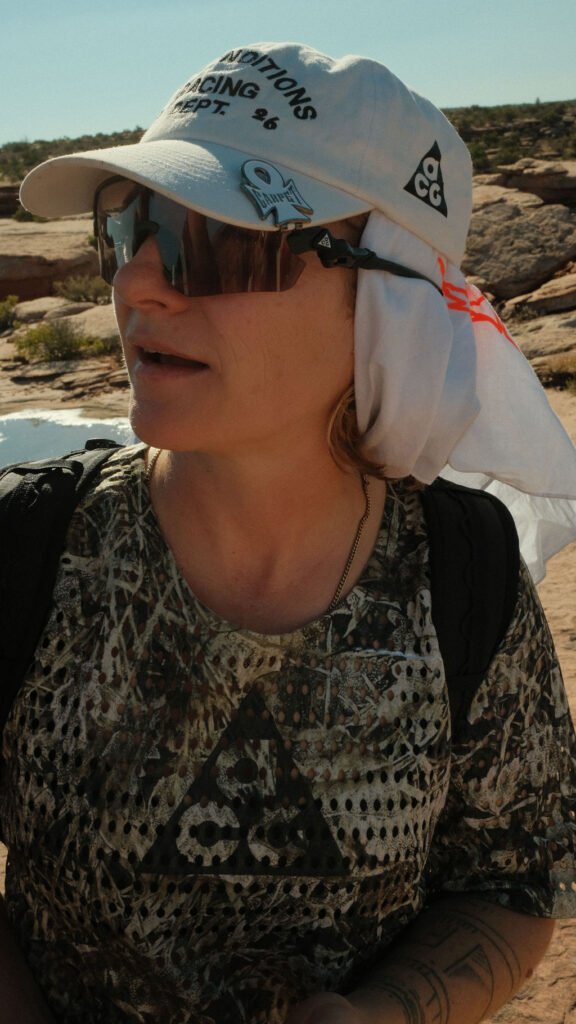
We heard not just what changed, but why: the zipper pulls got lighter, the down, the thread thickness. It’s all in service of lighter materials (10 ounces total, roughly the weight of a few chicken eggs) and warmth, which we’d soon learn about firsthand.
Side note. Margaret is a badass. She’s put together and fashionable in oversized shirts and glasses, and loves to talk deeply and passionately about her craft. She spent more than two years on the Lava Flow Ultralight, and she was one of the lead design minds behind the controversial Radical Air Flow tops that took trail running by storm earlier this year. Love them or hate them, we talked about the balance between fashion and athletic performance, and her answers were smart, thoughtful, and never short-sighted. When I asked what design she’d go back and change, she replied, “Oof. All of them.” She’s relentless in the pursuit of creating.
She was also accessible all weekend. In 22 years of communications and running media trips, I had never seen a top executive sweat through long hikes, camp, and cowboy camp for an entire weekend alongside everyone else. And there was no PR person glued to her side managing the message. We’d all walked in under an NDA on new product, so I won’t reveal anything yet. But rest assured, the 2027 ACG lineup is very exciting.
After Margaret, and after a long journey, the group found our first bonding moment.
With most of us needing to relieve ourselves, and once strangers from a few hours earlier, we were now staking out spots behind trees. Not marking our territory but becoming one with nature.
“Just pee on a rock,” Ian explained. “It’s better for the environment and dries quickly.”
My son would be so amped.
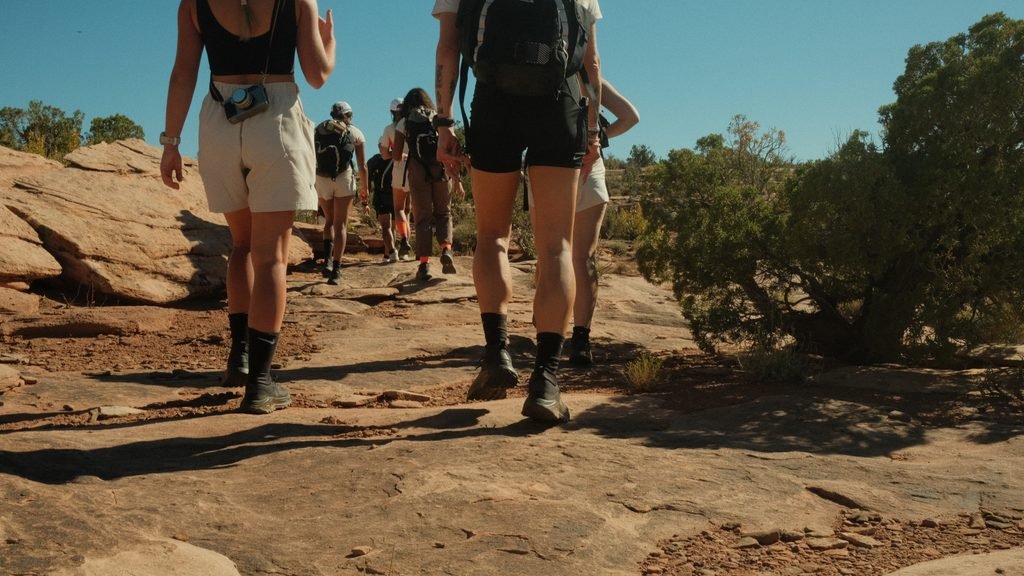
From relief to hiking, we finally started.
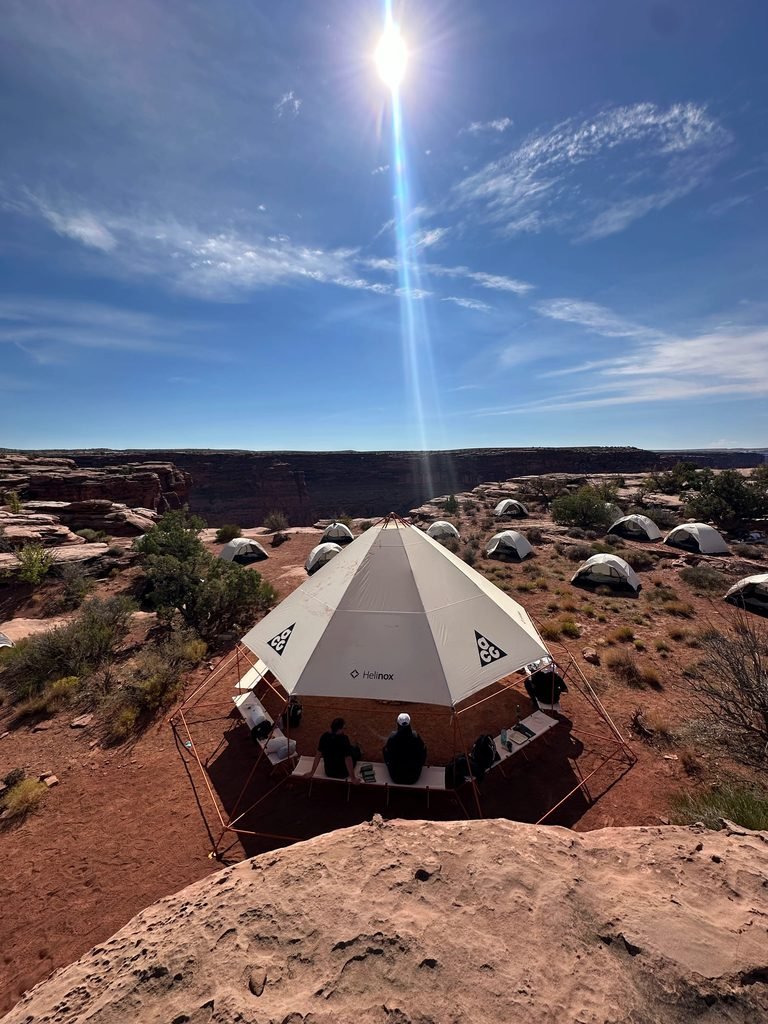
A one-mile hike to camp, where tents, sleeping pads, and sleeping bags were laid out for each of us, along with solar chargers and heat guns. And by “laid out,” I’m talking we needed to build our own dwelling.
Everyone sprang off to find the best spot like it was The Hunger Games. Some wanted to be high for the angle, and I just chose a spot that was flat.
A few New Yorkers had never pitched a tent, so I helped out. Very easy.
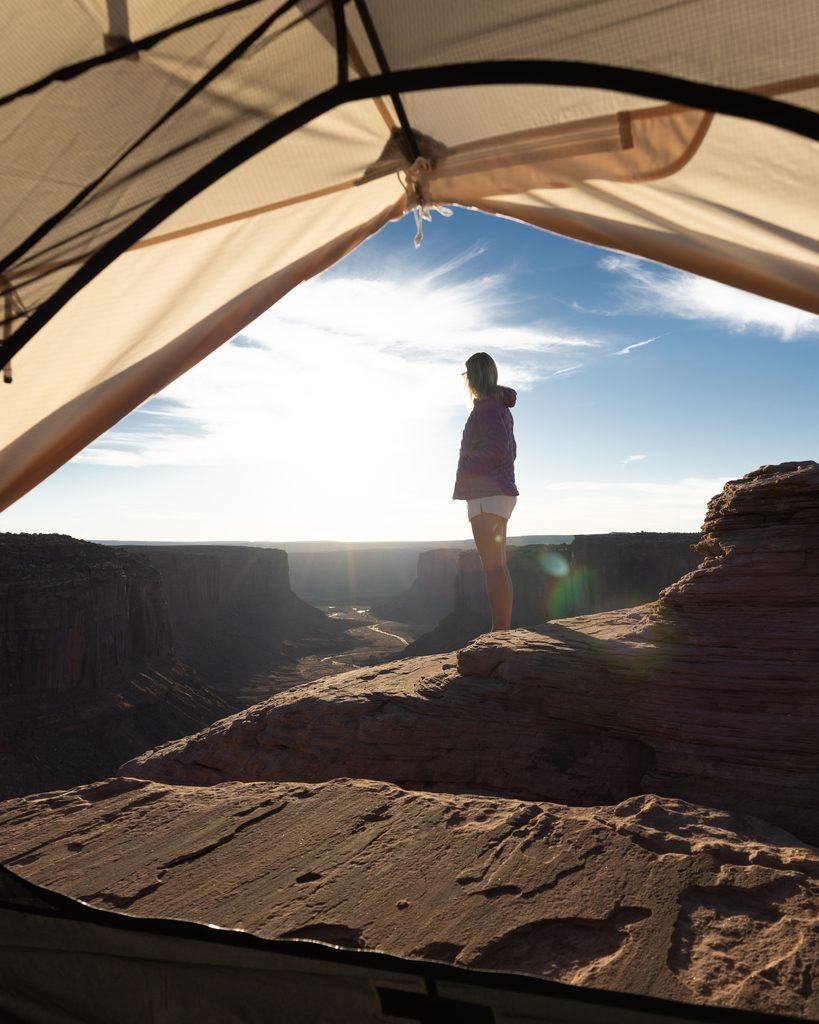
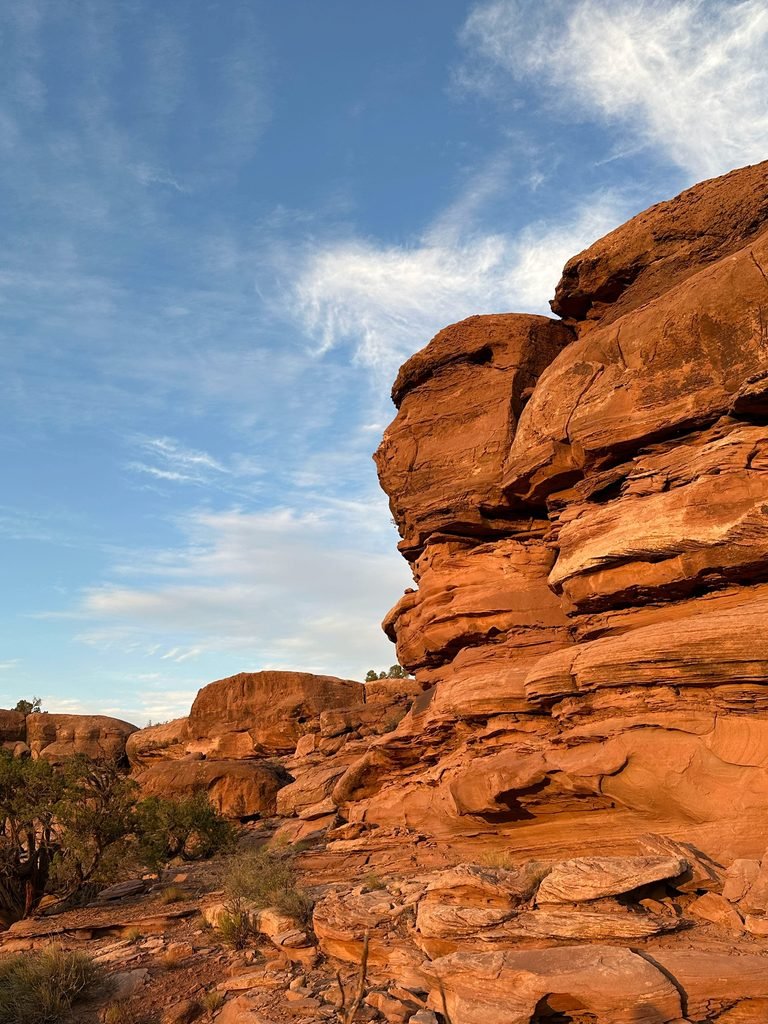
It was 97 degrees by now, but the top of Moab gave us a steady breeze. We spent an hour building camp and relaxing, and I got my first real test of the Zegama hiking boots.
I’d swapped the flimsy insoles for Superfeet insoles we swear by, so I can’t say how much credit goes where but like the Lava Flow Ultralight jacket, if you’re testing something, you put it through the paces, and the boots delivered. Firstly, they had excellent traction on every up and down.
And they were never too warm or sweaty, even with Nike Dri-FIT socks.
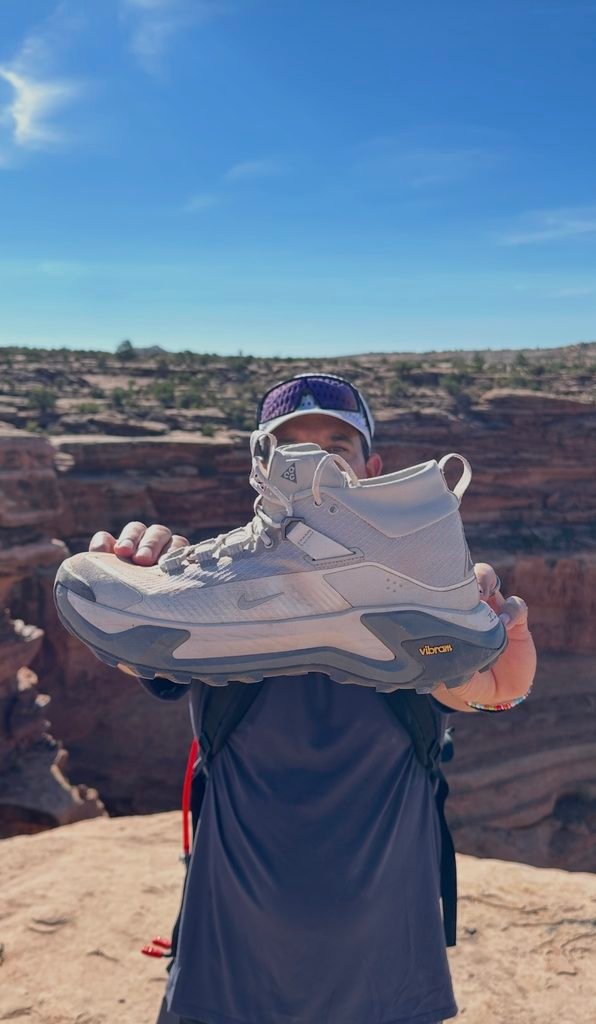
And most importantly, they were comfortable. Nike told me they’re built on the Zegama Trail platform so it makes sense. Even having been on my feet for 10-12 hours a day, not once did they ever start to bark or distract me from the mission.
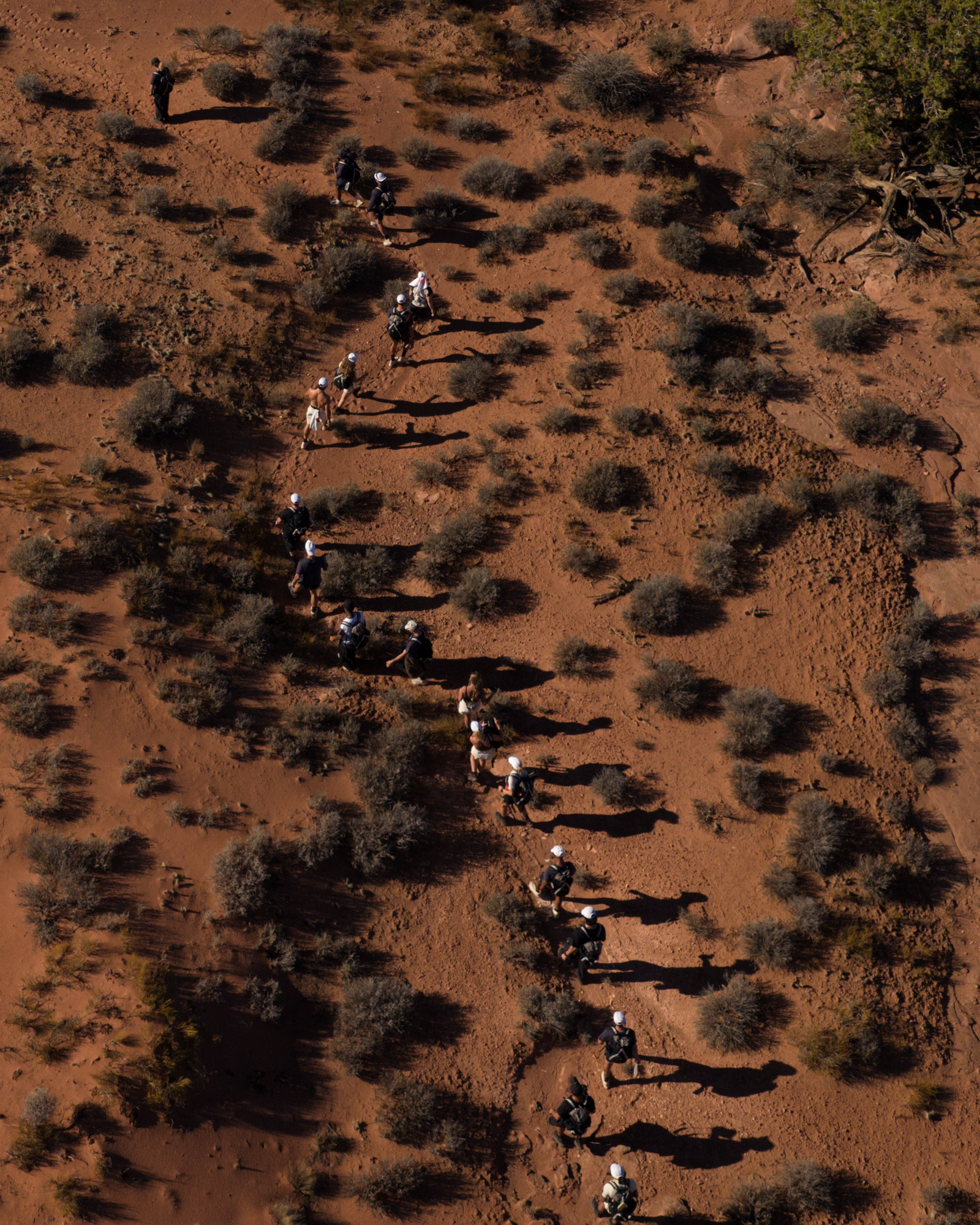
All ready, we finally set out on the first hike where Ian talked about biocrust, a living formation that takes 250 years to grow and one wrong step to destroy. He also told us to avoid stepping in rock divots, because even dry ones hold dormant life waiting for rain.
The group was big, we were “27 researchers”, and maybe that was too big because we snaked along, starting and stopping, waiting for the train to catch up.
But the energy held, and the ACG Dri-FIT kept me cool.
My hydration bladder was full of Skratch Labs and all was right.
We used our temperature guns to see how hot the rocks got, and my record was 109°F. We used thermal on ourselves too.
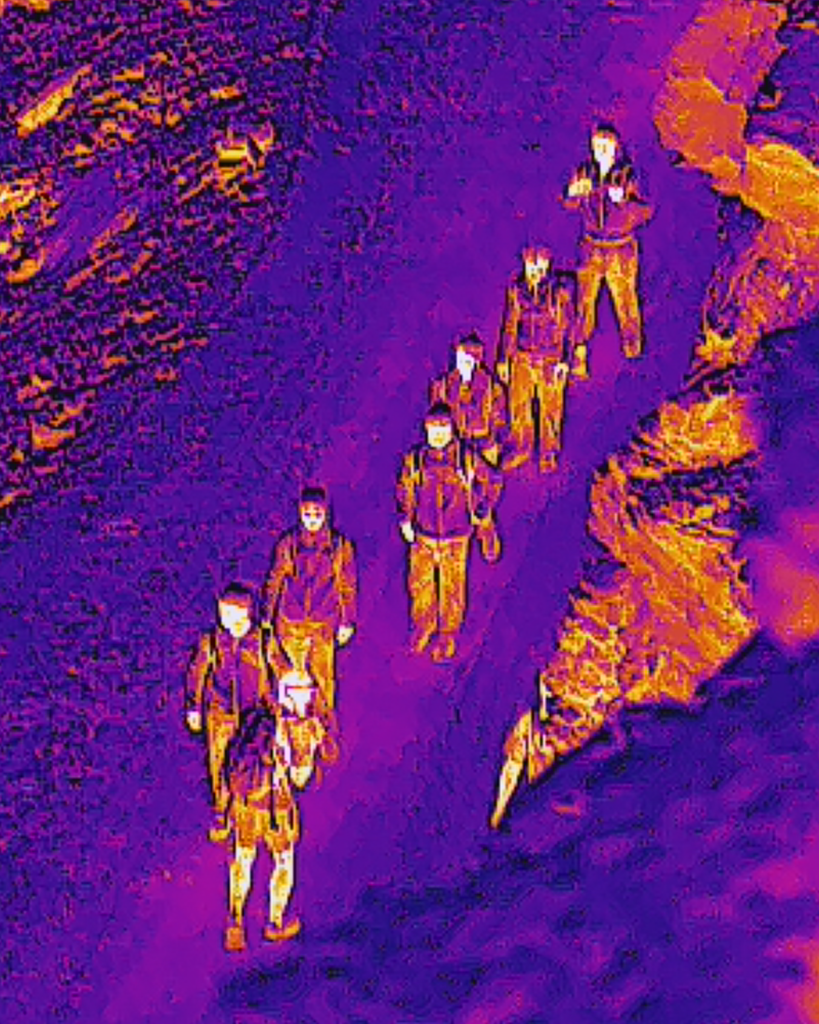
No need for the Lava Flow Ultralight yet.
After dinner, a local guide, Blaine, walked us through Moab’s history: the settlers, the Indigenous peoples, the tribal conflicts, and the uncertain future of public land under the current administration. He knew his stuff, though it felt a little incomplete.
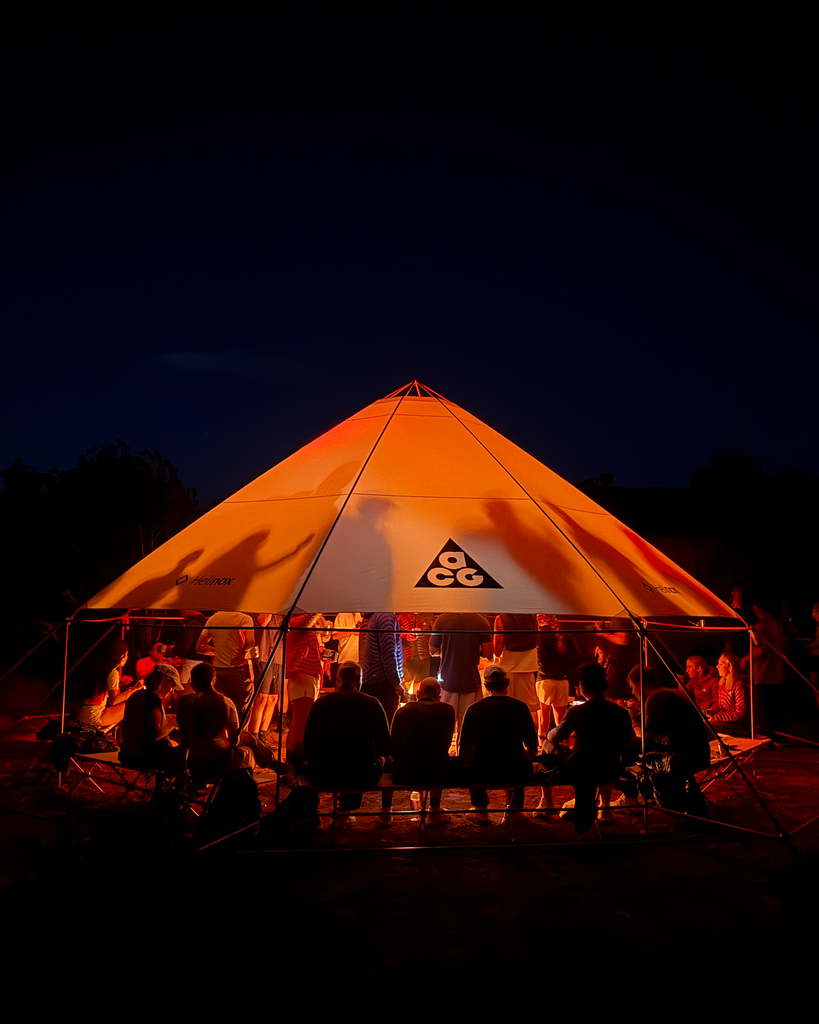
Looking around, I think everyone was too tired to dig deeper. Still, you can’t spend days in Moab and walk away uneducated about what you saw, touched, and lived in. The education aspect was great and we should all keep learning.
Then bed. Everyone got into their tents and an overwhelming sound of nothingness happened. Maybe for the first time in my entire life, it was just complete silence.
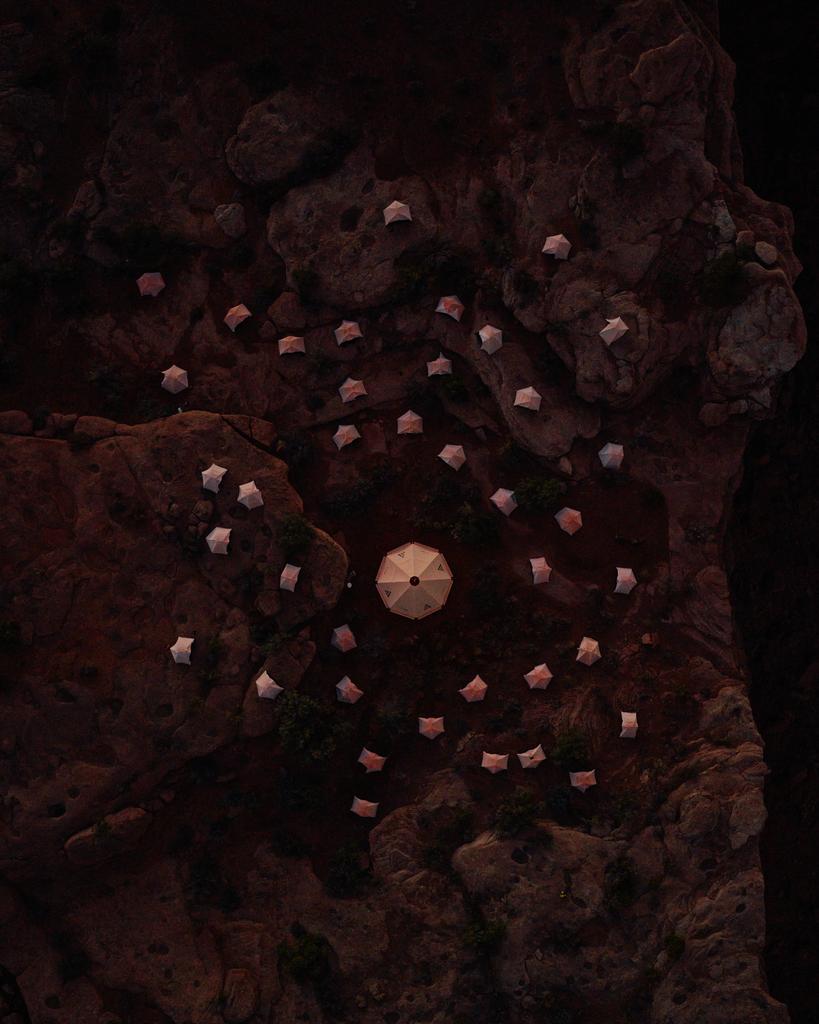
Then. Crunch. Crunch. Crunch. What the hell was that? It was everyone on their sleeping pads getting comfortable. It was hilarious, and it highlights that even the best-laid plans still have surprises.
The sleeping pads were loud, and all night people rolled over as if they were sleeping on a bag of potato chips.
But pro tip 2: always bring earbuds. I did, and I slept great.
The crazy thing about the desert is the swing. In a matter of hours, we went from 109°F to the upper 40s.
My Texas blood can’t take cold, and within a few hours I went from sweaty to cold, happily succumbing to the Lava Flow Ultralight jacket to see if it truly was worth its 10-ounce weight.
The Jacket
The jacket is warm without being hot, and sleeping in it on this occasion allowed us to be comfortable. But the efficiency is what impressed me most. Body heat alone was enough to keep us comfortable, with no extra layers and no fiddling. As I shifted throughout the night, it shifted with me and that’s the thing about this jacket. It’s so light that you don’t notice it. In bed, walking. Whatever.
But that efficiency can backfire too, because moving in it is a different story. Moab was unusually warm these 48 hours and once we started walking, we got hot, as if the more output our body made, the more the jacket cranked up our internal thermostat. But as the sun rose, we did need to take it off because we could feel our core temperature rising with the sun. But early AM over breakfast, perfect.
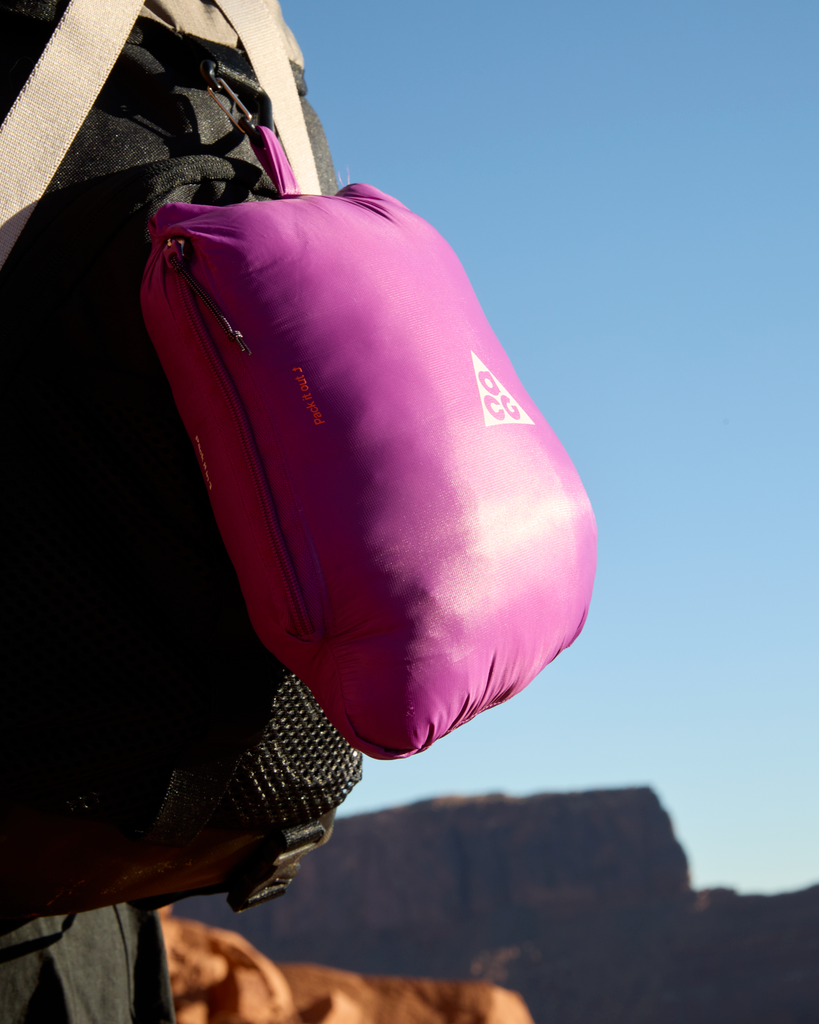
Our verdict: It’s a standout for camp, cold mornings, traveling, and sleeping under the stars. It packs ultra-small, weighs even less, and should be one to consider just about any time temps hit below 50°F too.
Day Two: Saturday
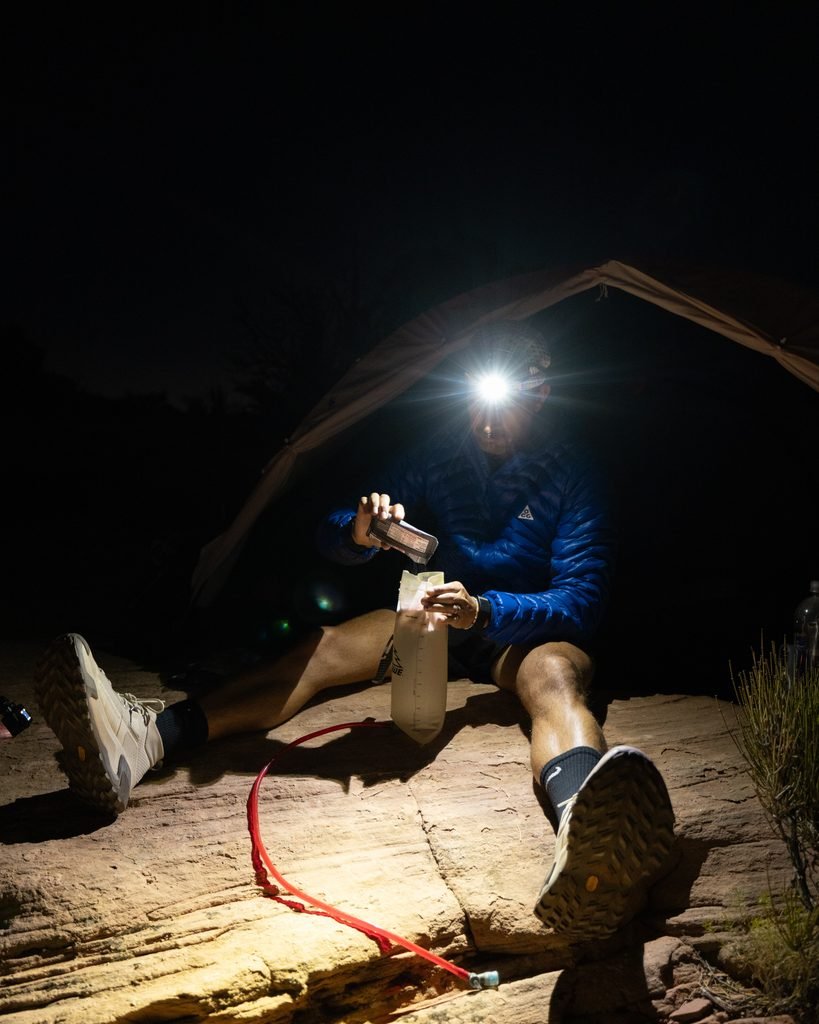
Up at 5 a.m.
Again, my kind of trip. Nike was serious about this one: no showers, early mornings, live through the product.
Teeth brushed, deodorant on, and a scurry to the bathroom half a mile away before anyone else was up.
It was a hole in the ground, so you want to be early.
Nobody wants an audience at 5 a.m. for that first morning dump.
Breakfast was yogurt and fruit, anything to bank carbs, because the plan was a 12-mile hike to the Arches.
That’s a lot to ask of 30 people over seven or eight hours, and not everyone wanted it.
My one suggestion would be to split into groups: the hardcore group (that’s me, and I’d have gone no matter what), the mid-pack that wants some miles but not twelve, and the “I’m here for the vibes” crew who go three miles, turn back, and get to know each other back at base camp.
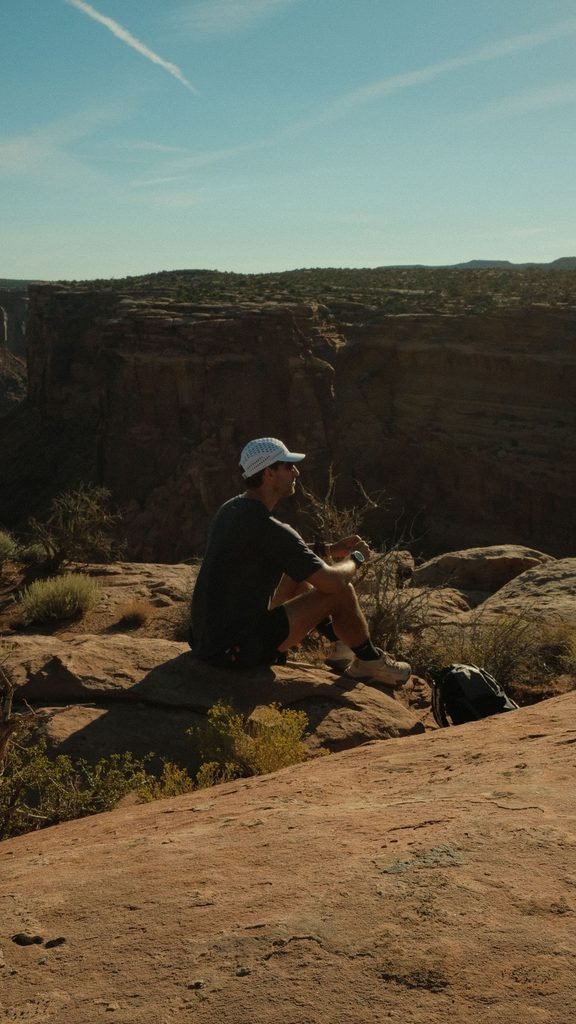
With a group this size, it’s hard to know each person’s agenda. For me, it’s about the product, the experience, putting in the miles, and testing yourself, especially when the heat hits 107°F like it did that day.
My watch ended the day at 12 miles total, including a three-mile switchback down to our Saturday sleeping spot under the stars. It wasn’t death-defying, just a road cars could drive on. But it was three miles with a 30-pound pack of water, a sleeping bag, and a pad.
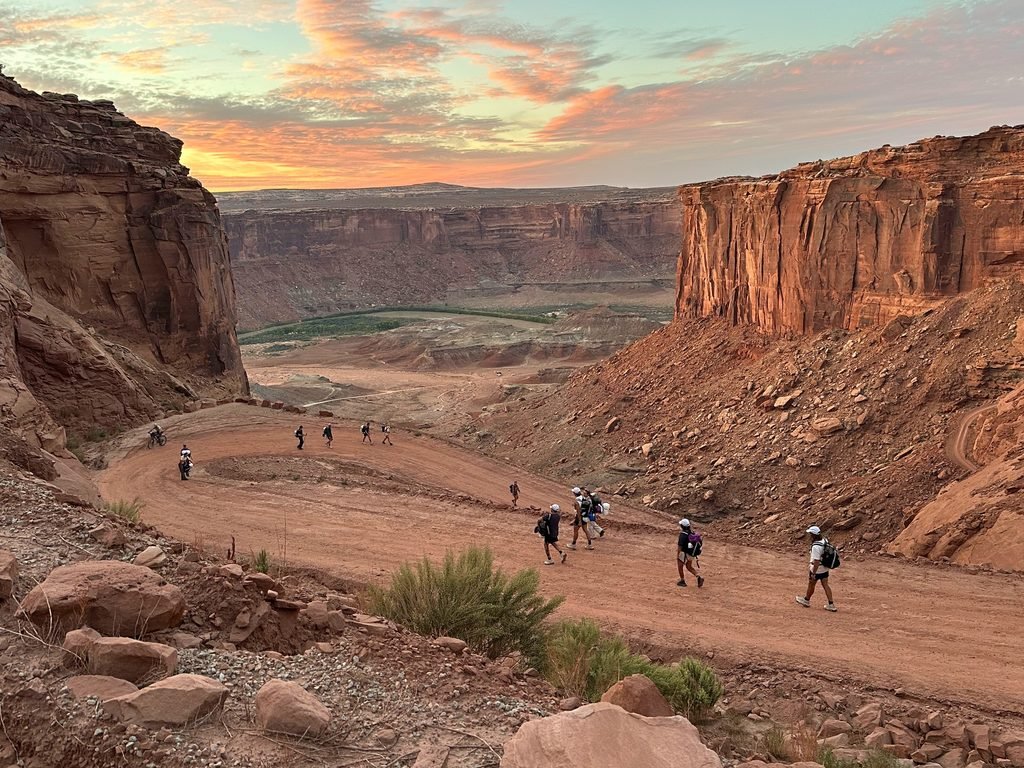
That was the beauty of it: you carried what you brought.
Bring a lot, carry a lot. Bring a little, and you’re lucky. I felt fine, and the excitement kept building for sleeping under the stars.
We dropped 1,500 feet, and by the time we reached camp all we could see were headlamps moving back and forth like worker ants. Some folks already had their bags out.
No tents this time, just a pad and a bag under the open sky.
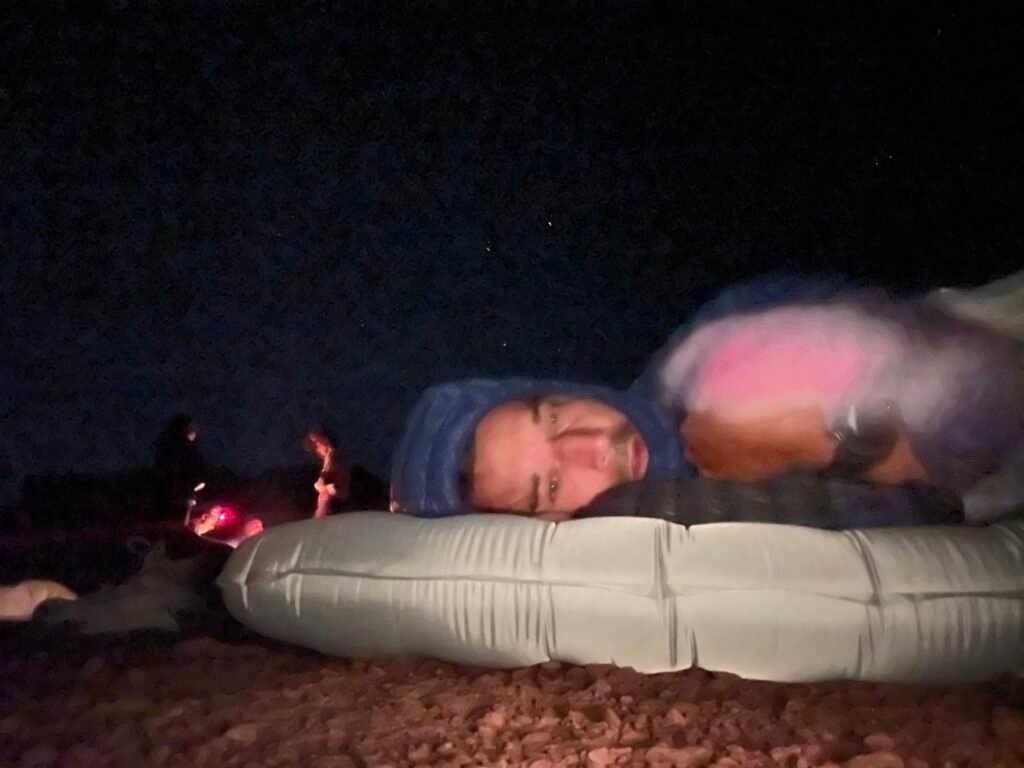
This was the real test of the Lava Flow Ultralight. A campfire roared, bats swooped around our heads, and there was a fair amount of screaming. Nobody got hurt, but it was memorable.
Then came the best part. Nike had brought in a local astronomer to walk us through the sky.
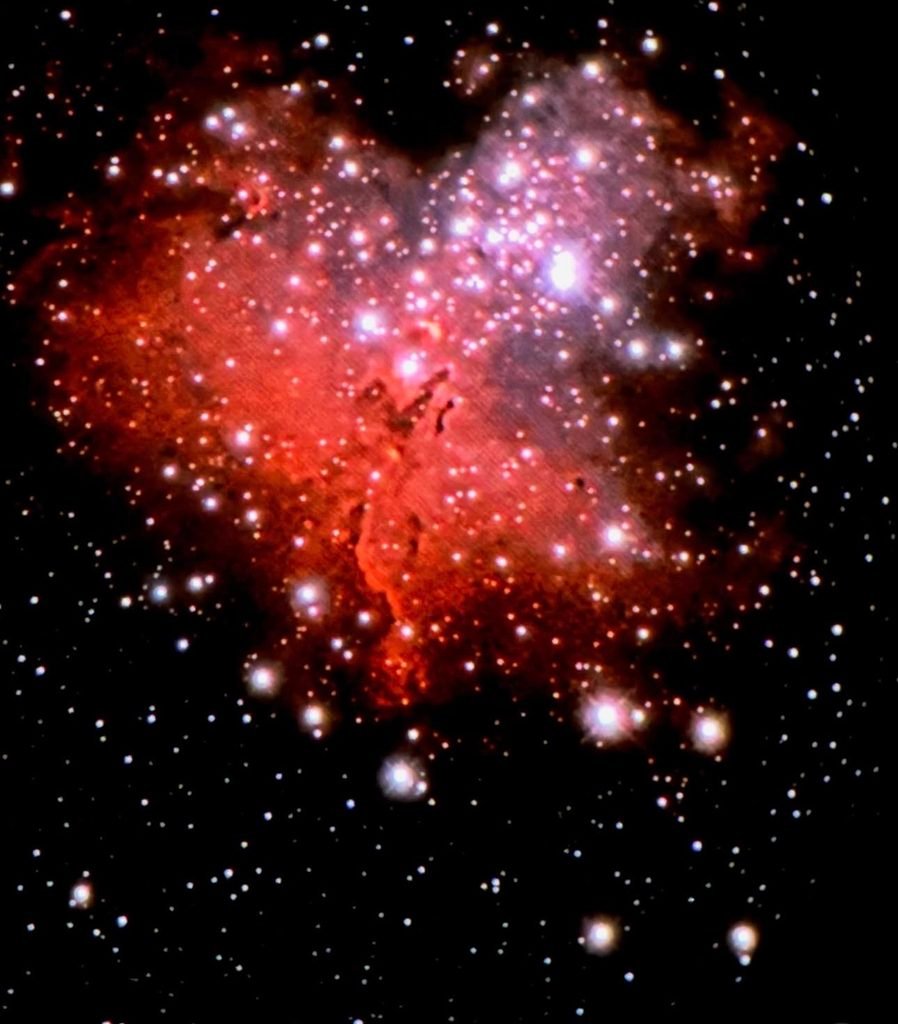
It’s so rare to actually see the stars. If you live near a city, you know.
But directly above us was the Milky Way, Orion’s Belt, the North Star, everything, and I felt like a seven-year-old again, listening to this nerdy, brilliant woman explain the solar system. I felt high without any drugs.
She had a laser pointer like the one you’d use on a cat, except we were the cat and the sky was the dot.
Without it, I’d have had no clue what she was pointing at. We saw Saturn up close through her telescopes, along with new stars in the nebula. We all went to bed staring up at the sky, and I slept better in the Lava Flow Ultralight under the stars than I had in the tent.
Highly recommend.
Day Three: Sunday
Up at 5 a.m. again for some cowboy coffee, then packed up and headed back toward Grand Junction.
Some folks hit a local gym to finally shower off two days of sweat and dust. I had a flight to catch, so I went straight to the airport, baby wipes in tow, for a quick bathroom wipe-down.
The Moab Experience
Here’s what I keep coming back to.
You get the most out of anything when you commit your entire existence to it, and this trip made that impossible to avoid.
For the first time in years, I was fully off the grid. No phone, no outside distractions.
From 5 a.m. to 10:30 p.m. for 48 hours, I was dedicated to exploring what Moab had to offer and how ACG responded to it.
This wasn’t a normal press trip in the least. It was regimented. We had book work, temperature readings, scrambling, rock climbing, and feedback to give. We got educated on Moab history and the stars.
We literally lived in the product, we didn’t just wear it. We slept, hiked, froze, and sweated in it, which is the only way to really know whether gear is any good.
Experiences Like This
Be thankful, go with the flow. Maybe it’s because I’ve been on the other side and know what goes into a trip like this, but my rules for most things in life are don’t sweat the small stuff and don’t dwell on what’s out of your control.
There were 30 media members, creators, and influencers on this trip, and it was ACG Research Mission 01, not 02, not 007.
Everyone was learning. Have you ever led 30 people anywhere? Now take them to a remote, off-the-grid spot, feed them, keep them safe, and hope the personalities and egos align. Add dietary restrictions and a range of fitness levels, and it’s a major lift. Then add the goal of letting us experience the gear as it was designed, built, and intended. That’s a damn big ask.
Was it perfect? No. Almost nothing is, in life, in a race, or, in this case, an expedition. But ACG jumped into this committed, and anything could be fixed with some quick thinking.
Back to December
Which brings me back to that booth in San Antonio. ACG told me ACG had lost focus, and I walked away feeling something I hadn’t felt about the brand in years. But feelings are cheap, and we wondered whether ACG would back it up or the comeback would fizzle.
Over the last 10 months, we’ve watched launch after launch and the excitement grow.
Research Mission 01 was another step, and a risky one. Putting 30 people in the desert, off the grid, in new products, with nowhere to hide can make or break momentum.
ACG put its neck on the line, and it could have gone badly.
It didn’t.
For us, this trip was as much about what we do at Front Pack as it was about the research expedition.
We don’t talk about anything without putting it through its paces.
If it sucks, we say so. If it’s awesome, we say that too. And if it’s a meh, then we meh.
Out there, under the Moab sky in a jacket that weighs about as much as a few eggs, there was nothing to say but ACG is back, and this time it’s more focused than ever.
If you liked this article, consider subscribing to our newsletter.
*note: ACG paid for us to attend but in no way did they tell us what to write, how to write, and when to write. This was our honest experience.
photos by Scott Baldwin, @alliehoo and @callenhearne
Leave a Reply
You must be logged in to post a comment.