

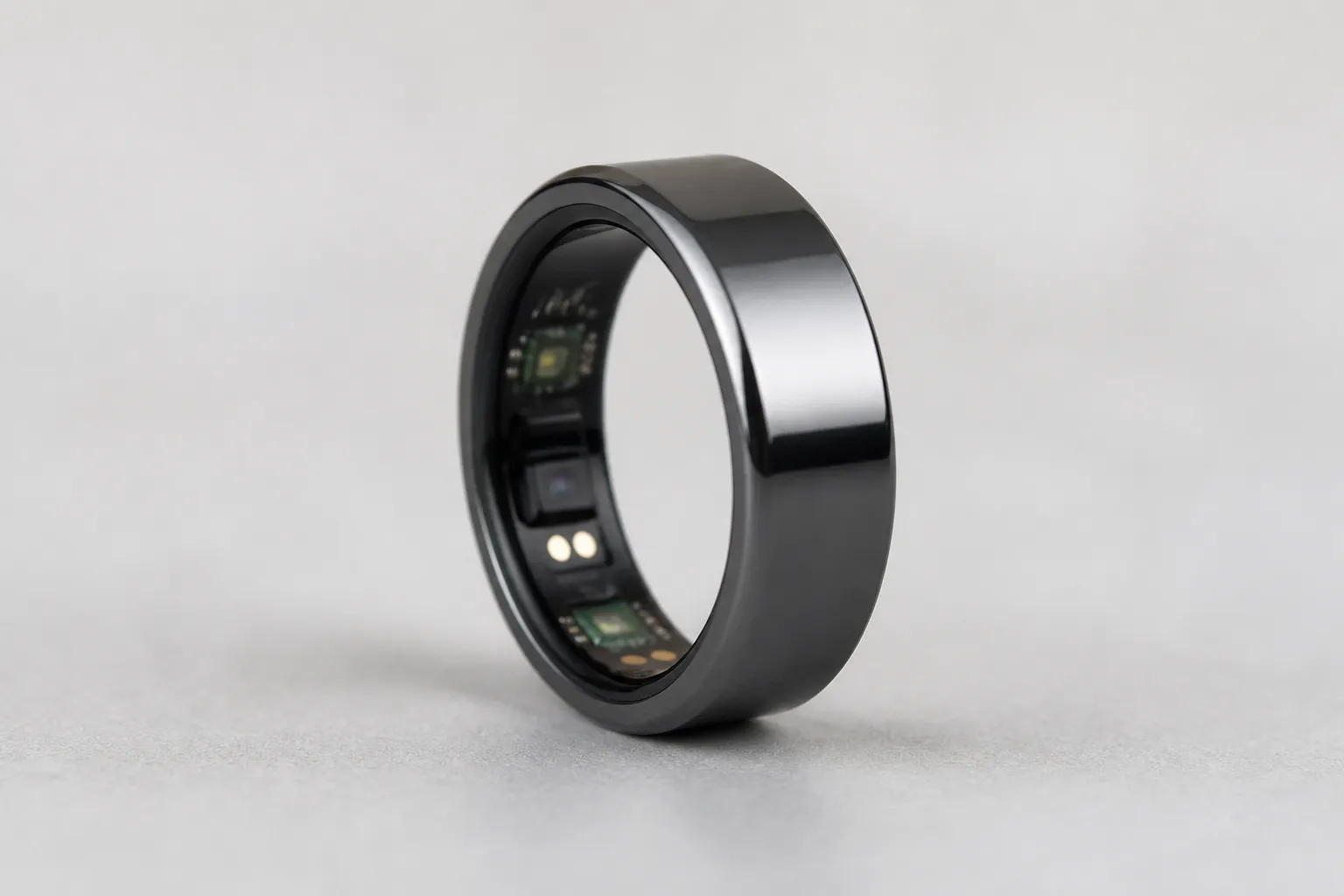
If you’ve ever woken up feeling like garbage and opened your Oura app to see a glowing “Optimal” sleep score, you’re not alone, and now there’s a lawsuit for everyone who feels the same.
On August 20, the Clarkson Law Firm filed a proposed class action against Oura in federal court in San Francisco on behalf of Madison Surber, who bought an Oura Ring 4 Gold for roughly $514 in May 2025. The claim argues Oura has spent years selling a ring that physically cannot do what its marketing says it does.
The Core Allegation
At the heart of the lawsuit is that sleep tracking isn’t a finger problem, it’s a brain problem.
The complaint’s central argument is blunt in that real sleep staging, the kind that separates REM from deep from light sleep is measured clinically with electrodes on the scalp, sensors on the eyes, and leads on the chin. That’s polysomnography, the gold standard used in sleep labs. A ring on your finger, the lawsuit argues, has none of that. What it has instead is heart rate, temperature, and motion data run through an algorithm that estimates what stage of sleep you’re probably in.
The suit claims Oura marketed those AI-generated estimates as near-clinical precision, citing the brand’s own language — “built for accuracy,” and “unparalleled accuracy,” and specific figures of 79% and, more recently, 95% sleep-staging accuracy versus a clinical sleep lab. The complaint’s framing on the algorithm’s real-world reliability is that it is more of a coin flip than science.
Nothing New
For anyone who spends time on Reddit, you’ve seen versions of this complaint for years. Most of the complaints center around people who have had nights that felt rough but still get scored as “optimal,” or users questioning whether a wrist or even a finger-based sensor can really separate REM from deep sleep in the first place.
And w’re not trying to be one-sided: Oura has published data pushing the other direction, including a Brigham and Women’s Hospital study that found the Oura Ring outperformed Fitbit Sense and Apple Watch in four-stage sleep classification against polysomnography.
Oura hasn’t yet responded publicly to this specific complaint. The suit is asking the court to stop what it calls false advertising and to get restitution for people who bought a ring based on those accuracy claims.
Why This Matters
If you’ve ever gotten the Garmin “Unproductive” after nailing out a 18 mile run, or Oura telling you that your sleep was “optimal” when you know it was trash, this lawsuit is an interesting one.
A lot of endurance athletes don’t just glance at a sleep score, we adjust training load, and build entire recovery routines around what these devices tell us. And that only works if the underlying data holds up. This lawsuit doesn’t prove the ring is wrong and Oura hasn’t even responded but it’s a good prompt to treat any wearable’s sleep score as a directional signal, not a diagnosis. We rely too much on these things without listening to ourselves. Start there!
We’ll keep an eye on where this one goes and it could be nothing, or it could be something.
A proposed class action is a claim, not a verdict but it’s the kind of case that could shape how every sleep-tracking wearable is allowed to market itself going forward.
Leave a Reply
You must be logged in to post a comment.