

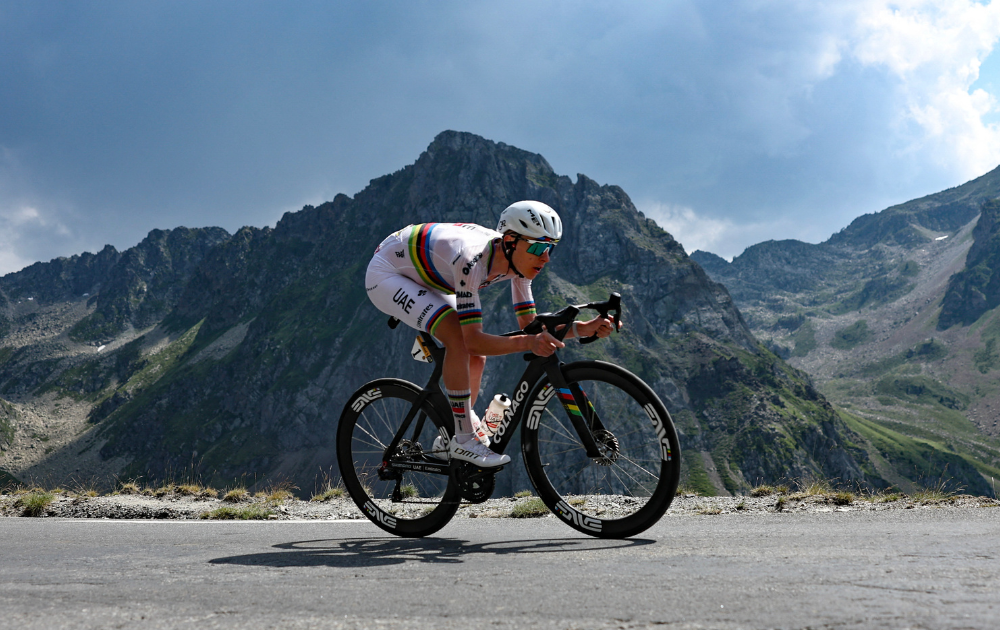
Every July, the Tour de France doubles as the cyclings biggest showroom and test lab.
Bikes get lighter, cockpits get weirder, and fabrics somehow get more aero. But between record-breaking heat across Spain and France and a genuine safety breakthrough finally near, this years Tour is less about aero tweaks and more about some functional innovation you’ll probably see at group rides soon enough.
Here’s what we’ve been watching.
Tactical Ice Vests Are Everywhere
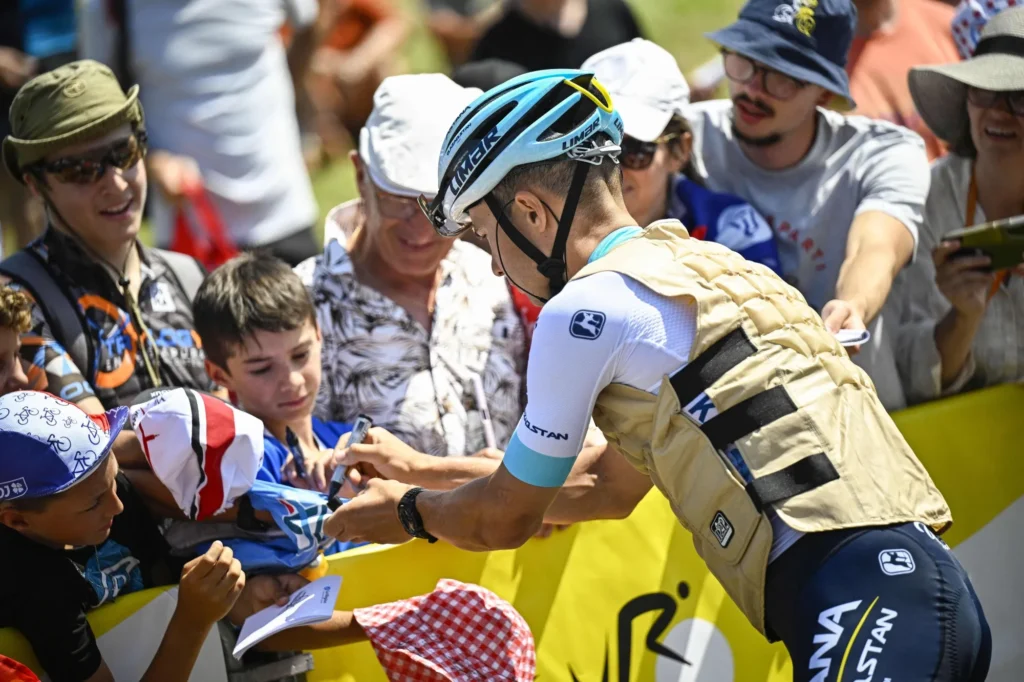
If you’ve watched even one stage of this year’s Tour, you’ve seen it: riders in what looks like a tactical cooling vest packed with ice, sometimes paired with ice socks stuffed down the back of a jersey. With temperatures pushing into the mid-90s and even triple digits this summer, cooling has stopped being a nice-to-have and become a core part of race-day prep for nearly every WorldTour team this year.
The DIY is impressive as some squads run full-torso ice vests. while others have gone more surgical, placing cooling patches only at the neck and spine.
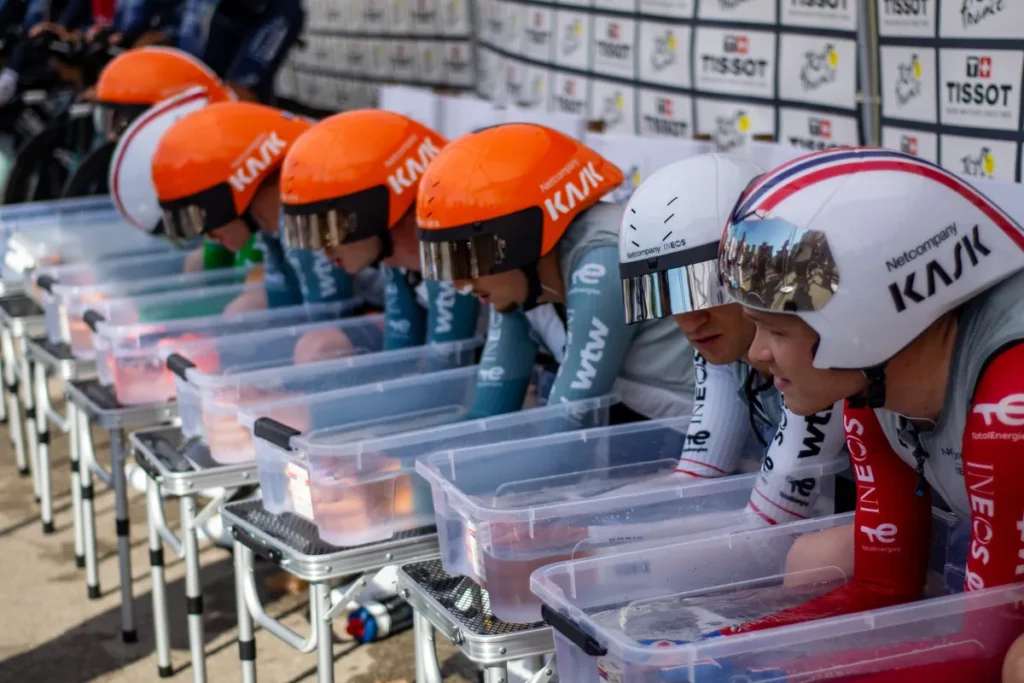
Netcompany-Ineos took it a step further before the Barcelona team time trial, setting up a full pre-cooling station with water chilled to a precise 8.8°C for riders to submerge their forearms in before racing. Super low-tech and a little bizarre at how specific it is but the forearm immersion pulls core temperature down without pre-cooling the leg muscles riders are about to rely on.
The UCI has actually pushed back on parts of this trend, banning ice socks during the race. But expect body-heat management like vests, fans, misting stations, and iced bidons to keep expanding as a category moving forward.
The Castelli Spine Airbag Jersey is Here to Save Your Life
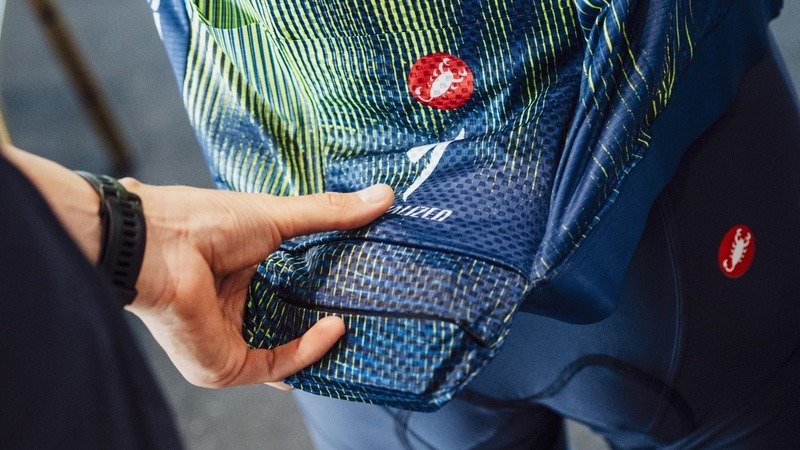
Another one to watch. Castelli, in partnership with Soudal Quick-Step, AG Insurance Soudal, and Italian safety-tech startup RAGAZ, unveiled a prototype airbag system built specifically to protect a rider’s spine in a crash.
Genius.
The whole system weighs about 70 grams, or roughly the same as two energy gels. It tucks into a purpose built pocket under a standard race jersey, and deploys in around 200 milliseconds when sensors detect a serious crash.
And if they’re not in a crash? It’s designed to disappear into your jersey versus adding bulk like a pair of boxers in skinny jeans.
The system is fully removable for charging and washing and instead of trying to protect the entire upper body (and adding weight and drag in the process), Castelli and RAGAZ narrowed the target to the spinal column specifically, which lets the system stay light enough while still addressing one of the most serious injury risks in a high-speed crash.
The UCI has confirmed it’s in active conversations with multiple manufacturers working on airbag tech for cyclists, and says it wants to widen the initiative rather than lock it to one team or brand.
If this prototype holds up in competition testing, don’t be surprised if airbag integration becomes a real thing you can buy and wear.
ExoLactate: The Gel Trying to Rewrite Fueling
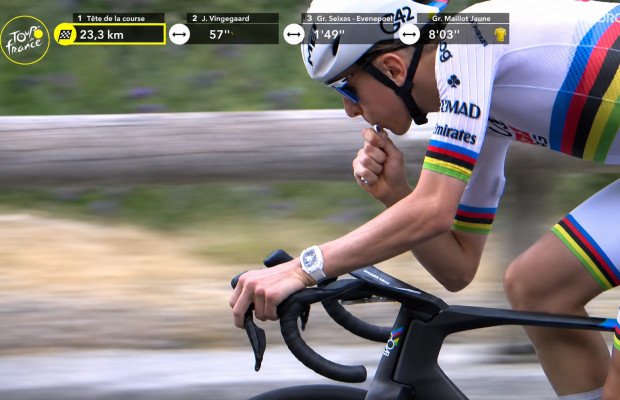
From pros to Joe’s we obsess over how many grams of carbs can a gut absorb per hour.
Riders now routinely take in 90-120+ grams hourly, chasing the outer edge of what the intestine’s carb transporters can handle. ExoLactate is betting the next gain isn’t more carbs but existing as a completely different fuel source.
The gel, developed by sports scientist Aitor Viribay alongside food scientists from the Basque Culinary Center, delivers exogenous lactate directly — something researchers have reportedly been trying to crack for 50 years.
Each gel carries about 40 grams of carbs alongside 5 grams of lactate, with the team behind it targeting a working dose of 10-25 grams of lactate per hour during competition.
The pitch is simple. Lactate uses a separate transporter (MCT) than glucose and fructose, so it can theoretically add a parallel energy pathway instead of competing for the same absorption bottleneck that caps carb-only fueling.
The product has already cleared food safety approval and hasn’t raised flags with anti-doping authorities, and it was reportedly tested by athletes at events like the Zegama Aizkorri mountain marathon and Western States 100 before making its Tour debut.
Demand has been intense enough that one WorldTour team bought out an entire early production run before other teams could get access, and as you see in the photo above, Tadej Pogačar has been ripping them though UAE’s nutrition partner Enervit. Even if they later clarified it was one of their own prototypes, not ExoLactate itself.
It’s worth a note of caution here: there’s no published, peer-reviewed data yet confirming exogenous lactate actually improves performance at these doses, and 5 grams of lactate is a small amount relative to the energy carbs alone provide. But if it works even modestly, it’s a first new fueling pathway the sport has seen in a long time and every supplement company is going to be working like mad to bring it to market.
Leave a Reply
You must be logged in to post a comment.