

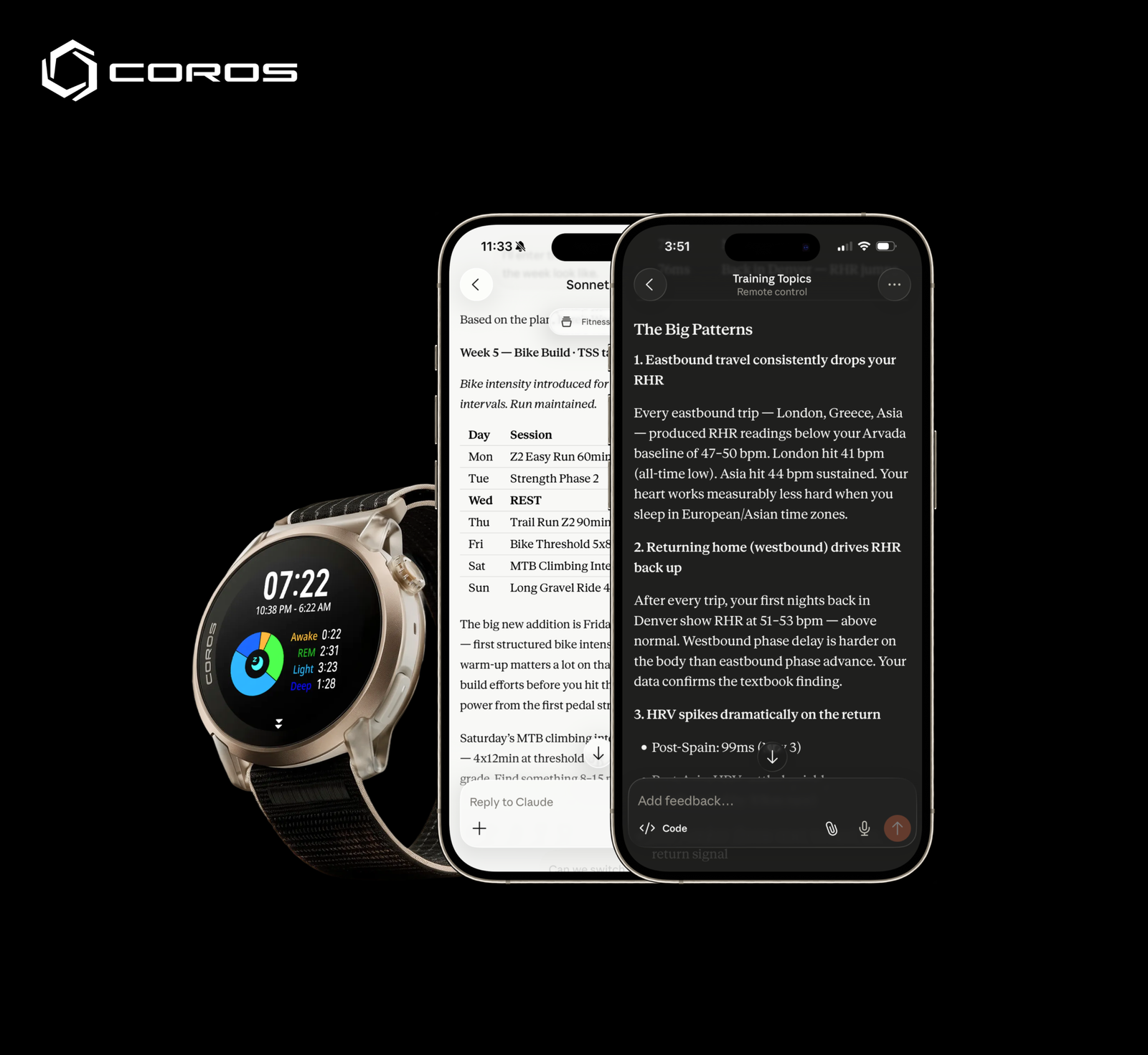
Today, COROS is the first major wearable brand to give athletes a direct line between their training data and AI.
The company announced its official Model Context Protocol (MCP), a new integration that connects an athlete’s COROS account directly to AI platforms like Claude and ChatGPT. Athletes with an active COROS account and a paid AI subscription can get started today at coros.com/stories/coros-metrics/c/mcp-testing.
What It Actually Does
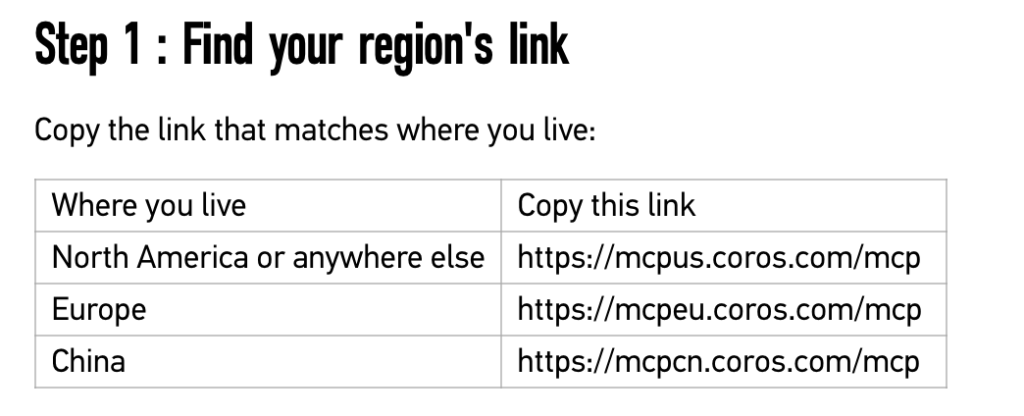
An MCP is essentially a secure bridge between your data and an AI. Instead of exporting files or typing in your own numbers, you just ask questions and the AI pulls directly from your real training history to answer them.
That means you can ask things like, “how did my training load trend over the last six weeks?” or “I have a half marathon in five weeks — am I on track?” and get an answer based on your actual data, not a generic response built on averages.
At launch, the integration is read-only across five data categories: your profile and paired hardware, activities, daily health metrics, EvoLab assessments, and your current training plan.
That covers a solid range of what most athletes care about day-to-day or for multi-week load trends like sleep, HRV, recovery status, VO2 max, threshold pace, and race predictions for distances from 5K to marathon.
Should You Dive In?
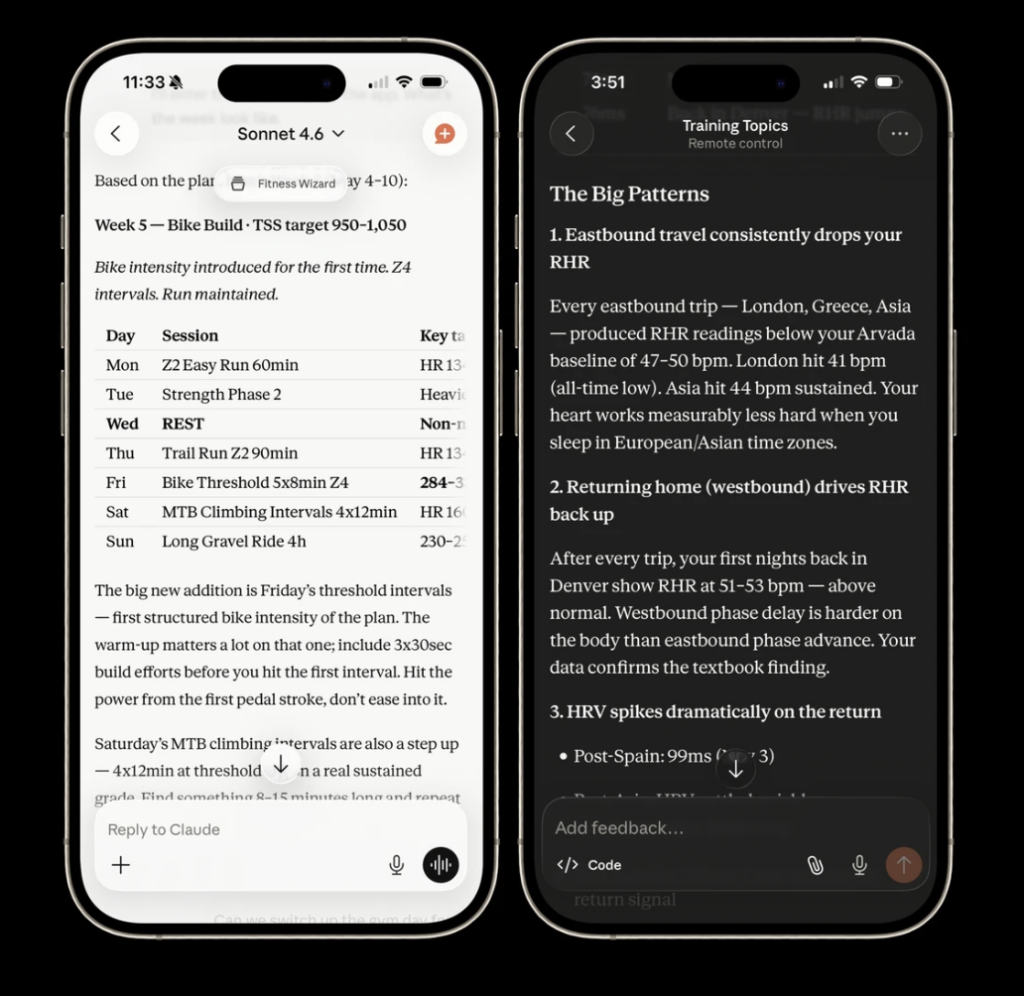
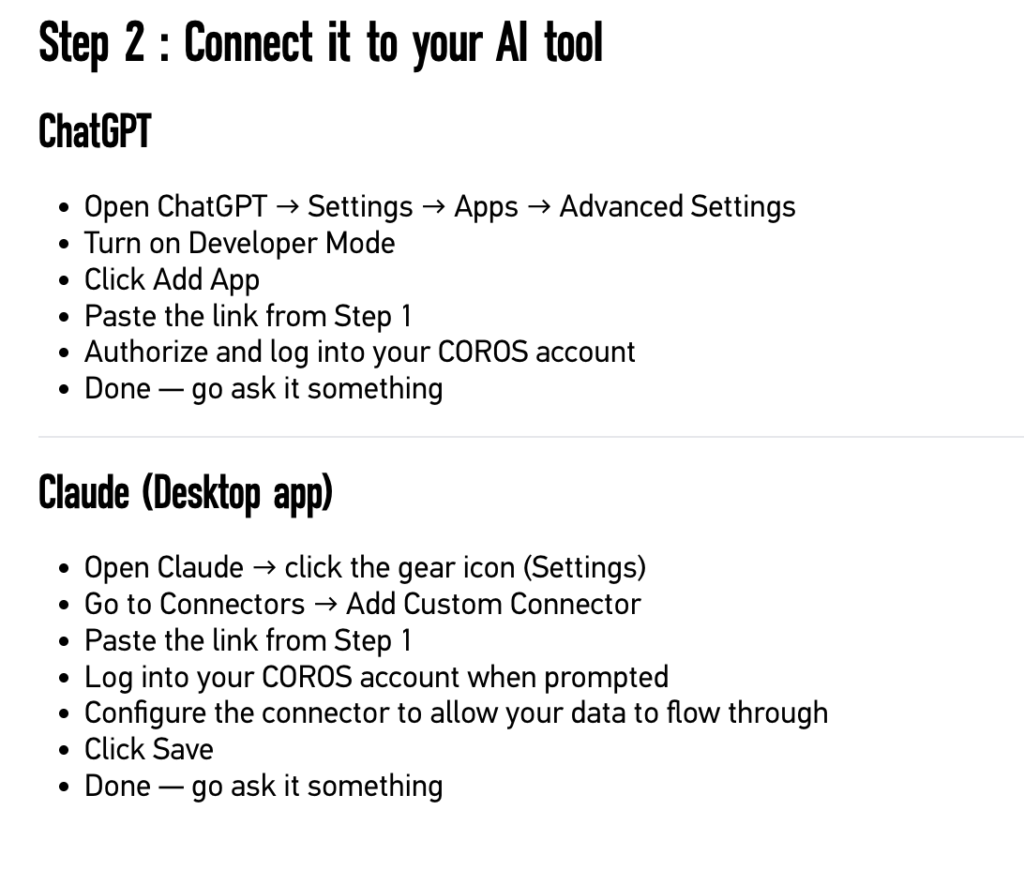
According to COROS, the integration currently works best with Claude Pro or ChatGPT Plus. The free tiers technically allow MCP connections but the message limits make daily use impractical. Of the two, Claude is the most practical option today because Anthropic invented the MCP standard, and ChatGPT supports MCP only in developer mode, which disables memory.
There are a few limitations worth knowing upfront. The integration doesn’t expose GPS route detail, per-second heart rate or paces, lap and interval splits, or cycling power data. So if you’re trying to really dig in and analyze an interval based track workout or pull a power from a 4 hour bike session, you’re not there yet. What you do get is solid summary-level data across your health and fitness metrics; enough to have genuinely useful conversations about trends, readiness, and patterns.
The integration is also read-only at launch, meaning AI-generated training plans can’t be pushed directly into your COROS calendar yet. COROS has flagged write permissions as a near-term update, which would let an AI-built plan land automatically in your calendar, making this truly useful when it arrives. That is of course if it can factor in your current level of fitness and fatigue because nobody wants a 3 hour run on the back of a 97 IF (Intensity Factor) and right now, that is where AI is screwing up. It doesn’t take into account the athlete, just the numbers.
Why Now?
Over the past year, inbound API integration requests to COROS grew by more than 1,100%, a signal of how hungry athletes are for flexible, intelligent access to their own data. Rather than routing that demand through a traditional approval process, COROS opted for the open standard, giving athletes direct access instead.
The broader market context is that Garmin keeps its AI features paywalled inside Connect+, and Strava’s API agreement explicitly restricts AI use, and most other major brands are building AI inside their own apps rather than letting athletes take their data elsewhere. For COROS, they’re moving in the opposite direction, betting that athlete autonomy is a better long-term play than a closed ecosystem. Which has always kind of been their thing. Even if you follow the brand on social media, its geared toward athlete conversation versus being spoken at.
For endurance athletes who already use Claude or ChatGPT regularly, this is worth trying.
The ability to ask your AI training questions backed by your actual data like HRV trends, load ratio, and EvoLab projections are fun to see.
Setup takes minutes and you just need to authorize your COROS credentials, connect the MCP in your AI platform’s connectors panel, and start asking questions.
As an endurance coach, I still cringe at the thought of athletes solely relying on AI to coach them. You’ll never max our your potential with it. I’m sorry. But we like the innovation. So dive in with a grain of salt and maybe you’ll come out learning some useful things about your training. But don’t forget that you’re still in charge and know your body best.
Leave a Reply
You must be logged in to post a comment.