

You already know that sleep is important. What you might not know is exactly how long your body is paying for it when you don’t get enough.
New research from Muse, the brain health platform behind one of the world’s largest at-home EEG datasets has put a number on it. And its not that you’r behind by hours, but days.
The Findings
You’re probably like me and assume we can sleep in on Saturday and square up on our sleep debt from a rough week of work.
But new data says otherwise. Drawing on 1,846 disrupted nights from 868 Muse users, the analysis finds that a single short night of sleep triggers a recovery response that unfolds across three consecutive nights; with deep sleep rising on each one, REM deferred, and total sleep time barely changing. And the brain doesn’t catch up by sleeping longer, it catches up by sleeping differently, rebuilding the architecture of sleep within the same window of time.
Why This Matters
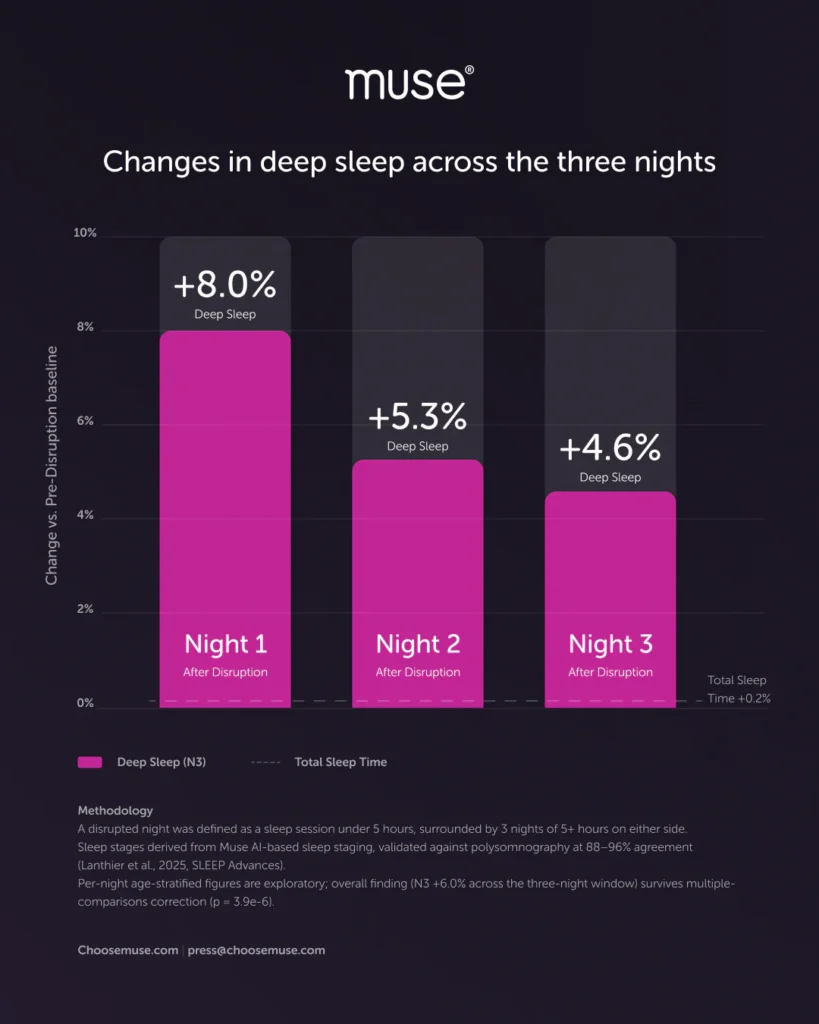
Deep sleep is where the real work happens and is the most restorative stage of the night, closely linked to physical recovery, memory consolidation, and long-term brain health. When you shortchange a night, your brain starts a multi-night repair sequence that reprioritizes your sleep architecture. Putting in a lot more behind the scenes work.
Sleep Architecture Is the Real Metric
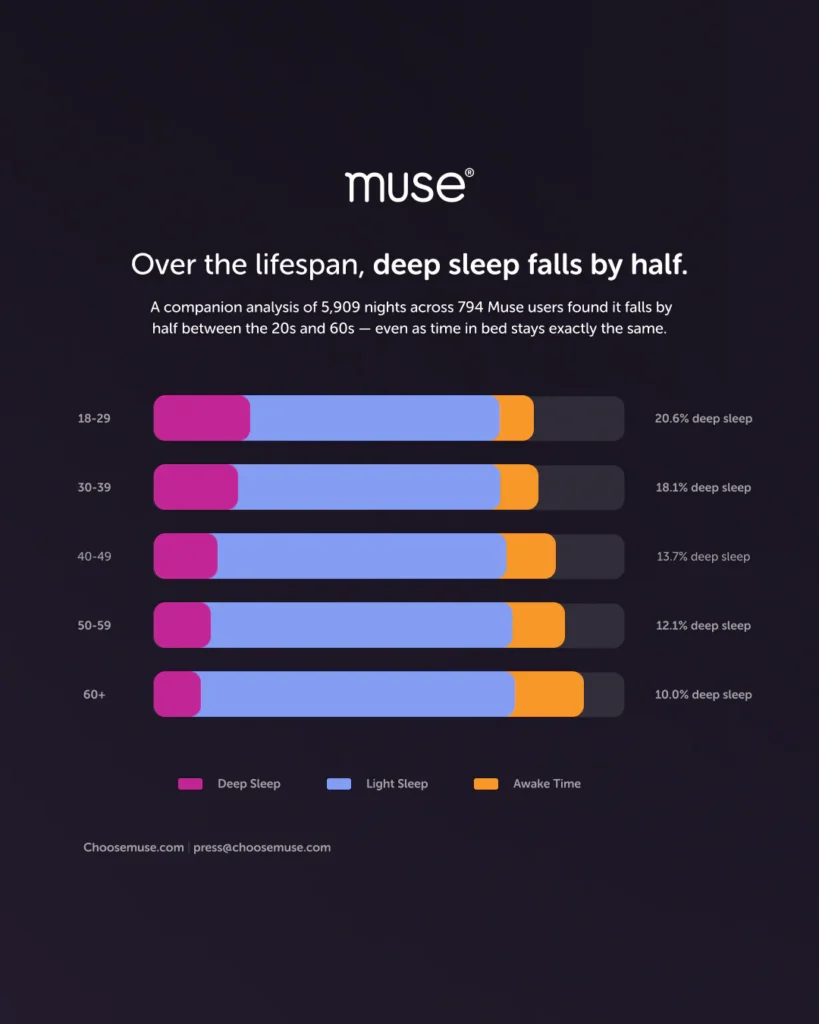
One of the more under appreciated findings by Muse is how the recovery actually works. Many adults spend enough time in bed but still wake up unrefreshed. The issue is often not sleep duration, but insufficient depth.
The Muse data reinforces this saying, total sleep time barely shifts during recovery nights, but what changes is the structure underneath the layers — deep sleep climbing, REM adjusting, the brain methodically rebalancing what was lost.
This is why sleep tracking tools that only measure duration are giving you an incomplete picture. Deep sleep quality depends on slow-wave continuity, not minutes of sleep, so two nights with identical deep sleep duration can deliver vastly different recovery results.
What the Research Backs Up
Muse isn’t a brand throwing out feel good sleep stats just for clicks. Their at home headband has been independently validated against hospital-grade sleep lab equipment, with accuracy landing between 88% and 96% across all sleep stages.
The Bottom Line
Whether you’re an athlete or not, treating sleep as it’s own discipline needs to be taken seriously and the data backs this up.
Consistency matters more than you think, and the cost of one disrupted night can derail half your week.
So there you go, you can’t out-train a chronic sleep deficit and you can’t compress the recovery into one long Saturday morning either.
Sleep is its own discipline so start treating it that way.
Leave a Reply
You must be logged in to post a comment.