


When Climatic announced L Max yesterday, we covered the launch and added some of our initial experiences.
But we also had questions and so did you. We got emails and receipts.
We got the kind of questions that don’t fit neatly into an announcement story but matter if you’re actually considering spending $55 a month on something you inhale.
So we reached out to Climatic to learn more. Below are our questions with their responses.
Big shout to Dr. Dale Christensen, Climatic’s Chief Science Officer & Adjunct Associate Professor of Medicine at Duke University who provided these answers.
How do I know if the L Max is Working?
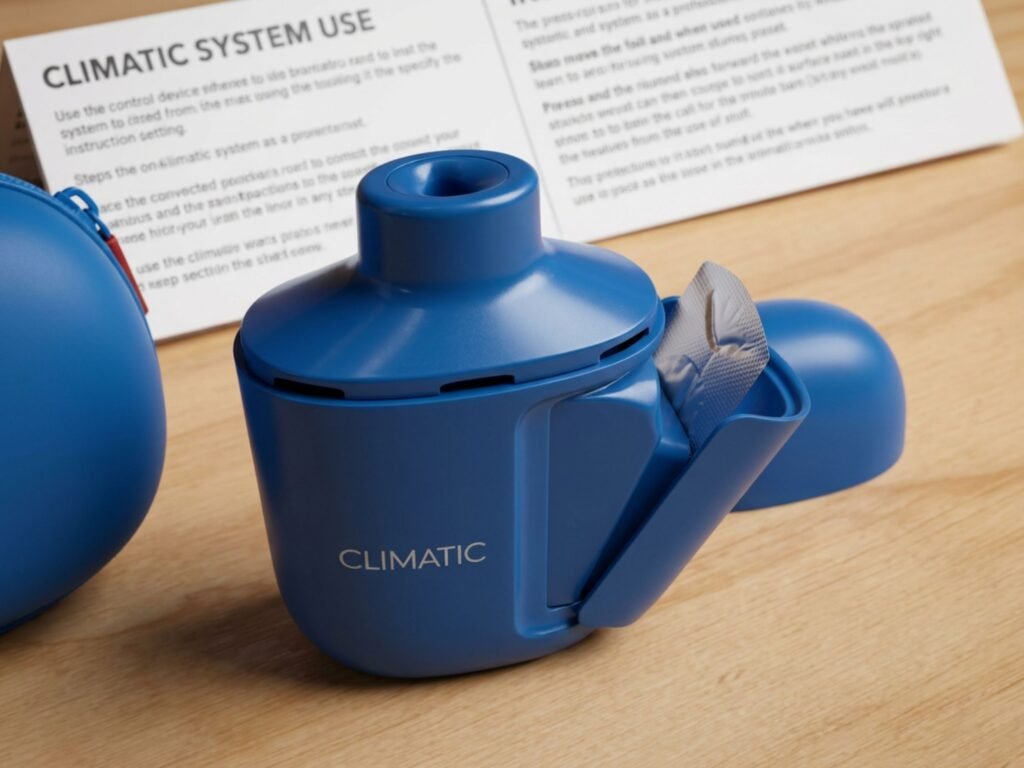
The honest answer: start with feel, then let the data follow.
The first signal for most people is simple — breathing feels easier. About 80% of testers reported that within the first two weeks, especially at higher intensities where breathing is usually the first thing that starts limiting you.
The measurable signals layer in after that. If you track data, here’s what to watch:
- Easier breathing at higher intensity, or the ability to hold power at lower perceived exertion
- Longer sustained efforts with more consistent output
- Faster recovery between hard intervals
- Improvements in HRV, peak flow, and overall respiratory markers
If you use an Oura Ring, Garmin, or any HRV-tracking device, that’s probably your clearest leading indicator.
What Does 6% Time Trial Improvement Look like in Real Numbers?
We pushed on this because “6% improvement” can mean a lot or very little depending on context.
The five week Climatic study included 13 participants who tracked standardized time trials alongside Oura Ring biometrics.
All early-stage stuff, designed to inform larger trials, Climatic is transparent about that, but the signal was consistent across participants which is a good sign.
On Performance: for a typical 30-minute effort, the average 6% improvement translated to roughly 1.5–2 minutes, depending of course on the athlete and modality. Participants maintained their normal training throughout — no structured intervention beyond daily product use. That makes the signal cleaner and more applicable to you.
On HRV: This was measured nightly using Oura (RMSSD-based scoring). Among participants with consistent data capture (n=9), 80% showed improvement within two weeks. The average increase was in the 5–10% range from baseline — and for context, a 3% shift is considered the threshold for a meaningful physiological change beyond normal day-to-day variation.
Climatic is currently running a larger randomized, double-blind, placebo-controlled trial scheduled to wrap this summer. That’s the data that confirms or challenges all of this at scale.
What’s Actually in Those Cartridges?
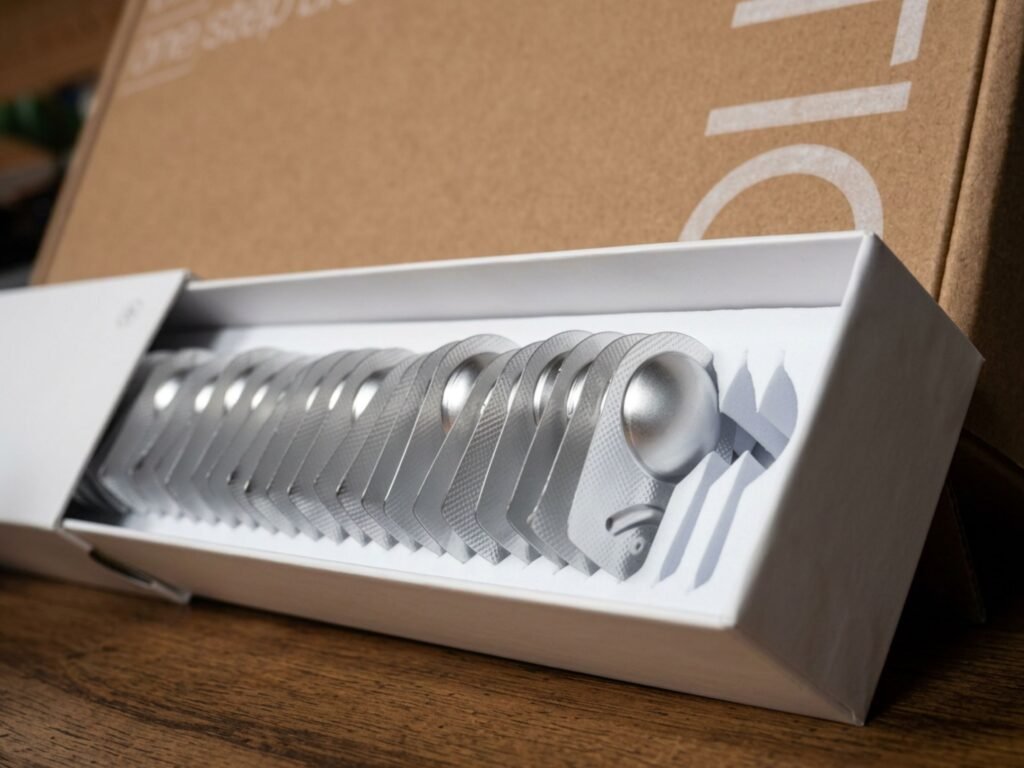
This is the question everyone will have the moment they see it, and Climatic knows it.
To be clear: L Max is a dry powder system — no liquid, no heating element, no combustion. The format is grounded in decades of established respiratory medicine.
Particles in the 1–5 micron range deposit in the airways of the lung rather than being absorbed elsewhere.
Here’s the full ingredient breakdown:
| Ingredient | What it does |
|---|---|
| Sodium Bicarbonate | Balances pH for optimal mucus expansion and clearance |
| Citric Acid | Reduces calcium in mucus to improve mobility |
| Arginine | Supports nitric oxide production for circulation and airflow |
| Forskolin | Promotes natural airway hydration |
| Theobromine | Supports optimal ciliary beating for efficient mucus movement |
Is this Basically an Inhaler?
It’s a fair reference point given both are inhaled and both target the lungs — but the mechanism is different.
Traditional inhalers work pharmacologically. Bronchodilators and steroids force the airways to open by relaxing smooth muscle or blocking inflammation. They’re designed for acute response: fast relief when something is going wrong.
L Max targets a different system entirely: mucociliary clearance — the lung’s built-in cleaning mechanism that moves mucus and trapped particles out of the airways.
It’s non-drug, and it’s designed to support that process with daily use, not to force a physiological response in the moment.
Put simply, an inhaler forces the airways open and L Max supports the lungs’ natural cleaning process so the airways can do their job more effectively over time.
An inhaler is intervention and L Max is maintenance.
The Bottom Line
Thanks for hanging with us on this one. We’re just very much radars up when a new company comes out with something they want people to inhale. We have a hard time completely trusting something like this but but the science behind L Max is more serious than most things that land in the wellness-for-athletes space.
The company’s open and willingly answering questions about the ingredient stack, the delivery device, and the early data points — even if the larger trial is still pending.
Whether daily lung health earns a slot in your routine and budget is a personal calculation. But if you train at intensity and you’ve ever noticed your breathing takes a few miles to come online, the theory here is at least worth understanding or a look.
We’ll keep tracking and reporting back.
Purchase at climatichealth.com
Leave a Reply
You must be logged in to post a comment.